
The Rise and Fall of Title 42 Border Policy
Tracing the origins, impact, and aftermath of the Title 42 border mandate.
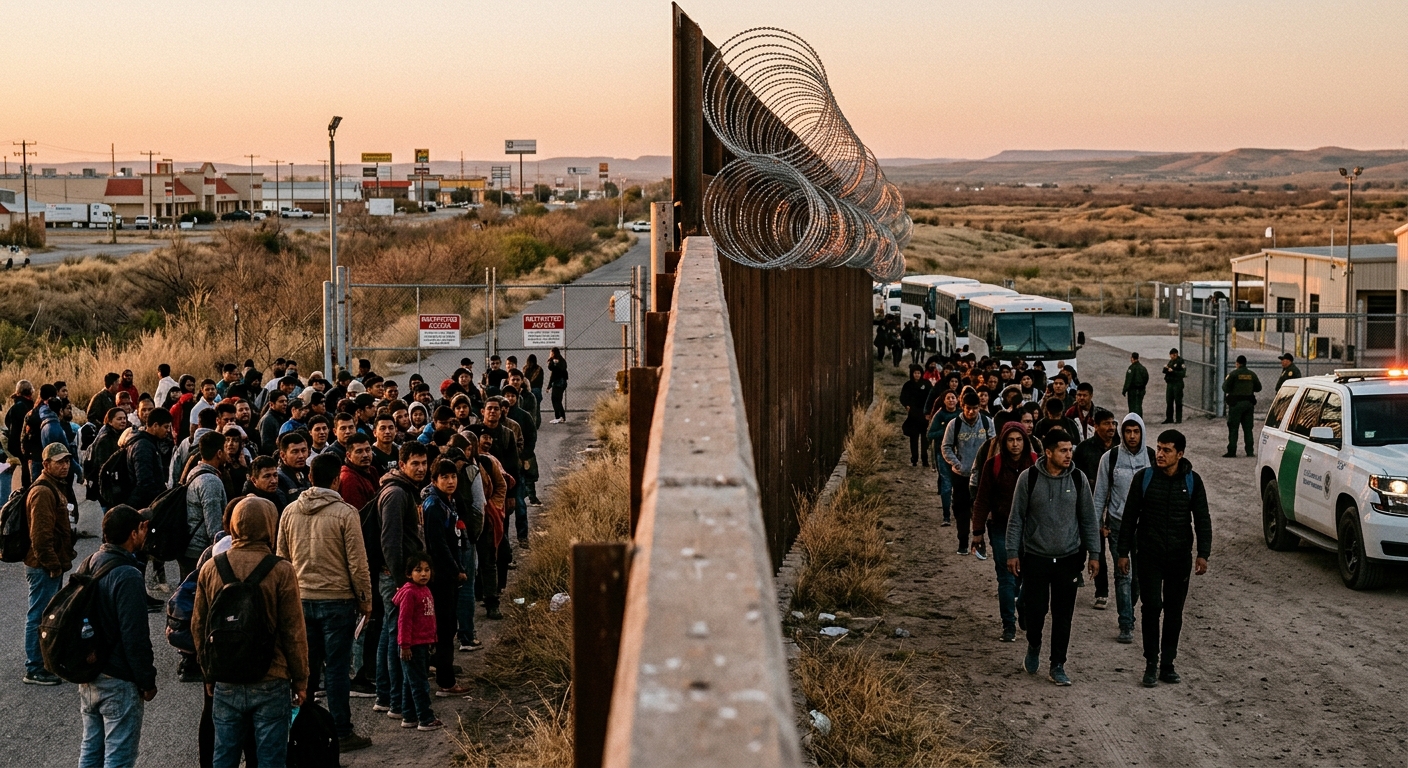
The Unprecedented Era of Border Expulsions
In early 2020, the COVID-19 pandemic triggered global shutdowns, but at the United States-Mexico border, it catalyzed one of the most profound shifts in immigration policy in modern American history. An obscure public health statute from the mid-twentieth century was thrust into the spotlight, serving as the primary mechanism for border enforcement. For more than three years, this mandate—widely known as Title 42—dominated the geopolitical landscape of North American migration, fundamentally altering how the United States interacted with individuals seeking refuge.
By the time it was lifted in May 2023, the policy had reshaped the operational strategies of federal law enforcement, strained diplomatic relations, and triggered immense humanitarian challenges. Understanding the magnitude of this policy requires a deep dive into its legislative origins, operational mechanics, the friction it caused among health professionals, and the lasting impacts on the American asylum system.
The Legislative Origins of the Expulsion Policy
To grasp the legal framework of the border closures, one must look back to the Public Health Service Act of 1944. Within this sweeping legislation lies Title 42 of the United States Code, a section that grants the federal government, specifically the Surgeon General and later the Centers for Disease Control and Prevention (CDC), the authority to temporarily suspend the introduction of persons into the country. The original intent of this statute was narrow: to prevent the spread of communicable diseases by quarantining arriving ships or halting travelers from specific, localized outbreak zones. It was never historically utilized for mass border closures.
However, in March 2020, the executive branch invoked this exact statute, arguing that the congregate settings of border facilities presented a severe risk of COVID-19 transmission. U.S. Customs and Border Protection (CBP) agents were authorized to bypass the standard processing protocols outlined in the Immigration and Nationality Act (INA). Ordinarily, when foreign nationals reach U.S. soil expressing a fear of returning home, they are legally entitled to an initial screening to determine if they qualify for asylum. Title 42 short-circuited this statutory right. Instead of being processed or detained pending an immigration hearing, migrants were subjected to rapid expulsions. Because these actions were classified under a public health mandate rather than immigration law, the standard procedural safeguards of the U.S. justice system were circumvented.
The Clash Between Public Health and Asylum Rights
The implementation of this policy sparked a fierce debate regarding its scientific validity. The core conflict lay in the mandate’s dual identity: it was a health order performing restrictive immigration enforcement. Almost immediately, medical professionals and epidemiologists voiced strong opposition.
Many argued the policy lacked empirical scientific merit as a containment strategy, especially after COVID-19 was widely circulating domestically. Public health scholars characterized the use of Title 42 as a disingenuous application of health codes to achieve long-sought political goals of reducing border crossings. They maintained that with proper mitigation strategies—masking, testing, and vaccination campaigns—asylum processing could have continued safely.
Concurrently, human rights advocates highlighted severe violations of international law. The United States is a signatory to the 1967 Protocol relating to the Status of Refugees, which establishes the principle of non-refoulement. This foundational tenet strictly prohibits nations from returning refugees to territories where their lives or freedoms would be threatened on account of race, religion, nationality, or political opinion. By expelling individuals rapidly, the Title 42 framework effectively ignored these obligations. Migrants were denied the opportunity to present a credible fear claim to an asylum officer, leading to widespread accusations that the U.S. was abandoning its historic role as a safe haven.
By the Numbers: Scale and the Recidivism Effect
The sheer volume of enforcement actions during the Title 42 era is staggering. Between March 2020 and May 2023, CBP reported millions of expulsions under this public health authority. However, interpreting these statistics requires understanding how the policy fundamentally altered migrant behavior.
Because a Title 42 expulsion was not a formal deportation, it carried no legal penalties. Under standard Title 8 immigration law, a formal deportation often results in a multi-year ban on legally re-entering the United States, and subsequent unauthorized crossings can lead to felony criminal prosecution. Title 42 carried no such deterrents; a migrant expelled in the morning could attempt to cross again in the afternoon with no added legal jeopardy.
This lack of consequence created a revolving door at the southern border. The rate of recidivism—the metric used by border officials to track migrants attempting to cross multiple times—skyrocketed. Consequently, the headline figures of border encounters were significantly inflated, representing a smaller number of unique individuals making repeated attempts.
| Metric | Title 42 (Public Health Order) | Title 8 (Immigration Law) |
|---|---|---|
| Legal Basis | Public Health Service Act of 1944 | Immigration and Nationality Act |
| Action Taken | Rapid Expulsion | Apprehension, Processing, Deportation |
| Asylum Access | Suspended for most demographics | Statutorily required screenings available |
| Legal Penalties | None (No ban on reentry) | 5-to-20 year bans, potential criminal charges |
Diplomatic Complexities and Uneven Application
A critical aspect of the policy was its uneven application, heavily dependent on international diplomacy. Executing an expulsion requires a receiving country willing to accept the returning individuals, making the United States entirely dependent on foreign governments, most notably Mexico.
Initially, Mexico agreed to accept the return of its own citizens, as well as individuals from Guatemala, Honduras, and El Salvador. Migrants from these nations bore the brunt of rapid border expulsions and were frequently returned within hours. Conversely, the policy fractured when applied to individuals arriving from countries with strained U.S. diplomatic ties. Nations such as Venezuela, Nicaragua, and Cuba generally refused deportation flights, and Mexico initially balked at accepting these citizens on behalf of the American government.
As a result, authorities found it logistically impossible to expel these demographics under the health order. This created a highly bifurcated system: families from Honduras might be expelled immediately without a hearing, while families from Venezuela crossing at the exact same location might be processed under standard laws and permitted to temporarily enter the U.S. to pursue their asylum claims.
The Human Cost: Danger, Desperation, and Fatalities
Beyond legal maneuvering, the human toll of the rapid expulsion policy was devastating. Expelling tens of thousands of vulnerable individuals into northern Mexican border towns precipitated a severe humanitarian crisis. Many of these regions are heavily controlled by transnational criminal organizations. Migrants, disoriented and devoid of resources, became highly lucrative targets for cartels. Human rights observers documented a massive surge in extortion, kidnapping, human trafficking, and violence directed at expelled individuals living in makeshift border encampments.
Furthermore, empirical data reveals a grim reality regarding border fatalities. Knowing apprehension meant immediate expulsion rather than a chance to claim asylum, many migrants opted to take increasingly perilous routes to evade detection entirely. A 2024 study examining records from the Pima County Office of the Medical Examiner in Arizona highlighted this tragic outcome. The research documented a 48 percent increase in recovered undocumented border crosser remains during the Title 42 era compared to the preceding period. Desperation to circumvent the order funneled migrants into the most unforgiving desert terrains, significantly escalating the lethality of the journey.
The End of an Era: Transitioning Back to Standard Protocols
The era of mass public health expulsions concluded on May 11, 2023. This termination coincided with the Biden administration’s decision to end the federal COVID-19 public health emergency declarations. The CDC formally determined the order was no longer necessary to protect U.S. communities, citing widespread vaccine availability and therapeutics.
The lifting of the order required a massive logistical pivot for the Department of Homeland Security, reverting operations to Title 8 immigration authorities. However, the post-Title 42 landscape did not mean a return to pre-2020 border dynamics. The federal government rolled out stringent new regulations designed to disincentivize irregular crossings.
A central pillar of this strategy was the Circumvention of Lawful Pathways rule. This directive presumes migrants are ineligible for asylum if they cross between official ports of entry or fail to seek protection in a third transit country. To provide a legal alternative, the government promoted the CBP One mobile application, requiring asylum seekers to secure an appointment at a port of entry. Simultaneously, CBP resumed issuing formal orders of expedited removal, imposing strict five-year bans on reentry for unlawful crossers.
Frequently Asked Questions (FAQ)
What was the official legal justification for implementing Title 42?
The policy was implemented under the Public Health Service Act of 1944. The executive branch and the CDC invoked it to prevent the potential spread of COVID-19 within congregate holding facilities at the border, arguing that regular processing would endanger law enforcement personnel and local communities.
Did Title 42 permanently stop all immigration into the United States?
No. It specifically targeted unauthorized border crossers and asylum seekers arriving at land borders. Standard legal immigration, such as visa processing for employment, family reunification, and student visas, experienced disruptions due to global embassy closures but was not legally suspended under this specific statute. Additionally, unaccompanied minors were eventually exempted from the expulsions.
How does standard Title 8 immigration law differ from Title 42?
Title 8 is the comprehensive body of federal law governing immigration and nationality. Under Title 8, individuals have a statutory pathway to seek asylum but also face severe legal consequences—such as long-term bans on reentry and criminal prosecution—if they cross unlawfully and are formally deported. Title 42 involved no formal deportations or legal penalties, only rapid physical expulsions.
Why did the policy end in May 2023?
The policy was explicitly tied to the national COVID-19 public health emergency. When the federal government officially declared an end to the pandemic emergency status in May 2023, the legal and scientific justification for maintaining the Title 42 border restrictions dissolved, forcing a return to standard immigration procedures.
Conclusion
The legacy of this pandemic-era border policy will be studied by legal scholars, sociologists, and public health officials for decades. It serves as a stark historical example of how emergency powers can be repurposed to radically alter established legal norms. Enacted under the banner of preserving public safety, the policy effectively suspended the right to seek asylum, inflated border encounter statistics through endless repeat crossings, and pushed desperate individuals into increasingly dangerous circumstances. As the United States navigates the complexities of the post-pandemic world under reinstated Title 8 authorities, the debate over balancing border security, humanitarian obligations, and international law remains pressing and unresolved.
References
- CDC Public Health Determination and Termination of Title 42 Order — Centers for Disease Control and Prevention. 2022-04-01. https://www.cdc.gov/media/releases/2022/s0401-title-42.html
- Nationwide Enforcement Encounters: Title 8 Enforcement Actions and Title 42 Expulsions — U.S. Customs and Border Protection. 2024-06-17. https://www.cbp.gov/newsroom/stats/cbp-enforcement-statistics/title-8-and-title-42-statistics
- Not in Our Name: The Disingenuous Use of “Public Health” as Justification for Title 42 Expulsions — Journal of Public Health Management and Practice (NCBI/PMC). 2022-03-08. https://www.ncbi.nlm.nih.gov/pmc/articles/PMC8903027/
- Impeding Access to Asylum: Title 42 “Expulsions” and Migrant Deaths in Southern Arizona — Social Science & Medicine (NCBI/PMC). 2024-10-15. https://www.ncbi.nlm.nih.gov/pmc/articles/PMC11477759/
Similar Articles








Read full bio of Sneha Tete


