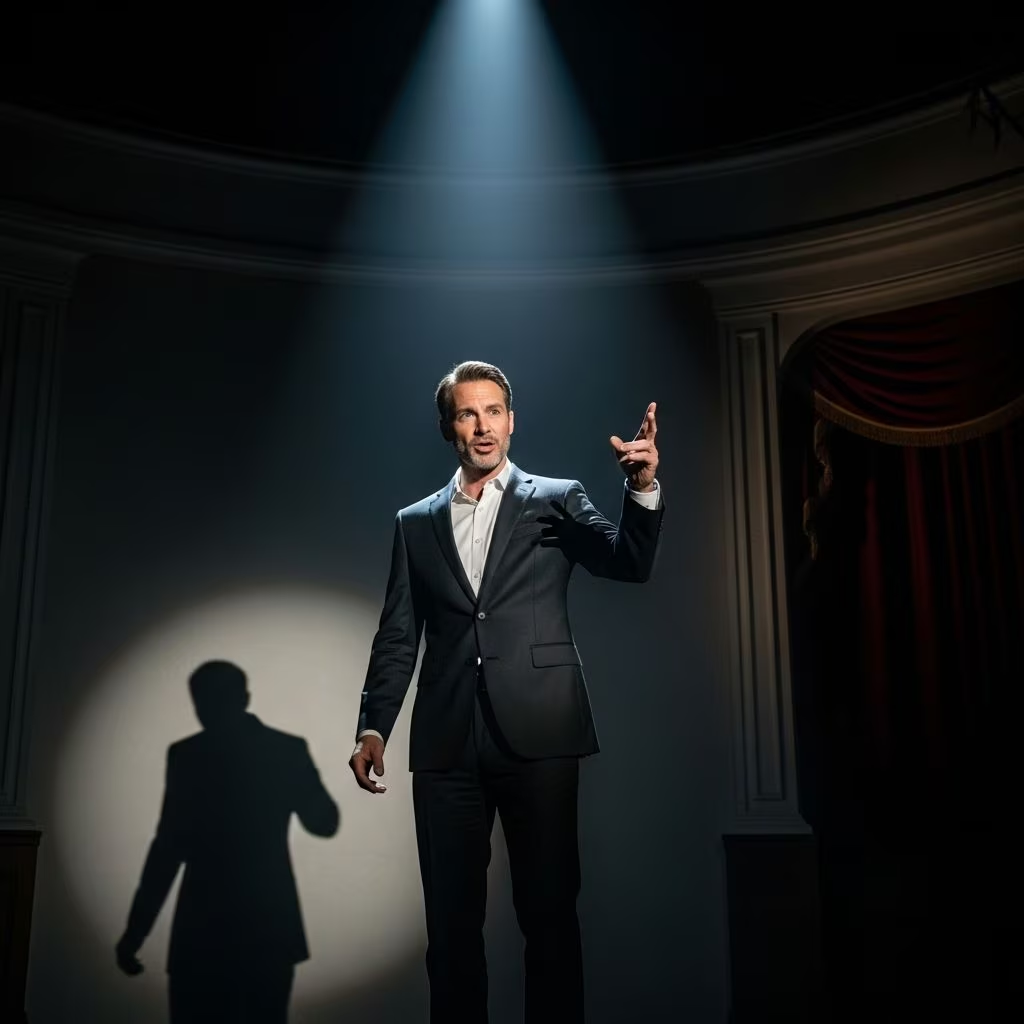
Attorneys who harness the power of performance arts can elevate their courtroom presence, turning complex arguments into compelling narratives that resonate deeply with judges and juries. Theater training equips lawyers with tools to master verbal delivery, nonverbal cues, and emotional connection, directly boosting case success rates through enhanced persuasion.
Why Performance Skills Define Legal Victories
In the high-pressure arena of trials, raw legal knowledge alone rarely seals the deal. Juries, often comprising non-experts, decide based on clarity, trust, and emotional pull rather than intricate statutes. Strong presentation skills build credibility by projecting authority via confident tone and eye contact, making arguments stick. Research underscores that clear, structured communication improves juror comprehension and retention of key facts.
Visual elements amplify this: high-quality graphics and videos aid memory far better than verbal recitals alone, helping lay audiences grasp events without confusion. Lawyers who integrate storytelling humanize facts, forging emotional bonds that data cannot, as humans are wired for narratives.
Core Elements of a Captivating Courtroom Act
Effective trial presentations blend verbal mastery, physical expressiveness, and narrative flair. Here’s how each contributes:
- Voice Command: Modulate tone, pace, and volume to emphasize points and sustain attention. Clear enunciation ensures every juror hears and understands, avoiding jargon pitfalls.
- Body Language: Purposeful gestures, steady posture, and direct eye contact convey conviction and rapport. These nonverbal signals often outweigh words in building trust.
- Narrative Crafting: Frame evidence as a hero’s journey—introducing conflict, building tension, and resolving with your client’s triumph—to engage emotions and guide perceptions.
- Visual Integration: Use charts, timelines, and animations to visualize abstracts, reinforcing memory and clarity.
Technology supports this: Tools for seamless evidence display prevent disruptions, keeping momentum. Tailor all elements to the audience—simplify for juries, deepen for judges—to maximize impact.
Infusing Drama: Theater Techniques for Lawyers
Theater classes offer lawyers a structured path to refine these skills, treating the courtroom as a stage. Acting drills teach presence under scrutiny, mirroring cross-examination stress.
| Theater Exercise | Legal Application | Benefit |
|---|---|---|
| Voice Projection & Modulation | Opening Statements | Commands attention, conveys authority |
| Improvisation Sessions | Cross-Examinations | Quick thinking, adaptive responses |
| Mirror Neuron Activation | Closing Arguments | Evokes empathy, shared emotions |
| Stage Blocking | Courtroom Movement | Dynamic engagement without distraction |
Participating in theater hones emotional authenticity—infusing genuine passion activates jurors’ mirror neurons, making them feel your client’s plight rather than just hear facts. Rehearsals mimic trial unpredictability, building resilience and polish.
Building Your Performance Repertoire Step-by-Step
Start with self-assessment: Record mock arguments to spot weaknesses in pacing or gestures. Then, layer in theater methods:
- Daily Vocal Warm-Ups: Practice scales and monologues to control breath and tone, essential for marathon trials.
- Feedback Loops: Rehearse before peers or coaches, refining based on input—like NITA programs advocate.
- Storyboarding Cases: Map arguments as three-act plays: setup, confrontation, resolution.
- Tech Dry Runs: Test visuals and software to avoid glitches.
- Mindful Presence: Meditation or improv fosters calm focus amid chaos.
Respectful advocacy balances zeal with professionalism—avoid aggression that alienates. Continuous study of frameworks like narrative rationality sharpens edges.
Real-World Wins: Cases Transformed by Theatrical Flair
Consider attorneys who’ve credited performance training for breakthroughs. One leveraged storytelling to frame a personal injury suit as a David’s fight against Goliath, swaying a skeptical jury through relatable heroism. Another used precise body language in a white-collar defense, projecting unshakeable integrity that dismantled prosecution attacks.
Visuals proved pivotal in complex fraud trials, where timelines clarified schemes better than testimony alone, boosting recall. Virtual hearings demand even sharper skills—mastering screen share and camera presence via theater’s remote improv. Statistics from advocacy institutes show polished presenters secure 20-30% more favorable verdicts, underscoring the edge.
Overcoming Common Performance Hurdles
Nerves plague even veterans; theater’s desensitization techniques—repeated exposure to audiences—rebuild confidence. Jargon traps ensnare novices: Practice plain-language versions to ensure accessibility.
For tech-shy lawyers, start simple: PowerPoint basics evolve into dynamic tools. Balance passion with objectivity—care deeply but stay professional to deflect attacks.
Frequently Asked Questions (FAQs)
Can non-actors really benefit from theater classes?
Absolutely. Theater focuses on universal skills like projection and presence, accessible to all with practice. Lawyers gain quick wins in poise and persuasion without full acting commitment.
How much time should lawyers invest in performance training?
Weekly sessions of 1-2 hours yield results in months. Combine with daily 15-minute warm-ups for sustained growth.
Does this apply to non-trial lawyers?
Yes—client meetings, negotiations, and arbitrations demand the same clarity and rapport.
What if my firm lacks resources for classes?
Free online improv videos, Toastmasters, or peer mocks suffice. Record and review solo.
Can visuals replace strong speaking?
No—they complement. Overreliance dilutes personal connection; integrate thoughtfully.
Commit to the Spotlight: Your Path Forward
Embrace theater training to transcend routine advocacy. By mastering delivery, you’ll not only argue cases but perform victories, forging lasting juror loyalty. Invest now—your next trial awaits its star.
References
- Essential Courtroom Presentation Skills: Enhancing Persuasion and Impact — RunSensible. 2023. https://www.runsensible.com/blog/essential-courtroom-presentation-skills-enhancing-persuasion-and-impact/
- How Attorneys Can Become Master Presenters and Storytellers — Miami-Dade Bar / Edward Gelb, Aurora Legal Marketing. 2023. https://www.miamidadebar.org/how-attorneys-can-become-master-presenters-and-storytellers/
- How Important Are Courtroom Presentations? — Precise, Inc. 2023. https://precise-law.com/how-important-are-courtroom-presentations/
- Communication Skills, Report Writing, and Courtroom Testimony: Presentation Skills — National Institute of Justice (NIJ), U.S. Department of Justice (.gov). Accessed 2026. https://nij.ojp.gov/nij-hosted-online-training-courses/communication-skills-report-writing-and-courtroom-testimony/courtroom-testimony/presentation-skills
- Public Speaking and the Art of Persuasion in the Courtroom — Plaintiff Magazine. 2023. https://plaintiffmagazine.com/recent-issues/item/public-speaking-and-the-art-of-persuasion-in-the-courtroom-2