
The Unfinished March: Securing Democracy
Explore the ongoing battle to protect voting rights in modern America.
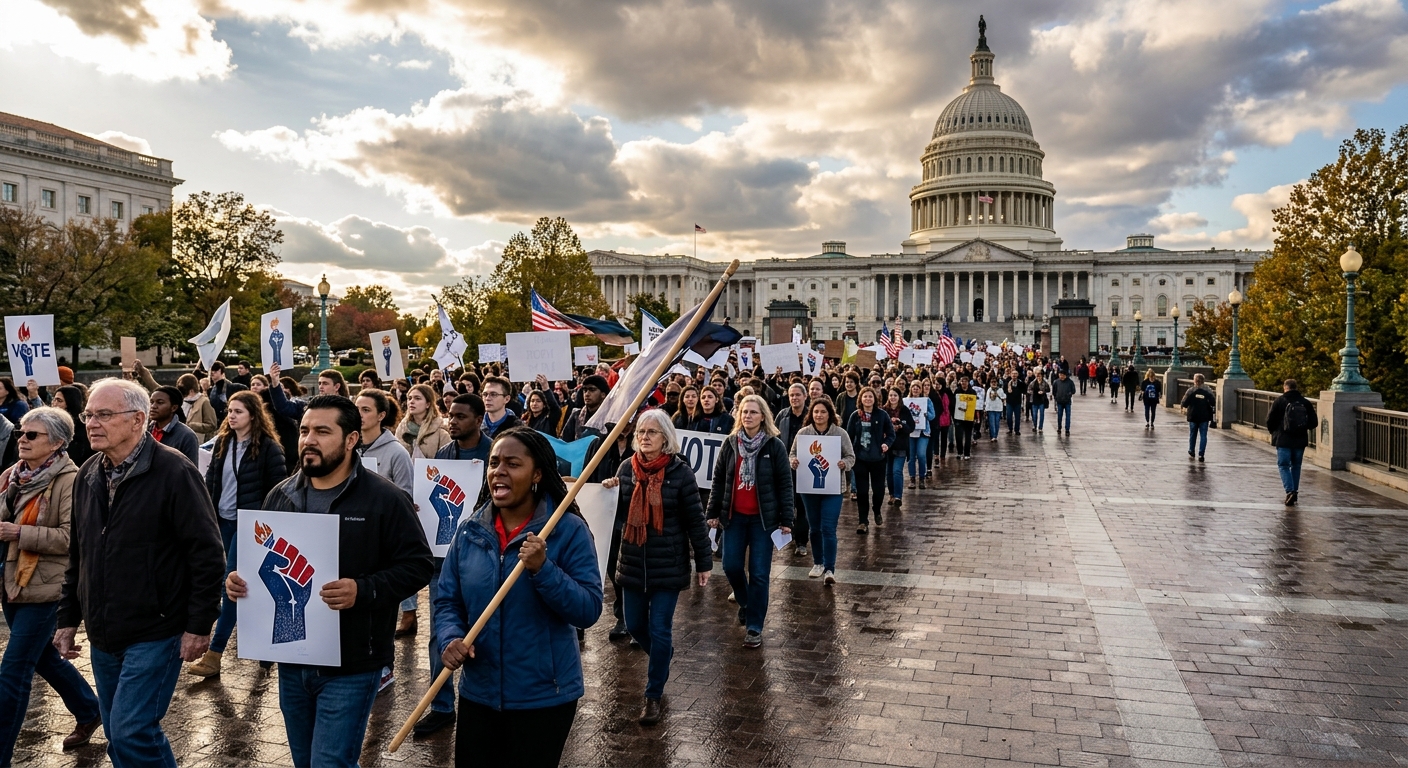
The Bedrock of Democratic Participation
The foundation of a thriving democracy rests on a singular, powerful premise: the right of every eligible citizen to participate freely and equally in the electoral process. Throughout the history of the United States, this fundamental right has never been universally guaranteed without a profound and enduring struggle. It has been fiercely fought for on dusty rural roads in the Deep South, negotiated within the marbled halls of Congress, and debated inside the highest courts of the land. While many view the sweeping civil rights victories of the mid-twentieth century as the definitive conclusion of this battle, the reality is far more intricate. The struggle for equitable ballot access was not permanently resolved decades ago; rather, it has continuously evolved, adapting to new political climates and shifting legal frameworks.
Today, the ongoing push to protect ballot access is as urgent as ever, serving as a stark reminder that democratic rights require constant, unwavering vigilance. To truly understand the present landscape of electoral access in the United States, one must first look back at the monumental sacrifices that paved the way. It requires an examination of the precise statutory tools designed to protect voters, an analysis of recent judicial decisions that have dramatically altered the legal battlefield, and a clear-eyed recognition of the modern, administrative hurdles that continue to threaten equal participation in our democratic systems.
The Catalyst of 1965: A Turning Point in American Democracy
The modern narrative of American electoral equity cannot be accurately told without centering on the pivotal events of 1965. During that year, the systemic disenfranchisement of Black Americans—ruthlessly enforced through mandatory poll taxes, impossibly complex literacy tests, and violent intimidation—reached a critical breaking point. The national consciousness was violently awakened by an event now etched into history as “Bloody Sunday.” On March 7, 1965, peaceful demonstrators attempting to march from Selma to Montgomery, Alabama, to demand their constitutional right to vote, were met with severe brutality by state and local law enforcement. The televised images of tear gas and batons raining down on defenseless citizens horrified the nation and placed immense pressure on the federal government to take decisive action.
In response to the overwhelming public outcry and the tireless, strategic advocacy of civil rights leaders, President Lyndon B. Johnson championed comprehensive federal legislation to dismantle these discriminatory barriers once and for all. On August 6, 1965, the Voting Rights Act (VRA) was signed into law, marking a monumental shift in the balance of power between federal oversight and state electoral procedures. The VRA explicitly outlawed literacy tests and authorized the deployment of federal examiners to register qualified citizens in jurisdictions with deeply entrenched histories of discrimination. It remains one of the most significant pieces of civil rights legislation in the nation’s history.
The Statutory Shield: Sections 2, 4, and 5
The brilliance and efficacy of the Voting Rights Act lay heavily in its robust enforcement mechanisms, primarily found within Sections 2, 4, and 5 of the legislation. Each section played a unique and vital role in systematically dismantling localized voter suppression.
- Section 2: This provision applied a nationwide prohibition against the denial or abridgment of the right to vote on account of race or color. It allowed civil rights organizations and the Department of Justice to sue jurisdictions over discriminatory practices. Crucially, Section 2 is permanent and has no expiration date, remaining a primary tool for voting rights litigation today.
- Section 4(b): This section established a specific “coverage formula” used to identify states, counties, and local jurisdictions with the most egregious records of voter suppression. Jurisdictions were flagged based on their historical use of “tests or devices” to restrict voting and their historically low voter registration or turnout rates.
- Section 5: Serving as the enforcement teeth for Section 4, Section 5 required the covered jurisdictions to obtain “preclearance” before implementing any changes to their election laws. This meant that any alteration—from moving a polling place across the street to entirely redrawing electoral maps—had to be approved by either the U.S. Department of Justice or a federal court in Washington, D.C., to ensure the change would not negatively impact minority voters.
This proactive preclearance approach prevented discriminatory policies from ever taking effect, fundamentally transforming the electoral landscape and ushering in unprecedented levels of minority voter registration and participation over the ensuing decades.
The Dismantling of Protections: Shelby County v. Holder
For nearly half a century, the preclearance requirement served as an incredibly effective shield against the resurgence of voter suppression. However, the legal landscape shifted seismically in 2013 with the Supreme Court’s landmark ruling in Shelby County v. Holder. In a sharply divided 5-4 decision, the Court struck down the coverage formula located in Section 4(b) of the VRA. The majority opinion argued that the formula, which was based on decades-old historical data, was unconstitutional because it did not reflect current political realities and unfairly burdened specific states in violation of the principle of equal state sovereignty.
While the Supreme Court did not explicitly invalidate Section 5’s preclearance requirement itself, rendering the coverage formula unconstitutional effectively neutralized it. Without a constitutionally valid formula to determine exactly which jurisdictions were subject to preclearance, the federal government lost its most potent tool for preemptively blocking discriminatory election changes. The Department of Justice subsequently confirmed that, following this ruling, no jurisdictions were subject to the preclearance requirements under the old formula, fundamentally altering how federal civil rights laws are enforced nationwide.
The dissenting opinion, authored by the late Justice Ruth Bader Ginsburg, fiercely criticized the majority’s logic. She famously likened the decision to discard the preclearance requirement to “throwing away your umbrella in a rainstorm because you are not getting wet.” Her warning proved deeply prescient. Almost immediately following the decision, several states that had previously been subject to preclearance rushed to enact restrictive electoral laws that had previously been blocked or deterred by the federal government. The decision effectively shifted the immense burden of proof from the states—who previously had to prove their laws were not discriminatory prior to implementation—to civil rights groups and ordinary citizens, who now have to endure lengthy, resource-intensive litigation to strike down discriminatory laws after the damage is already done.
Modern Barriers: The New Era of Voter Suppression
The post-Shelby County era has witnessed a dramatic resurgence of what voting rights advocates refer to as “second-generation” barriers to the ballot box. Unlike the overt violence and explicit literacy tests of the Jim Crow era, modern voter suppression tactics are frequently cloaked in the innocuous language of administrative efficiency and election security. However, their ultimate impact on marginalized communities remains disproportionately harsh and statistically verifiable.
One of the most prevalent modern tactics is the implementation of strict voter identification laws. Proponents argue these measures are strictly necessary to prevent in-person voter fraud, despite extensive academic and judicial research demonstrating that such fraud is exceptionally rare. In reality, strict ID laws disproportionately affect low-income citizens, elderly individuals, and voters of color, who are statistically less likely to possess the highly specific types of government-issued identification required by these mandates, or who face significant financial and logistical barriers in obtaining them.
Another significant hurdle is the aggressive purging of voter registration rolls. While periodically maintaining accurate registration lists is a standard and necessary administrative task, some states have adopted highly aggressive “use-it-or-lose-it” policies. Under these rules, registered voters who have not participated in recent consecutive elections or who fail to respond to generic mailers are quietly removed from the rolls. Consequently, many individuals only discover their registration has been purged when they arrive at their designated polling place on Election Day, resulting in immediate disenfranchisement.
Furthermore, the systemic reduction of polling locations, particularly concentrated in densely populated urban areas, has created severe logistical nightmares for voters. Long lines that require waiting for several hours act as a de facto poll tax for hourly workers who simply cannot afford to lose a half-day’s wages to cast their ballot. Restrictions on early voting periods and mail-in voting have also been implemented in various jurisdictions. Data from the U.S. Census Bureau indicates that the 2020 election saw a massive surge in voter participation, with 66.8% of citizens aged 18 and older casting a ballot—the highest turnout rate of the 21st century. Following this historic surge, dozens of state legislatures introduced bills specifically designed to curtail the very mechanisms, such as expanded absentee voting and drop boxes, that facilitated such widespread participation.
Rebuilding the Bridge: Legislative and Grassroots Efforts
The fight to secure the ballot is not merely a historical reflection; it is a highly active, ongoing campaign fought simultaneously on multiple fronts. Recognizing the glaring vulnerabilities left in the wake of the Shelby County decision, federal lawmakers have repeatedly introduced comprehensive legislation aimed at restoring and modernizing the VRA’s core protections. Legislative proposals aim to establish a new, contemporary coverage formula that would reinstate the preclearance requirement for states and municipalities with recent, documented histories of electoral discrimination. While intense partisan gridlock has frequently stalled these vital efforts at the federal level, the push for robust statutory protection remains a primary, unwavering focus for civil rights advocates across the ideological spectrum.
Simultaneously, the battle is being fiercely waged at the grassroots level. Community organizations and civic groups are courageously stepping into the void left by diminished federal oversight. These organizations dedicate immense resources to conducting massive voter registration drives, running comprehensive educational campaigns to inform citizens of shifting identification requirements, and organizing community transportation to polling sites to mitigate the negative impact of polling place closures.
Litigation also remains a critical, albeit grueling, tool. Civil rights attorneys continuously challenge discriminatory electoral maps and restrictive voting laws under Section 2 of the VRA. Although pursuing these complex legal cases is resource-intensive and often takes years to definitively resolve in the courts, they represent an absolutely crucial line of defense in protecting marginalized voices from systemic, legally sanctioned disenfranchisement.
Why Every Vote Matters: Demographics and the Future
As the demographic landscape of the United States continues to evolve at a rapid pace, ensuring equitable access to the political process is more paramount than ever. The nation’s growing diversity is a profound cultural and economic strength, but it also underscores the critical need for an electoral system that accurately and fairly reflects the will of its entire populace, rather than a select few.
When structural barriers depress turnout among specific demographics, the resulting government policies predictably fail to address the pressing needs of those marginalized communities. Key issues such as public education funding, healthcare access, infrastructure development, and criminal justice reform are deeply impacted by who holds elected office. In turn, who holds office is directly determined by who is able to successfully navigate the deliberate obstacles placed in front of the ballot box. Protecting the right to vote is not a partisan issue; it is a fundamental democratic imperative. The long-term integrity and legitimacy of the republic rely entirely on the unhindered participation of all its citizens.
Conclusion
The historical fight for voting rights was a literal and figurative march toward equality, paid for with the courage, resilience, and blood of civil rights pioneers. The Voting Rights Act of 1965 was the triumphant legislative embodiment of that courage. However, as the legal shifts and political maneuvering of recent decades have starkly demonstrated, the protections won in the past are not invincible. The erosion of federal oversight and the rapid proliferation of modern suppression tactics demand a renewed, fierce commitment to democratic principles. The journey toward true, unassailable electoral equity is ongoing. It is incumbent upon the current generation to pick up the mantle, advocate for robust legal protections, and ensure that the foundational right to vote remains easily accessible to every American, regardless of their zip code, income level, or skin color.
Frequently Asked Questions (FAQs)
What was the primary purpose of the Voting Rights Act of 1965?
The Voting Rights Act of 1965 was enacted to systematically dismantle discriminatory barriers that prevented Black Americans and other minorities from exercising their constitutional right to vote. It outlawed subjective practices like literacy tests and established direct federal oversight of election laws in regions with a documented history of severe discrimination.
How did the Shelby County v. Holder decision change elections?
In 2013, the Supreme Court ruled that the “coverage formula” used to determine which states needed federal approval (known as preclearance) before changing their election laws was unconstitutional. This effectively ended the preclearance system, allowing states with histories of discrimination to implement new voting restrictions without prior federal review or approval.
What exactly is “preclearance” in the context of voting rights?
Preclearance was a strict requirement under Section 5 of the Voting Rights Act that mandated certain jurisdictions to legally prove to the U.S. Department of Justice, or a federal court, that any proposed changes to their voting laws were not discriminatory before those changes could actually be put into effect.
What are second-generation voter suppression tactics?
Unlike overt, violent methods or explicit poll taxes, second-generation tactics are administratively subtle but still disproportionately impact marginalized voters. Examples include strict voter ID requirements, aggressive purging of voter registration rolls for inactivity, the strategic closure of polling places in minority neighborhoods, and the partisan gerrymandering of electoral districts.
References
- Voting Rights Act (1965) — National Archives. 2022-02-08. https://www.archives.gov/milestone-documents/voting-rights-act
- Section 4 Of The Voting Rights Act — Department of Justice. 2023-11-17. https://www.justice.gov/crt/section-4-voting-rights-act
- SHELBY COUNTY v. HOLDER — Supreme Court of the United States. 2013-06-25. https://www.supremecourt.gov/opinions/12pdf/12-96_6k47.pdf
- 2020 Presidential Election Voting & Registration Tables Now Available — Census Bureau. 2021-04-29. https://www.census.gov/newsroom/press-releases/2021/2020-presidential-election-voting-and-registration-tables-now-available.html
- Section 2 Of The Voting Rights Act — Department of Justice. 2023-04-05. https://www.justice.gov/crt/section-2-voting-rights-act
Similar Articles








Read full bio of Sneha Tete


