
Texas Workplace Smoking Rules: What Employers Need To Know 2025
Navigate Texas rules on workplace smoking, vaping bans, and employer rights in private and public spaces.
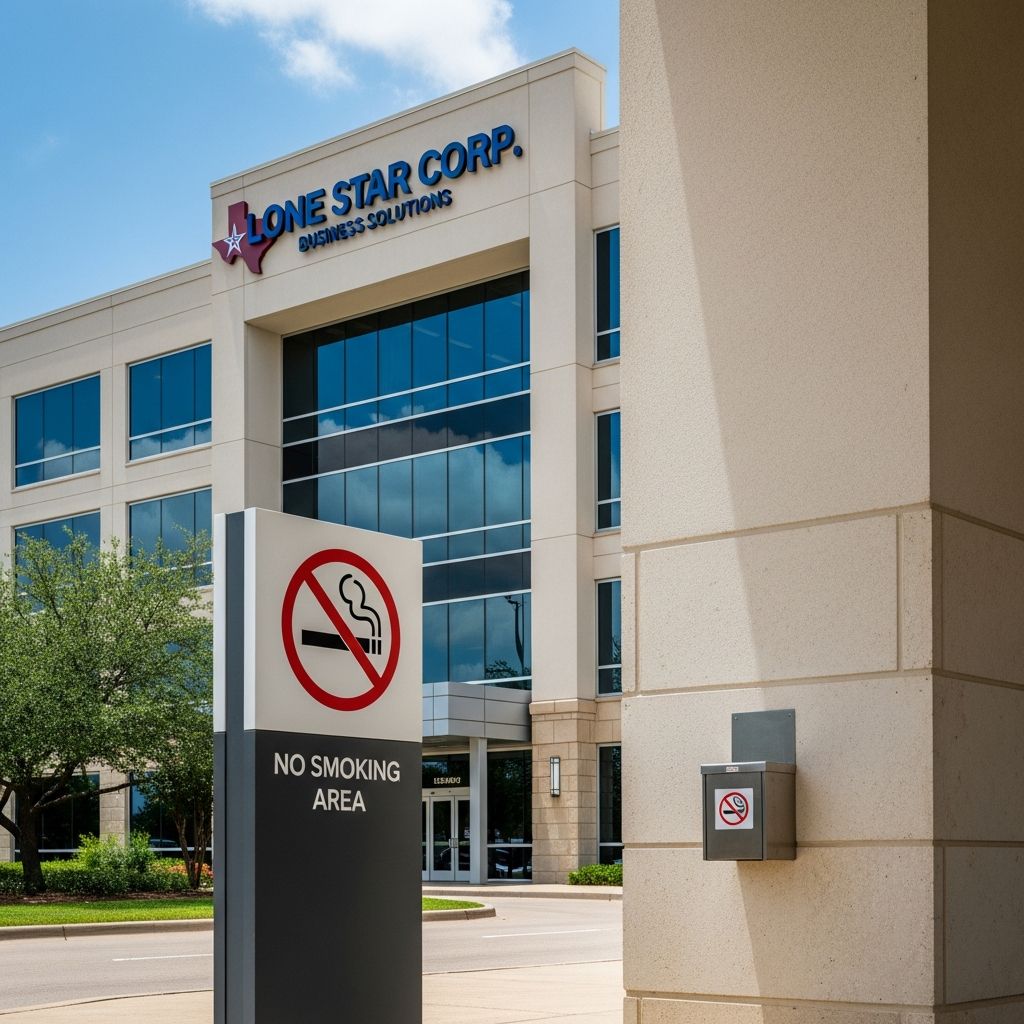
Texas maintains a hands-off approach at the state level regarding smoking in private workplaces, leaving most decisions to employers while local governments impose targeted restrictions. This framework balances business autonomy with public health efforts to curb secondhand smoke exposure.
Overview of Statewide Policies on Tobacco Use
Unlike many states, Texas has no comprehensive statutes dictating smoking policies in private employment settings. Employers face no obligation to designate smoking zones or accommodate tobacco users in any specific manner. This absence of mandates empowers businesses to craft their own rules, ranging from total prohibitions to permissive environments, as long as they comply with any applicable local measures.
State laws do intervene in select public-facing operations. For instance, healthcare facilities, restaurants, and bars often fall under broader prohibitions on tobacco use to safeguard patients, diners, and staff alike. These rules extend to employees, ensuring uniform application across customers and workers.
Local Ordinances Shaping Workplace Environments
Municipalities drive much of the regulation in Texas, with over 106 cities enforcing comprehensive smoke-free policies in non-hospitality workplaces, eateries, and lounges. These measures typically ban smoking indoors, creating cleaner air for office workers, retail staff, and service industry employees.
- Austin restricts tobacco use within 15 feet of doors or operable windows in smoke-free enclosed areas.
- Dallas extended its bans to vaping on December 11, 2025, prohibiting it in all indoor public spaces, within 15 feet of entrances, and on park grounds—mirroring traditional smoking limits.
- San Antonio’s 2024 amendment, effective January 1, 2025, equates electronic smoking devices (ESDs) with cigarettes, barring them wherever tobacco is forbidden.
- Houston aligns with these major cities, forming a consistent urban front against indoor aerosol exposure.
Designated outdoor smoking spots, where permitted, must sit at least 15 feet from building entries statewide, minimizing drift into workspaces. Businesses spanning multiple locales must navigate this patchwork, often adopting the strictest standards for uniformity.
Employer Flexibility in Policy Development
Private companies enjoy broad latitude to implement smoking guidelines without state interference. Many opt for outright bans to foster healthier atmospheres, cut maintenance expenses from odors and residue, and appeal to nonsmoking talent.
No requirements exist for smoke breaks, distinguishing Texas from locales mandating such pauses. Employers may discipline or terminate based on policy violations without legal repercussions tied to tobacco habits.
| Policy Element | State Requirement | Common Employer Practice |
|---|---|---|
| Designated Smoking Areas | None | Optional; often outdoors only |
| Accommodations for Smokers | Not required | Rare; focus on nonsmokers |
| Smoke Breaks | Not mandated | Discretionary |
| Anti-Discrimination Protections | Absent for smokers | Off-duty conduct unprotected |
This table highlights the voluntary nature of most decisions, allowing tailored approaches to workforce needs.
Expansion of Bans to Vaping and E-Cigarettes
Recent municipal actions target vaping alongside traditional smoking, recognizing aerosol risks from nicotine and chemicals. Dallas’s ordinance demands updated signage depicting both cigarettes and vape icons with prohibition slashes, enforcing compliance immediately post-grace period.
San Antonio’s update protects against secondhand vapor in workplaces, aligning penalties identically to tobacco infractions. The Texas Department of State Health Services advocates smokefree worksites encompassing all tobacco products, including e-cigarettes, though enforcement remains local.
Businesses must post clear notices; violations invite fines, prompting proactive policy reviews. Vape retailers face no sales curbs but cannot permit use in regulated zones.
Health Rationale Behind Restrictions
Proponents cite secondhand exposure dangers: lung damage, brain development risks for youth, and indoor pollution from chemical-laden vapors. Urban alignments in Dallas, Houston, Austin, and San Antonio signal momentum toward broader protections, potentially influencing future state legislation.
Workplaces benefit via improved air quality, reduced cleaning, and enhanced employee well-being, with minimal pushback from operators already favoring clean environments.
Navigating Compliance for Businesses
To align with rules:
- Review city-specific ordinances for your location.
- Install compliant signage, including vaping symbols where applicable.
- Train staff on enforcement without overstepping.
- Consider uniform no-tobacco policies for multi-site operations.
Larger firms monitor bills like SB2024, which eyes e-cigarette marketing curbs, though workplace focus stays local.
Employee Rights and Recourse
Smokers lack state shields against adverse actions for habit-related issues or off-hours use. Nonsmokers cannot demand accommodations, though policies often prioritize their comfort voluntarily.
Disputes hinge on policy clarity and local law adherence; consult legal experts for tailored advice.
Frequently Asked Questions
Does Texas mandate smoke-free private offices?
No, state law leaves this to employer discretion, subject to municipal rules.
Can cities ban vaping in workplaces?
Yes, as in Dallas (2025) and San Antonio (effective 2025), extending smoke bans to e-devices.
Must employers provide smoking breaks?
No such requirement exists statewide.
Are designated smoking areas required?
Not by state law; any must be 15 feet from entrances.
Can smokers be fired for off-duty smoking?
Yes, no protections cover off-duty conduct.
Future Directions in Texas Tobacco Control
With 106 smoke-free municipalities and major cities synchronizing vaping curbs, pressure mounts for unified state measures. Legislative efforts like proposed e-cigarette restrictions hint at evolution, prioritizing public health without overriding employer freedoms.
Employers should stay vigilant, as trends favor expansive clean-air mandates benefiting workers and patrons alike.
References
- Texas Laws on Smoking in the Workplace — Nolo. 2023. https://www.nolo.com/legal-encyclopedia/workplace-smoking-laws-texas-46928.html
- Dallas Just Banned Vaping Everywhere Smoking Is Prohibited — The Texas Insider. 2025-12-11. https://thetexasinsider.com/dallas-just-banned-vaping-everywhere-smoking-is-prohibited-and-its-pushing-texas-toward-a-healthier-future/
- Smoking & Vaping Ordinance — City of San Antonio. 2024. https://www.sa.gov/Directory/Departments/SAMHD/Healthy-Living/Tobacco-Vaping/Smoking-Vaping-Ordinance
- Comprehensive Smoking Bans — Texas Oncology. 2023. https://www.texasoncology.com/cancer-facts/smoking-bans
- Bill Amendment: TX SB2024 — LegiScan (Texas Legislature). 2025. https://legiscan.com/TX/amendment/SB2024/id/260554
- Secondhand Smoke and Smokefree Environments — Texas Department of State Health Services. 2025. https://www.dshs.texas.gov/tobacco/secondhand-smoke-and-smokefree-environments
Similar Articles








Read full bio of medha deb




