
Texas Small Claims Court: Complete Guide To Suing For $20,000
Master the essentials of Texas small claims court: limits, filing steps, procedures, and tips for success without a lawyer.
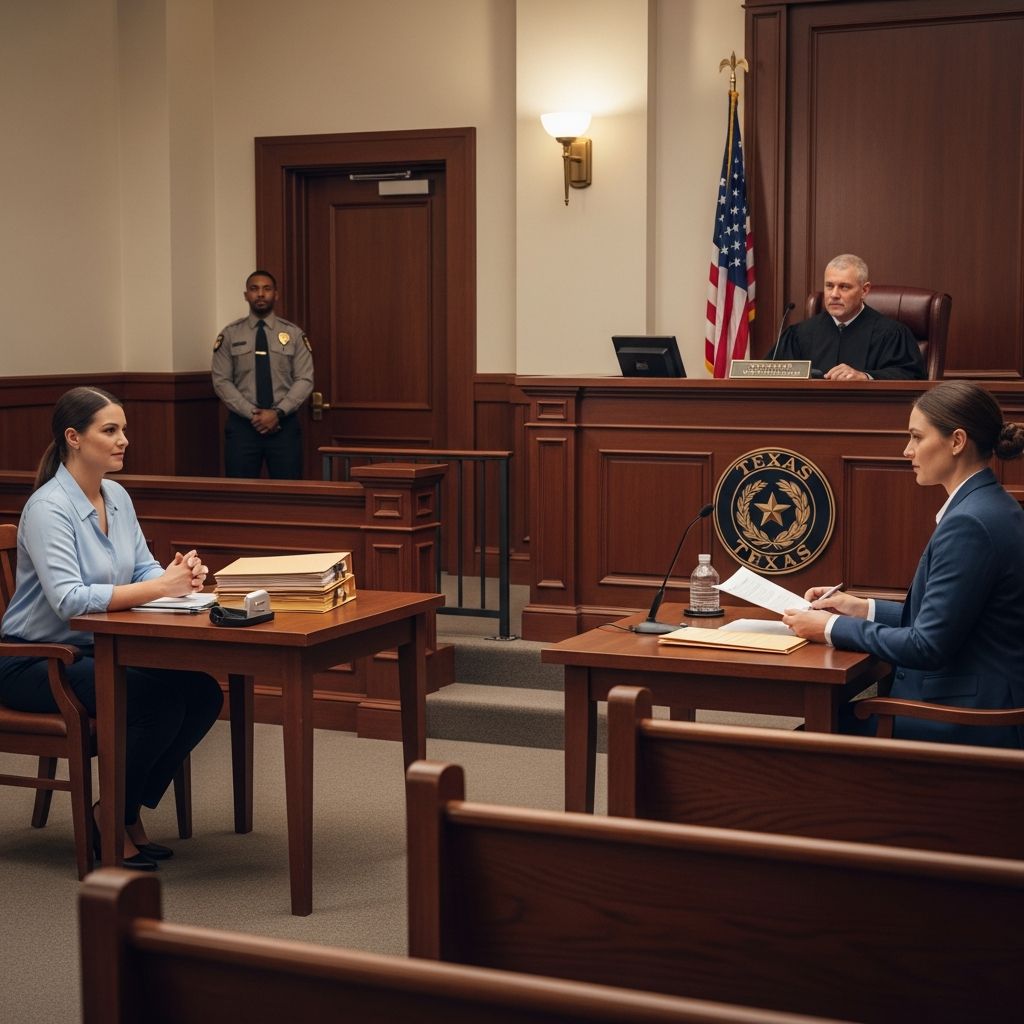
Texas small claims courts, operated through justice of the peace (JP) precincts, offer a streamlined way to resolve disputes involving money or property up to $20,000 without needing a lawyer. These courts prioritize accessibility, informality, and efficiency for everyday legal issues like unpaid debts, damaged goods, or service disputes.
Understanding Justice Courts in Texas
Justice courts serve as the entry point for minor civil matters across Texas counties. Unlike higher courts, they feature simplified rules under Texas Rules of Civil Procedure 500-507, allowing self-representation in most cases. This setup reduces costs and speeds up resolutions, making it ideal for individuals and small businesses.
Key benefits include no mandatory attorneys, flexible scheduling, and focus on facts over legal technicalities. However, judges enforce basic procedural standards to ensure fairness.
Cases Suitable for Small Claims
Justice courts handle monetary claims up to $20,000, excluding interest and court costs but including attorney fees if applicable. Common examples:
- Unpaid loans or invoices
- Breaches of contract for services or goods
- Property damage from accidents or negligence
- Return of security deposits (non-eviction)
- Civil penalties or statutory damages
Courts award money only; they cannot order specific actions like contract performance. Evictions and repairs fall under separate rules but share the same venue.
Financial Limits and Exclusions
The $20,000 cap applies statewide, covering principal damages plus recoverable fees. Statutory interest and filing costs are added post-judgment. Debt claims against consumers have nuances under Rule 508, but small claims follow standard Part V rules.
| Case Type | Max Amount | Includes | Excludes |
|---|---|---|---|
| Standard Small Claims | $20,000 | Attorney fees | Interest, court costs |
| Debt Claims | $20,000 | Fees if allowed | Same |
| Repair/Remedy | $20,000 | Damages | Non-monetary orders |
Note: Older local rules cited $10,000, but current statutes confirm $20,000.
Choosing the Correct Court Precinct
File in the JP precinct where the defendant resides, the event occurred, or services were provided. Multi-precinct counties require address lookup via county directories.
- Defendant in-state: Their county/precinct preferred.
- Out-of-state/unknown: Plaintiff’s precinct allowed.
- Businesses: Use registered DBA name from county clerk database.
Verify via county JP websites or Texas Judicial Branch tools.
Step-by-Step Filing Process
Prepare meticulously before visiting the court:
- Gather evidence: Contracts, receipts, photos, witness contacts, defendant details (full name, address).
- Contact JP court: Confirm precinct, fees ($46-$206 base, varying by defendants/location), forms, payment methods (cash, money order; no personal checks).
- Complete Petition: Use official form detailing claim, amount, facts. Available from Texas Justice Court Training Center.
- Pay fees: Online where available; waivers via Statement of Inability for low-income filers.
Courts issue citations post-filing for service.
Serving the Defendant Properly
Service is mandatory: court generates citation attached to petition. Options:
- Certified/registered mail with return receipt.
- Constable/sheriff personal delivery ($80+ fees).
- Avoid unverified methods to prevent dismissal.
Proof of service filed with court; defendant gets 14-20 days response time depending on method.
Defendant’s Response Options
Defendants may:
- Pay claim pre-hearing.
- File answer denying claims (fee ~$46).
- Counterclaim if under $20,000 (notify plaintiff).
- Request dismissal if improper venue/service.
No answer = default judgment possible.
Preparing for Your Hearing
Hearings are informal, bench trials unless jury requested. Arrive early with:
- All evidence organized.
- Witnesses (subpoena if needed, $10/day fee).
- Clear timeline of events.
Plaintiff proves claim by preponderance of evidence. Dress professionally; be concise.
Requesting a Jury Trial
File request and $25+ fee 14 days pre-trial. Jury of 6 decides facts; judge rules law. Rare in small claims due to simplicity.
Possible Court Outcomes
Judgments:
- For plaintiff: Amount owed, costs, interest (state rate ~5-18%).
- Dismissal or defendant win.
- Installment plans if requested.
Verbal rulings formalized in writing.
Enforcing Your Judgment
Courts don’t collect; plaintiff must:
- Abstract judgment for liens.
- Writ of execution for seizure (fees apply).
- Garnishment (attorney often needed; sue bank).
- Turnover orders for hidden assets.
Defendants ~30 days to pay; exemptions apply (e.g., homestead).
Appeal Rights and Process
Lose? Appeal to county court within 14-21 days with bond (or Statement of Inability). New trial de novo; attorney recommended.
Costs Breakdown Across Counties
| Item | Typical Fee | Notes |
|---|---|---|
| Filing (1 Defendant) | $46-$80 | In-precinct |
| Service | $80-$160 | Mail or constable |
| Jury | $25+ | 14 days pre-trial |
| Subpoena | $5+ witness $10/day | As needed |
| Execution/Writ | $5-$160 | Post-judgment |
Fees recoverable if you win.
Frequently Asked Questions
Can I sue a business in small claims?
Yes, use registered business name/DBA from county clerk. Serve at principal office.
Do I need a lawyer?
No, but complex cases or appeals may benefit. Courts allow attorneys.
What if defendant ignores service?
Alternative service (posting/publication) possible after affidavit; seek court order.
How long to collect judgment?
10 years, renewable. Act promptly.
Can I get fees waived?
Yes, file Statement of Inability proving indigency.
Resources for Self-Represented Litigants
Leverage free tools:
- TexasLawHelp.org forms/guides.
- State Law Library FAQs.
- TJCTC packets/subpoenas.
Consult county JP clerk pre-filing.
References
- General Information – Small Claims Cases — Texas State Law Library. 2023. https://guides.sll.texas.gov/small-claims
- How to Sue in Justice Court (Small Claims Court) — Texas Law Help. 2023. https://texaslawhelp.org/article/how-to-sue-in-justice-court-small-claims-court
- Small Claim Cases — Tarrant County Justice of the Peace. 2023. https://www.tarrantcountytx.gov/en/justice-of-the-peace-courts/justice-1/civil-cases/small-claim-cases.html
- Small Claims — Texas Law Help. 2023. https://texaslawhelp.org/money-debt/small-claims
- Small Claims Suit Application — Rusk County Justice Court. 2023. https://www.ruskcountytx.gov/upload/page/3644/docs/JP1/Small%20Claims%20Suit%20Application.pdf
Similar Articles








Read full bio of medha deb


