
Texas Senior Driving Regulations: What Seniors Need To Know
Essential guide to Texas driving rules for seniors, covering renewals, tests, restrictions, and safety measures for older motorists.
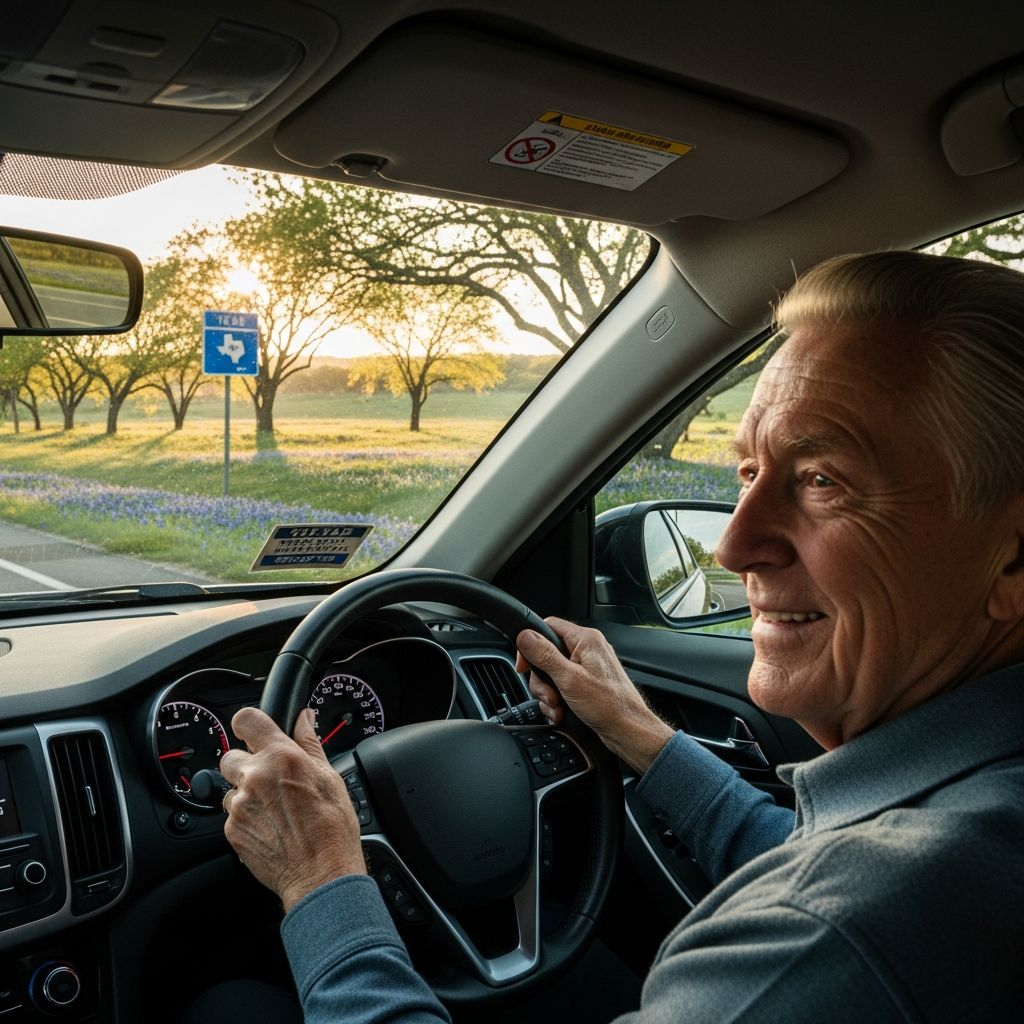
Texas enforces specific driving regulations for older adults to balance personal mobility with public road safety. These rules target drivers aged 65 and above, focusing on frequent license renewals, vision assessments, and condition-based evaluations rather than blanket age bans.
Age-Based License Renewal Schedules
Texas differentiates license renewal intervals by age to monitor fitness for driving more closely as individuals age. Drivers under 79 typically renew every six to eight years, but seniors face shorter cycles.
- Ages 65-78: Eligible for standard renewal processes, often every six years, with options for online or mail renewal if previously renewed in person.
- Ages 79-84: Must renew in person every eight years, ensuring direct oversight.
- Ages 85+: Required to renew in person every two years, with heightened scrutiny on abilities.
This graduated approach allows most seniors to maintain driving privileges while mandating periodic check-ins. In-person renewals demand appointments at Department of Public Safety (DPS) offices, proof of identity, U.S. citizenship or lawful presence, biometric data like thumbprints and signatures, a photograph, fee payment, and a vision exam.
Mandatory Vision Screenings for Older Drivers
Clear vision remains fundamental to safe driving, prompting Texas to require vision tests at every in-person renewal for seniors 79 and older. These exams evaluate acuity, depth perception, and peripheral vision to confirm road sign readability and hazard detection.
Younger drivers take this test only at select renewals, but seniors undergo it routinely. Failure may lead to corrective lens restrictions or further medical review, yet many pass and continue driving unrestricted.
| Age Group | Vision Test Frequency | Potential Outcomes |
|---|---|---|
| Under 79 | At in-person renewals (every 6-8 years) | Pass or restricted license |
| 79-84 | Every 8 years, in person | Full license or evaluation |
| 85+ | Every 2 years, in person | License with possible limits |
Medical Fitness and Driver Evaluations
Beyond vision, Texas assesses overall medical fitness through voluntary surrender options and triggered investigations. Seniors 65+ can proactively surrender licenses for ID cards without office visits, preserving identification while relinquishing driving rights.
No automatic driving or cognitive tests apply solely by age. However, DPS may request skills tests, road evaluations, or doctor reports if concerns arise from accidents, citations, family reports, or physician referrals. Conditions like dementia, epilepsy, or severe vision loss trigger reviews via the Texas Medical Evaluation Process.
This individualized system prioritizes evidence over assumptions, requesting additional info only when safety risks appear evident.
Common Driving Restrictions for Seniors
Restrictions tailor licenses to individual capabilities, enabling continued driving under safe parameters. DPS applies these based on test results or medical input.
- A Restriction: Corrective lenses mandatory.
- G Restriction: Daylight hours only, addressing night vision decline.
- K Restriction: Intrastate driving within Texas.
- P Restriction: Maximum 45 MPH speed limit.
These adjustments support independence; for instance, daylight limits accommodate common age-related glare sensitivity without full revocation.
Investigations into Unsafe Driving
DPS launches probes into potential unsafe drivers upon reports from doctors, family, law enforcement, or crash data. For seniors, this might involve medical records, re-tests, or hearings. Outcomes range from clearance to suspension or revocation if impairments prove substantial.
Vehicle registration and disability placards fall under the Texas Department of Motor Vehicles (TXDMV), separate from licensing.
Preparing for Renewal: Step-by-Step Process
Scheduling ahead eases the in-person mandate for 79+ drivers. Gather documents: current license, proofs, medical forms if requested. Expect wait times, so book via DPS online portal.
- Verify eligibility and age-based rules.
- Schedule appointment online or by phone.
- Collect identity, residency, and citizenship documents.
- Arrive for vision test, photo, biometrics, and payment ($25-$33 fees).
- Receive new license or restrictions on-site.
Streamlined systems now offer clearer guidance, reducing confusion.
Safety Tips Tailored for Senior Drivers
Proactive habits complement legal compliance. Regular eye exams, medication reviews for drowsiness, and defensive driving courses lower risks. Avoid peak traffic, use mirrors diligently, and consider adaptive vehicles with features like blind-spot monitors.
Texas emphasizes shared responsibility: all drivers, regardless of age, must meet safety standards.
Debunking Myths on 2026 Changes
Rumors of sweeping 2026 federal mandates for seniors—like nationwide cognitive tests, annual renewals for all 65+, or tech mandates—lack substantiation. Texas maintains state-specific rules without confirmed overhauls; viral claims exaggerate or fabricate.
Focus remains on existing DPS protocols, with no evidence of mandatory road tests for all seniors or nighttime bans.
Frequently Asked Questions
Do all Texas seniors need driving tests at renewal?
No, tests are not age-mandated. DPS requests them only for specific concerns like recent accidents or medical flags.
Can seniors renew licenses online after 79?
No, in-person renewal is required every cycle for ages 79+, including vision screening.
What happens if a senior fails the vision test?
Restrictions like glasses requirement or daylight-only may apply; further evaluation could follow.
Are there penalties for family reporting unsafe driving?
No penalties for good-faith reports; DPS investigates confidentially to protect public safety.
Can seniors get disabled parking placards through DPS?
No, contact TXDMV for placards based on medical certification.
Maintaining Mobility Beyond Driving
For those facing restrictions or choosing to stop, options include RideShare, senior shuttles, paratransit, or family assistance. Surrendering licenses grants fee-free ID cards, easing transitions.
Texas supports aging in place with these measures, fostering safe, independent lifestyles.
References
- Senior Drivers – Age 79 or Older — Texas Department of Public Safety. 2026 (accessed). https://www.dps.texas.gov/section/driver-license/senior-drivers-age-79-or-older
- Texas Driving Laws for Seniors and Older Drivers — Nolo. 2026 (accessed). https://www.nolo.com/legal-encyclopedia/texas-driving-laws-seniors-older-drivers.html
- Requirements — Texas Department of Public Safety. 2026 (accessed). https://www.dps.texas.gov/section/driver-license/requirements
- What Texas Senior Drivers Need to Know About License Requirements — DriversEd.com. 2026 (accessed). https://driversed.com/trending/what-texas-senior-drivers-need-know-about-license-requirements
- Senior Drivers Alert: New Texas Road Laws You Can’t Ignore in 2026 — YouTube (Texas Faultline). 2026-01-07. https://www.youtube.com/watch?v=SKFukX_eCCI
Similar Articles








Read full bio of Sneha Tete


