
The Impact of Citizen-Enforced Health Laws: Texas S.B. 8
Exploring the impacts and future of citizen-enforced laws like Texas's S.B. 8.
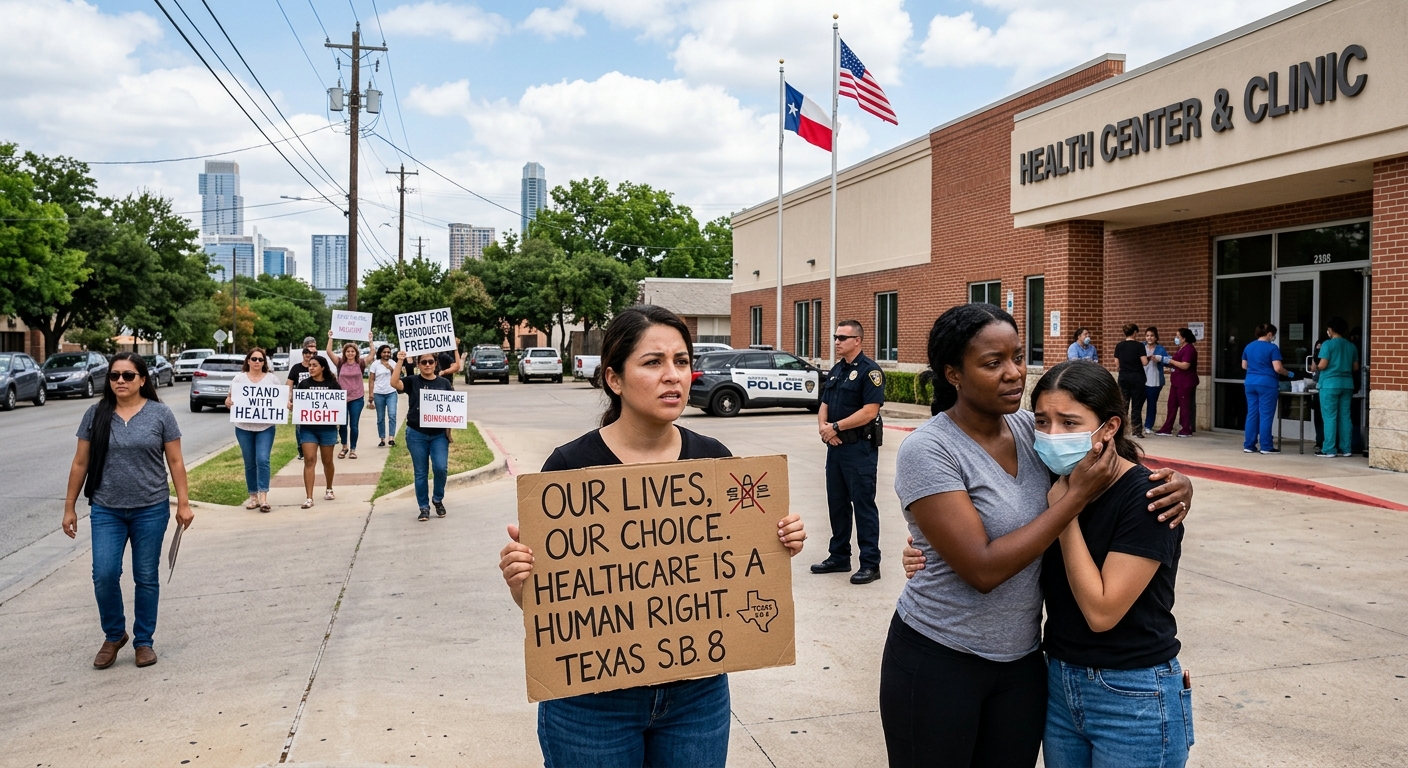
Introduction to a New Era of Legal Enforcement
The landscape of reproductive healthcare and legal enforcement in the United States experienced a seismic shift with the introduction of Texas Senate Bill 8 (S.B. 8). Enacted in September 2021, this legislation represented a profound departure from conventional state regulatory frameworks. Instead of relying on state officials to enforce its stringent prohibitions on abortion after the detection of embryonic cardiac activity—which typically occurs around five to six weeks of gestation—S.B. 8 outsourced enforcement entirely to private citizens . This unprecedented mechanism created a system of civil litigation that essentially bypasses traditional avenues for immediate federal judicial review.
The enactment of this law not only severely curtailed abortion access within the state’s borders but also served as a testing ground for a novel legal strategy that could potentially be applied to other constitutionally debated rights in the future. This comprehensive analysis explores the intricate mechanics of citizen-enforced legislation, its profound chilling effect on medical professionals, its disparate impact on marginalized communities, and what this regulatory blueprint signifies for the broader trajectory of civil rights and legal norms in America.
The Mechanics of Civil Enforcement: A Paradigm Shift
At the core of Texas S.B. 8 is a structural enforcement mechanism that fundamentally alters the historical relationship between the state, the legal system, and private citizens. Traditionally, state laws restricting healthcare access or governing public welfare are enforced by executive branch actors, such as police departments, district attorneys, or medical oversight boards. If an advocacy group or medical provider wishes to challenge the constitutionality of such a law, they typically file a lawsuit seeking a pre-enforcement injunction against the state officials tasked with its enforcement.
S.B. 8 deliberately circumvents this conventional legal pathway by expressly forbidding any state official from enforcing its provisions. Instead, it empowers any private individual—regardless of whether they reside in Texas or have any direct, personal connection to the patient or the event—to file a civil lawsuit against anyone who performs, induces, or “aids and abets” an abortion in violation of the law. This incredibly broad definition of “aiding and abetting” can encompass a wide array of activities, from a physician performing a medical procedure to a receptionist scheduling an appointment, or even a friend providing transportation to a healthcare facility.
The financial incentives embedded within the legislation are striking and heavily skewed. Successful plaintiffs are entitled to statutory damages of at least $10,000 per abortion, in addition to recovering their legal fees. Conversely, defendants who successfully defend themselves against these lawsuits are explicitly barred by the statute from recovering their own attorney’s fees. This asymmetrical cost structure is intentionally designed to maximize financial risk for healthcare providers and their support networks, effectively weaponizing the civil justice system to achieve a specific policy outcome. The result is a privatized surveillance network where the mere threat of financial ruin enforces compliance far more effectively than the threat of traditional state prosecution.
The Chilling Effect on Healthcare Providers
The immediate consequence of S.B. 8’s implementation was a profound chilling effect that rippled rapidly through the entire Texas healthcare system. Medical professionals, clinic administrators, and allied support organizations found themselves operating under an omnipresent threat of boundless, unpredictable civil liability. Because the law allows multiple individuals to file lawsuits concerning a single event, a clinic could theoretically face an endless barrage of legal actions, each requiring costly and time-consuming defenses.
Faced with the prospect of insurmountable legal fees and potential institutional bankruptcy, the vast majority of reproductive healthcare clinics in Texas were forced to immediately cease offering abortion services past the six-week mark . This compliance was not driven by state-issued cease-and-desist orders, but by the sheer unmanageability of the financial risk imposed by vigilante litigation. Physicians were placed in a harrowing ethical and legal bind, forced to weigh their professional commitment to comprehensive patient care against the devastating personal and institutional consequences of defending against civil lawsuits.
Furthermore, the chilling effect extended far beyond the immediate provision of abortion care; it disrupted the broader ecosystem of reproductive health. Routine maternal care, the management of complex ectopic pregnancies, and standard treatments for miscarriages became legally fraught territories. Medical providers reported operating in an environment of heightened anxiety and diagnostic hesitation, fearing that standard medical interventions for pregnancy complications could be misconstrued or intentionally targeted by opportunistic plaintiffs under the guise of an S.B. 8 violation. The breakdown of trust and the introduction of pervasive legal fear severely degraded the quality, timeliness, and accessibility of comprehensive obstetric and gynecological care across the state, fundamentally altering the foundational doctor-patient relationship.
Public Health Impacts and the Burden on Vulnerable Populations
The public health ramifications of shifting legal enforcement to a citizen-led model have been swift and severe, with the heaviest burdens falling predictably on the most vulnerable demographics. Research analyzing the immediate aftermath of S.B. 8’s implementation indicated a drastic reduction in facility-based abortion care within the state. For individuals with the financial means, flexible employment, and access to private transportation, the primary recourse became interstate travel—seeking care in neighboring jurisdictions.
However, this “travel safety valve” is largely inaccessible to low-income individuals, minors, undocumented immigrants, and those living in deep rural areas . For these specific populations, crossing state lines involves insurmountable logistical hurdles, including the exorbitant cost of travel, securing overnight accommodations, taking unpaid time off work, and arranging childcare. Consequently, the restrictive environment fosters deep health inequities. The inability to access timely reproductive care often forces individuals to carry unwanted or medically complex pregnancies to term, which intersects directly with broader maternal health crises.
Data from the Centers for Disease Control and Prevention (CDC) consistently highlights that maternal mortality rates in the United States—particularly among Black and Hispanic women—are alarmingly high compared to other developed nations . Policies that severely restrict access to comprehensive reproductive healthcare inevitably exacerbate the underlying social determinants of health that drive these persistent disparities. Furthermore, peer-reviewed medical studies published in the wake of S.B. 8 have pointed to deeply concerning trends, including noticeable increases in infant mortality and adverse neonatal outcomes within the state of Texas . When healthcare access is aggressively curtailed by the threat of vigilante civil litigation, the collateral damage is ultimately measured in declining public health metrics and deepening systemic inequalities.
Comparative Analysis: Traditional vs. Citizen-Enforced Legislation
To fully grasp the paradigm shift represented by laws like S.B. 8, it is helpful to compare this novel model directly with traditional statutory enforcement frameworks. The table below outlines the core functional differences between the two approaches.
| Feature | Traditional State Enforcement | Citizen-Enforced Civil Action (S.B. 8 Model) |
|---|---|---|
| Enforcing Authority | State officials (Police, District Attorneys, Medical Agencies) | Private citizens (regardless of connection to the event) |
| Primary Penalty | Criminal charges, public fines, loss of medical licenses | Statutory civil damages (minimum $10,000) |
| Judicial Review | Subject to pre-enforcement injunctions against the state | Difficult to enjoin pre-enforcement; lacks a clear state defendant |
| Legal Costs | Standard legal cost structures | Asymmetrical (defendants cannot recover fees even if they win) |
| Scope of Liability | Direct perpetrators of the prohibited act | Anyone who “aids or abets” the act in any capacity |
The Ripple Effect: A Blueprint for Future Legal Strategies
Perhaps the most significant long-term legacy of Texas S.B. 8 is not its specific subject matter, but rather the architectural blueprint it provides for future legislative drafting across the country. By successfully insulating a controversial policy from immediate federal judicial review, Texas lawmakers created a procedural mechanism that can theoretically be transposed onto virtually any highly polarized issue. Legal scholars and civil rights advocates have raised continuous alarms that the “bounty” model represents a profound, existential threat to the broader architecture of constitutional rights in the United States.
If states are permitted to bypass constitutional protections simply by delegating legal enforcement to private citizens, the fundamental guarantees of the legal system are inherently compromised. The strategy relies on overwhelming the target with distributed, decentralized litigation rather than proving a legal case on its constitutional merits. This tactic could easily be adapted by other states to target different rights depending entirely on the political leaning of the current legislature. For instance, a state could draft a law allowing private citizens to sue individuals who purchase specific types of firearms, or authorize civil actions against publishers who distribute controversial literature, or even target those who participate in certain types of public protests or environmental activism.
The proliferation of citizen-enforced laws threatens to balkanize the American legal landscape. It actively encourages a system where fundamental rights are no longer protected by uniform judicial standards, but are instead entirely contingent upon the willingness of private actors to weaponize the civil court system against their neighbors. This fundamentally destabilizes the predictability, fairness, and foundational integrity of the rule of law.
Future Trajectories and Policy Responses
In response to the novel, unprecedented challenges posed by citizen-enforced restrictions, defensive policy innovations have rapidly begun to emerge. Several states that prioritize reproductive healthcare access have enacted protective “shield laws.” These legislative measures are specifically designed to protect their own local medical providers and residents from extraterritorial civil litigation originating from states utilizing the Texas model. Shield laws typically prohibit local law enforcement from cooperating with out-of-state investigations related to legally protected healthcare and strictly forbid state courts from enforcing out-of-state civil judgments tied to laws like S.B. 8.
Furthermore, the focus of healthcare advocacy has progressively shifted toward expanding access to telehealth and medication-based interventions, though these too remain fiercely contested legal battlegrounds. The future of healthcare access in the United States appears increasingly fragmented, defined largely by a chaotic patchwork of conflicting state laws. As the legal system continues to grapple with the profound procedural anomalies introduced by civil enforcement mechanisms, the ultimate resolution will likely require definitive federal judicial intervention or sweeping national legislation to clarify the rigid boundaries of state power and private litigation. Until then, the legislative model established by S.B. 8 remains a potent, highly disruptive force in American jurisprudence and public health administration.
Frequently Asked Questions (FAQs)
- What makes Texas S.B. 8 fundamentally different from previous healthcare restrictions?
Unlike traditional laws enforced by state authorities or police, S.B. 8 strictly forbids state officials from enforcing it. Instead, it exclusively authorizes private individuals to file civil lawsuits against anyone who aids or abets an abortion after embryonic cardiac activity is detected. This specific design makes the law exceptionally difficult to challenge in federal court prior to its actual enforcement.
- Who exactly can be sued under the S.B. 8 civil enforcement model?
The law’s language is intentionally broad, targeting anyone who “aids or abets” the procedure. This sweeping definition can include physicians, nurses, clinic staff, organizations providing financial assistance for the procedure, or even private individuals who merely provide transportation or directions to a clinic.
- What are the specific financial risks for those sued under this law?
Plaintiffs who win their cases are entitled to statutory damages of at least $10,000 per violation, plus attorney’s fees. Most importantly, if the defendant wins the case, they are barred by the statute from recovering their own legal fees, creating immense, non-recoverable financial risk for healthcare providers.
- How has this legislation impacted maternal and public health in Texas?
The law has led to a massive reduction in available reproductive healthcare facilities within the state. Research indicates this creates disproportionate hardships for low-income and rural populations, exacerbating existing maternal health disparities and increasing risks for adverse health outcomes due to severely delayed or completely denied care.
- Could this “bounty” mechanism be utilized for issues other than reproductive health?
Yes. Legal experts aggressively warn that this structural blueprint could easily be adapted by other states to target a wide variety of constitutional rights. Issues such as gun ownership, freedom of speech, or other highly contested political topics could be targeted by deputizing private citizens to enforce the state’s policy preferences through civil courts.
References
- 87(R) SB 8 – Enrolled Version — Texas Legislature Online. 2021-09-01. https://capitol.texas.gov/BillLookup/Text.aspx?LegSess=87R&Bill=SB8
- Maternal Mortality Rates in the United States, 2022 — Centers for Disease Control and Prevention (CDC). 2024-05-01. https://www.cdc.gov/nchs/data/hestat/maternal-mortality/2022/maternal-mortality-rates-2022.htm
- Changes in Facility-Based Abortion Care Among Texas Resident Minors and Young Adults After a 2021 Abortion Ban — American Journal of Public Health (AJPH). 2024-02-11. https://ajph.aphapublications.org/doi/10.2105/AJPH.2023.307557
- Texas ban on abortion in early pregnancy associated with rise in infant deaths — JAMA Pediatrics. 2024-06-24. https://jamanetwork.com/journals/jamapediatrics/fullarticle/2819785
Similar Articles








Read full bio of Sneha Tete


