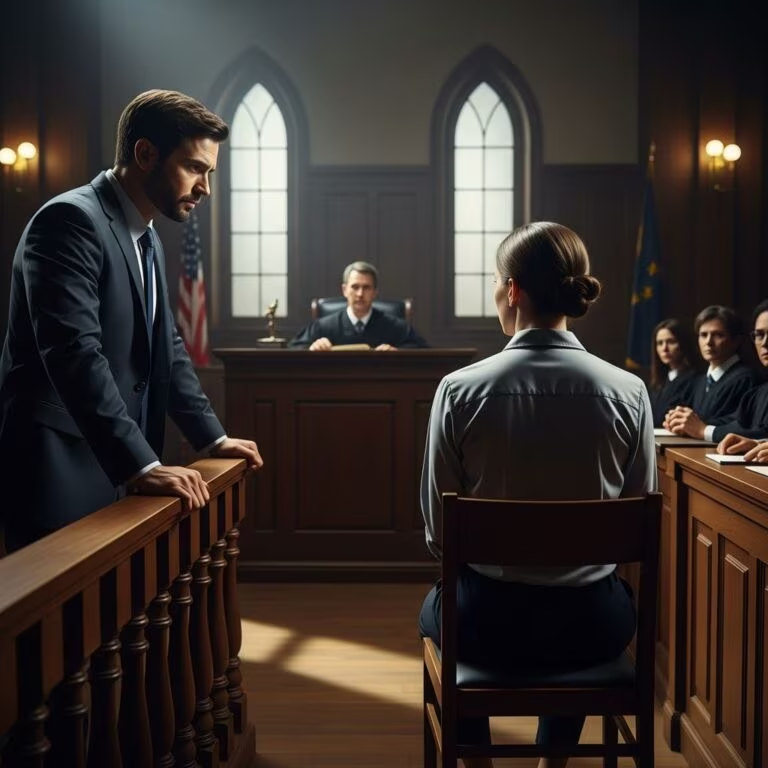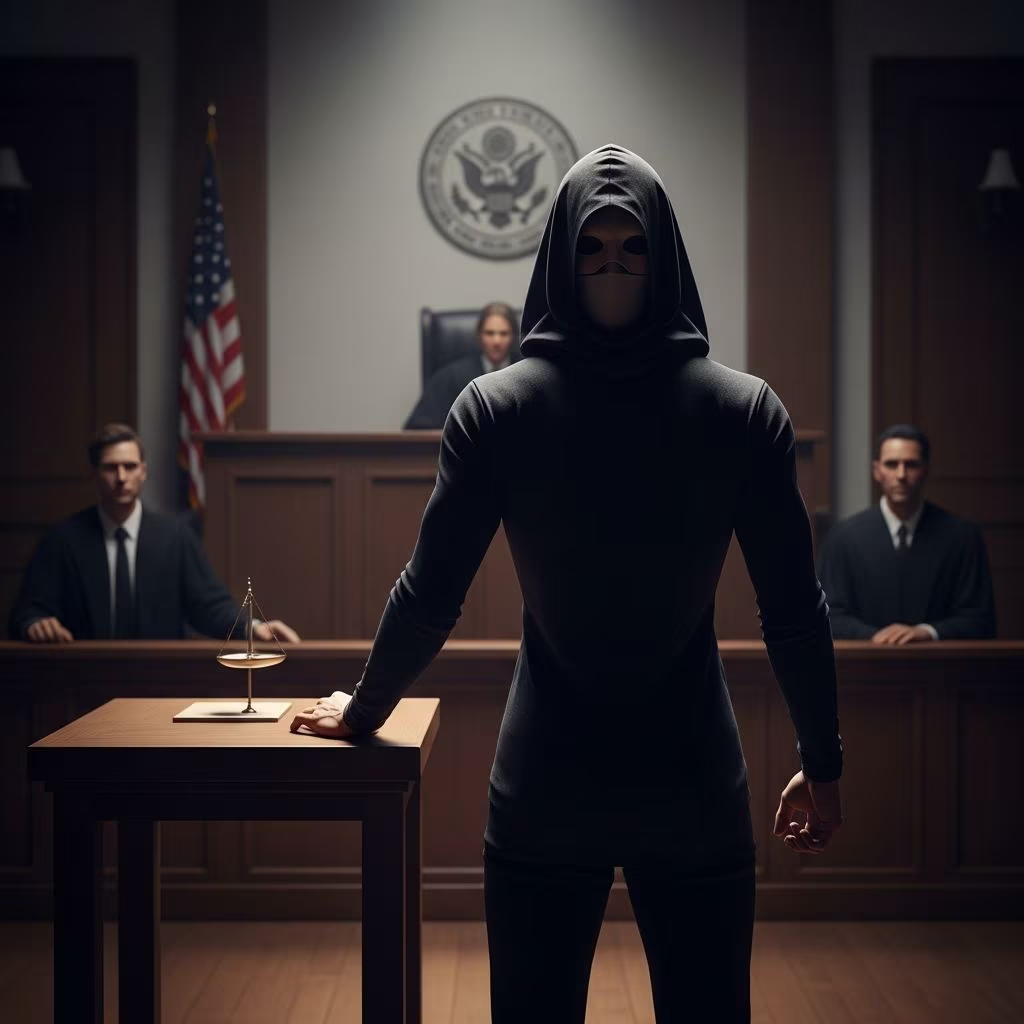
In criminal trials, the tension between protecting vulnerable witnesses and upholding a defendant’s right to confront accusers often leads to innovative courtroom measures. One such measure is permitting witnesses to testify while disguised, a practice that raises profound questions about fairness, perception, and constitutional guarantees. This approach aims to shield individuals from retaliation while ensuring their testimony reaches the jury, but it must navigate strict legal thresholds to avoid prejudicing the defense.
Constitutional Foundations of Witness Confrontation
The **Sixth Amendment** to the U.S. Constitution guarantees that “in all criminal prosecutions, the accused shall enjoy the right… to be confronted with the witnesses against him.” This Confrontation Clause ensures defendants can directly challenge testimony through cross-examination, observing the witness’s demeanor for signs of credibility, such as facial expressions or body language. Courts have long interpreted this to require face-to-face encounters, emphasizing the psychological impact of confronting an accuser directly.
However, exceptions emerge when witness safety is at stake. The Supreme Court’s rulings, like Coy v. Iowa and Maryland v. Craig, underscore that while physical presence is preferred, alternatives like screens or remote testimony may be justified under narrow circumstances, such as preventing trauma to child victims. Disguises represent a middle ground, altering appearance without fully severing the confrontation.
When Courts Permit Disguised Testimony
Judicial approval for disguises hinges on demonstrated threats to the witness. Factors include prior intimidation attempts, the nature of the crime (e.g., organized crime or gang-related cases), and evidence of potential harm. Minimal alterations, such as wigs, fake facial hair, or non-reflective sunglasses, have been upheld because they preserve the jury’s ability to assess demeanor.
For instance, in cases involving informants, courts have allowed subtle disguises like mustaches and wigs, ruling they do not violate confrontation rights since cross-examination remains effective and jurors can still evaluate truthfulness. More extensive coverings, however, like full masks or hats obscuring the face, risk reversal on appeal for impeding demeanor observation.
- Minimal disguises approved: Sunglasses, wigs, facial hair alterations.
- Rejected disguises: Full-face masks, turned-up collars combined with hats.
- Key test: Does the disguise allow jury assessment of emotions and expressions?
Balancing Safety and Presumption of Innocence
A core concern is the disguise’s impact on the jury’s perception. Allowing a witness to testify anonymously or altered could imply the defendant is dangerous, subtly eroding the presumption of innocence—a pillar of due process under the Fifth and Fourteenth Amendments. Prosecutors must prove the necessity without broadcasting guilt.
Trial judges conduct evidentiary hearings to weigh risks. If the prosecution shows specific threats, such as witness tampering under 18 U.S.C. § 1512 or state laws like California Penal Code § 136.1, disguises may proceed. These laws criminalize intimidation, bribery, or harassment, with penalties up to 20 years federally, underscoring the seriousness of retaliation fears.
| Factor | Supports Disguise | Risks Reversal |
|---|---|---|
| Threat Evidence | Documented tampering attempts | Vague or speculative fears |
| Disguise Extent | Partial (e.g., wig only) | Obstructive (e.g., mask) |
| Jury Impact | Neutral instructions given | Implies defendant danger |
| Cross-Examination | Fully preserved | Hindered by concealment |
Judicial Guidelines and Precedents
Federal and state courts apply a necessity standard: disguises are permissible if no less restrictive means suffice and the defendant’s rights remain intact. The Federal Rules of Evidence, particularly Rule 611, empower judges to control interrogation for safety while preventing harassment. Rule 608 further allows credibility challenges via reputation evidence, unaffected by minor disguises.
Appellate decisions draw lines: the Eleventh Circuit in United States v. Yates rejected extensive disguises for blocking demeanor cues. Conversely, New York courts approved wigs and fake beards where security was paramount. In informant cases, the Sixth Amendment holds as long as physical presence and cross-examination occur.
California’s rules on witness immunity (Rule 5.548) complement this by compelling testimony while protecting against self-incrimination, sometimes paired with anonymity measures. Yet, no federal constitutional bar exists outright, leaving discretion to trial courts.
Practical Implications for Defendants and Prosecutors
For defendants, challenging a disguise involves motions to suppress or for mistrial, arguing prejudice. Success depends on proving the measure undermined cross-examination or biased the jury. Defense attorneys scrutinize threat evidence, often cross-examining law enforcement on alternatives like relocation via U.S. Marshals witness protection.
Prosecutors bear the burden, filing motions with affidavits detailing risks. They may request limiting instructions: “The witness’s appearance does not reflect on the defendant’s character.” Empirical studies suggest juries focus more on testimony content than visuals, but disguises can plant subconscious doubt.
In high-stakes cases like RICO prosecutions, disguises enable critical testimony from cooperators, tipping scales toward conviction without compromising core rights.
Alternatives to Physical Disguises
Courts increasingly explore non-visual protections:
- Remote testimony: Two-way video under Craig standards, requiring necessity findings.
- Screening: One-way screens shielding witnesses from defendants, upheld for child victims.
- Anonymity orders: Pseudonyms and sealed identities pre-trial.
- Enhanced security: Bailiffs, metal detectors, without altering appearance.
These preserve confrontation better than heavy disguises, aligning with Scalia’s emphasis in Crawford v. Washington on live, in-person testimony.
Frequently Asked Questions (FAQs)
Q: Does a disguised witness violate the Sixth Amendment?
A: Not automatically; minimal disguises are allowed if they don’t impair cross-examination or demeanor assessment, per case law.
Q: What threats justify a disguise?
A: Specific evidence of tampering, intimidation, or retaliation risk, such as under 18 U.S.C. § 1512.
Q: Can juries be instructed on disguises?
A: Yes, courts often give neutral instructions to prevent prejudice against the defendant.
Q: Are full masks ever permitted?
A: Rarely; they typically fail constitutional scrutiny for blocking facial cues.
Q: How does witness tampering law apply?
A: It criminalizes efforts to influence testimony, strengthening cases for protective measures like disguises.
Ethical and Policy Considerations
Beyond legality, disguises spotlight broader reforms. Advocacy groups push for federal standards on witness protection, arguing ad hoc rulings breed inconsistency. Critics warn of “trial by disguise,” where optics favor prosecution in danger-laden cases. Policymakers debate expanding programs like the Witness Security Program, which relocates thousands annually without courtroom theatrics.
Empirical data from the Department of Justice shows retaliation fears deter 20-30% of witnesses in violent crime cases, justifying safeguards. Yet, overuse risks eroding public trust in verdicts. Future Supreme Court guidance could clarify boundaries, perhaps extending Craig to adult witnesses under exceptional threats.
In sum, disguised testimony embodies the law’s delicate equilibrium: safeguarding truth-seekers while honoring accusatory confrontation. As threats evolve—from gangs to cyber-harassment—courts must adapt without forsaking foundational principles.
References
- Sixth Amendment Violated If Informant Testifies in Disguise? — Greg Hill & Associates. Accessed 2026. https://www.greghillassociates.com/sixth-amendment-violated-if-informant-testifies-in-disguise.html
- Criminal Defense: Can A Witness Testify Anonymously? — Boatwright Legal. Accessed 2026. https://boatwrightlegal.com/criminal-defense-witness-anonymous/
- The Disguised Witness and Crawford’s Uneasy Tension with Craig — Drake Law Review. 2015-06-01. https://drakelawreview.org/wp-content/uploads/2015/06/irvol58-2_mcallister.pdf
- Rule 5.548. Granting immunity to witnesses — California Courts. Accessed 2026. https://courts.ca.gov/cms/rules/index/five/rule5_548
- 28 USC App, FEDERAL RULES OF EVIDENCE, ARTICLE VI — U.S. House of Representatives. Accessed 2026. https://uscode.house.gov/view.xhtml?path=%2Fprelim%40title28%2Ftitle28a%2Fnode232%2Farticle6&edition=prelim
- How Does Witness Tampering Impact a Criminal Case? — Zachary McCready Law. Accessed 2026. https://zacharymccreadylaw.com/blog/how-does-witness-tampering-impact-a-criminal-case/