
Tenant Repair-and-Deduct Rights Explained
Learn when and how tenants may pay for essential repairs themselves, legally deduct the cost from rent, and avoid eviction risks.
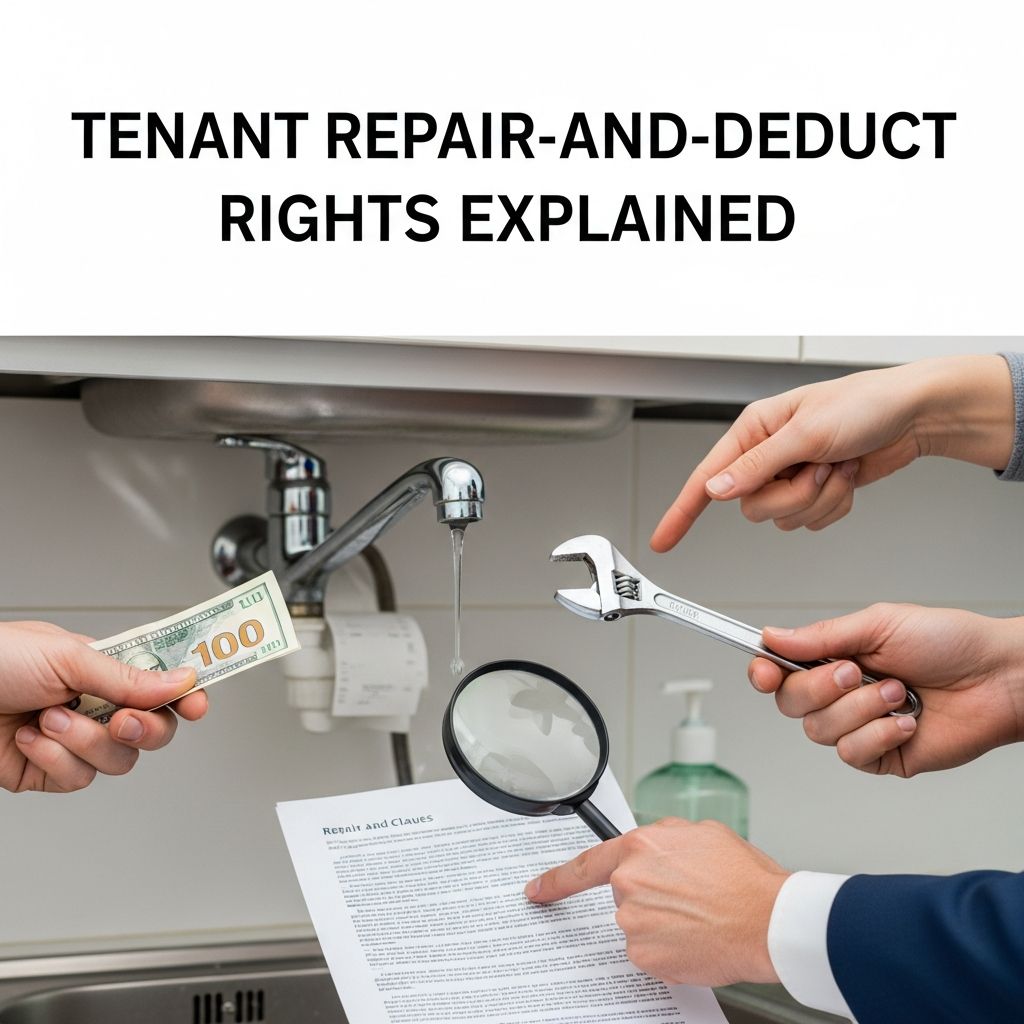
Understanding the Tenant Repair-and-Deduct Remedy
In many places, tenants have a limited right to pay for certain essential repairs themselves and then deduct the cost from future rent. This remedy is often called “repair and deduct”. It is intended as a last resort when a landlord fails to fix serious problems that affect health, safety, or basic habitability, such as lack of heat, major leaks, or unsafe wiring.
Because misusing repair and deduct can lead to rent arrears and possible eviction, tenants should understand when it is allowed, what procedures must be followed, and which repairs qualify under local law.
Legal Background: Landlord Repair Duties and Habitability
Most residential tenancies are governed by a mix of statutes, building codes, and common law that obligate landlords to keep rental housing safe and habitable. These obligations often include:
- Maintaining structural elements such as roofs, walls, floors, and windows in sound condition.
- Ensuring essential services like heat, hot water, electricity, and plumbing are functional and safe.
- Complying with health, fire, and building codes that affect tenant safety.
When landlords ignore these duties and refuse to perform necessary repairs, several legal tools may be available to tenants, including reporting code violations, suing for damages, or using a repair-and-deduct strategy where permitted.
What Is “Repair and Deduct” in Practice?
The repair-and-deduct remedy allows a tenant to:
- Give the landlord proper notice of a serious repair problem.
- Allow a reasonable time for the landlord to fix it.
- Hire a qualified contractor if the landlord does nothing.
- Pay the contractor directly.
- Subtract the actual repair cost from future rent payments, up to limits set by law.
In many jurisdictions, this is not a general right to withhold rent. Instead, it is a narrow, structured remedy allowed only when specific conditions are met and only for certain types of repairs.
Typical Eligibility Requirements
Although details differ by jurisdiction, several common requirements usually apply before a tenant may rely on repair and deduct:
| Requirement | What It Usually Means |
|---|---|
| Serious disrepair | The problem significantly affects health, safety, or basic living conditions (for example, no heat, major leaks, unsafe wiring). |
| Landlord’s legal duty | The issue is something the landlord is legally responsible for, not repairs the tenant agreed to handle. |
| Proper notice | The tenant has notified the landlord (ideally in writing), clearly describing the problem and requesting repair. |
| Reasonable time to act | The landlord was given a fair opportunity to carry out the repairs but failed to do so. |
| Reasonable cost | The tenant chooses a cost-effective contractor and does not overpay; some laws limit the amount that can be deducted or the number of times per year. |
Step-by-Step: How Tenants Commonly Use Repair and Deduct
Guidance from housing organizations and legal aid groups often sets out a careful, multi-step process to minimize the risk that a landlord will treat the deduction as unpaid rent.
1. Document the Problem
Before contacting the landlord, tenants should gather evidence:
- Photographs or video of the defect (for example, mold, leaks, or broken windows).
- Dates when the problem first appeared and any prior complaints.
- Copies of relevant lease clauses that confirm the landlord’s responsibility.
Good documentation can be crucial if there is later a dispute about whether the issue was serious or how long it existed.
2. Give Written Notice and Time to Repair
Many legal guides advise tenants to notify their landlord in writing, even if they have already complained verbally. The written notice should:
- Describe the repair problem clearly and specifically.
- Explain how it affects health, safety, or habitability (for example, no hot water, exposed wiring).
- Request that the landlord fix the issue by a reasonable deadline.
- Be kept on file by the tenant, with proof of when it was sent.
The “reasonable time” to repair depends on the urgency. A lack of heat in winter may justify a shorter deadline than minor cosmetic damage.
3. Warn the Landlord You Will Arrange Repairs
If the landlord still does not act, guidance from tenant advocacy organizations typically recommends sending a second letter making it clear that:
- The landlord is in breach of their repair obligations.
- The tenant intends to hire a contractor if repairs are not done by a final date.
- The cost of repairs will be claimed back, including by deduction from rent if necessary.
This warning letter gives the landlord a final opportunity to perform the work and reduces later arguments that the tenant acted prematurely.
4. Obtain and Share Repair Estimates
Best practice is usually to obtain several estimates from reputable contractors. In some common law guidance, tenants are advised to:
- Request at least two or three written quotes.
- Send copies of those estimates to the landlord.
- Offer the landlord a brief further period to comment or to choose a contractor and do the job themselves.
Choosing the lowest reasonable estimate helps demonstrate that the tenant acted responsibly and did not overspend.
5. Hire a Qualified Contractor and Keep Records
When the tenant proceeds with the work, they should:
- Use an insured, competent tradesperson.
- Avoid any unnecessary or luxury improvements that go beyond the essential repair.
- Keep copies of the contract, invoice, and proof of payment.
Tenants can be held responsible for shoddy workmanship or damage caused by the contractor they chose, so careful selection matters.
6. Request Reimbursement Before Deducting Rent
Before unilaterally reducing rent, many legal aid organizations advise tenants to give the landlord one last chance to reimburse the repair cost directly:
- Send the landlord a copy of the invoice.
- Ask for repayment by a clear date.
- Explain that, if not repaid, the cost will be deducted from upcoming rent and specify which months will be affected.
If the landlord fails to reimburse, the tenant may then deduct the documented amount from future rent, following any statutory limits on how much can be deducted at one time.
What Types of Repairs Usually Qualify?
Repair and deduct is intended for necessary repairs, not for upgrades or cosmetic improvements. Typical examples include:
- Restoring heat, hot water, or electricity when they have failed.
- Fixing serious leaks that risk structural damage or mold.
- Repairing broken locks or windows that compromise security.
- Addressing unsafe wiring or other urgent safety hazards.
By contrast, tenants generally cannot use repair and deduct to pay for:
- Remodeling, redecorating, or adding features not previously provided.
- Upgrading functioning systems to higher standards (for example, luxury fixtures).
- Routine tasks the lease clearly assigns to tenants, such as lawn care in some agreements.
Limitations and Risks of Repair and Deduct
Although repair and deduct can be quicker and cheaper than going to court, it has significant limits and potential risks for tenants.
1. No General Right to Withhold Rent
In many jurisdictions, tenants do not have a general right to simply stop paying rent because repairs have not been done. Official guidance in some countries states clearly that withholding rent outright may lead to possession proceedings and possible eviction. Repair and deduct, where allowed, is a narrow exception and must be used exactly as the law requires.
2. Upfront Cost Falls on the Tenant
One major limitation is that tenants generally must:
- Pay the contractor themselves first.
- Wait to recover the money through reimbursement or future rent deductions.
This means repair and deduct is most practical for relatively small-scale repairs that a tenant can afford to pay for upfront.
3. Possible Impact on Benefit Payments
Housing rights organizations note that tenants whose rent is paid directly via housing benefit or similar schemes may face complications if they try to use rent for repairs. In some systems, benefit payments can be suspended while disputes are resolved, leaving tenants exposed.
4. Risk of Eviction if Procedure Is Not Followed
If a landlord claims there are rent arrears, the tenant’s best defense is to show that every step in the correct procedure was followed and that deductions match actual repair costs. Skipping steps, failing to send notices, or deducting too much can weaken that defense and increase eviction risks.
Landlord Perspective: Repair Costs and Tax Treatment
Landlords who comply promptly with repair obligations avoid most repair-and-deduct disputes. From a financial standpoint, many jurisdictions allow landlords to treat legitimate repair expenses as deductible costs when calculating rental income for tax purposes.
Official tax guidance in some countries distinguishes between:
- Repairs and maintenance that keep a property in its existing condition (usually deductible in the year incurred), and
- Capital improvements that enhance or significantly upgrade the property (often recovered over time through depreciation).
Where tenants contribute to repair costs that the landlord was otherwise responsible for, tax authorities may treat those payments as part of the landlord’s rental income, with the landlord still able to deduct the full repair expense separately.
Alternatives to Repair and Deduct
Because repair and deduct can be risky when misused, tenants should consider other options that may be safer or more effective:
- Negotiation: Communicate directly with the landlord about timing, cost, and access for contractors.
- Local housing or code enforcement: Report serious hazards to local authorities empowered to inspect and enforce housing standards.
- Rent abatement or damages through court: Some tenants may seek a court order reducing rent or awarding compensation for distress or damage caused by disrepair.
- Mediation: Many communities offer landlord–tenant mediation services to help resolve disputes without formal litigation.
Practical Tips for Tenants Considering Repair and Deduct
Tenants who are thinking about using rent to cover repair costs can reduce legal risk by following these best practices drawn from official and reputable guidance:
- Always keep paying any portion of rent not related to the repair if possible, to minimize arrears.
- Never deduct more than the documented, reasonable cost of the repair.
- Keep copies of all communications, estimates, invoices, and receipts.
- Seek independent advice from a lawyer, legal aid clinic, or tenant organization before withholding any rent.
- Check whether your jurisdiction has specific statutes that set dollar limits, time limits, or notice requirements for repair and deduct.
Frequently Asked Questions (FAQs)
Can I always withhold rent if my landlord refuses to make repairs?
No. In many legal systems, tenants do not have a general right to stop paying rent because repairs are not done. Official guidance warns that withholding rent outright can lead to possession action and eviction. Repair and deduct, where available, is a specific remedy that must follow strict procedures.
Does repair and deduct cover cosmetic or luxury improvements?
Generally not. Repair and deduct is typically limited to necessary repairs that restore the property to a safe and habitable condition. Cosmetic changes or upgrades go beyond basic repair and usually cannot be charged against rent.
What if my lease says I cannot use rent to pay for repairs?
In some jurisdictions, terms that attempt to prevent tenants from using lawful remedies, such as offsetting certain repair costs, may be considered unfair and not legally binding. However, enforceability depends on local law, so tenants should obtain legal advice before relying on this argument.
How much can I deduct from my rent?
Some laws limit the amount a tenant can deduct at one time or per year, or restrict repair and deduct to smaller-scale works. Other places rely on general concepts of reasonableness. Because the rules vary widely, tenants should consult local statutes or legal aid resources before deducting any amount.
Should I talk to a lawyer before using repair and deduct?
Yes, it is strongly advisable. Repair and deduct can protect tenants from unsafe conditions, but if used incorrectly it can create rent arrears that landlords may use as grounds for eviction. A lawyer or qualified housing adviser can explain how local law applies and help you follow the correct procedure.
References
- Tenant deducts from rent or offsets rent arrears because of disrepair — Shelter England. 2021-03-19. https://england.shelter.org.uk/professional_resources/legal/housing_conditions/legal_remedies_for_disrepair/tenant_deducts_from_rent_or_offsets_rent_arrears_because_of_disrepair
- Withholding rent because repairs haven’t been done — Citizens Advice. (Accessed 2025). https://www.citizensadvice.org.uk/housing/repairs-and-housing/repairs-and-housing-conditions/getting-your-landlord-to-do-repairs/renting-from-the-council-or-a-housing-association/withholding-rent-because-repairs-havent-been-done/
- Income Tax: Work out your rental income when you let property — HM Revenue & Customs. 2024-01-10. https://www.gov.uk/guidance/income-tax-when-you-rent-out-a-property-working-out-your-rental-income
- PIM2040 – Deductions: repairs: other rules — HM Revenue & Customs Property Income Manual. 2021-03-31. https://www.gov.uk/hmrc-internal-manuals/property-income-manual/pim2040
- A guide to landlords’ and tenants’ property repair responsibilities — Total Landlord Insurance. 2023-06-15. https://www.totallandlordinsurance.co.uk/knowledge-centre/landlords-and-tenants-property-repair-responsibilities
Similar Articles








Read full bio of medha deb


