
Tenant Associations: Power, Rights, and How to Organize
Learn how tenant associations transform isolated renter complaints into organized, lawful, and effective collective housing advocacy.
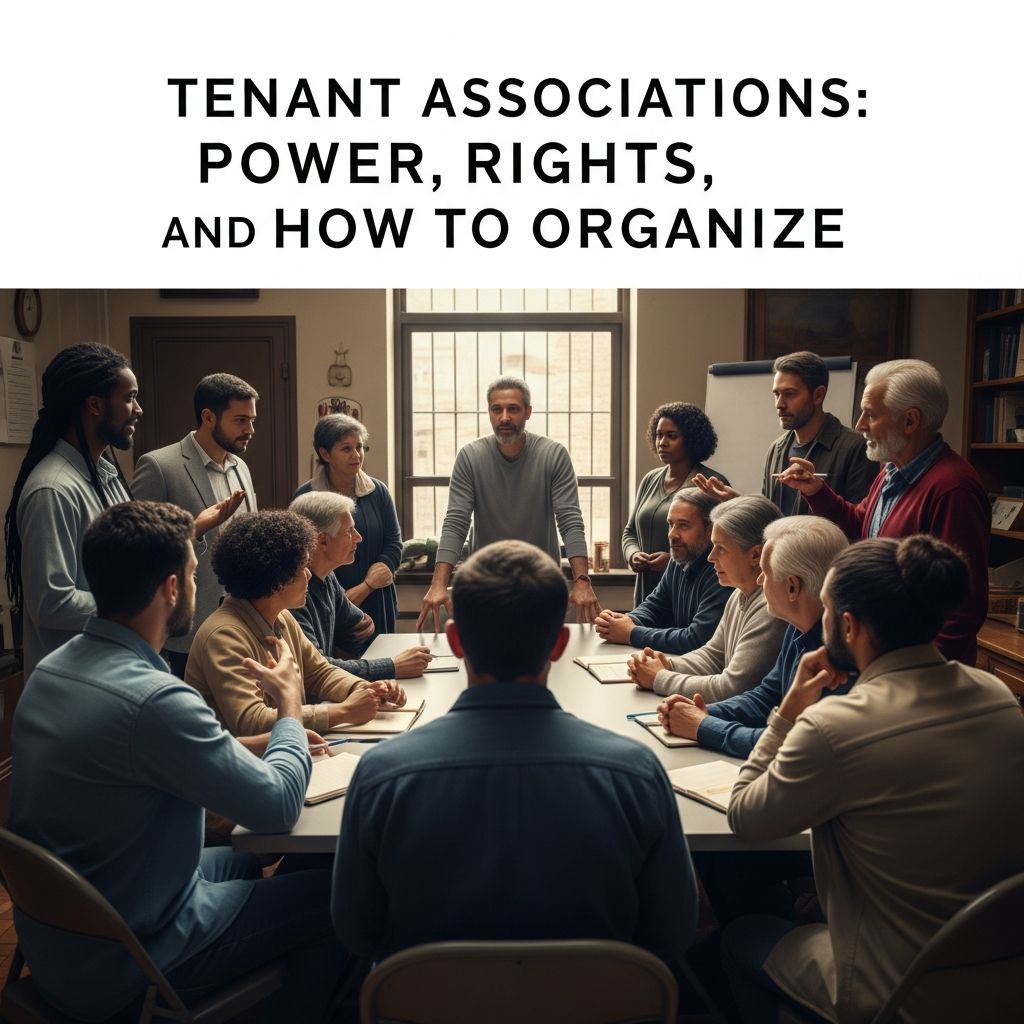
Tenant associations transform individual renters into a unified voice that can negotiate fairly with landlords, demand legal compliance, and improve day-to-day living conditions. In many jurisdictions, recognized tenant or renters’ associations also gain specific statutory rights, such as consultation on rent levels, service charges, and building management decisions.
What Is a Tenant Association?
A tenant association (sometimes called a renters’ association or tenants’ and residents’ association) is a group formed by people who rent homes in the same building, complex, or community. The association’s purpose is to represent renters’ shared interests on issues such as rent increases, maintenance, safety, and building management.
Unlike informal chats between neighbors, a tenant association usually has:
- An agreed name and purpose
- Members (tenants who join voluntarily)
- Elected officers, such as a chair and secretary
- Basic rules for meetings and decision-making
In some regions, law or policy recognizes such groups formally and grants them defined rights to information, consultation, and participation in housing decisions.
Why Tenant Associations Matter
On their own, tenants can struggle to get timely repairs, fair treatment, or clear answers about charges and policies. A well-run association changes the balance of power by combining information, collective bargaining, and legal protection.
Key Benefits for Renters
- Stronger bargaining power to negotiate over rent increases, lease terms, and service levels, compared with isolated individual complaints.
- Improved communication channels with landlords or managing agents, making it easier to raise systemic issues and agree on solutions.
- Better living conditions through coordinated pressure for repairs, safety measures, and maintenance standards.
- Shared legal knowledge, including access to legal aid, housing advice, and training on rights and responsibilities.
- Community support, social connection, and practical help between neighbors during disputes or emergencies.
Typical Issues Tenant Associations Address
- Chronic disrepair, such as leaks, mold, or broken heating
- Excessive or unclear service charges and fees
- Noise, anti-social behavior, or safety concerns in common areas
- Security issues, like poor lighting, broken entry systems, or vandalism
- House rules, building policies, or management changes that affect tenants
- Consultation on major works, renovations, or redevelopment plans
Recognized vs. Informal Tenant Associations
Many laws draw a distinction between an informal group of tenants and a recognized tenant association. Recognition can be granted by a landlord or by an authorized tribunal or housing body, depending on local law.
| Feature | Informal Tenant Group | Recognized Tenant Association |
|---|---|---|
| Legal status | No special legal recognition | Formally recognized under applicable housing rules |
| Right to information | Members rely mainly on their individual rights | Association often has direct rights to inspect accounts, charges, and documents |
| Consultation rights | Landlord may consult but is not always obliged | Landlord may be legally required to consult on major works, service charges, and management changes |
| Influence on decisions | Depends on voluntary cooperation by landlord | Statutory or contractual influence on key housing and management decisions |
| Perception by authorities | Less formal voice in policy or regulatory discussions | May be invited to participate in inspections, audits, or policy forums |
Recognition usually requires meeting membership thresholds, demonstrating that the association is democratic, and proving it represents a substantial proportion of eligible tenants.
Core Functions of a Tenant Association
Although each association is unique, most effective groups share several core functions that make them valuable to renters and authorities alike.
1. Representing Tenants’ Collective Interests
The association acts as a unified voice on matters that affect the building or estate as a whole, such as:
- Rent review discussions or proposals
- Large-scale repairs and capital works
- Changes in managing agents or ownership
- Building-wide policy changes, like pet rules or parking
2. Securing Transparency Around Charges
Where the law allows, a recognized association can request detailed information about service charge accounts, insurance arrangements, and other shared costs.
- Review annual summaries of expenditure for accuracy and fairness
- Inspect receipts, invoices, and supporting documents
- Suggest alternative contractors or challenge excessive quotes
3. Improving Day-to-Day Communication
Instead of many tenants sending uncoordinated complaints, the association creates a structured channel:
- Regular meetings with building management or landlord representatives
- Agreed timelines for responses on repairs and policy issues
- Newsletters, online groups, or notice boards to update residents
4. Supporting Dispute Resolution
Many tenant associations encourage early, informal resolution of disputes:
- Helping neighbors understand rules and each other’s perspectives
- Referring serious cases to mediation or formal complaints processes
- Gathering evidence and testimony when disputes reach courts or tribunals
5. Building Community and Social Support
Beyond legal and financial issues, associations often become hubs for community life:
- Organizing social events or clean-up days
- Supporting vulnerable tenants by sharing information and resources
- Creating a shared sense of responsibility for the building’s condition
Legal Rights Often Available to Recognized Associations
The specific rights of tenant associations vary by country and region, but many legal systems grant recognized groups a set of core protections and consultation rights.
- Right to organize: Tenants generally have the right to form associations, hold meetings on-site, distribute information, and contact neighbors about joining.
- Right to information: Recognized associations may demand details about service charges, maintenance contracts, and housing services.
- Right to consultation: Landlords may be required to consult the association on major works, changes in management, or substantial rent or service-charge changes.
- Right to professional advice: In some systems, associations can appoint independent surveyors or experts to inspect common areas and review service charge issues.
- Protection from interference: Laws or regulations may prohibit landlords from retaliating against tenants or organizers for participating in a tenant association.
Because housing law is highly jurisdiction-specific, tenants should seek reliable local legal information or accredited advice services to understand the exact rights available where they live.
How to Start a Tenant Association
Forming an association is largely a practical organizing task: bringing neighbors together, agreeing on goals, and building simple structures that can grow over time.
Step 1: Gauge Interest and Identify Common Concerns
- Talk informally with neighbors about problems they face (repairs, costs, safety).
- Use flyers, hallway notices, or online groups to invite tenants to an initial meeting.
- Emphasize that the aim is constructive: better communication and lawful, fair treatment.
Step 2: Hold an Initial Meeting
- Explain what a tenant association is and what it can and cannot do.
- List and prioritize issues tenants want to address together.
- Ask for volunteers to act as interim organizers or a steering group.
- Agree to draft simple rules (a constitution) and schedule a formal founding meeting.
Step 3: Draft Basic Rules and Structure
Most recognized associations need clear, nondiscriminatory, and democratic rules.
- Choose a name for the association.
- State who can join (e.g., all tenants in specified buildings).
- Describe how officers will be elected and how often.
- Set basic procedures for meetings, voting, and record-keeping.
- Include principles like non-discrimination and independence from the landlord.
Step 4: Elect Officers and Adopt the Rules
- Invite as many tenants as possible to a founding meeting.
- Present the draft rules and allow discussion and amendments.
- Vote to adopt the rules and formally establish the association.
- Elect officers (such as chair, secretary, and treasurer) for a fixed term.
Step 5: Seek Formal Recognition (Where Available)
If local law provides recognition for tenant associations, the group may apply once basic criteria are met.
- Confirm eligibility requirements, such as minimum membership percentages or qualifying tenancies.
- Gather evidence of membership and democratic processes.
- Submit an application to the landlord or relevant tribunal/authority.
- Respond promptly to requests for further information or clarification.
Step 6: Establish Ongoing Practices
- Hold regular meetings and publish brief notes or minutes.
- Maintain clear records of decisions and correspondence.
- Periodically review priorities and adjust strategy.
- Encourage new tenants to join so representation remains strong.
Working Effectively With Landlords and Agencies
While some conflicts are inevitable, many tenant associations aim for a professional, problem-solving relationship with landlords or managing agents.
- Be evidence-based: Document problems with dates, photos, and copies of earlier requests.
- Use clear written communication: Summarize issues and requested remedies in letters or emails from the association, not scattered individual messages.
- Propose solutions: Offer realistic, cost-conscious suggestions instead of only describing complaints.
- Distinguish urgent issues: Highlight health and safety risks or legal non-compliance that require immediate action.
- Escalate appropriately: If dialogue fails, know when to seek legal advice, use formal complaint routes, or involve regulators.
Risks, Challenges, and How to Address Them
Tenant associations also face challenges that require careful planning and transparent governance.
- Unequal participation: A small core may do most of the work. Rotating roles, clear time limits on posts, and encouraging new volunteers can help.
- Internal disagreements: Written rules about decision-making and conflict of interest reduce friction.
- Data protection and privacy: Contact lists and documents should be handled in line with applicable privacy laws and best practices.
- Legal complexity: Associations should refer difficult legal questions to accredited housing advice organizations or qualified lawyers, rather than improvising.
- Potential landlord resistance: Where laws protect organizing, associations can assert their rights calmly and document any interference.
Frequently Asked Questions (FAQs)
Do I need my landlord’s permission to start a tenant association?
In most legal systems that recognize tenant organizations, renters have a protected right to form associations and meet peacefully, without needing the landlord’s prior consent, provided they respect reasonable rules about noise, safety, and access.
Can non-tenants, such as homeowners, join the association?
Membership rules vary by building and law. Many tenant associations focus on renters only, while broader residents’ associations may include leaseholders or owners. Your rules should clearly define who is eligible and keep voting arrangements transparent.
Are tenant association leaders personally liable for decisions?
Liability depends on local law, the association’s legal form (if any), and how it operates. Keeping accurate records, acting within agreed rules, and seeking legal advice on major decisions reduces personal risk.
Can a tenant association stop a rent increase?
Associations rarely have the power to block lawful rent increases outright, but collective negotiation and organized evidence can influence the size, timing, or conditions of increases and may help tenants challenge unlawful or unreasonable charges.
What if my landlord ignores the association?
If a landlord refuses reasonable engagement, the association can use statutory rights to obtain information where available, escalate complaints through official procedures, and, when necessary, seek legal remedies or involve regulators or tribunals.
References
- New statutory duties concerning Tenants Associations from 1st November 2018 — Field Seymour Parkes LLP. 2018-11-01. https://www.fsp-law.com/new-statutory-duties-concerning-tenants-associations-from-1st-november-2018/
- Tenants Association – Leasehold Information Sheet — Leasehold Advisory Service (UK Government-funded). 2020-05-14. https://www.lease-assn.org/leasehold-information-sheets/tenants-association.php
- What is a Tenants Association? — MoneySuperMarket. 2023-02-10. https://www.moneysupermarket.com/mortgages/what-is-a-tenants-association/
- Guide to setting up a Tenants’ Association — International Union of Tenants (IUT). 2016-09-01. https://www.iut.nu/policy/set-up-a-ta/
- Tenants and Residents Associations: The Basics — London Borough of Hammersmith & Fulham. 2019-01-01. https://www.lbhf.gov.uk/sites/default/files/section_attachments/tra_information_pack.pdf
- The Role of Renters Associations — Outerbridge Law P.C. 2022-07-15. https://www.outerbridgelaw.com/blog/the-importance-of-renters-associations-explained/
- Tenant Associations: When and Why You Should Form One — Listing2Leasing. 2023-06-01. https://listing2leasing.com/blog/tenant-associations-when-and-why-you-should-form-one/
Similar Articles








Read full bio of Sneha Tete


