
Needs Vs. Wants: Classroom Activities And Lesson Plan
Help young people separate true necessities from nice-to-haves so they can make smarter money choices every day.
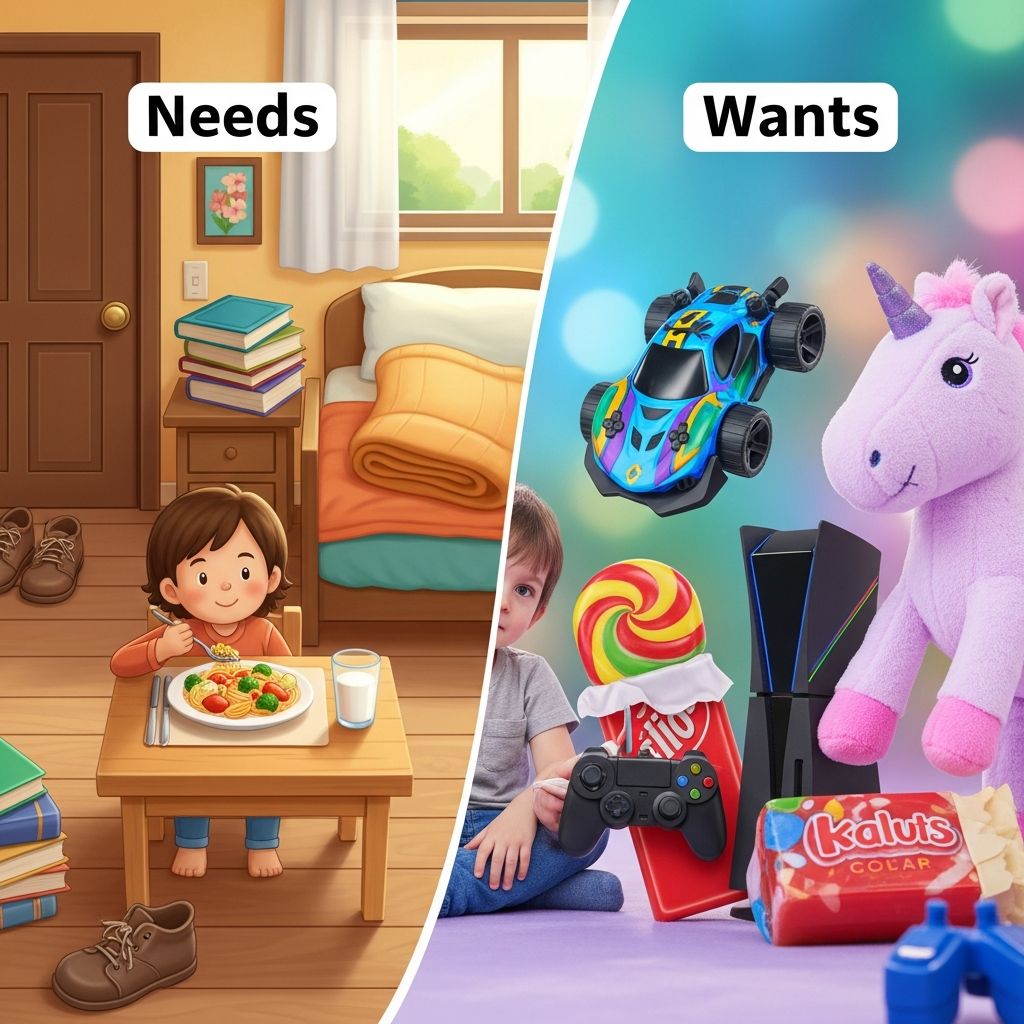
Knowing the difference between a need and a want is a core life skill that shapes how young people spend, save, and plan for the future. When students can sort their expenses into these two categories, they gain the power to make choices that support their goals instead of holding them back.
This article offers educators and caregivers a practical, classroom-ready approach to exploring needs versus wants, encouraging students to reflect on their own spending and create simple “rules to live by” for money decisions.
Why Needs vs. Wants Matters for Financial Decisions
Financial education resources for young people consistently highlight distinguishing needs and wants as a foundation for smart money choices and basic budgeting.
- Needs are essential for survival and basic well-being.
- Wants are things we enjoy, but we can live without them.
When students do not understand this difference, they may treat every desire as urgent, which can lead to overspending, debt, and stress later in life.
Defining Needs and Wants in Student-Friendly Language
Before asking students to reflect on their own expenses, clarify the basic concepts in simple terms they can relate to.
What Is a Need?
A need is something you must have to live safely and stay reasonably healthy and able to function day to day.
Common examples for young people include:
- Food that provides real nutrition (not just snacks or treats)
- Safe housing and basic utilities (electricity, water, heat)
- Essential clothing suitable for the weather
- Basic healthcare and prescriptions
- Transportation to school or work
- School-related costs, like required supplies or fees
What Is a Want?
A want is something that makes life more fun, comfortable, or interesting, but is not required for survival or basic functioning.
Examples of wants for kids and teens might include:
- New video games or streaming subscriptions
- Brand-name or designer clothing and accessories
- Restaurant meals, coffee drinks, and takeout
- Concert tickets, movies, and paid apps
- The newest phone when the current one still works
- Decor items for a bedroom that is already furnished
When an Item Is Part Need, Part Want
Many real-life expenses have both need and want elements. A smartphone may be necessary for safety or school communication, but the latest model with extra features is usually a want.
You can help students think in layers:
- The basic version that covers safety, school, or work is the need.
- Upgrades, extras, and luxury brands are the want.
| Category | Need (Basic) | Want (Extra) |
|---|---|---|
| Food | Groceries for home meals | Fast food, snacks, specialty drinks |
| Clothing | Weather-appropriate everyday clothes | Designer brands, duplicates in many colors |
| Technology | Working phone or computer for school | Latest model, extra-large storage, premium accessories |
| Transportation | Bus pass or basic car for commuting | Luxury car or rideshares for convenience |
| Housing | Safe, clean place to live | High-end furniture, décor, extra space not used |
Core Learning Goals for a Needs vs. Wants Lesson
When designing a lesson or activity around needs versus wants, aim for outcomes that go beyond definitions.
- Identify which common expenses are needs, wants, or a mix of both.
- Reflect on recent personal spending choices.
- Explain how recognizing needs vs. wants can change decisions.
- Create simple personal guidelines (or “money rules”) for future spending.
These goals align with national youth financial education standards, which emphasize comparing needs and wants and evaluating choices with limited resources.
Step-by-Step Activity: Reflecting on Personal Spending
The heart of this approach is a reflection activity where students look at their own expenses and practice sorting them into needs and wants. This can be done with a printed worksheet, a digital form, or a simple notebook page.
Step 1: Warm-Up Discussion
Begin with a short conversation that activates prior knowledge and lowers anxiety about talking about money.
- Ask students to think silently about the last three things they bought or asked a family member to buy.
- Invite volunteers to share one example without judgment or commentary.
- Write examples on the board in neutral language (for instance, “sneakers,” “snack,” “bus fare”).
Then ask:
- Which of these are clearly needs?
- Which are clearly wants?
- Which could be both, depending on the situation?
Step 2: Individual Expense Inventory
Next, students complete their own mini-inventory of expenses. Encourage them to use the last week or month as a reference, but they do not need to share every detail with the group.
Have them list:
- Regular costs they pay or that are paid on their behalf (for example, phone bill, bus pass, lunch money).
- Recent purchases they decided on themselves (for example, snacks, digital items, outings).
Remind students that the goal is not to “catch mistakes” but to understand patterns.
Step 3: Sort into Needs, Wants, and In-Between
Ask students to label each expense as one of three categories:
- N = Mostly a need
- W = Mostly a want
- M = Mixed (part need, part want)
For mixed items, students briefly note which part is the need and which part is the want. For example:
- Phone: need = basic plan for safety; want = unlimited data and upgraded camera.
- Shoes: need = one pair for school and sports; want = extra pairs in different styles.
Step 4: Reflect on Patterns and Trade-Offs
Once students have labeled their list, guide them through reflection questions they answer privately in writing:
- How many of your items are needs, wants, and mixed?
- Are you surprised by any item you labeled as a want?
- Is there a want you would give up if you needed money for an important need?
- What is one want that feels especially worth it to you, and why?
This reflection introduces the idea of opportunity cost—choosing one thing usually means giving up something else. Students begin to see that saying “yes” to a want may mean saying “no” to a future need or goal.
Step 5: Create Personal “Money Rules to Live By”
To make learning stick, invite students to turn their reflections into 3–5 short, practical rules they can use in everyday decisions.
Sample student-friendly rules might include:
- “I will cover my necessary school and travel costs before I spend on entertainment.”
- “If I want to buy something over a certain amount, I will wait 24 hours before deciding.”
- “I will save a small part of any gift money before spending the rest.”
- “I will compare at least two options before paying for a big want.”
Encourage students to keep these rules somewhere visible, such as on the inside of a notebook or as a note on their phone.
Connecting Needs vs. Wants to Simple Budgeting
Once students can sort their expenses, you can briefly introduce how needs and wants show up in a basic budget.
Many personal finance educators recommend planning to cover necessities first and then deciding what portion of remaining money goes toward wants and savings.
- First priority: Needs (required bills, essential transportation, school costs)
- Second priority: Savings for goals and emergencies
- Third priority: Wants and flexible fun spending
Even a very simple “income minus needs, then choices” model helps students see that they have control over where their money goes.
Discussion Prompts to Deepen Understanding
Use these prompts to encourage critical thinking and respectful dialogue about money choices.
- Can something be a want for one person and a need for another? Give examples.
- How can advertising make a want feel like a need?
- How might your list of needs change when you move out on your own?
- What money decision have you made that you feel proud of? What made it a good choice?
- When is it okay to choose a want over a need in the short term, and when is it risky?
Tips for Teaching Needs vs. Wants with Care and Respect
Money conversations can be sensitive, especially for students whose families are under financial stress. Consider these approaches:
- Normalize differences. Emphasize that every family handles money differently and that the class is learning tools, not judging anyone’s situation.
- Use hypothetical examples. When needed, switch to fictional scenarios so no one feels exposed.
- Focus on choices within control. Some costs are fixed or decided by adults; spend more time on smaller day-to-day decisions students can influence.
- Highlight strengths. Point out smart choices students share, such as saving for something or finding a lower-cost option.
Frequently Asked Questions (FAQs)
How early can children start learning about needs versus wants?
Children in early elementary school can begin to grasp the idea that some things are required (like food and a home) and others are “extras.” As they get older, you can introduce more complex examples and money-related decisions.
What if students disagree about whether something is a need or a want?
Disagreement can be a productive part of the lesson. Encourage students to explain their reasoning and consider context. For example, internet access can be a want in some situations and a need in others, particularly when schools rely on online tools.
How does this topic connect to saving and goal-setting?
Once students can tell needs from wants, they can choose to delay or reduce some wants and put that money toward savings goals, such as a class trip, a device, or future education. This connection between trade-offs today and goals tomorrow is a key part of financial literacy.
Is it realistic to expect teens to limit their wants?
No one can or should avoid wants entirely. The aim is not perfection; it is awareness. When teens understand their patterns, they can choose which wants matter most and which they are willing to skip in order to fund needs and important goals.
How can families reinforce this learning at home?
Caregivers can reinforce the lesson by talking through everyday choices—such as grocery shopping, back-to-school purchases, or planning a small outing—and asking children to help decide what counts as a need, what is a want, and what the trade-offs might be.
References
- Money Smart for Young People — Federal Deposit Insurance Corporation (FDIC). 2022-08-01. https://www.fdic.gov/consumer-resource-center/money-smart-young-people
- Needs vs Wants Lesson Plan — PersonalFinanceLab.com. 2023-03-15. https://www.personalfinancelab.com/wp-content/uploads/Needs-vs-Wants.pdf
- Needs vs. Wants: How to Budget for Both — NerdWallet. 2024-05-10. https://www.nerdwallet.com/finance/learn/financial-needs-versus-wants
- Wants vs. Needs: A Teen’s Guide to Smart Spending — Midwest Bank. 2025-08-01. https://midwest.bank/news/2025/08/wants-vs-needs-a-teens-guide-to-smart-spending/
- First Job Euphoria: Needs v. Wants — United States Courts. 2019-06-30. https://www.uscourts.gov/about-federal-courts/educational-resources/educational-activities/financial-literacy-financial-firsts-can-be-financial-pitfalls/first-job-euphoria-needs-v-wants-financial-literacy
Similar Articles








Read full bio of medha deb


