Understanding the Legal Framework for Electroshock Self-Defense Devices
Electroshock weapons, including tasers and stun guns, have become increasingly popular as self-defense tools for personal protection. However, their legality varies significantly across the United States, and understanding the regulatory landscape is essential before purchasing or carrying one of these devices. Unlike traditional firearms, which require extensive licensing and permits in most jurisdictions, tasers and stun guns operate under a different legal framework that emphasizes eligibility screening and location-based restrictions rather than comprehensive licensing requirements.
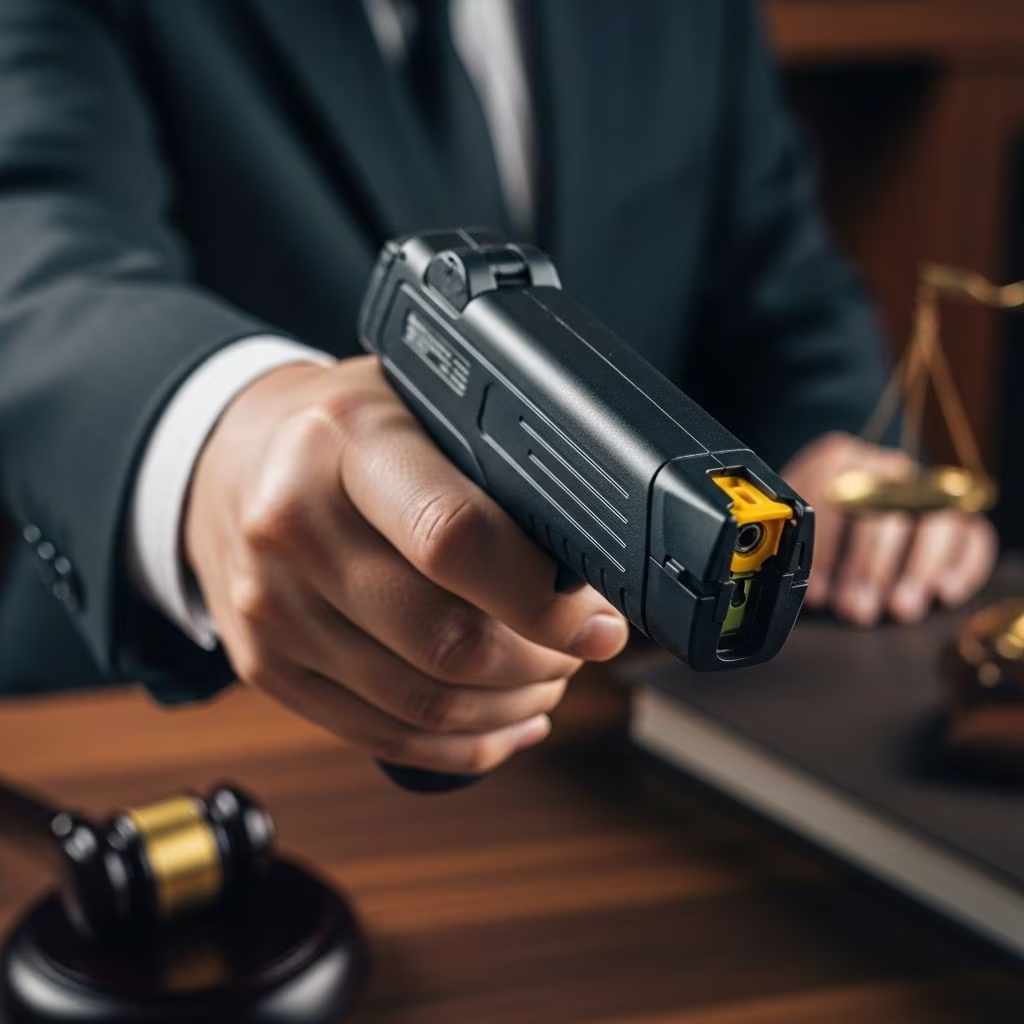
The distinction between stun guns and tasers is important from a legal perspective. Stun guns deliver an electrical charge through direct contact with an attacker, while tasers (conducted energy weapons) project electrical probes at a distance. Despite these functional differences, both devices are generally treated similarly under state and federal law, though some jurisdictions have developed specific statutes addressing each type of electroshock weapon separately.
Who Can Legally Possess Electroshock Weapons for Self-Defense
Eligibility requirements for taser and stun gun ownership represent the primary legal barrier to possession in most states. Rather than requiring permits, legislators have opted to establish categorical restrictions based on criminal history, age, and drug-related convictions. These restrictions aim to prevent dangerous individuals from accessing these weapons while preserving the right of law-abiding citizens to employ them for legitimate self-defense purposes.
The following individuals are typically prohibited from possessing tasers and stun guns across most jurisdictions:
- Convicted felons: Any individual with a felony conviction in federal court, state court, or equivalent foreign jurisdiction faces automatic disqualification from taser ownership.
- Individuals convicted of assault crimes: Those with convictions for assault, assault with a deadly weapon, or similar violent offenses cannot legally possess these devices, as lawmakers view prior violent behavior as a significant risk factor.
- Narcotics addicts: Individuals officially determined to be addicted to controlled substances are prohibited from owning electroshock weapons in most states.
- Those with prior stun gun misuse convictions: Anyone previously convicted of illegally using a taser or stun gun loses the privilege of possessing such a device in the future.
- Individuals subject to protective orders: Some states explicitly bar those named in domestic violence or personal protection restraining orders from carrying tasers.
Age requirements also vary by jurisdiction. While some states allow adults aged 18 and above to possess tasers without restriction, others impose higher age minimums or require parental consent for minors in the 16-18 age range. These age-based restrictions stem from concerns about impulse control and judgment, particularly among younger individuals.
State-by-State Legal Status and Requirements
The nationwide taser legality landscape reflects a general trend toward permissiveness, yet with notable regional variations that require careful examination. The majority of states have legalized tasers and stun guns for personal self-defense purposes, though they frequently impose specific conditions on possession and use.
States such as California, Colorado, Arizona, Alabama, Arkansas, Michigan, Minnesota, North Carolina, and Pennsylvania all permit taser ownership for qualified individuals, though each state maintains its own restrictions on age, prohibited persons, and restricted locations. California’s approach, codified in Penal Code Section 22610, exemplifies the standard regulatory model used across much of the country. This statute permits possession for lawful self-defense while explicitly excluding convicted felons, individuals addicted to narcotics, minors under 16, and those with prior assault convictions.
Massachusetts and Connecticut represent more restrictive approaches, treating tasers similarly to firearms with licensing, dealer registration, and storage requirements that parallel firearm regulations. These states have determined that electroshock weapons warrant the same level of regulatory oversight as traditional guns, resulting in more burdensome acquisition and maintenance procedures.
Rhode Island initially banned tasers entirely but reversed course following a 2022 federal court ruling in O’Neil v. Neronha, which found the complete prohibition unconstitutional. This landmark case prompted Rhode Island to legalize tasers subject to general restrictions, demonstrating how judicial review can reshape state self-defense law.
Restricted Locations and Prohibited Carrying Areas
Even where tasers are legal for possession, numerous locations explicitly prohibit carrying these devices. Understanding where electroshock weapons cannot be carried is as important as knowing where they can be.
The following locations typically prohibit taser possession across most states:
- Educational facilities including K-12 schools and school grounds
- Government buildings and courthouses
- Federal facilities and military installations
- Airports, including areas beyond Transportation Security Administration checkpoints
- Passenger terminals at ports and harbors
- Secure transportation facilities
- Hospitals and medical facilities in some jurisdictions
- Correctional facilities and detention centers
These restrictions reflect governmental priorities to maintain safety in locations where vulnerable populations congregate or where heightened security protocols already exist. Schools, in particular, receive special attention across state legislatures due to concerns about taser misuse among student populations and the potential for escalation of conflicts in educational settings.
Understanding Legal Self-Defense Versus Criminal Misuse
The distinction between lawful self-defense and criminal assault using a taser is crucial and carries substantial legal consequences. A taser used in genuine self-defense against an imminent threat represents legally justified force, while deploying one against another person in non-threatening circumstances constitutes a serious crime.
Lawful self-defense taser use requires the following conditions:
- Reasonable belief in imminent threat of serious bodily injury
- Reasonable belief that taser use was necessary to prevent that harm
- Proportionality between the threat faced and the response employed
- No role in initiating the confrontation or escalating the conflict
Criminal misuse, by contrast, encompasses using a taser as a threat, employing it for intimidation purposes, deploying it against individuals not posing an imminent threat, or using it during the commission of another crime. These actions carry serious criminal penalties that vary by jurisdiction and severity.
Criminal Penalties for Illegal Possession and Misuse
The consequences of violating taser and stun gun laws vary substantially depending on the nature of the violation, the jurisdiction, and the offender’s criminal history. Understanding these penalties underscores why legal compliance is essential.
Penalties for unlawful possession typically include:
| Offense Type | Potential Consequences |
|---|---|
| First offense for illegal possession (prohibited person) | Infraction with $50 fine or misdemeanor with up to 6 months jail and/or $1,000 fine |
| Subsequent possession offense | Misdemeanor with up to 6 months jail and/or $1,000 fine |
| Misdemeanor assault with taser | Up to $1,000 fine and/or 1 year jail |
| Felony assault with taser (enhanced circumstances) | 16 months, 2 years, or 3 years imprisonment plus possible $10,000 fine |
| Assault against law enforcement, school employee, or firefighter | Enhanced penalties with significantly longer prison sentences |
The enhancement of penalties for assaulting protected individuals such as police officers, teachers, and emergency responders reflects legislative judgment that attacking individuals with specific public safety responsibilities warrants more severe punishment.
Concealed Carry Considerations and Practical Guidelines
One significant advantage of taser ownership compared to firearm ownership is that concealed carry generally does not require a permit in most states. Since tasers are not classified as firearms, many jurisdictions have declined to impose concealed weapons licensing requirements for these devices. However, this permissive approach does not eliminate all restrictions; prohibited locations remain off-limits regardless of whether the device is openly displayed or concealed.
For individuals legally entitled to possess tasers, implementing responsible storage and maintenance practices protects both the owner and others who might access the device:
- Store devices in secure locations away from children and unauthorized users
- Maintain adequate battery charge to ensure device functionality during emergencies
- Practice with demonstration units or trainer cartridges to develop familiarity without expending valuable live cartridges
- Understand the device’s technical specifications, including activation methods and deployment distance
- Review state and local laws periodically, as regulations can change
Practical Documentation and Defense Considerations
Individuals considering taser ownership should maintain documentation of their legal eligibility. While no permit system exists in most states, having clear records regarding the absence of disqualifying convictions can prove valuable if legal questions arise. Similarly, maintaining purchase receipts from licensed dealers demonstrates good-faith compliance with acquisition requirements.
If a taser is ever deployed in self-defense, prompt reporting to law enforcement and cooperation with investigation becomes essential. Claiming self-defense requires detailed explanation of the circumstances that made you reasonably believe deadly force was necessary, and early legal counsel can help preserve rights while responding to law enforcement inquiries.
Interstate Travel and Jurisdictional Variations
The patchwork nature of state taser laws creates challenges for individuals who travel across state lines. A taser legal in one state may face restrictions in a neighboring jurisdiction. Travelers should research taser regulations in states they visit before carrying such devices. Transporting a taser across state borders without understanding destination-state laws can result in unexpected criminal liability.
Federal law also establishes boundaries for taser use and possession. While tasers are not firearms under federal law, federal facilities and properties maintain independent prohibitions on carrying any weapons, including electroshock devices. Individuals planning to visit federal installations should assume tasers are prohibited unless explicitly permitted by the specific facility.
Common Questions About Taser Legality and Use
Q: Do I need a permit to carry a taser for self-defense?
A: In most states, no permit is required for taser ownership or concealed carry because tasers are not classified as firearms. However, you must meet eligibility requirements and cannot carry them in prohibited locations regardless of permit status.
Q: Can a felon possess a taser for self-defense?
A: No. Individuals with felony convictions are explicitly prohibited from possessing tasers in virtually all jurisdictions. This restriction applies regardless of how long ago the conviction occurred.
Q: Are tasers legal for minors to carry?
A: Minors under 16 are generally prohibited from possessing tasers. Minors aged 16-18 may be permitted to possess tasers with written parental consent in some states, but minors cannot independently purchase these devices.
Q: What happens if I use a taser against someone who is not a threat?
A: Using a taser against a non-threatening individual constitutes criminal assault, which can result in misdemeanor or felony charges depending on jurisdiction and circumstances, with potential jail time and significant fines.
Q: Can I carry a taser onto an airplane?
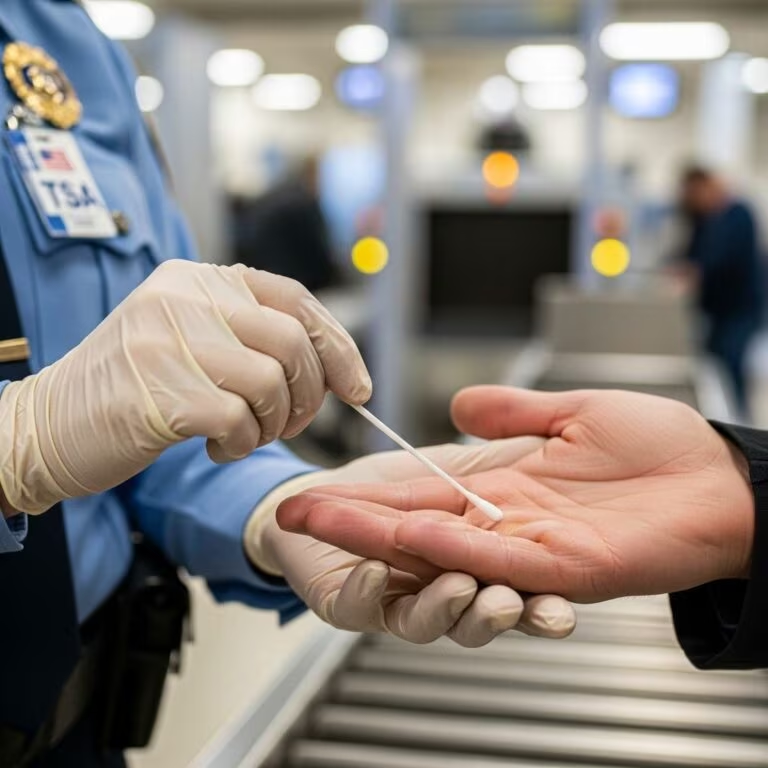
A: No. Tasers are prohibited in checked baggage and carry-on luggage on commercial aircraft. They are also prohibited in airport security areas beyond TSA checkpoints.
Q: Do I need to register my taser with the government?
A: Most states do not require taser registration. Massachusetts and Connecticut, which treat tasers more like firearms, may have registration or dealer notification requirements, but the majority of states have no registration system.
Q: Can I use a taser in my home for self-defense?
A: Yes, if you legally own a taser and use it in genuine self-defense against an imminent threat, home use is legally permissible. However, using it against family members or non-threatening individuals can result in assault charges.
References
- Penal Code § 22610 PC – Are Tasers Legal in California? — Shouse Law Group. 2025. https://www.shouselaw.com/ca/defense/penal-code/22610/
- Self-Defense Weapon Laws by State: Know What’s Legal — Premier Body Armor. 2025. https://premierbodyarmor.com/blogs/pba/self-defense-weapon-laws-by-state
- Rules of Carrying Taser Guns in the 50 States — E-Disaster Systems. 2025. https://edisastersystems.com/blogs/news/rules-of-carrying-taser-guns-in-the-50-states
- Self-Defense Weapons You Can Legally Carry in California — Southwest Legal. 2025. https://southwestlegal.com/self-defense-weapons-you-can-legally-carry/
- O’Neil v. Neronha — U.S. District Court, District of Rhode Island. 2022. Case ruling on taser prohibition constitutionality.