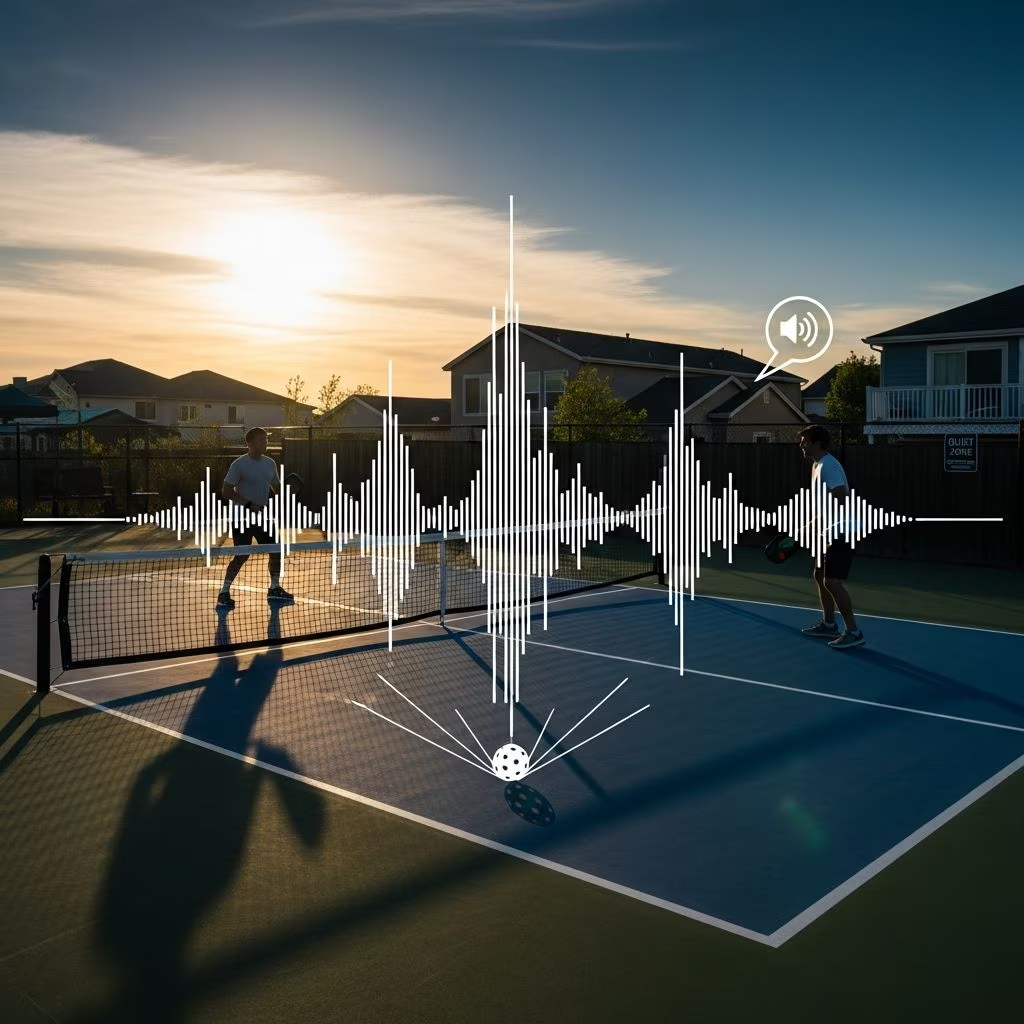
Pickleball’s rapid growth has brought vibrant energy to communities, but its distinctive popping sounds often clash with the need for quiet in residential areas. Average play generates around 59 dBA, with peaks up to 70 dBA, frequently exceeding local noise thresholds and sparking conflicts. Homeowners report disturbances during family time, work calls, or sleep, prompting demands for action. This article outlines actionable strategies, drawing from model ordinances, acoustic studies, and real-world implementations to balance recreation with neighborly peace.
Understanding the Science of Pickleball Sound
The sharp, repetitive ‘pop’ from pickleball paddles and balls creates impulsive noise that travels far, particularly in open spaces. Unlike steady sounds, these bursts penetrate windows and walls, raising interior levels by more than acceptable margins. Research shows noise drops by about 6 dB for every doubling of distance from the court, meaning proximity is key to impact. Court orientation matters too: sounds project longest along the length (north-south for sun reasons), up to 500 feet at 55 dBA, but only 260 feet sideways.
Typical residential noise limits are 55 dBA daytime and 50 dBA evening/nighttime, based on U.S. EPA data and common municipal codes. Pickleball often violates these, especially with multiple courts amplifying the din. Low-frequency components (measured in dBC) add annoyance, as they rumble through structures undetected by standard dBA meters.
Local Laws and Enforcement Options
Most communities regulate noise via ordinances prohibiting sounds that disturb ‘reasonable persons’ or exceed decibel caps at property lines. For pickleball, violations trigger complaints to code enforcement, police non-emergency lines, or health departments. Persistent issues may qualify as private or public nuisances, allowing civil suits if governments fail to act.
Enforcement challenges include limited staff training and equipment for measuring impulsive sports noise. Citations are rare for municipal courts, heightening litigation risks against cities. Track incidents with logs (dates, times, durations, effects on daily life) to build cases. Some areas mandate permits for courts, tying approval to noise studies.
Zoning as the First Line of Defense
Planners use zoning to prevent conflicts proactively. Pickleball courts should never be permitted in residential zones due to incompatibility; instead, treat as conditional uses requiring reviews. A tiered framework based on distance from homes offers clarity:
| Distance from Residences | Requirement |
|---|---|
| < 100 feet | Prohibited |
| 100-350 feet | Mandatory noise abatement (barriers) |
| 350-600 feet | Acoustic study required |
| > 600-800 feet | Permitted with time restrictions |
This aligns with model codes recommending 800-foot setbacks from dwellings for unmitigated play. Rural/suburban areas may need 1,200 feet or ‘not plainly audible’ indoors tests. Prohibit evening/night use (post-7 p.m., pre-9 a.m.) near homes.
Practical Noise Reduction Techniques
Beyond regulations, engineering fixes curb propagation. Key methods include:
- Court Siting: Position sides toward noise-sensitive areas, avoiding end-line orientation to homes. Maintain 500+ feet buffers where feasible.
- Acoustic Barriers: Solid brick/stone walls or fences with absorptive panels reduce noise by 12 dB; baffles suit indoors.
- Equipment Upgrades: Promote ‘green list’ quieter paddles/balls, though not yet distance-altering.
- Usage Limits: Cap sessions, enforce quiet hours via signage/apps.
Combining these with monitoring ensures compliance. For existing courts, retrofits like panels yield quick wins.
Navigating Community and Legal Conflicts
Disputes often pit enthusiasts against residents. Mediation via neutral facilitators fosters compromises like adjusted schedules or shared funding for barriers. If unresponsive, escalate to nuisance claims citing health impacts (stress, sleep loss). Courts have sided with plaintiffs when noise violates ordinances or zoning.
Homeowner associations (HOAs) face liability for court approvals without mitigations. Municipalities risk suits if rec departments ignore complaints. Public hearings for expansions allow input, influencing outcomes.
Model Policies for Lasting Solutions
Adopt comprehensive codes integrating setbacks, decibels, and audibility:
- 55/50 dBA limits at boundaries (day/night).
- 3 dBC interior rise cap.
- 800-foot zoning buffers.
- Time bans near homes.
Cities like those in South Seattle studies exemplify tiered approaches. Developers benefit from clear criteria, avoiding post-build fights.
Frequently Asked Questions
What decibel levels are typical for pickleball?
Average 59 dBA per match, peaks at 70 dBA; multiple courts increase this.
How far should courts be from homes?
Minimum 500-800 feet without mitigation; closer requires barriers/studies.
Can I sue over pickleball noise?
Yes, as nuisance if ordinances violated and authorities unresponsive.
What are effective barriers?
Solid walls/fences with absorptive material, cutting 12 dB.
Do quieter paddles solve it?
Partially; ‘green’ tech helps but doesn’t replace distance rules.
By blending regulation, technology, and dialogue, communities can enjoy pickleball without sacrificing serenity. Proactive planning preserves harmony as the sport surges.
References
- Model Noise Ordinance for Pickleball — Noise Pollution Clearinghouse. 2023. https://www.nonoise.org/regulation/Pickleball%20Model%20Noise%20Ordinance.pdf
- Weekend Reads | Pickleball Noise Pollution and the Science Behind It — South Seattle Emerald. 2024-07-20. https://southseattleemerald.org/feature/2024/07/20/weekend-reads-pickleball-noise-pollution-and-the-science-behind-it
- Pickleball Noise Legislation — General Code. 2024. https://www.generalcode.com/blog/pickleball-noise-legislation/
- Why the Pop, Pop, Pop of Pickleball Needs a Zoning Solution — American Planning Association. 2025. https://www.planning.org/planning/2025/nov/why-the-pop-pop-pop-of-pickleball-needs-a-zoning-solution/
- The Legal and Community Issues of Noise Pollution from Pickleball Courts — Beyond NIL. 2024. https://beyondnil.com/blog/the-legal-and-community-issues-of-noise-pollution-from-pickleball-courts
- Pickleball Noise Articles and Related Materials — Rollwdtx Meeting Document. 2024. https://mccmeetingspublic.blob.core.usgovcloudapi.net/rollwdtx-meet-02bcca06d30f47fe896790107621ba79/ITEM-Attachment-001-92ad885c2a6f4bffaddc2355a3e7df0e.pdf
- Solutions for Noisy Pickleball Courts — Productive Parks. 2024. https://productiveparks.com/solutions-noisy-pickleball-courts