
Advancing Equality: Systemic Racism as a Global Human Rights Crisis
Shifting the paradigm from domestic civil rights to universal human rights.
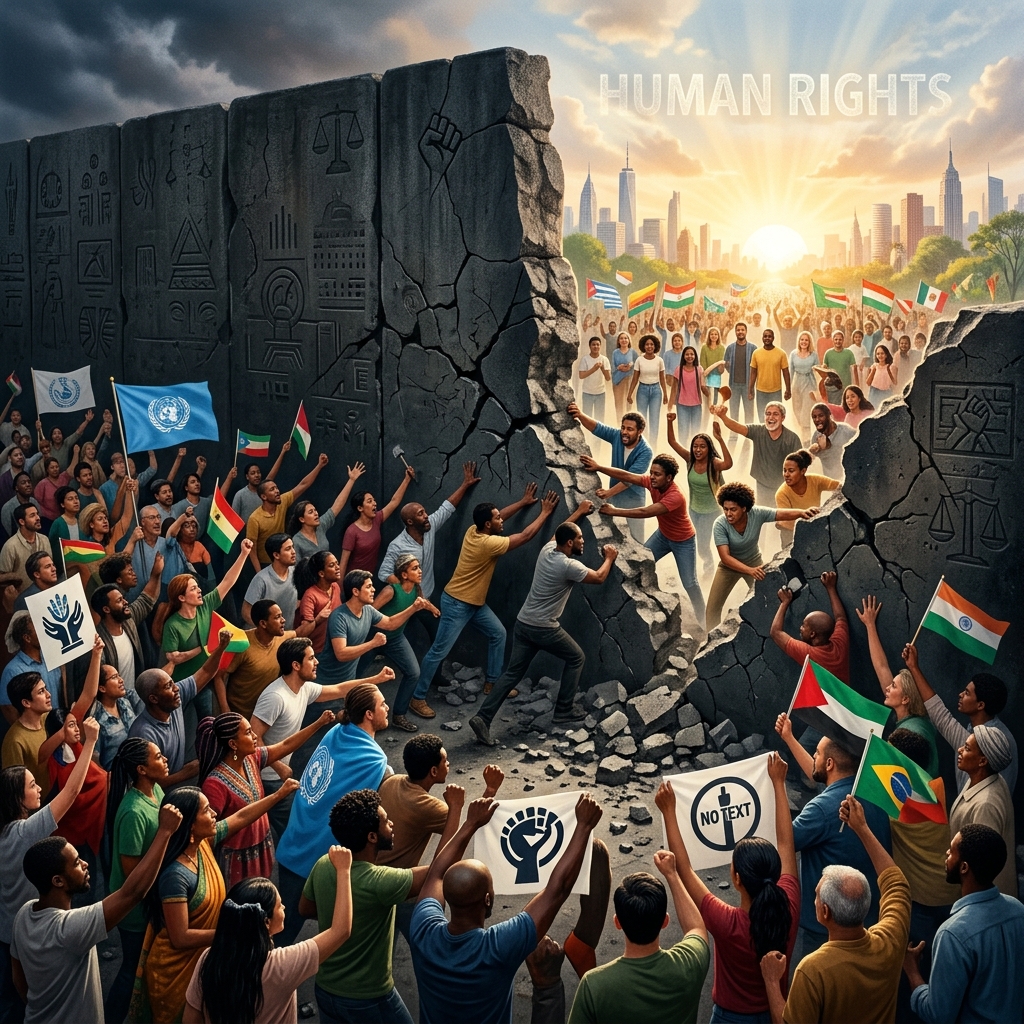
For decades, the struggle for racial equity has predominantly been framed as a battle for civil rights. Within this traditional paradigm, advocates appeal to national constitutions, local legislation, and domestic courts to rectify historical injustices and discriminatory policies. However, a localized approach often proves insufficient when the legal systems themselves are intertwined with the very prejudices they are meant to dismantle. Consequently, a vital paradigm shift has emerged in the pursuit of equity: recognizing and treating systemic racism not merely as a domestic civil rights dispute, but as a profound violation of fundamental, universal human rights.
Reframing racial injustice through a human rights lens elevates the conversation from internal political debates to a matter of international law and global moral obligation. Civil rights are, by definition, granted by a specific government or state, meaning they can be altered, restricted, or revoked by those same governing bodies. Human rights, conversely, are inherent to all individuals regardless of their nationality, geographical location, or the domestic laws of their home country. By elevating racial justice to the international stage, advocates can leverage a broader array of treaties, international tribunals, and global diplomatic pressure to hold nations accountable for systemic inequality.
The Historical Evolution of a Global Movement
The philosophical and legal foundations for viewing racial discrimination as a human rights violation were solidified in the aftermath of the Second World War. The atrocities of the era forced the international community to recognize that state sovereignty could no longer serve as an absolute shield for governments that oppressed their own populations. This realization culminated in the creation of the United Nations and the drafting of foundational texts designed to protect individual dignity on a global scale. Early civil rights leaders quickly recognized the strategic advantage of this new international framework, realizing that domestic pressure alone was often insufficient to dismantle entrenched racial hierarchies.
Throughout the mid-twentieth century, prominent advocates attempted to bypass resistant national governments by appealing directly to the international community. They presented comprehensive petitions outlining systemic discrimination, racial violence, and economic marginalization as direct violations of emerging global standards. While these early efforts were often suppressed by powerful nations wary of international interference in their domestic affairs, they successfully planted the seed for a globalized approach to racial justice. These historical maneuvers established a blueprint for modern activism, demonstrating that appealing to universal human rights protocols can generate vital international scrutiny and force domestic issues onto the global diplomatic agenda.
Foundational International Treaties and Frameworks
The architecture of international human rights law provides specific instruments designed to eradicate racial discrimination. Chief among these is the International Convention on the Elimination of All Forms of Racial Discrimination (ICERD). Adopted by the United Nations, ICERD is a legally binding treaty that obligates signatory nations to condemn racial discrimination and pursue policies that actively eliminate it in all its forms. Unlike passive non-discrimination clauses, ICERD requires states to take affirmative actions to dismantle systemic barriers and ensure the full and equal enjoyment of human rights for all racial and ethnic groups.
These treaties established the legal precedent that racial justice is a matter of international concern. The Universal Declaration of Human Rights, established in 1948, remains a uniquely authoritative foundational standard for global equality protocols, explicitly outlining that all humans are born free and equal in dignity and rights . When nations ratify treaties like ICERD, they agree to regular reviews by independent international committees. These oversight mechanisms require governments to publicly report on their progress—or lack thereof—in achieving racial equity, providing a crucial avenue for accountability that exists completely independent of domestic political structures.
Key International Human Rights Instruments
| Treaty / Declaration | Year Established | Core Mandate Regarding Equality |
|---|---|---|
| Universal Declaration of Human Rights (UDHR) | 1948 | Establishes universal equality and explicitly forbids discrimination based on race, color, or origin . |
| International Convention on the Elimination of All Forms of Racial Discrimination (ICERD) | 1965 | Compels state parties to actively eradicate racial discrimination and promote understanding among all races . |
| International Covenant on Civil and Political Rights (ICCPR) | 1966 | Guarantees the right to self-determination, equal protection under the law, and participation in public affairs. |
Manifestations of Racial Injustice as Human Rights Violations
To understand why the fight for racial justice is fundamentally a human rights issue, one must examine how systemic racism deprives individuals of the basic rights outlined in international conventions. These deprivations are not isolated incidents of individual prejudice but are woven into the fabric of essential societal institutions, thereby violating the fundamental principles of universal equality.
The Criminal Legal System and the Right to Liberty
One of the most glaring intersections of systemic racism and human rights violations occurs within the criminal legal system. International law strictly prohibits arbitrary arrest, detention, and unequal treatment before the judiciary. Yet, in many nations, marginalized racial groups face disproportionate rates of police surveillance, violent encounters with law enforcement, and dramatically higher rates of incarceration. Statistical data consistently reveals stark racial disparities in prison populations, highlighting a systemic failure to provide equal protection and due process . When a justice system predominantly criminalizes specific racial demographics, it violates the fundamental human right to liberty and security of person.
Economic Marginalization and the Standard of Living
International human rights frameworks explicitly recognize the right to an adequate standard of living, which encompasses housing, healthcare, and education. Systemic racism frequently manifests as structural economic marginalization. Historical practices of redlining, discriminatory lending, and systemic underinvestment in minority communities have created vast racial wealth gaps. Furthermore, marginalized groups often face disproportionate exposure to environmental hazards and unequal access to quality medical care. These economic and social disparities are not merely unfortunate socio-economic realities; under international law, they represent a systemic failure by the state to protect the economic and social rights of its citizens.
Democratic Participation and Disenfranchisement
The right to participate in one’s government through free and fair elections is a cornerstone of international human rights law. However, racial justice advocates continually battle systemic efforts to dilute the political power of minority groups. Tactics such as racial gerrymandering, the imposition of restrictive voter identification laws, and the mass disenfranchisement of individuals with criminal records serve to systematically exclude specific demographics from the democratic process. By hindering political participation based on racial lines, governments violate the internationally recognized right to political self-determination and equal democratic representation.
Mechanisms of International Accountability
The true power of framing racial justice as a human rights issue lies in the mechanisms of international accountability. The United Nations operates various treaty bodies and human rights councils that conduct periodic reviews of member states. During these reviews, non-governmental organizations (NGOs) and grassroots advocates can submit “shadow reports” that provide independent data and narratives contradicting official government claims. This process allows advocates to expose domestic racial injustices on a prominent global stage, leveraging the diplomatic concept of “naming and shaming.”
While international bodies often lack direct enforcement mechanisms, such as an international police force, the diplomatic pressure they generate is highly influential. Public condemnation by independent global experts can damage a nation’s international standing, affecting trade relations, diplomatic alliances, and global soft power. Furthermore, recommendations issued by international tribunals provide domestic advocates with authoritative blueprints for reform, allowing them to return to their local courts and legislatures with the backing of the international community . This synergy between global pressure and local activism is a vital tool in dismantling entrenched systemic racism.
The Strategic Advantage of a Universal Lens
Shifting the discourse from civil rights to human rights offers significant strategic advantages for advocates. First, it depoliticizes the demand for equality. When racial equity is framed as a universal human right, it becomes a baseline moral imperative rather than a partisan political issue subject to legislative negotiation. It establishes that basic human dignity is non-negotiable and cannot be compromised for political expediency.
Secondly, the human rights framework fosters profound global solidarity. By recognizing systemic racism as a global phenomenon rather than a series of isolated national issues, advocates can build transnational coalitions. Marginalized groups in different countries can share strategies, legal precedents, and resources, amplifying their collective voice. This global network of solidarity ensures that the fight for racial justice is supported by a unified, international movement dedicated to the universal protection of human dignity.
Frequently Asked Questions (FAQ)
- What is the primary difference between civil rights and human rights?
Civil rights are legal rights granted and protected by a specific government or national constitution, such as the right to vote or protection from discrimination within that country. Human rights are universal, inherent rights that belong to every person by virtue of being human, regardless of their nationality or the specific laws of their government. - How can international treaties impact domestic laws?
When a country signs and ratifies an international treaty, it legally commits to aligning its domestic laws with the treaty’s standards. Even if international courts cannot always directly overturn domestic laws, treaties provide a binding legal framework that domestic advocates use in local courts to argue for reform, and they expose the state to international diplomatic pressure and review processes. - Why is systemic racism considered a human rights violation?
Systemic racism inherently deprives specific groups of their fundamental rights to equal protection, liberty, adequate living standards, and political participation. Because these rights are guaranteed to all individuals under international law, state-sanctioned or state-tolerated systemic racism represents a direct failure to uphold universal human rights obligations.
Conclusion
The fight for racial justice is intrinsically linked to the broader, global struggle for human rights. While localized civil rights movements remain essential for enacting specific legislative changes, they are fundamentally strengthened when supported by the universal moral and legal authority of international human rights frameworks. By defining systemic racism as a violation of international law, advocates can transcend domestic political limitations, invoke powerful international oversight, and forge vital global alliances. Ultimately, securing racial justice is not merely about adjusting domestic policies; it is about fulfilling the universal promise of human dignity, equality, and unalienable rights for every individual across the globe.
References
- Universal Declaration of Human Rights — United Nations General Assembly. 1948-12-10. https://www.un.org/en/about-us/universal-declaration-of-human-rights
- International Convention on the Elimination of All Forms of Racial Discrimination (ICERD) — Office of the High Commissioner for Human Rights (OHCHR). 1965-12-21. https://www.ohchr.org/en/instruments-mechanisms/instruments/international-convention-elimination-all-forms-racial
- Prisoners in 2022 – Statistical Tables — Bureau of Justice Statistics (BJS). 2023-11-30. https://bjs.ojp.gov/library/publications/prisoners-2022-statistical-tables
- Systemic Racism and Human Rights — United Nations Human Rights Council. 2023-04-15. https://www.ohchr.org/en/racism/systemic-racism
Similar Articles








Read full bio of medha deb


