
Systemic Racial Bias in the US Death Penalty
How systemic racism dictates capital punishment outcomes in the US.
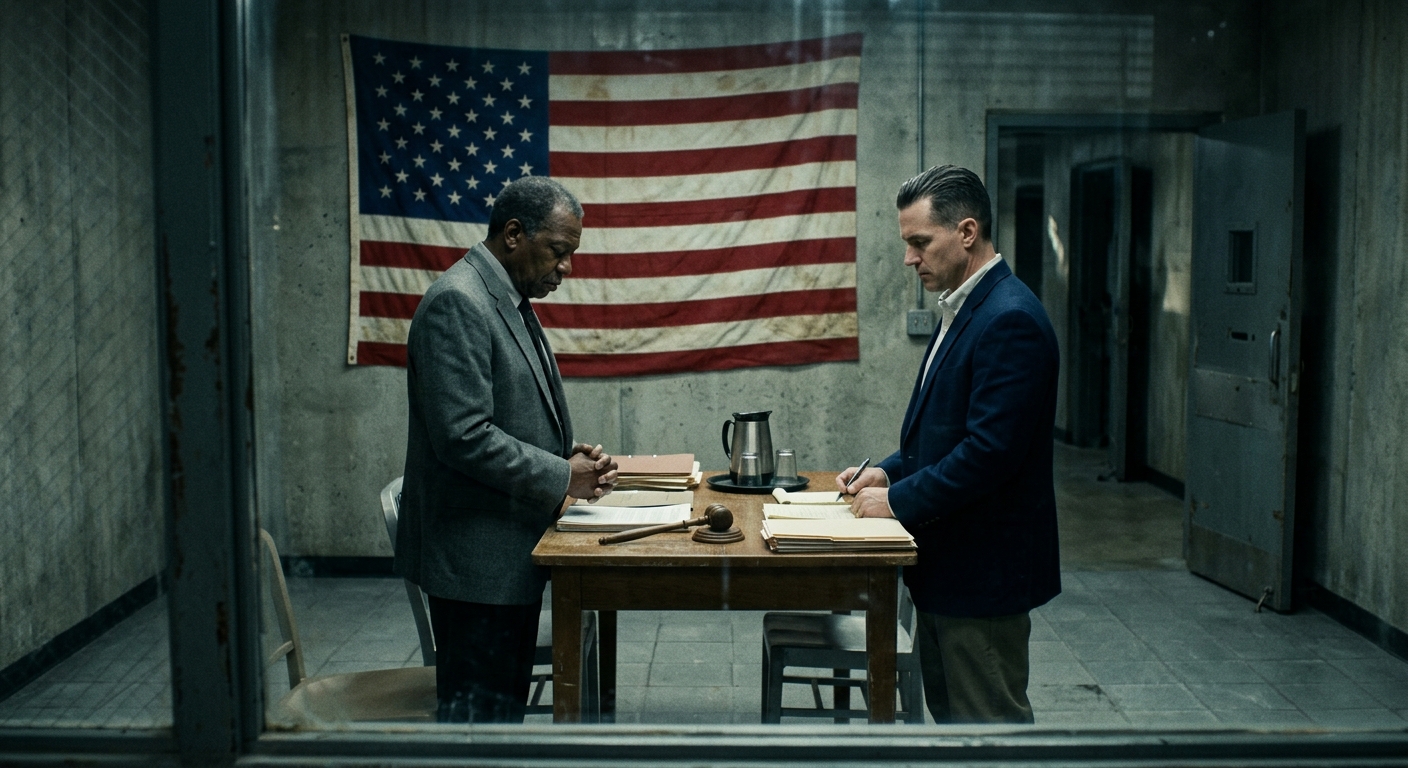
The United States criminal justice system is frequently championed as a beacon of fairness, operating under the foundational democratic promise of equal protection under the law. However, an objective, data-driven examination of capital punishment reveals a deeply entrenched, systemic prejudice that fundamentally shatters this illusion. Instead of functioning as a purely objective legal mechanism reserved strictly for the “worst of the worst” offenders, the death penalty frequently acts as a dark mirror reflecting the nation’s historical and ongoing racial biases. Although legislative reforms and landmark Supreme Court decisions over the past fifty years have attempted to sanitize the administration of the ultimate punishment, a stark and undeniable reality persists: the color of a defendant’s skin—and, even more decisively, the color of the victim’s skin—plays an outsized role in determining who is condemned to die. The ongoing application of capital punishment remains heavily tainted by statistical racial disparities, transforming the death penalty into a grim, high-stakes lottery dictated by geography, socioeconomic status, and systemic racism.
The Historical Shadow: From Extrajudicial Violence to State Sanction
To fully understand the profound racial disparities present in today’s capital punishment system, one must first acknowledge its dark historical roots. Sociologists and legal historians consistently draw a direct, unbroken line between the horrific era of extrajudicial lynchings in the American South and the modern application of the death penalty. As public executions and mob violence became socially unacceptable and legally indefensible throughout the twentieth century, the mechanisms of racial control did not disappear; instead, they transitioned into the formalized, state-sanctioned arena of the courtroom. The swift, brutal “justice” of the mob was effectively replaced by capital trials that, while bearing the outward veneer of due process and constitutional protection, frequently produced the exact same outcomes for Black defendants.
This historical legacy is not merely an academic talking point; it is actively reflected in the geographic distribution of executions today. A significant majority of modern state-sponsored executions occur in Southern states with deep historical ties to slavery, segregation, and Jim Crow laws. This transition from extrajudicial terror to formally legislated capital punishment established a deeply flawed foundation, permanently embedding racial bias into the very architecture of the American criminal justice system.
Demographics of the Condemned: Who Sits on Death Row?
The statistical realities of death row demographics provide an irrefutable indictment of the system’s fairness. While African Americans make up approximately 13 percent of the overall United States population, they constitute a vastly disproportionate percentage—over 40 percent—of the individuals currently awaiting execution. Comprehensive data provided by civil rights organizations and the Bureau of Justice Statistics consistently highlights this profound imbalance, demonstrating that Black defendants are disproportionately arrested for, charged with, and convicted of capital crimes.
This demographic skew is not an anomaly but a persistent feature of a judicial pipeline heavily influenced by race. From the initial point of contact with law enforcement to pretrial detention and the ultimate quality of legal representation, systemic disadvantages compound at every single step. Consequently, racial minorities face a substantially higher likelihood of receiving the ultimate punishment compared to white defendants who commit similar offenses. The sheer numbers expose a system where justice is not blind, but rather highly sensitive to the racial identity and socioeconomic standing of the accused.
The Valuation of Life: The Decisive Role of the Victim’s Race
Perhaps the most damning and statistically robust evidence of racial bias within capital punishment lies not merely in the race of the perpetrator, but in the race of the victim. Extensive legal and sociological research, including comprehensive execution databases compiled by the Death Penalty Information Center (DPIC), reveals a disturbing, implicit hierarchy of human life within the nation’s courts. Approximately 75 percent of all executions in the modern era involve cases where the murder victim was white, despite the fact that, nationally, homicide victims are split relatively evenly between Black and white individuals.
When a Black defendant is accused of murdering a white victim, the statistical probability of a death sentence skyrockets dramatically. The judicial machinery operates in a manner that implicitly signals that white lives hold more societal value and demand greater protection, thereby warranting the most severe and irreversible form of retribution available to the state. Conversely, homicides involving Black victims—particularly those with Black defendants—rarely trigger a capital prosecution. This glaring disparity underscores the uncomfortable truth that capital punishment in the United States is frequently less about the objective severity or brutality of the crime itself, and more about the identity and social status of the person who was harmed.
| Victim Demographics | Percentage of Homicide Victims (National) | Percentage of Death Penalty Executions |
|---|---|---|
| White Victims | ~50% | ~75% |
| Black Victims | ~50% | ~15% |
*Note: Data represents historical approximations based on aggregate statistics from the Death Penalty Information Center and national homicide reports. The remaining percentage encompasses other racial demographics.
The Gatekeepers of Life and Death: Prosecutorial Discretion
The agonizing journey to the execution chamber begins long before a jury renders a verdict; it originates directly in the prosecutor’s office. Prosecutors wield immense, largely unchecked discretionary power within the justice system. They alone hold the authority to decide whether to aggressively pursue the death penalty or to offer a plea agreement for life imprisonment. Academic studies consistently show that implicit biases heavily influence these critical, life-altering decisions. A prosecutor’s subconscious associations regarding race, criminality, and future dangerousness can lead to vastly divergent paths for identical crimes.
White defendants are frequently offered plea bargains that spare their lives and allow for future appeals, while Black defendants are aggressively pushed toward capital trials. Furthermore, the overwhelmingly white demographic makeup of elected prosecutors in jurisdictions that actively utilize the death penalty creates a profound cultural disconnect, further exacerbating racial disparities in charging decisions. The lack of diversity among the gatekeepers of the justice system ensures that the perspectives and biases of the majority continue to dictate the fates of minority defendants, effectively blocking any chance for culturally competent, equitable justice.
Jury Selection and the Whitewashing of the Courtroom
If a capital case proceeds to trial, the defendant’s fate ultimately rests in the hands of a jury of their peers. However, the jury selection process is fraught with legal mechanisms that actively disadvantage Black defendants. The practice of “death qualification”—which excludes potential jurors who are morally or ethically opposed to the death penalty from serving on capital cases—disproportionately weeds out Black citizens, who statistically oppose capital punishment at much higher rates than their white counterparts.
Additionally, despite the Supreme Court’s mandate in Batson v. Kentucky prohibiting prosecutors from striking jurors based solely on race, the discriminatory practice remains pervasive. Prosecutors frequently cite seemingly race-neutral reasons—such as a juror’s neighborhood, occupation, level of education, or even their demeanor—to systematically eliminate Black individuals from the jury pool. The result is often an all-white or predominantly white jury tasked with deciding the fate of a Black defendant. Furthermore, the psychological environment of a predominantly white courtroom can be intensely alienating for a minority defendant. The lack of peer representation on a jury not only violates the spirit of the Sixth Amendment but also stifles diverse perspectives during jury deliberations. When individuals from marginalized communities are systematically excluded from the civic duty of serving on a jury, the entire justice system suffers a profound loss of legitimacy in the eyes of the public.
Innocence, Race, and the Ultimate Irreversible Error
The intersection of race and capital punishment reaches its most tragic and terrifying peak in cases of wrongful conviction. Data on legal exonerations reveals that Black individuals are significantly more likely to be wrongfully convicted of murder and sentenced to death than white individuals. Systemic factors such as cross-racial eyewitness misidentification, racial profiling by law enforcement, coerced false confessions, and the reliance on heavily incentivized, unreliable jailhouse informants disproportionately affect defendants of color.
The National Registry of Exonerations has documented numerous harrowing cases where innocent Black men spent decades confined to death row before DNA evidence or the belated discovery of prosecutorial misconduct finally secured their freedom. The psychological torment inflicted upon an innocent person facing state-sponsored execution is unimaginable, yet this trauma is disproportionately inflicted upon Black communities. The normalization of these grave errors suggests a systemic indifference to Black lives, where the pressure on police departments to quickly close high-profile cases frequently overrides the rigorous pursuit of objective truth. It is a grim reality that for some, the presumption of innocence is effectively erased by the color of their skin long before they even step into a courtroom. The inherent fallibility of the human-run justice system becomes an existential threat when the punishment is absolute and irreversible.
The Intersecting Burdens of Class and Geography
Systemic racism does not operate in a vacuum; it is intimately entwined with poverty and geography. Capital defendants are almost exclusively poor, meaning they must rely entirely on court-appointed public defenders. These dedicated but overwhelmed defense attorneys are frequently overworked, severely underfunded, and sometimes lack the specialized, niche experience required to effectively litigate a complex death penalty case against a well-resourced state prosecution team. A wealthy defendant who can afford elite private counsel, mitigation specialists, and expert medical witnesses is almost never sentenced to death, regardless of the crime’s severity. For marginalized, impoverished communities, the inability to purchase adequate justice practically guarantees harsher legal outcomes.
Furthermore, the death penalty is not a widespread national phenomenon but rather a hyper-localized one. A remarkably small fraction of counties in the U.S.—primarily located in the Deep South and parts of the West—is responsible for the vast majority of modern executions. This geographical concentration transforms capital punishment into a postcode lottery heavily influenced by local racial politics, regional budgets, and the individual attitudes of district attorneys.
The Path Forward: The Growing Push for Abolition
The persistent, irrefutable evidence of racial bias has fueled a growing, formidable movement toward the complete abolition of the death penalty. As public awareness of these systemic inequities expands, nationwide support for capital punishment has steadily declined over the past two decades. Several states have recently abolished the death penalty entirely, citing its arbitrary application, its exorbitant financial cost to taxpayers, and the unacceptable, omnipresent risk of executing the innocent. Grassroots organizations, legal advocates, and community leaders are working tirelessly to expose the deep-seated flaws in the capital punishment machinery. Their efforts emphasize that investing in community resources, mental health care, and violence prevention strategies offers a far more effective and humane approach to public safety than state-sanctioned executions.
Civil rights organizations and international human rights bodies continually condemn the United States for its retention of a practice so deeply compromised by systemic racism. True justice cannot be achieved in a system where the ultimate punishment is distributed unevenly along racial lines. Eliminating the death penalty is not merely a matter of legal reform; it is a fundamental moral imperative required to dismantle a legacy of racial oppression and build a truly equitable, just society.
Frequently Asked Questions (FAQs)
Does the Supreme Court acknowledge racial bias in the death penalty?
Historically, the Supreme Court has set an exceptionally high bar for proving racial bias. In the landmark 1987 case McCleskey v. Kemp, the Court ruled that overarching statistical evidence of systemic racial disparities is not enough to overturn a death sentence. Instead, defendants must prove intentional, conscious discrimination in their specific case, a standard which is incredibly difficult to demonstrate.
Are there laws specifically designed to prevent racial bias in capital cases?
Some states have attempted to address this by passing “Racial Justice Acts,” which allow defendants to use statistical evidence of systemic bias to challenge their death sentences. North Carolina passed such a law in 2009 (though it was later controversially repealed), and California enacted a comprehensive Racial Justice Act in 2020 aimed at eliminating racial bias in convictions and sentencing.
How does the financial cost of the death penalty compare to life imprisonment?
While not strictly a racial issue, the economics of capital punishment disproportionately impact underfunded jurisdictions that often house marginalized communities. Numerous studies have conclusively shown that seeking and carrying out the death penalty is significantly more expensive than sentencing a defendant to life in prison without parole. This is largely due to prolonged legal appeals, specialized death row housing, and complex, bifurcated trial procedures.
Why do wrongful convictions happen more often to minority defendants?
Wrongful convictions among minority groups are driven by a compounding combination of factors. These include racial profiling by law enforcement, cross-racial eyewitness misidentification (where witnesses have scientifically documented difficulty accurately identifying individuals of another race), and a stark lack of resources for court-appointed defense attorneys to thoroughly investigate alibis and alternative suspects.
References
- Race and the Death Penalty by the Numbers — Death Penalty Information Center. 2023-08-15. https://deathpenaltyinfo.org/policy-issues/race
- Capital Punishment, 2021 – Statistical Tables — Bureau of Justice Statistics (US Department of Justice). 2023-11-01. https://bjs.ojp.gov/library/publications/capital-punishment-2021-statistical-tables
- Race and the Death Penalty — National Association of Criminal Defense Lawyers (NACDL). 2022-05-10. https://www.nacdl.org/Content/Race-and-the-Death-Penalty
- How Geography and Race Influence the Death Penalty — Equal Justice USA. 2023-02-20. https://ejusa.org/resource/race-and-the-death-penalty/
Similar Articles








Read full bio of Sneha Tete




