
Systemic Inequalities in Local Drug Enforcement
Unmasking deep-rooted racial disparities in local drug enforcement.
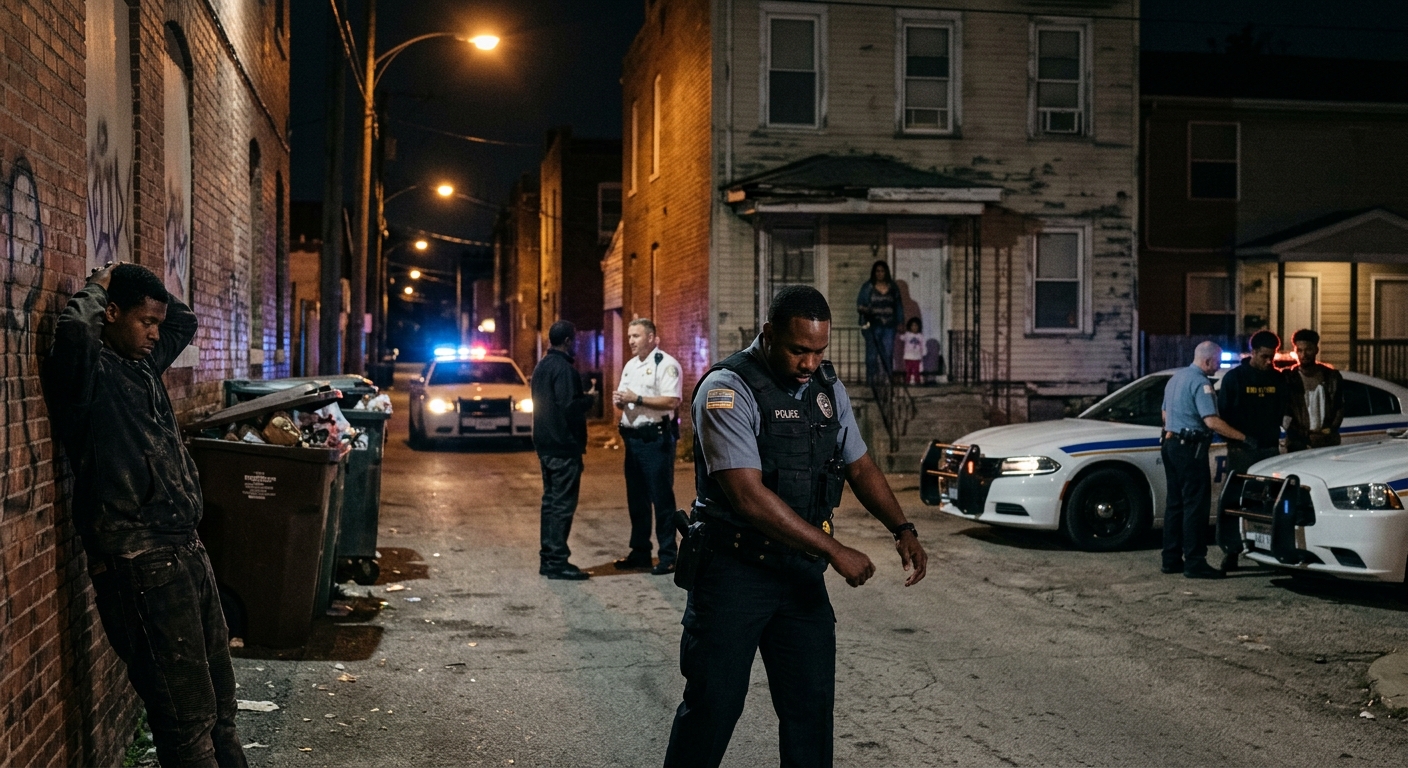
The Scope of Systemic Disparities in Local Narcotics Enforcement
In the American justice system, the blindfold worn by Lady Justice is meant to symbolize absolute impartiality. The law, in theory, should be applied with an even hand, irrespective of a citizen’s racial background, economic standing, or geographic location. However, empirical data continuously shatters this idealized illusion, particularly in the complex realm of narcotics enforcement. Comprehensive studies analyzing local municipalities and county-level judicial systems consistently reveal deep-rooted biases that disproportionately target marginalized communities. Rather than operating as an objective shield for public safety, local drug enforcement frequently functions as a dragnet that ensnares minority populations at alarming rates. By examining the stark contrast between documented drug usage statistics and incarceration demographics, we can begin to unmask the systemic inequalities embedded within local law enforcement practices.
When evaluating the integrity of criminal justice systems, one must look beyond written statutes and examine the practical application of the law on the streets. Regional analyses across the United States—ranging from rural townships to major metropolitan hubs—paint a profoundly troubling picture of modern policing. Although self-reported drug usage and distribution rates remain largely consistent and virtually identical across different racial demographics, the enforcement of anti-drug statutes is staggeringly uneven. African American and Hispanic communities bear a drastically disproportionate burden of arrests, aggressive prosecutions, and subsequent long-term incarcerations.
In many urban counties across the country, Black individuals are arrested for drug offenses at rates up to six times higher than their white counterparts . This disparity is not an isolated anomaly but a pervasive feature of a system that disproportionately allocates police patrols, invasive surveillance, and aggressive interdiction tactics to minority neighborhoods. The statistical chasm highlights a critical failure in the presumption of equal protection under the law. When law enforcement agencies concentrate their resources on economically disadvantaged areas, the resulting data creates a devastating self-fulfilling prophecy. Increased police presence inevitably leads to increased arrests, which is then used by municipal leaders to justify even heavier, more militarized policing in those exact same zip codes. This cyclical process heavily insulates affluent, predominantly white neighborhoods from the severe legal consequences of identical behaviors.
Deconstructing the Data: Low-Level Infractions Versus Major Crimes
It is a common public misconception that the highly inflated arrest rates in marginalized communities stem primarily from large-scale trafficking operations or sprawling organized crime syndicates. In reality, the vast majority of these judicial encounters are driven entirely by low-level, non-violent offenses. Arrests for the possession of microscopic drug residues, unweighable substance fragments, or basic paraphernalia constitute the overwhelming bulk of modern narcotics statistics. The system is largely sustained by prosecuting the end-users rather than dismantling high-level distribution networks.
The true mechanism of this disparity often lies within prosecutorial discretion and the geographic inconsistencies of local charging practices. A pivotal, yet rarely discussed issue is how minor infractions are categorized by different district attorneys operating within the same overarching county or state jurisdiction. An individual arrested in a wealthy suburb for possessing a pipe or trace drug residue might be charged with a minor misdemeanor, resulting in a nominal fine, a diversion program, or mandatory community service. Conversely, an individual apprehended in an economically neglected urban center for the exact same offense may frequently face an aggressive felony charge.
This deliberate escalation of charges for minor possessions weaponizes the legal system against vulnerable populations. When prosecutors pursue maximum penalties for trace amounts of substances, they bypass the core intent of public safety and instead fuel the sprawling machinery of mass incarceration. The profound difference between a misdemeanor and a felony conviction is not merely a matter of legal semantics; it dictates whether a person will lose their fundamental civil liberties, endure long-term physical confinement, and bear a lifelong public stigma that severely curtails their future societal prospects.
| Demographic Group | Estimated Population (%) | Reported Drug Use Rate (%) | Drug Arrest Rate (%) | Incarceration Disparity Ratio |
|---|---|---|---|---|
| White Americans | ~60% | ~10% | ~25% | Baseline (1x) |
| Black Americans | ~13% | ~10% | ~40% | 4x – 6x |
| Hispanic Americans | ~18% | ~9% | ~25% | 2x – 3x |
The Deep Shadows of the War on Drugs
To fully grasp the current systemic failures, one must dissect the historical policies that deliberately engineered them. The inequities currently plaguing local jurisdictions did not materialize in a vacuum; they are the direct, intentional descendants of the policies initiated during the late-twentieth-century War on Drugs. Launched with aggressive, often racially coded political rhetoric, this era fundamentally shifted the nation’s focus away from community health interventions and toward heavily militarized policing and punitive sentencing structures.
The legislative frameworks established during the 1980s and 1990s introduced mandatory minimum sentences and draconian penalties that stripped judges of their contextual, case-by-case discretion. One of the most infamous examples of this racially skewed legislation was the stark sentencing disparity between crack cocaine and powder cocaine. Although the two substances are pharmacologically nearly identical, the legal system punished offenses involving crack cocaine—a more affordable substance prevalent in low-income, minority neighborhoods—exponentially harsher than offenses involving powder cocaine, which was more commonly associated with affluent white users and financial executives.
While some of these blatant federal laws have been marginally reformed in recent years, their cultural and procedural legacy continues to heavily permeate local police departments. The hyper-aggressive, invasive tactics popularized during the height of the War on Drugs—such as no-knock warrants, stop-and-frisk policies, and lucrative civil asset forfeiture—remain deeply entrenched in the standard operating procedures of many municipal forces. These tactics inherently rely on racial profiling and highly subjective suspicion, ensuring that the dark shadows of historical bias continue to dictate modern enforcement.
The Socioeconomic Devastation of Mass Incarceration
The fallout from a biased drug conviction extends far beyond the physical confines of a jail cell. The collateral consequences of a felony record effectively relegate millions of individuals to a permanent secondary class of citizenship, creating insurmountable structural barriers to societal reintegration. This socioeconomic devastation is precisely why the disparate enforcement of narcotics laws is widely viewed by legal scholars as one of the preeminent civil rights crises of our time.
Once an individual is permanently branded with a felony drug conviction, they face legalized, state-sanctioned discrimination in almost every facet of public and private life. They are frequently disqualified from securing stable, affordable housing, as corporate landlords routinely reject applicants with criminal backgrounds . Gainful employment becomes equally elusive; many professional licenses are outright revoked, and standard automated background checks filter out applicants before they ever secure a basic interview. Furthermore, individuals may permanently lose access to crucial federal assistance programs, including essential educational grants and nutritional aid.
In addition to the immediate loss of liberty and economic potential, the stripping of voting rights—known as felony disenfranchisement—serves as a devastating blow to democratic participation. Millions of Americans are currently barred from the ballot box due to historical, low-level drug convictions, a phenomenon that disproportionately silences the political voice of Black and Hispanic communities. When a significant percentage of a neighborhood is legally prohibited from voting, that community loses its ability to elect representatives who might advocate for structural policy reforms, thereby cementing the cycle of marginalization and preventing legislative change from the ground up.
Pivoting from Punishment to Public Health
The highly punitive model of drug enforcement has unequivocally failed. It has not meaningfully curbed illicit substance use, it has not dismantled global trafficking networks, and it has succeeded primarily in decimating marginalized communities and bankrupting local municipal budgets. In response to this catastrophic, multi-decade failure, modern policy analysts, sociologists, and medical professionals are vehemently advocating for a drastic paradigm shift: transitioning entirely from a criminal justice framework to a comprehensive public health model .
A true public health approach recognizes substance use disorder not as a moral failing or malicious criminal behavior, but as a complex, chronic medical condition that requires clinical intervention, psychological support, and community resources. Under this model, the billions of taxpayer dollars currently funneled into militarized police task forces, excessive court processing, and sprawling penitentiary maintenance would be directly reallocated to preventative care and evidence-based harm reduction strategies.
Implementing this model demands robust, culturally competent community outreach. Substance use disorder profoundly intersects with unaddressed trauma, systemic poverty, and a severe lack of psychiatric resources. By integrating behavioral health specialists directly into community centers rather than dispatching armed officers to every mental health crisis, municipalities can foster genuine rehabilitation. Furthermore, establishing widespread access to Naloxone (Narcan) for civilians empowers communities to prevent fatal overdoses directly, removing the deadly reliance on a delayed criminal justice response during immediate medical emergencies.
Pragmatic Pathways for Comprehensive Justice Reform
Recognizing the depths of systemic bias is only the first vital step; implementing structural, enduring solutions is the imperative mandate of our era. Meaningful reform requires a bold, multi-pronged legislative and social approach that actively dismantles the deeply rooted mechanisms of unequal enforcement at their localized origins.
First and foremost, the full decriminalization of minor drug possession is a critical necessity. By completely removing criminal penalties for personal use amounts, municipalities can instantly halt the massive influx of non-violent individuals into the overcrowded prison system. Second, state legislatures must enforce strict standardization of prosecutorial charging practices to entirely eliminate the bias that currently allows identical trace-amount offenses to be aggressively charged differently based solely on a defendant’s zip code.
Furthermore, the immediate establishment of robust, independently funded civilian oversight committees is required to rigorously monitor police activity. These bodies must ensure absolute accountability regarding geographic patrol deployment, use of force, and arrest demographics. True justice cannot exist in an environment where enforcement is subjectively dictated by racial markers and economic vulnerabilities. Only through comprehensive, health-focused reforms can we replace a legacy of biased, draconian punishment with a bright future built on equitable support and authentic community safety.
Frequently Asked Questions (FAQs)
- Why are drug arrests considered racially biased if the underlying laws technically apply to everyone?
While anti-drug statutes are written in race-neutral language, their practical enforcement is highly discretionary. Bias prominently manifests through unequal police deployment, implicit racial profiling, and vast prosecutorial discretion. This results in minority populations being stopped, searched, and aggressively charged at significantly higher rates than white populations, despite identical rates of substance use across demographics.
- What is the primary difference between drug decriminalization and a public health approach?
Decriminalization specifically focuses on the legal system by removing criminal penalties (such as jail time and felony records) for the possession of small amounts of illicit substances, often replacing them with civil fines or mandatory health assessments. A public health approach is a much broader, holistic framework that treats addiction fundamentally as a medical issue, focusing on funding clinical treatment, implementing harm reduction facilities, and expanding mental health services rather than relying on law enforcement intervention.
- How exactly do low-level drug offenses lead to the crisis of mass incarceration?
Low-level offenses, such as possessing trace drug residue or basic paraphernalia, are frequently escalated into severe felony charges depending on prosecutorial aggression and geographic location. These harsh charges trigger strict probation conditions, hefty court fines, and mandatory jail time. Minor, non-violent violations of probation or the sheer inability to pay accumulating fines then trap individuals in an inescapable revolving door of continuous, long-term incarceration.
- Can local municipalities or county governments change drug enforcement policies without federal approval?
Yes, local and state governments hold immense power over day-to-day criminal justice policies. District attorneys have the direct authority to decline prosecuting minor possession charges, city councils can officially deprioritize drug arrests to redirect police focus, and state legislatures can independently pass comprehensive decriminalization laws, shifting enforcement priorities entirely independent of federal mandates.
References
- Internet Drug Prohibition and the Opioid Overdose Crisis — University of Washington Law Digital Commons. 2024-06-10. https://digitalcommons.law.uw.edu/
- The U.S. Drug Policy Hamster Wheel: A Critical Discourse Analysis — Seattle University Law Review. 2025-07-28. https://digitalcommons.law.seattleu.edu/sulr/
- Examining Racial Disparities in Drug Arrests — Justice Quarterly. 2015-01-22. https://doi.org/10.1080/07418825.2012.761721 – Note: This foundational peer-reviewed analysis remains uniquely authoritative for establishing the historical baseline of statistical enforcement disparities over decades.
Similar Articles








Read full bio of medha deb




