
Systemic Failures in U.S. Immigration Detention
Watchdog reports expose critical safety and medical failures in ICE detention.
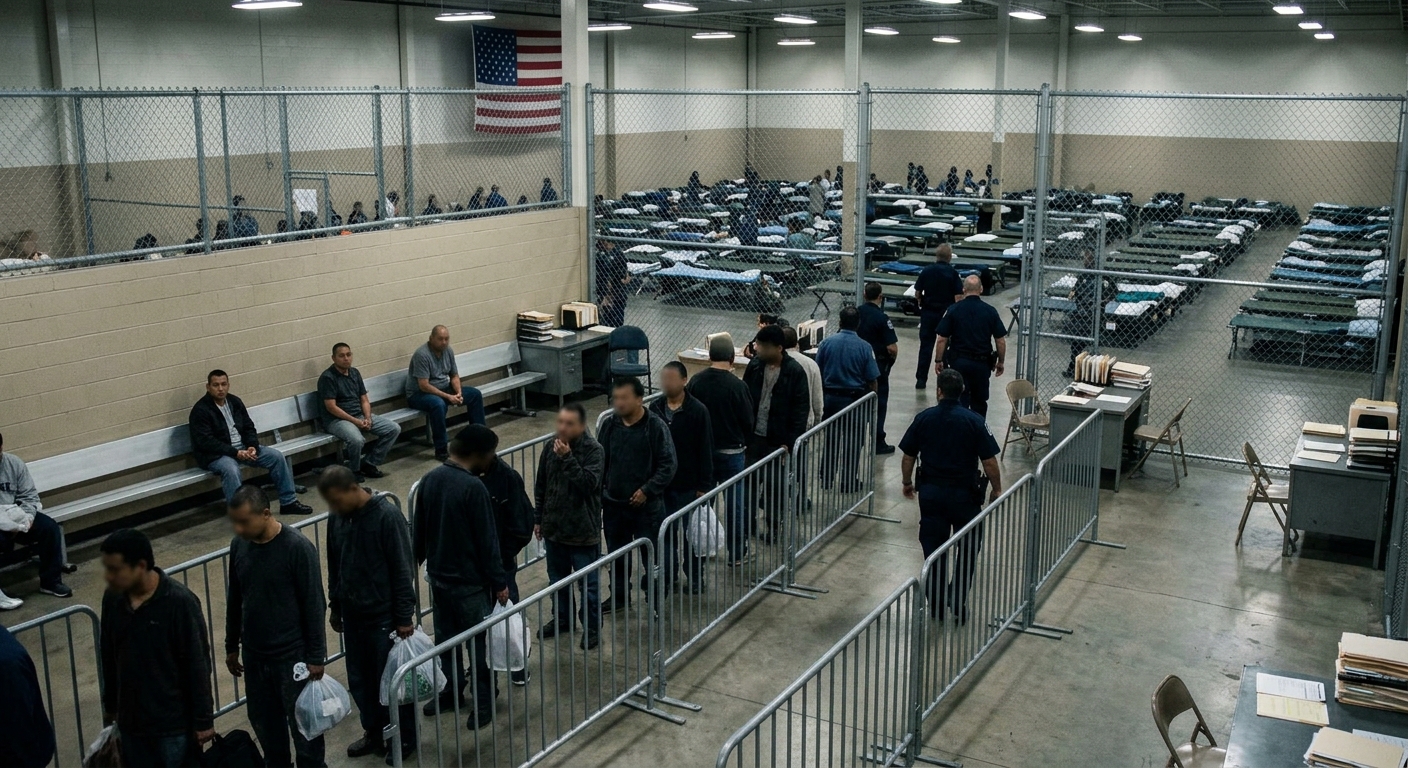
The intersection of immigration enforcement and human rights remains one of the most heavily debated spaces in American public policy. At the center of this conversation lies the complex network of detention centers managed by U.S. Immigration and Customs Enforcement (ICE). While the stated purpose of these facilities is merely to house noncitizens pending civil immigration proceedings, independent investigations consistently paint a darker picture. Reports generated by official government watchdogs—most notably the Department of Homeland Security’s Office of Inspector General (OIG) and the Government Accountability Office (GAO)—have rigorously documented alarming, systemic failures across this detention network. These audits expose deeply ingrained operational deficiencies that endanger the lives, health, and psychological well-being of thousands of detainees. From severe medical understaffing and the unregulated misuse of solitary confinement to broken internal grievance systems, the findings demand immediate attention. By analyzing unannounced inspection reports from locations such as the La Palma Correctional Center in Arizona, and aggregating data from nationwide oversight initiatives, a clear pattern emerges. The infrastructure designed to safely house noncitizens is buckling under the weight of inadequate government oversight, profit-driven contractor models, and a culture that routinely deprioritizes basic human standards.
The Architecture of Detention Oversight and Standards
To grasp the persistence of failures within the immigration detention system, it is necessary to examine the bureaucratic mechanisms intended to keep it accountable. ICE relies on Performance-Based National Detention Standards (PBNDS). These standards dictate expected baselines for healthcare, food quality, and use of physical force. However, creating standards and actively enforcing them are two conflicting endeavors. Oversight is functionally fractured across several entities. The ICE Office of Detention Oversight (ODO) conducts routine audits. Yet, external watchdogs frequently characterize these reviews as insufficient, noting facilities regularly receive passing grades despite glaring operational realities. Consequently, the most actionable insights come from independent entities like the DHS OIG and GAO. The OIG conducts unannounced inspections, bypassing sanitized presentations facilities prepare for scheduled audits. These surprise visits are instrumental in uncovering hazards that standard audits miss. Furthermore, the GAO analyzes overarching macro-management, finding systemic gaps in how data is utilized. Recent evaluations indicate that while ICE possesses channels for evaluating standards, it lacks the robust analytical framework required to track, identify, and permanently address recurring issues.
Severe Medical Care Deficiencies and Staffing Crises
The most harrowing revelations emerging from OIG inspections involve the dire state of medical and mental health care within ICE facilities. PBNDS regulations explicitly require detention centers to maintain adequate medical staffing to provide timely health assessments, dispense medications accurately, and respond swiftly to emergencies. Yet, unannounced inspections reveal a healthcare system stretched beyond its breaking point, largely driven by chronic understaffing. In numerous facilities—including prominently documented cases like the La Palma Correctional Center in Arizona—investigators discovered internal medical units operating with staggering personnel vacancy rates. This critical shortage translates to perilous delays in care. Patients suffering from chronic conditions frequently report missing critical medication doses because there are simply not enough staff members on duty to complete distribution rounds. Mental health care is similarly neglected. Detainees with psychological vulnerabilities often languish without access to psychiatric professionals, leading to preventable outcomes including self-harm. The unprecedented stress of the COVID-19 pandemic magnified these vulnerabilities. Watchdog reports noted that during peak outbreaks, several facilities inexplicably failed to enforce fundamental precautions—such as universal masking and timely quarantine protocols—directly contributing to massive viral transmission.
| Operational Area | PBNDS Mandate | Documented Watchdog Findings |
|---|---|---|
| Medical Staffing | Maintain sufficient medical personnel to ensure timely care. | Chronic vacancies leading to delayed chronic and emergency treatment. |
| Infection Control | Strict adherence to communicable disease protocols. | Failure to enforce distancing or distribute PPE effectively during outbreaks. |
| Medication Administration | Timely and accurate dispensation of prescribed drugs. | Frequent missed doses due to lack of available nursing staff on shift. |
Security Protocols, Use of Force, and Segregation Hazards
Beyond medical neglect, daily security practices within many ICE centers consistently raise profound human rights concerns. The use of administrative segregation is strictly intended as a temporary measure of absolute last resort, utilized solely for severe disciplinary infractions or genuine safety requirements. Instead, multiple OIG reports document facilities utilizing segregation as a standard population management tool. Detainees, including those with pre-existing mental health diagnoses, have been placed in strict isolation for prolonged periods without legal justification or mandatory psychological reviews. This unchecked misuse of segregation violates internal detention standards and inflicts severe psychological harm on a traumatized population. Furthermore, comprehensive investigations highlight alarming irregularities regarding the application of physical force. In some privately contracted facilities, guards rapidly deploy chemical agents against non-violent detainees prior to exhausting verbal de-escalation techniques. Compounding the physical danger is a persistent lack of official documentation. When force is utilized, PBNDS mandates rigorous reporting and medical evaluations. Watchdogs repeatedly find that facility staff fail to properly document these critical incidents, submit incomplete reports, or omit required audiovisual recordings, effectively shielding abusive behavior from external scrutiny.
Substandard Living Conditions and Grievance Systems
The physical environment of daily confinement is another area where facilities egregiously fall short of federal mandates. Unannounced OIG inspections repeatedly uncover deplorable living conditions that violate basic environmental safety standards. Detainees frequently endure mold-infested bathrooms, dilapidated plumbing, and extremely poor indoor ventilation. Food service operations are equally problematic; investigators have noted expired goods, unsanitary kitchen areas, and meals failing to meet nutritional requirements. When individuals attempt to formally report these degrading conditions, they are met with a dysfunctional grievance system. The GAO highlighted that while ICE operates a Detention Reporting and Information Line, the resolution of complaints is abysmal. Between fiscal years 2017 and 2019, the reporting line received over 13,000 allegations regarding severe medical neglect, property confiscation, and physical abuse.
- Lack of Timely Responses: Facility staff routinely fail to respond to formal grievances within the strict timeframe mandated by ICE standards.
- Superficial Investigations: Institutional responses are often dismissive, completely lacking any substantive investigation into the root cause of the stated grievance.
- Failure to Analyze Data: ICE does not comprehensively analyze submitted complaint data at a national level. By treating every grievance as an isolated event, the agency consistently misses critical opportunities to identify broader patterns of abuse.
The Profit Motive: Private Operators and Lack of Accountability
A significant factor directly contributing to these entrenched failures is the federal government’s heavy reliance on for-profit prison corporations to operate the vast majority of ICE detention beds. This privatization model introduces an inescapable conflict of interest: the corporate imperative to maximize shareholder profit frequently opposes the financial investment required to maintain high standards of medical care and adequate staffing. Contractual agreements between ICE and these private entities often include lucrative guaranteed minimums, essentially ensuring companies are paid for a specific number of beds regardless of occupancy. Despite these massive financial guarantees, facilities are consistently cited for severe understaffing—a primary driver of increased corporate profit margins. When private operators blatantly fail to meet the PBNDS, ICE holds the clear administrative authority to impose strict financial penalties or terminate contracts. However, oversight bodies have consistently noted that ICE rarely utilizes these punitive measures, effectively granting private operators functional impunity.
Pathways to Meaningful and Sustained Reform
Addressing the deeply entrenched dysfunction within the U.S. immigration detention system requires immediate, aggressive intervention. The recommendations put forth by the DHS OIG and the GAO provide a clear roadmap for necessary systemic reforms. First, ICE must fundamentally overhaul its internal audit mechanisms, transitioning away from predictable, scheduled inspections toward rigorous, unannounced evaluations that accurately capture true daily conditions. Furthermore, ICE must implement robust data analytics to track and synthesize grievance reports across all facilities. By proactively identifying localized hot spots of complaints—whether involving medical neglect or unauthorized use of force—the agency can intervene before catastrophic failures occur. Finally, lasting accountability will only be achieved when ICE demonstrates the willingness to strictly enforce severe financial penalties on contractors who repeatedly fail to uphold the PBNDS.
Frequently Asked Questions (FAQ)
What are the Performance-Based National Detention Standards (PBNDS)?
The PBNDS are official guidelines established by ICE to strictly govern the operations of immigration detention facilities, covering critical aspects like medical care, use of force, and grievance procedures.
Who is responsible for auditing ICE detention facilities?
Oversight involves ICE’s internal Office of Detention Oversight (ODO), but crucial independent audits are provided by the DHS Office of Inspector General (OIG) and systemic analyses by the Government Accountability Office (GAO).
Why is medical understaffing a common issue in these centers?
Many ICE facilities are privately operated. Keeping staffing levels intentionally low significantly reduces overhead operational costs and increases corporate profit margins, directly causing severe delays in medical care.
What happens if a detention center fails an OIG inspection?
The OIG issues a public report outlining violations. While ICE is supposed to enforce compliance and can impose financial penalties or revoke contracts, watchdogs note that ICE rarely holds private operators strictly accountable.
References
- Immigration Detention: ICE Can Improve Oversight and Management (GAO-23-106350) — U.S. Government Accountability Office. 2023-01-09. https://www.gao.gov/products/gao-23-106350
- Violations of Detention Standards Amidst COVID-19 Outbreak at La Palma Correctional Center in Eloy, AZ (OIG-21-30) — Office of Inspector General, Department of Homeland Security. 2021-03-30. https://www.oig.dhs.gov/sites/default/files/assets/2021-03/OIG-21-30-Mar21.pdf
- Immigration Detention: DHS Should Define Goals and Measures to Assess Facility Inspection Programs (GAO-25-107580) — U.S. Government Accountability Office. 2025-05-21. https://www.gao.gov/products/gao-25-107580
Similar Articles








Read full bio of medha deb




