
Systemic Failures in U.S. Immigration Detention
Examining systemic oversight failures and solitary confinement in detention.
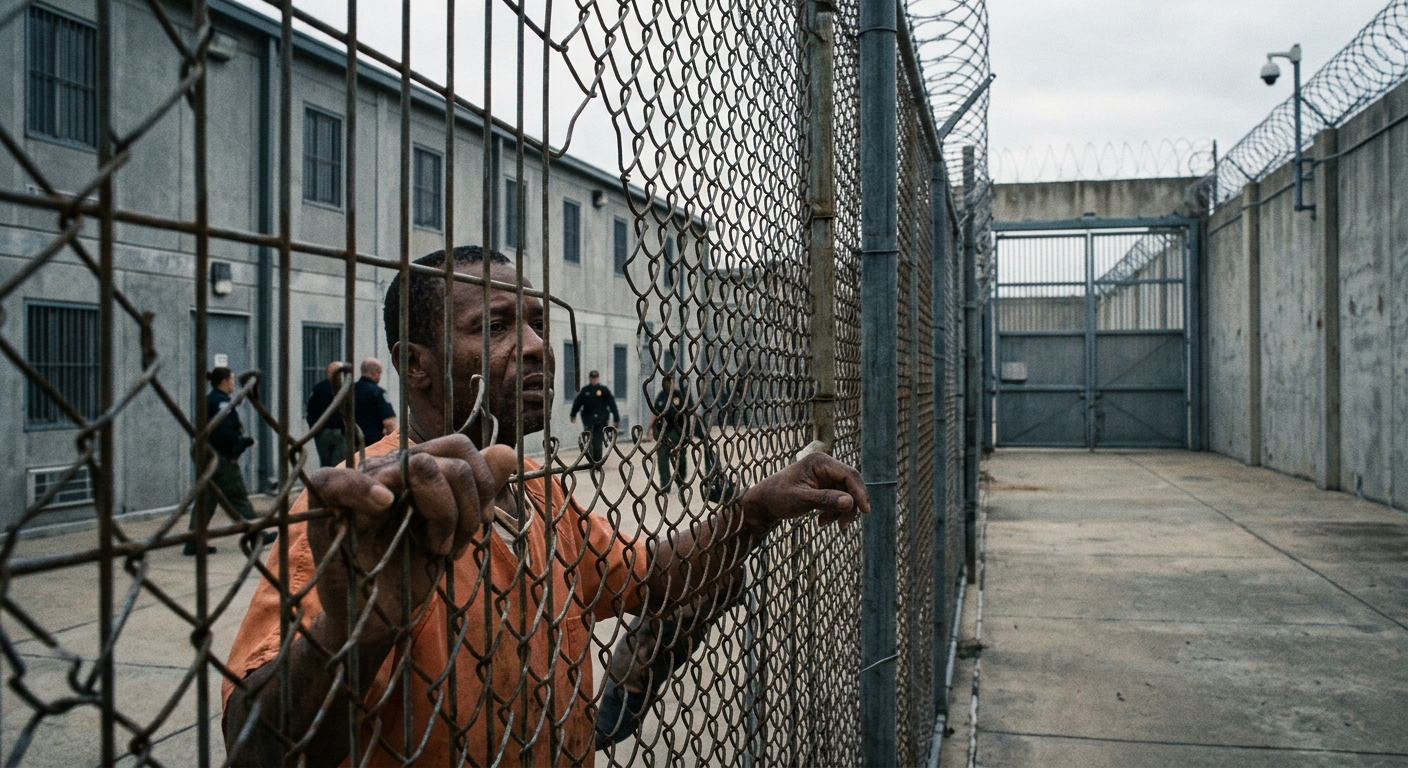
The Architecture of Isolation in a Civil System
In the United States, the immigration detention system operates under the legal premise of civil, administrative confinement rather than criminal punishment. The primary objective of this system is simply to ensure that individuals appear for their immigration proceedings or await deportation. However, the operational and architectural realities of these facilities often mirror maximum-security prisons. One of the most glaring examples of this contradiction is the widespread use of solitary confinement, an extreme carceral measure that strips individuals of meaningful human contact and subjects them to profound psychological strain.
Despite being held for non-punitive reasons, thousands of immigrants—many of whom are asylum seekers fleeing persecution or individuals with deep roots in the United States—find themselves locked in small, isolated cells for 22 to 24 hours a day. The reliance on this severe form of isolation exposes deeply entrenched systemic failures within detention facility management. Instead of operating as a temporary, last-resort measure for critical safety issues, isolation is frequently utilized as a standard management tool, pointing to a critical breakdown in both policy enforcement and institutional oversight.
Administrative vs. Disciplinary Segregation
Within the bureaucratic framework of detention management, solitary confinement is officially categorized into two distinct types: administrative segregation and disciplinary segregation. Understanding the difference between these classifications is crucial to comprehending how the system circumvents its own intended limitations.
Disciplinary Segregation: This form of isolation is explicitly punitive. It is intended to be used only after a formal process determines that a detained individual has committed a serious violation of facility rules. Policies stipulate that it should be a measured response, complete with due process protections, hearings, and strict time limits.
Administrative Segregation: Conversely, administrative segregation is ostensibly non-punitive. It is meant for individuals who require medical isolation, are pending a disciplinary hearing, or require protective custody because they are vulnerable to violence in the general population. However, because administrative segregation does not require the same rigorous due process as disciplinary segregation, it is frequently abused. Facility operators often use it as a default mechanism for managing diverse populations, bypassing the need for formal justification.
| Segregation Type | Official Purpose | Observed Reality & Misuse |
|---|---|---|
| Administrative | Non-punitive medical isolation, safety, or protective custody. | Indiscriminately used for population control; disproportionately harms vulnerable groups. |
| Disciplinary | Punitive isolation following a formal finding of a severe rule violation. | Deployed without adequate due process; frequently used as a first-response tool. |
The 2013 Policy Directives: A Framework Ignored
Recognizing the severe consequences of isolation, federal authorities issued a comprehensive directive in 2013 aimed at strictly regulating segregation within civil detention facilities. This directive was heralded as a major step toward accountability. It explicitly mandated that solitary confinement be utilized exclusively as a last resort, particularly emphasizing the need to protect populations with special vulnerabilities, such as those with severe mental illnesses, chronic physical disabilities, or individuals who identify as LGBTQ+.
The 2013 guidelines established rigorous reporting and oversight mechanisms. Facilities were required to meticulously document the rationale for placing an individual in segregation, prove that less restrictive alternatives had been considered and exhausted, and provide continuous centralized reporting to headquarters. If an individual with a known vulnerability was placed in isolation, or if a stay extended beyond 14 days, elevated administrative review was legally required to prevent indefinite confinement.
Yet, the existence of a policy is meaningless without enforcement. Over a decade later, the foundational tenets of this directive remain largely ignored by the private contractors and local authorities that manage the vast majority of these detention centers.
Watchdog Investigations and Systemic Failures
The chasm between policy and practice has been repeatedly exposed by internal government watchdogs. Independent audits and reports generated by the Department of Homeland Security’s Office of Inspector General (OIG) have cast a harsh light on the daily operational reality of these facilities. Investigations have routinely concluded that federal oversight is woefully inadequate, allowing widespread and unchecked violations of the segregation directives.
- Missing Documentation: Auditors frequently find that facilities fail to maintain the necessary paperwork justifying why an individual was placed in solitary confinement. Crucial assessments of less restrictive alternatives are often blank or completely absent from detainee files.
- Prolonged Placements: Individuals are routinely left in isolation well beyond the permitted timelines without the mandatory reviews from field office directors. This transforms temporary placements into indefinite psychological torture.
- Record Retention Violations: Investigative bodies have noted rampant issues with record keeping, where facilities prematurely destroy evidence of segregation usage or maintain disjointed tracking systems (such as inconsistent spreadsheets), making accurate centralized audits impossible.
- First Resort Rather Than Last: Rather than exhausting all other options, facilities frequently utilize segregation as an immediate solution for minor infractions, mental health crises, or mere administrative convenience.
These findings point to a systemic culture of non-compliance. Without the credible threat of financial penalties or contract termination for the operators of these facilities, the internal directives serve merely as suggestions rather than binding operational laws.
The Protection Paradox: Vulnerability as a Liability
Perhaps the most devastating application of solitary confinement in immigration detention involves those who are placed in “protective custody.” Individuals who identify as LGBTQ+, particularly transgender women, as well as detainees with severe mental health conditions, are often targeted for violence or harassment within the general facility population. In response, instead of creating safe, integrated housing solutions, facility administrators frequently place these individuals in administrative segregation.
This creates a cruel paradox: individuals who are already traumatized or marginalized are subjected to the most punitive, restrictive environment available under the guise of protection. They are denied access to communal dining, outdoor recreation, educational programming, and sometimes even legal resources. For an asylum seeker who has fled torture or persecution, being locked in a tiny cell for 23 hours a day for their own “safety” exacerbates existing trauma and actively punishes them for their vulnerability.
The Devastating Health Consequences of Isolation
The human toll of solitary confinement cannot be overstated. Decades of medical and psychological research have conclusively demonstrated that sensory deprivation and social isolation induce profound psychological degradation. Within days, individuals subjected to these conditions can begin to experience extreme anxiety, paranoia, hallucinations, and severe depression. For those with pre-existing mental health conditions—a demographic heavily represented in civil detention—the effects are rapid and often irreversible.
The international community has long recognized the catastrophic impacts of this practice. The United Nations Standard Minimum Rules for the Treatment of Prisoners, commonly known as the Nelson Mandela Rules, definitively state that solitary confinement extending beyond 15 consecutive days constitutes prolonged solitary confinement, which can amount to torture or cruel, inhuman, and degrading treatment.
In the context of U.S. immigration detention, where individuals have not been convicted of a crime and are merely navigating the complex civil immigration system, subjecting them to conditions that violate international human rights standards is a profound moral failure. The resultant physical impacts—ranging from cardiovascular stress to a severely increased risk of self-harm and suicide—highlight an urgent public health crisis occurring behind closed doors.
Avenues for Accountability and Systemic Reform
Addressing this systemic crisis requires more than simply issuing new internal memos. True reform demands a fundamental overhaul of how accountability is structured within the immigration enforcement apparatus. Legislative action is imperative to strictly prohibit the use of solitary confinement for any vulnerable individual, including those with mental or physical disabilities, and those seeking protective custody.
Furthermore, there must be strict, enforceable limits on the duration of any isolation placement, aligning domestic policies with the 15-day limit established by the Nelson Mandela Rules. Federal oversight bodies must be granted the authority to impose immediate, severe financial penalties on private contractors and county jails that fail to report segregation data or retain necessary records.
Finally, Congress must demand total transparency. The creation of a centralized, publicly accessible database tracking every instance of segregation in civil detention would strip away the opacity that currently allows these abuses to flourish. Without independent eyes on the system, the cycle of policy violation and human suffering will inevitably continue.
Conclusion
The ongoing misuse of solitary confinement within U.S. immigration detention represents a critical failure of oversight and a betrayal of the civil nature of these facilities. When individuals are subjected to psychological torture simply because a facility lacks the resources or will to manage them humanely, it ceases to be an administrative process and becomes an instrument of systemic abuse. Eradicating this practice is not just a matter of regulatory compliance; it is a fundamental imperative for preserving human dignity and adhering to international human rights standards.
Frequently Asked Questions (FAQs)
What is the difference between administrative and disciplinary segregation?
Administrative segregation is officially intended for non-punitive reasons, such as medical isolation or protective custody. Disciplinary segregation is used as a punishment following a formal finding of a rule violation. However, in practice, administrative segregation is often used in a way that is indistinguishable from punishment.
How does solitary confinement impact a person’s mental health?
Solitary confinement causes severe psychological harm, including anxiety, paranoia, severe depression, and hallucinations. It significantly increases the risk of self-harm and suicide, and these effects can begin manifesting within just a few days of isolation.
What are the Nelson Mandela Rules?
The Nelson Mandela Rules are the United Nations Standard Minimum Rules for the Treatment of Prisoners. They state that placing an individual in solitary confinement for more than 15 consecutive days is considered “prolonged solitary confinement” and can amount to torture.
Why are vulnerable populations disproportionately affected?
Facilities often use solitary confinement as a default method for managing individuals who require special care or protection, such as those with mental illnesses or LGBTQ+ individuals. Instead of providing safe housing, administrators lock them in isolation under the guise of “protective custody.”
Why is oversight so difficult in immigration detention?
Many detention centers are operated by private contractors or local county jails. Poor record-keeping, reliance on disjointed tracking systems, and the destruction of segregation documents make it extremely difficult for federal watchdogs to accurately audit and regulate facility practices.
References
- ICE Needs to Improve Its Oversight of Segregation Use in Detention Facilities (OIG-22-01) — Department of Homeland Security Office of Inspector General. 2021-10-13. https://www.oig.dhs.gov/sites/default/files/assets/2021-10/OIG-22-01-Oct21.pdf
- United Nations Standard Minimum Rules for the Treatment of Prisoners (the Nelson Mandela Rules) — United Nations Office on Drugs and Crime. 2015-12-17. https://www.unodc.org/documents/justice-and-prison-reform/Nelson_Mandela_Rules-E-ebook.pdf
- Directive 11065.1: Review of the Use of Segregation for ICE Detainees — U.S. Immigration and Customs Enforcement. 2013-09-04. https://www.ice.gov/doclib/detention-reform/pdf/segregation_directive.pdf
- Solitary Confinement Use in Immigration Detention Before and After the Beginning of the SARS-CoV-2 Pandemic — Journal of General Internal Medicine (Springer). 2023-02-07. https://www.ncbi.nlm.nih.gov/pmc/articles/PMC9904712/
Similar Articles








Read full bio of medha deb




