
Systemic Failures and International Scrutiny: Examining Human Rights in U.S. Immigration
Exploring the widespread injustice in U.S. immigration, from labor exploitation to detention abuses.
The Deepening Crisis of Immigration Enforcement
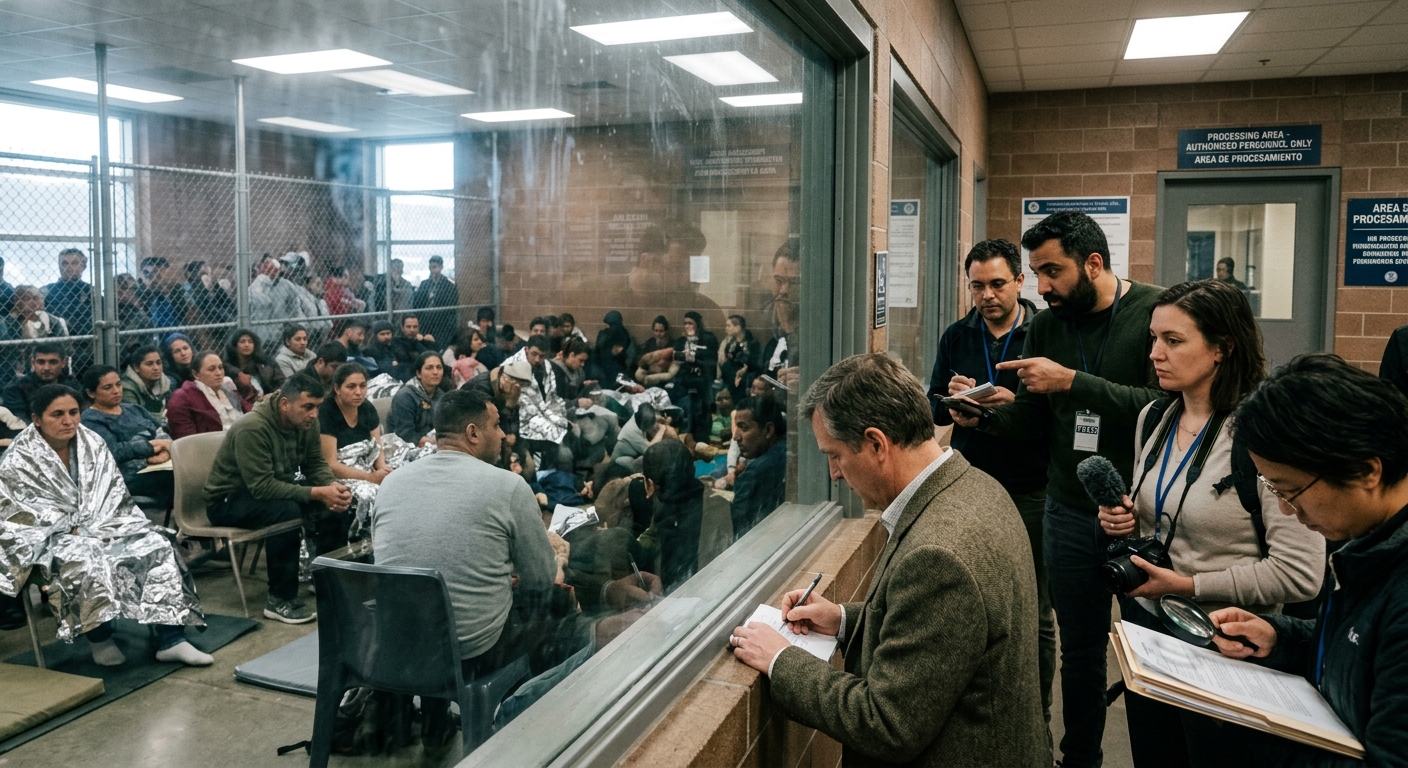
The United States’ immigration enforcement apparatus has long operated under intense scrutiny, frequently drawing condemnation from civil liberties organizations, legal advocates, and international human rights bodies alike. For decades, stories of widespread injustice have permeated the national consciousness, highlighting a system seemingly designed to punish rather than efficiently and fairly process those seeking a better life. From the harrowing conditions inside sprawling, multi-billion-dollar detention facilities to the silent suffering of exploited agricultural workers laboring in the nation’s rural heartlands, the human rights of migrants are continually under severe threat.
These persistent, systemic abuses have routinely prompted critical interventions from global entities, such as the United Nations Special Rapporteur on the human rights of migrants, who seek to hold the government accountable to fundamental international standards. As global migration patterns rapidly shift in response to climate change, economic instability, and political persecution, the absolute necessity for a humane, dignified immigration policy has never been more urgent. Ignoring these widespread abuses not only violates established international legal frameworks but also profoundly compromises the core democratic values that prioritize justice and equality for all. This analysis examines the multifaceted dimensions of migrant rights violations in the U.S., exploring the grim realities of civil detention, the systemic exploitation of immigrant labor, the pervasive criminalization of marginalized communities by militarized police forces, and the vital importance of international oversight in driving meaningful reform.
The Crucible of Detention: Overcrowding and Inhumane Conditions
Immigration detention in the United States has morphed into a sprawling, highly lucrative apparatus that frequently operates with minimal oversight and a profound disregard for basic human rights. Testimonies collected over the years by global human rights organizations, domestic civil liberties groups, and international watchdogs paint a harrowing picture of daily life inside these secured facilities. Widespread accounts consistently describe horrifying levels of overcrowding that openly defy standard health and safety regulations. In some historical and ongoing instances, physical spaces originally designed to hold half a dozen individuals have been found crammed with more than twenty people. These detainees are forced to endure unsanitary, suffocating conditions where disease can spread rapidly and basic personal space is virtually nonexistent.
The cruelty within these walls often extends far beyond mere structural inadequacy or bureaucratic neglect; it is frequently woven into the very fabric of how these centers are managed by private contractors and federal agencies. Advocacy groups have documented chilling, detailed reports of guards allegedly utilizing existing racial and ethnic divisions to stoke violence among the detained population. In some verified accounts, officers were accused of deliberately classifying detainees incorrectly to incite conflict within specific housing pods, effectively weaponizing the inmates against one another. Furthermore, investigations have revealed critical failures in basic security protocols, the improper use of physical restraints, and devastating delays in providing essential medical treatment. When basic healthcare is denied or delayed, treatable conditions can rapidly deteriorate into life-threatening emergencies, further highlighting the deep systemic negligence that plagues these facilities nationwide.
Despondency is a common, tragic thread running through the entire detention system. With many detainees facing the terrifying, prolonged prospect of deportation back to countries where they fear for their physical safety or lives, the psychological toll is immense. These deeply hostile environments are exacerbated by severe mental health neglect, psychological abuse, and the routine use of solitary confinement as a punitive measure rather than a necessary safety protocol. In extreme cases, this overwhelming despair has driven individuals to tragic ends, including preventable suicides. Such devastating outcomes underscore the urgent, unignorable need to treat civil immigration detention not as a default punitive measure, but rather as an exceptional, last-resort action, as strictly prescribed by international human rights law.
The Invisible Workforce: Labor Exploitation and Vulnerability
While the federal detention system represents the most visceral and visible manifestation of immigrant criminalization, a quieter but equally insidious crisis unfolds continuously in the nation’s fields, agricultural processing plants, factories, and restaurant kitchens. Immigrant workers, particularly those employed in the massive agricultural sector, form the indispensable, load-bearing backbone of the American food supply chain. Yet, despite their ‘essential’ designation during national emergencies, they remain among the most fiercely exploited, underpaid, and legally unprotected laborers in the country.
Advocates and rural legal assistance programs continuously highlight the dire plight of farmworkers and day laborers who endure grueling, physically destructive conditions that routinely violate fundamental labor protections. Accounts from representatives working directly with these communities reveal a grim, inescapable reality: laborers are frequently forced to work six or seven days a week, often toiling from before sunrise until well after dark, effectively never seeing the sun outside of their labor. They do this without access to legally mandated rest periods, appropriate hydration breaks, overtime pay, or employer-sponsored medical insurance. For many South Asian, Latino, and other immigrant laborers, compounding language barriers and a profound lack of familiarity with the intricate U.S. legal system create a pervasive, crippling vulnerability that unscrupulous employers actively exploit.
The Migrant and Seasonal Agricultural Worker Protection Act (MSPA) and other federal fair labor statutes theoretically offer a robust web of safeguards for these essential workers. However, without rigorous, proactive enforcement by government agencies, these laws are rendered virtually meaningless on the ground. Unscrupulous employers and unregulated farm labor contractors frequently weaponize the precarious immigration status of their workforce to maintain complete operational control. They operate on the calculated assumption that undocumented individuals, or those relying on restrictive temporary H-2A visas bound to a single employer, are significantly less likely to report egregious wage theft, sexual harassment, or dangerous working conditions. The ever-present threat of employer retaliation—which can swiftly lead to sudden job loss, eviction from company housing, and immediate deportation—ensures a powerful culture of silence where widespread exploitation goes unpunished and uncorrected.
Militarized Enforcement and the Criminalization of Communities
The systemic injustice faced by migrants is further compounded by the aggressive, often militarized tactics employed by local and federal law enforcement agencies operating within their communities. The criminalization of immigrants frequently spills out of the exploitative workplace and the shadows of detention centers, directly impacting families and neighborhoods attempting to engage in peaceful civic action and daily life. Routine traffic stops or minor civic infractions can swiftly escalate into life-altering encounters with federal immigration authorities, weaving a persistent net of severe anxiety over entire communities.
A historical flashpoint that continues to resonate powerfully in contemporary discussions of police violence against immigrant populations occurred during the May Day immigration rallies of 2007 in Los Angeles. During what was explicitly organized and intended to be a peaceful, family-oriented demonstration advocating for comprehensive immigration reform and basic civil rights, tensions escalated dramatically at MacArthur Park. Following minor provocations from a very small, isolated group of individuals, law enforcement officers operating in heavily armed riot gear chose to aggressively clear the entire park. They deployed batons and fired hundreds of less-lethal foam projectiles indiscriminately into dense crowds composed of families, young children, peaceful marchers, and even credentialed members of the press covering the historic event.
This heavily scrutinized incident of unjustified violence serves as a stark, enduring illustration of the broader, systemic criminalization of immigrant communities in the United States. When the constitutional right to peaceful assembly is met with overwhelming, disproportionate state force, it sends a clear, intimidating message: marginalized groups will continuously bear the brunt of abusive policing tactics. These traumatizing incidents not only cause immediate, sometimes permanent physical harm, but they also inflict lasting, multi-generational psychological damage. They fracture the already fragile trust between immigrant neighborhoods and the very municipal institutions ostensibly tasked with serving and protecting them, ultimately making everyone in society considerably less safe.
The Essential Role of International Oversight
Given the deeply entrenched, highly politicized nature of these domestic challenges, the direct involvement of international human rights mechanisms is absolutely crucial for maintaining transparency and demanding accountability. The United Nations Special Rapporteur on the human rights of migrants plays a uniquely pivotal role in independently investigating, meticulously documenting, and globally exposing these widespread injustices. Through official, government-sanctioned country visits, the Special Rapporteur is able to gather unfiltered, firsthand testimonies directly from those most impacted: detained individuals shivering in holding cells, farmworkers toiling in the fields, civil society organizations fighting in the courts, and the government officials responsible for policy implementation.
These specialized international observers provide an essential, objective assessment of how a nation’s domestic laws and enforcement practices align with binding global human rights standards and treaties. A core tenet of their mandate emphasizes that the deprivation of human liberty should never be utilized as a deterrent or a punishment for irregular entry or stay. The Special Rapporteur consistently and forcefully advocates for the widespread implementation of community-based alternatives to detention, highlighting that incarcerating vulnerable populations—such as unaccompanied children, pregnant women, and trauma survivors fleeing severe persecution—is a profound violation of their fundamental human rights. By elevating the localized, often ignored voices of the marginalized to the highest global stage, international mandates pressure sovereign governments to confront their systemic, institutional failures. They provide a vital blueprint for enacting meaningful, human-rights-centered reforms that prioritize human dignity over harsh deterrence.
Forging a Path Toward Accountability and Reform
Addressing and ultimately dismantling the widespread injustice embedded deeply within the U.S. immigration system requires a comprehensive, multi-faceted, and unwavering commitment from all levels of government. Superficial changes are no longer sufficient; systemic overhauls must be implemented to protect the fundamental rights of all individuals residing within the country’s borders.
- Ending Mass Incarceration: There must be a definitive paradigm shift away from the highly profitable mass incarceration of migrants. Federal funds currently allocated to expanding the physical footprint of the detention infrastructure should be immediately redirected toward robust, community-based case management programs. These proven programs respect human dignity, keep families united, and ensure high rates of compliance with immigration court proceedings without unnecessarily stripping vulnerable individuals of their liberty.
- Enforcing Labor Rights: Fundamental labor rights must be aggressively and uniformly enforced across all economic sectors, absolutely regardless of a worker’s immigration status. Empowering federal and state labor agencies to severely penalize exploitative employers and predatory farm labor contractors will help dismantle the perverse economic incentives that currently drive the systemic abuse of migrant laborers.
- Demanding Police Accountability: Law enforcement agencies must be held to the highest standards of accountability for the disproportionate use of force and racial profiling against immigrant communities. Independent oversight boards, mandatory de-escalation training, and strict limits on cooperation between local police and federal immigration enforcement are vital steps.
Only through rigorous oversight, the provision of universal legal representation for those navigating the complex immigration system, and an unwavering, institutionalized commitment to fundamental human rights can the United States truly hope to rectify these profound systemic injustices and honor its historical legacy as a sanctuary for those seeking a better life.
Frequently Asked Questions (FAQs)
What is the primary role of the UN Special Rapporteur on the human rights of migrants?
The UN Special Rapporteur is an independent expert appointed by the United Nations Human Rights Council to examine and report on the human rights conditions of migrants worldwide. They conduct fact-finding country visits, gather testimonies from impacted communities, and issue recommendations to governments to ensure their immigration policies comply with international human rights standards. While they are not authorized to enforce laws directly, their comprehensive reports hold significant diplomatic weight and are frequently used by the UN General Assembly to guide and shape international policy.
Why are immigrant farmworkers particularly vulnerable to labor exploitation?
Immigrant farmworkers often face intersecting vulnerabilities, including a lack of legal immigration status, restrictive temporary work visas (such as the H-2A program), language barriers, and deep geographic isolation. These compounding factors create an extreme power imbalance, making workers highly hesitant to report wage theft, unsafe conditions, or physical abuse for fear of severe employer retaliation, loss of housing, and potential deportation.
What are some proposed alternatives to the mass detention of migrants?
Human rights organizations and international experts strongly advocate for community-based alternatives to detention (ATD). These programs allow individuals to reside safely in communities while their complex immigration cases are processed. Effective ATDs rely on holistic case management, providing access to necessary legal representation, medical care, and social services. These programs have been statistically proven to ensure extremely high rates of compliance with court appearances at a mere fraction of the financial and human cost of physical detention.
How does the criminalization of migrants affect broader public safety?
When local law enforcement agencies aggressively criminalize immigrant communities or collaborate extensively with federal immigration authorities, it severely erodes essential public trust. Immigrants and their family members become deeply afraid to report crimes, act as witnesses, or seek essential medical and emergency services. This widespread fear undermines community policing efforts and ultimately makes entire neighborhoods far less safe for everyone, as true public safety relies intrinsically on the cooperation, communication, and trust of all community members regardless of their legal immigration status.
References
- Detained Immigrants Detail Physical Abuse and Inhumane Conditions at Largest Immigration Detention Center in the U.S. — American Civil Liberties Union. 2025-12-08. https://www.aclu.org/press-releases/detained-immigrants-detail-physical-abuse-and-inhumane-conditions-at-largest-immigration-detention-center-in-the-u-s
- LAPD takes blame for park melee — Los Angeles Times. 2007-10-10. https://www.latimes.com/archives/la-xpm-2007-oct-10-me-lapd10-story.html
- Department of Labor halts enforcement of expanded labor protections for migrant farmworkers on H-2A temporary visas — Economic Policy Institute. 2025-06-24. https://www.epi.org/blog/department-of-labor-halts-enforcement-of-expanded-labor-protections-for-migrant-farmworkers-on-h-2a-temporary-visas/
- End of visit statement of the UN Special Rapporteur on the human rights of migrants, Felipe González Morales — OHCHR. 2019-07-17. https://www.ohchr.org/en/statements/2019/07/end-visit-statement-un-special-rapporteur-human-rights-migrants-felipe-gonzalez
- Migrant and Seasonal Agricultural Worker Protection Act (MSPA) — U.S. Department of Labor. 2024-01-01. https://www.dol.gov/agencies/whd/agriculture/mspa
Similar Articles








Read full bio of Sneha Tete


