
Systemic Disparities in School Discipline
Examining how school policing disproportionately harms marginalized students.
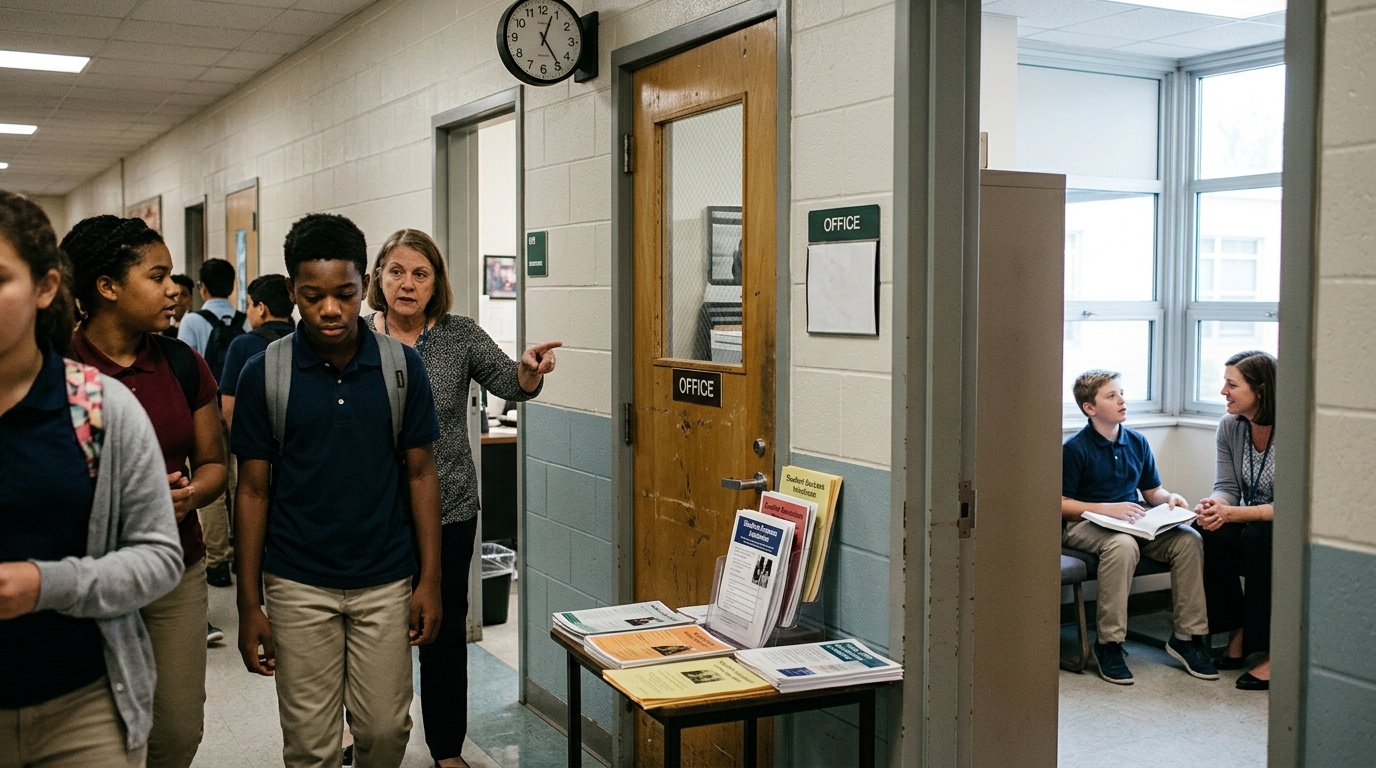
Public educational institutions are fundamentally designed to be safe havens for intellectual growth, social development, and community building. However, for a significant demographic of students in the United States, the classroom has increasingly become an entry point into the juvenile and adult criminal justice systems. This phenomenon, widely documented by educational researchers and civil rights advocates, illustrates a troubling trajectory where typical adolescent misbehavior is met with severe legal consequences rather than pedagogical intervention. By substituting administrative discipline with law enforcement action, educational environments inadvertently establish a pathway that pushes marginalized youth out of school and into the penal system.
Understanding this complex issue requires a deep examination of how policies evolved, who is most drastically affected by these punitive frameworks, and what systemic failures perpetuate the cycle. Through analyzing federal civil rights data, understanding the operational priorities of modern schools, and listening to the calls for systemic reform, we can begin to unravel the mechanisms of this institutional pipeline and explore viable, supportive alternatives.
The Institutionalization of School Policing
The contemporary landscape of school discipline is heavily defined by the widespread presence of law enforcement within educational facilities. Decades ago, student infractions such as skipping class, talking back to a teacher, or minor altercations were exclusively handled by school principals, counselors, and parents. The response was inherently educational, aimed at correcting behavior while keeping the student integrated within the school community.
The paradigm began to shift dramatically during the 1990s, driven by a wave of “zero-tolerance” policies and heightened public anxieties regarding youth crime and school safety. Federal initiatives and funding heavily incentivized the placement of School Resource Officers (SROs)—sworn law enforcement personnel—directly into middle and high schools. According to a recent survey by the Bureau of Justice Statistics, there were approximately 23,400 sworn SROs stationed in educational facilities nationwide by the end of the 2019–2020 school year. Furthermore, modern estimates suggest that a majority of public schools now employ some form of consistent security or police presence.
While the intended purpose of SROs was to protect students from external threats and serious violence, the practical reality has often resulted in the policing of routine student conduct. The presence of armed officers in hallways inherently changes the atmosphere of a school, subtly shifting the overarching philosophy from one of nurturing development to one of surveillance and control. When law enforcement officers are tasked with resolving everyday behavioral issues, the tools utilized are inevitably legal ones: citations, detainments, and formal arrests. Consequently, offenses that once resulted in detention or a meeting with parents now frequently yield criminal records.
The Unequal Burden: Analyzing Disproportionate Impact
The most alarming aspect of the increased reliance on school policing is not just the volume of student arrests, but the glaring inequities in who is being arrested. Extensive data collection over the past decade consistently reveals that the criminalization of student behavior does not affect all demographics equally. Instead, the burden falls disproportionately on students of color and students with disabilities.
Racial Inequities in Disciplinary Action
Data consistently indicates a stark racial divide in how school discipline is administered. The U.S. Government Accountability Office (GAO), utilizing civil rights data from public schools, has reported that Black, Native Hawaiian/Pacific Islander, and American Indian/Alaska Native students are subjected to disciplinary actions at alarmingly disproportionate rates. In many districts, Black students are arrested at rates two to three times higher than their White peers, despite research consistently showing that students of color do not misbehave at higher rates.
This disparity is often rooted in the subjective nature of many school offenses. While objective violations—such as possessing a weapon or illicit substances—are relatively clear-cut, many school arrests stem from subjective categories like “disorderly conduct,” “insubordination,” or “disrupting the educational process.” Implicit biases and systemic stereotypes heavily influence how these subjective behaviors are interpreted. An action that might be perceived as a minor annoyance when exhibited by a White student is frequently escalated as a threat or an act of aggression when exhibited by a Black or Brown student. This differing threshold for tolerance directly translates into higher rates of law enforcement referrals for youth of color.
The Intersecting Vulnerability of Disability
Students with disabilities represent another heavily criminalized demographic within the public school system. Individuals receiving services under the Individuals with Disabilities Education Act (IDEA) make up a distinct minority of the total student population, yet they account for a vastly disproportionate percentage of school-related arrests and physical restraints.
Many students with neurodivergent conditions, emotional disturbances, or behavioral disabilities require specialized accommodations, individualized education programs (IEPs), and trained interventions when they experience distress. However, when schools lack the necessary special education resources or properly trained support staff, administrators frequently default to calling the SRO to manage a student experiencing a behavioral crisis. Punishing a child for manifestations of their disability not only violates the core principles of equitable education but inflicts profound trauma. Subjecting a student to handcuffs and arrest because they are experiencing a psychological crisis highlights a severe institutional failure to provide appropriate care and accommodation.
Misaligned Resources: Law Enforcement Versus Mental Health Support
The escalation of student arrests is deeply intertwined with how educational funding is prioritized and allocated. For a school to function as a supportive ecosystem, it requires a robust network of mental health professionals, including school psychologists, social workers, counselors, and nurses. These professionals are specifically trained to de-escalate crises, address the root causes of behavioral issues, and provide trauma-informed care.
Unfortunately, many school districts prioritize the funding of security infrastructure and policing over mental health resources. Millions of students currently attend schools that have a dedicated law enforcement officer on campus but completely lack a school psychologist or social worker. When teachers and administrators are overwhelmed and lack access to dedicated behavioral health specialists, they have few options other than law enforcement when a student acts out. This fundamental misallocation of resources guarantees a punitive response to issues that are inherently psychological, emotional, or social.
| Aspect of Intervention | Traditional Punitive Policing | Therapeutic/Restorative Support |
|---|---|---|
| Primary Goal | Compliance, deterrence, and punishment. | Understanding root causes, accountability, and healing. |
| Methodology | Suspension, expulsion, citations, arrests. | Counseling, mediation, individualized behavioral plans. |
| Personnel Involved | School Resource Officers, police, administrators. | Social workers, psychologists, trained counselors. |
| Long-term Outcome | Increased dropout rates, legal system involvement. | Improved emotional regulation, sustained academic engagement. |
The Ripple Effects: Long-term Consequences of Law Enforcement Contact
The impact of a school-based arrest extends far beyond a single incident; it alters the fundamental trajectory of a young person’s life. The introduction to the legal system at a formative age creates a cascade of negative collateral consequences.
- Academic Disengagement: Students who are arrested or suspended lose vital instructional time. The stigma associated with being labeled a “problem student” or a “criminal” by their own school often leads to deep alienation. Consequently, these students demonstrate significantly lower attendance rates, poorer academic performance, and a drastically higher likelihood of dropping out entirely.
- Psychological Trauma: Being detained, handcuffed, and processed by police officers is an inherently traumatic experience, particularly for children. This trauma can exacerbate existing mental health struggles, breed a profound distrust of authority figures, and create an atmosphere of fear within the educational setting.
- Future Justice System Involvement: Criminological research consistently demonstrates that early contact with the juvenile justice system is one of the strongest predictors of future incarceration. A minor misdemeanor charge on a student’s record can limit their access to higher education, reduce employment opportunities, and establish a permanent cycle of systemic disenfranchisement.
Forging a New Path: Structural Solutions for Safer Schools
Dismantling the mechanisms that push students from the classroom into the courtroom requires a fundamental reimagining of what constitutes school safety. Safety cannot simply be defined by the presence of armed guards; true safety is cultivated in an environment where students feel supported, understood, and emotionally secure.
Implementing Restorative Justice Practices
Many progressive districts are actively shifting away from zero-tolerance frameworks and embracing restorative justice models. Restorative justice fundamentally changes how a school community views infractions. Instead of asking what rule was broken and how the offender should be punished, restorative practices ask who was harmed, what needs have arisen, and whose obligation it is to repair the harm. Through guided mediation, peer juries, and conflict resolution circles, students are held accountable for their actions in a way that promotes empathy and personal growth rather than exclusion and alienation. Evidence from districts utilizing these models shows significant drops in both behavioral incidents and out-of-school suspensions.
Reallocating Funds to Student Support Personnel
To implement effective behavioral interventions, schools must have the appropriate personnel. A critical step in systemic reform involves reallocating budgets to ensure schools meet recommended student-to-counselor ratios. By investing in social workers, behavioral interventionists, and school psychologists, districts can proactively address the trauma, poverty, and family distress that often manifest as classroom misbehavior. When professionals trained in adolescent psychology replace law enforcement as the primary responders to behavioral crises, the educational environment transforms from a site of policing to a site of genuine support.
Frequently Asked Questions (FAQs)
What exactly is the school-to-prison pipeline?
The school-to-prison pipeline refers to the systemic policies and practices within educational institutions—such as zero-tolerance discipline, increased police presence, and frequent out-of-school suspensions—that disproportionately push vulnerable youth out of schools and into the juvenile and adult criminal justice systems.
Why are School Resource Officers (SROs) controversial?
While advocates argue SROs provide essential security against external threats, critics point out that their daily duties often expand into enforcing standard school rules. Because SROs are trained as law enforcement rather than educators, their interventions frequently result in citations and arrests for minor behavioral issues, disproportionately affecting marginalized students.
How do implicit biases affect school discipline?
Implicit biases are unconscious attitudes or stereotypes that affect our understanding, actions, and decisions. In schools, implicit bias often leads to educators or officers perceiving the behavior of Black and Brown students as more aggressive or threatening than similar behavior exhibited by White students. This results in harsher punishments and more frequent law enforcement referrals for students of color.
What is a restorative justice approach in schools?
Restorative justice is a philosophy focused on repairing harm rather than merely punishing the offender. In a school setting, it involves strategies like peer mediation, community circles, and collaborative problem-solving. This approach keeps students in the classroom, helps them understand the impact of their actions, and strengthens the overall school community.
References
- K-12 Education: Differences in Student Arrest Rates Widen when Race, Gender, and Disability Status Overlap — U.S. Government Accountability Office (GAO). 2024-07-08. https://www.gao.gov/products/gao-24-106579
- 2020-21 Civil Rights Data Collection (CRDC) — U.S. Department of Education, Office for Civil Rights. 2025-01-16. https://civilrightsdata.ed.gov/
- The Role and Impact of School Resource Officers — RAND Corporation. 2024-11-25. https://www.rand.org/pubs/research_briefs/RBA3241-1.html
- School Resource Officers, 2019–2020 — Bureau of Justice Statistics. 2023-11-14. https://bjs.ojp.gov/library/publications/school-resource-officers-2019-2020
Similar Articles








Read full bio of Sneha Tete




