
Systemic Disparities in Police Traffic Stops
Uncovering the statistical realities of racial bias in routine police stops.
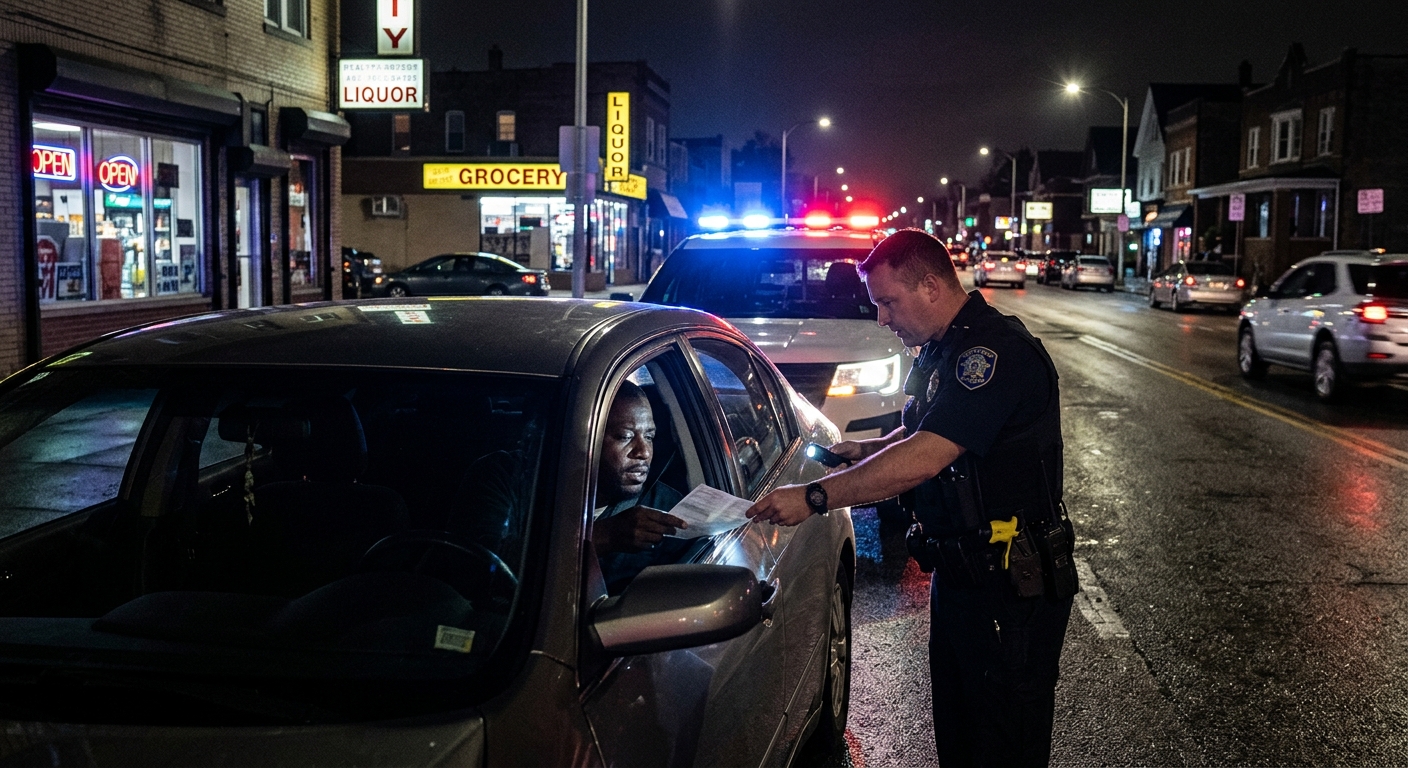
For decades, the most common interaction between American citizens and law enforcement has been the routine traffic stop. Millions of drivers are pulled over every year for various infractions, ranging from speeding to broken taillights. However, when these interactions are analyzed through the lens of demographic data, a stark and troubling narrative emerges. Traffic stops are not distributed equally among the population; they disproportionately impact marginalized groups, particularly Black and Brown communities.
The conversation surrounding racial disparities in policing has evolved from anecdotal accounts to robust, data-driven analyses. In jurisdictions across the United States, independent researchers, civil rights organizations, and government advisory boards have aggregated massive datasets that paint a clear picture of systemic inequities. This data reveals that the color of a driver’s skin often dictates not only the likelihood of being stopped but also the severity of the subsequent interaction, including the probability of being searched, handcuffed, or subjected to use of force.
Addressing these disparities requires a deep dive into the mechanics of modern policing. By examining the statistics, understanding the legal frameworks that permit such disparities, and exploring proposed legislative solutions, society can begin to untangle the complex web of over-policing. The goal is to move toward a justice system that prioritizes public safety without compromising the civil liberties of its diverse populations.
The Mechanics of Pretextual Policing
To understand why traffic stops disproportionately affect communities of color, one must first examine the concept of the pretextual stop. A pretextual stop occurs when a law enforcement officer pulls over a vehicle for a minor traffic violation—such as an expired registration tag, a malfunctioning license plate light, or an obscured windshield—when their actual intention is to investigate a hunch regarding a more serious, unrelated crime for which they do not have reasonable suspicion.
The legal foundation for this practice was solidified by the United States Supreme Court, which ruled that an officer’s subjective intent does not render a traffic stop unconstitutional, provided there was an objective violation of traffic law. Because traffic codes are notoriously expansive, it is virtually impossible to drive for any significant distance without committing a minor infraction. This grants officers immense discretion in choosing whom to stop, when to stop them, and where to enforce these minor rules.
When discretion is broad, the potential for implicit and explicit bias to influence decision-making increases exponentially. Studies have shown that in areas where police officers are encouraged to use traffic stops as a proactive crime-fighting tool, the burden of this enforcement falls heavily on minority neighborhoods. The reliance on pretextual policing essentially creates a two-tiered system of justice: one where minor infractions are ignored, and another where they are actively weaponized as a gateway to invasive searches and interrogations.
Analyzing the Data: Race and Stop Rates
The empirical evidence supporting the existence of racial disparities in policing is overwhelming. One of the most comprehensive resources on this topic is the Stanford Open Policing Project, which has collected and standardized over 200 million records of traffic stops from across the country. The project’s findings consistently indicate that Black drivers are significantly more likely to be stopped by police than white drivers, relative to their share of the residential population.
Local and state-level data further corroborates these national findings. In California, the Racial and Identity Profiling Act (RIPA) mandates that law enforcement agencies collect demographic data on all pedestrian and traffic stops. Annual reports from the RIPA board consistently demonstrate that Black individuals are stopped at rates grossly disproportionate to their population size. For instance, in jurisdictions like San Diego, independent evaluations have highlighted severe disparities. A comprehensive review by the Police Scorecard project revealed that Black individuals were stopped by local police at a rate 219 percent higher than white individuals.
These disparities cannot be explained away by differences in driving behavior or crime rates. Even when controlling for variables such as neighborhood demographics and crime statistics, the racial gap persists. Furthermore, the “veil of darkness” test—a statistical method comparing stop rates during daylight (when race is visible) to rates after sunset (when race is harder to see)—has shown that the proportion of Black drivers stopped drops significantly at night. This strongly suggests that visual identification of race plays a pivotal role in the decision to initiate a stop.
The “Hit Rate” Paradox: Searches and Contraband
Perhaps the most damning evidence of bias in traffic stops lies in what happens after the vehicle is pulled over. Following a stop, officers may request consent to search the vehicle or conduct a search based on probable cause. Data consistently shows that Black and Hispanic drivers are subjected to searches at much higher rates than white drivers across various jurisdictions.
However, this increased scrutiny does not yield higher rates of criminal discovery. In fact, a paradox exists: while minorities are searched more frequently, officers are statistically less likely to find contraband (such as illegal drugs or weapons) on them compared to white drivers who are searched. This metric, known as the “hit rate,” fundamentally undermines the argument that disproportionate stops and searches are an effective, evidence-based crime-fighting strategy. Recent academic studies, including those published in the Journal of Quantitative Criminology, highlight that the false alarm rate—searching an innocent person—is significantly higher for Black drivers.
To illustrate this paradox, consider the generalized hit rate data derived from aggregate national studies on traffic stop outcomes. The table below demonstrates the disparity between search rates and the actual discovery of contraband.
| Demographic Group | Search Rate (Percentage of Stops) | Contraband Discovery Rate (Hit Rate) |
|---|---|---|
| White Drivers | 2.5% | 32.0% |
| Black Drivers | 5.8% | 24.5% |
| Hispanic Drivers | 4.9% | 22.1% |
The numbers reveal a clear operational flaw. The threshold of suspicion used to justify searching minority drivers is substantially lower than the threshold applied to white drivers. This inefficiency not only wastes public resources but also inflicts unnecessary trauma on thousands of innocent civilians every year.
The Psychological and Community Toll
The impact of disproportionate policing extends far beyond statistical anomalies and hit rates; it exacts a profound psychological toll on communities of color. For many Black and Brown individuals, driving is accompanied by a persistent, underlying anxiety—a phenomenon often colloquially referred to as “driving while Black.” The hyper-surveillance of minority neighborhoods means that residents are acutely aware that a simple trip to the grocery store could result in a humiliating and potentially dangerous police encounter.
When innocent individuals are repeatedly pulled over, questioned, and subjected to invasive searches, it erodes their fundamental sense of citizenship and dignity. These encounters are frequently characterized by an imbalance of power, where asserting one’s constitutional rights can quickly escalate the situation. Children who witness their parents being unjustly detained or searched during a routine drive to school internalize a profound sense of insecurity and alienation. Over time, this repeated exposure to systemic bias breeds deep-seated mistrust between marginalized communities and law enforcement agencies.
Furthermore, this breakdown in trust has severe implications for public safety. When communities feel targeted rather than protected by the police, they are less likely to report crimes, cooperate with investigations, or serve as witnesses. The systemic overuse of pretextual stops thereby undermines the foundational goal of law enforcement, which is to foster safe and secure environments for all residents.
Legislative and Policy Avenues for Reform
Recognizing the harmful consequences of biased traffic enforcement, advocates and policymakers are increasingly pushing for structural reforms. The goal is to limit police discretion in situations where it is most likely to be influenced by bias, thereby reducing the sheer volume of unnecessary and antagonistic encounters.
Several progressive jurisdictions are exploring or implementing policies designed to curb pretextual policing. These reforms generally fall into a few key categories:
- Banning Pretextual Stops: Some city councils and state legislatures are drafting ordinances that explicitly prohibit officers from initiating traffic stops solely for low-level equipment violations (e.g., dangling items from a rearview mirror, expired registration) unless there is a clear, immediate threat to public safety.
- Ending Consent Searches: Because civilians rarely feel empowered to deny an armed officer’s request to search their vehicle, advocates argue that “consent” in these scenarios is inherently coercive. Reforms seek to require officers to have independent probable cause before conducting any search, eliminating consent as a standalone justification.
- Mandatory Data Collection and Transparency: Expanding laws like California’s RIPA to a national level ensures that all police departments are required to track and publish detailed demographic data on stops, searches, and use of force. This transparency is vital for holding agencies accountable.
- Reassigning Traffic Duties: Some proposals suggest removing armed police officers from routine traffic enforcement altogether, replacing them with unarmed civilian personnel or relying more heavily on automated enforcement technologies, which, if implemented equitably, do not rely on visual racial profiling.
By shifting the focus of law enforcement away from fishing expeditions and toward genuine public safety threats, communities can begin to dismantle the architecture of systemic bias that has long defined American policing.
Frequently Asked Questions (FAQs)
What exactly is a pretextual stop?
A pretextual stop is a law enforcement tactic where an officer pulls over a driver for a minor traffic or equipment violation (the pretext) with the actual intention of investigating a more serious, unrelated crime for which they do not have sufficient evidence or reasonable suspicion to initiate a stop directly.
Why are “hit rates” important in evaluating police data?
Hit rates measure the percentage of police searches that result in the discovery of illegal contraband. They are crucial because they help determine if searches are being conducted based on genuine suspicion or racial bias. When minority drivers are searched more often but have lower hit rates than white drivers, it indicates that a lower standard of evidence is being used against them.
What is a consent search?
A consent search occurs when a police officer asks for and receives permission from an individual to search their person or vehicle, even without a warrant or probable cause. Critics argue these are inherently coercive due to the inherent power dynamic between armed officers and civilians.
How does the Stanford Open Policing Project contribute to the issue?
The Stanford Open Policing Project submits public records requests to police departments across the United States. They collect, clean, and standardize the raw data from millions of traffic stops, making it publicly available for researchers, journalists, and policymakers to study racial disparities in policing scientifically.
Conclusion
The analysis of traffic stop data across the United States provides undeniable proof that systemic disparities exist in modern law enforcement. From the initial decision to pull a vehicle over to the invasive searches that often follow, minority drivers bear a disproportionate burden of police scrutiny. The stark contrast between high search rates and low contraband discovery rates among Black and Brown communities exposes the inefficiency and inherent bias of pretextual policing.
Moving forward, the path to equitable justice requires more than just acknowledging these statistics; it demands concrete, legislative action. By dismantling the legal frameworks that protect biased practices—such as ending pretextual stops and limiting consent searches—society can foster a law enforcement system that truly serves and protects all its members equally. Transparency, data-driven reform, and community-led policy initiatives are the essential building blocks for restoring trust and ensuring civil rights for every citizen on the road.
References
- Racial and Identity Profiling Advisory Board Annual Report — California Department of Justice. 2024-01-01. https://oag.ca.gov/ab953/board
- Findings: U.S. Traffic Stop Data — Stanford Open Policing Project. 2019-03-15. https://openpolicing.stanford.edu/findings/
- Evaluating Policing in San Diego — Police Scorecard / Campaign Zero. 2019-07-31. https://policescorecard.org/sandiego
- Study shows racial bias is no ‘false alarm’ in policing — University of Michigan (Meyer, M. & Gonzalez, R., Journal of Quantitative Criminology). 2024-05-07. https://record.umich.edu/articles/study-shows-racial-bias-is-no-false-alarm-in-policing/
Similar Articles








Read full bio of Sneha Tete




