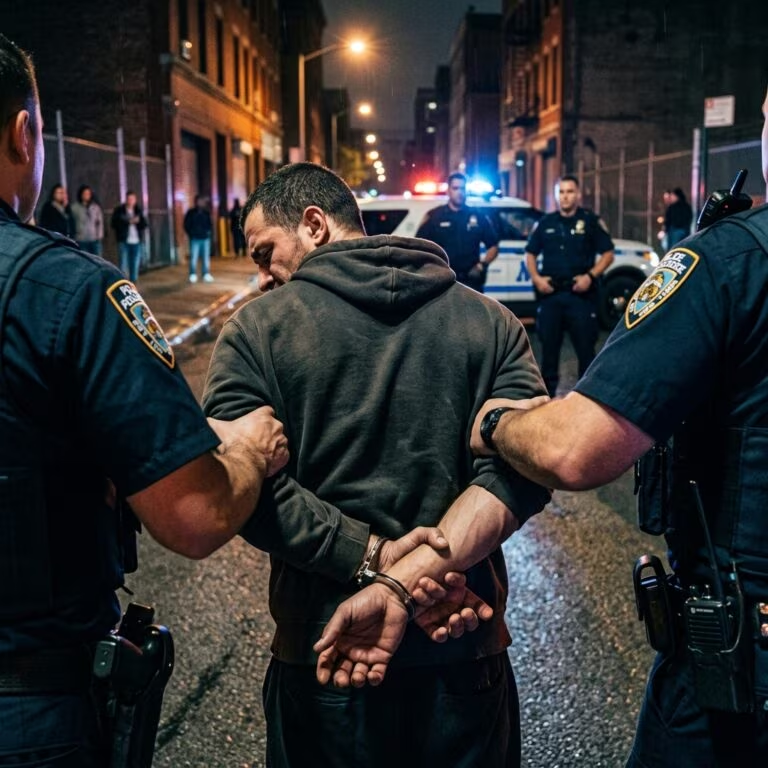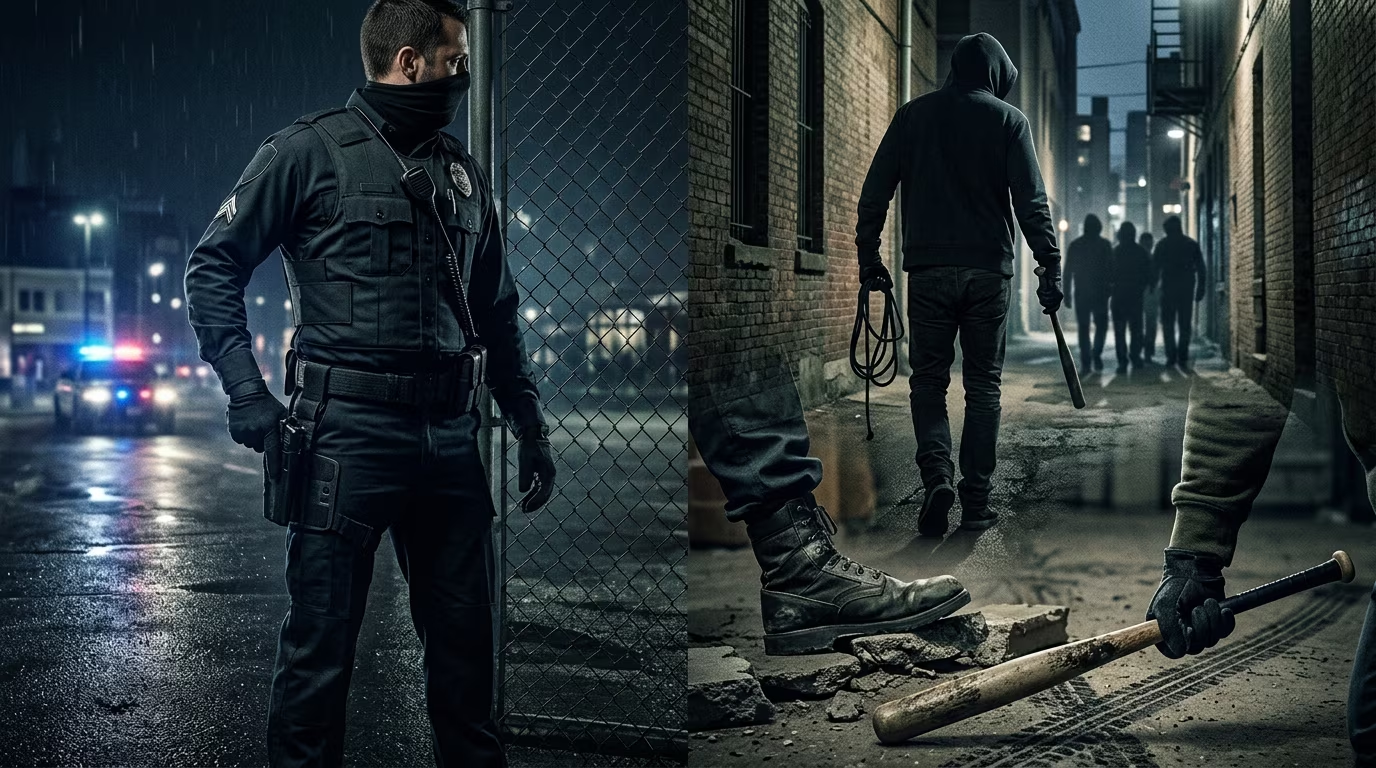
The landscape of American public safety is frequently punctuated by controversial judicial outcomes that expose deep, systemic fractures within law enforcement institutions and the justice system. When an individual stands trial for acts of violence committed during civil unrest, the public’s focus is naturally drawn to the specifics of the case—the timeline, perceived threats, and stringent legal definitions of self-defense. However, viewing these pivotal events solely through the narrow lens of individual culpability severely limits our understanding of the broader crisis. It obscures a more insidious problem: the complicity of the criminal justice apparatus, particularly municipal law enforcement, in creating an environment where armed vigilantism flourishes unchecked.
This comprehensive analysis delves into the systemic mechanisms that enable civilian violence under the guise of self-defense, exploring the disparate treatment of different protest groups by law enforcement agencies. We emphasize the urgent need for institutional accountability that transcends the actions of any single actor. By moving beyond isolated courtroom verdicts, communities and policymakers can address the root causes of civil unrest. Only through this broader lens can we understand how state actors either mitigate tensions or inadvertently exacerbate the potential for lethal violence, ensuring public safety serves all demographics equitably.
The Broader Implications of High-Profile Acquittals
High-profile acquittals involving claims of self-defense during protests send a chilling and dangerous message to the public, particularly to minority communities historically targeted by systemic racism and over-policing. While a jury’s verdict is strictly limited to the specific legal parameters of a single case, the societal reverberations are profound. These verdicts are frequently interpreted by extremist factions as legal validation for armed civilians to appoint themselves as supplementary law enforcement. This dynamic encourages untrained individuals to bring lethal weapons into already volatile situations, drastically increasing the likelihood of tragedy.
The American courtroom is a highly controlled environment designed explicitly to assess individual actions against established legal codes. It is fundamentally ill-equipped to put entire public institutions on trial. Therefore, when an armed individual is acquitted of charges stemming from protest-related violence, the verdict does not address the strategic and tactical decisions made by police commanders on the ground. It does not answer why armed civilians were permitted to roam freely past established police lines during curfews. It fails to explain why law enforcement officials may have expressed gratitude or fraternized with these armed groups while deploying harsh riot control tactics against unarmed civil rights demonstrators. The justice system’s failure to hold broader policing institutions accountable allows civilian militarization to go unchecked.
The Dangerous Intersection of Policing and Armed Vigilantism
The presence of armed civilians at public demonstrations inherently raises the stakes, transforming peaceful assemblies into potential flashpoints for lethal violence. According to extensive research conducted by the Armed Conflict Location & Event Data Project (ACLED), demonstrations involving armed individuals are nearly six times more likely to turn violent or destructive compared to unarmed demonstrations . Despite this heightened risk, law enforcement agencies across the country have historically exhibited a concerning level of tolerance, and sometimes outright support, for armed right-wing groups and self-proclaimed militia members.
This tolerance manifests in various operational ways, ranging from passive observation to active coordination on the ground.
- Tacit Approval and Normalization: When police ignore armed civilians patrolling streets in tactical gear, it provides a tacit endorsement of their presence. This normalizes vigilantism, emboldening individuals who lack the rigorous training, strict accountability structures, and legal mandate of sworn peace officers.
- Information Sharing and Fraternization: There are documented cases of law enforcement officers sharing tactical information or communicating sympathetically with armed vigilante groups, creating dangerous, informal alliances that critically undermine objective law enforcement.
- Escalation of Conflict: The mere visual presence of high-powered firearms at a protest naturally escalates tension. When police fail to manage this dynamic, they effectively abdicate their responsibility to maintain public order.
The Brennan Center for Justice highlights how explicit racism and far-right militancy within the ranks of law enforcement further complicate this dynamic, creating a toxic culture where political alignment supersedes the constitutional duty to protect all citizens equally .
A Tale of Two Responses: Protest Policing and Racial Disparities
The starkest illustration of systemic bias in American law enforcement is consistently observed in the disparate policing tactics deployed against different groups of demonstrators. Protests advocating for Black lives and demonstrating against systemic police brutality are frequently met with aggressively militarized responses. Law enforcement agencies heavily deploy tear gas, rubber bullets, flashbang grenades, and execute mass arrests against civil rights demonstrators, often treating the assemblies as inherently hostile from their inception.
Conversely, armed demonstrations led by white nationalist entities, anti-government militias, or counter-protesters frequently experience a markedly different police response. These groups, even when openly violating municipal ordinances or brandishing firearms aggressively, are frequently met with de-escalation tactics, patience, and a generally hands-off monitoring approach. This glaring double standard is a direct manifestation of deeply ingrained institutional biases that view minority populations demanding civil rights as inherent threats, while simultaneously viewing armed, predominantly white civilians as well-intentioned allies.
To clearly illustrate this systemic disparity, consider the common tactical deployments and operational postures adopted by law enforcement:
| Response Category | Civil Rights / Racial Justice Protests | Armed / Militia Demonstrations |
|---|---|---|
| Initial Posture | Highly militarized from the outset, heavily armored riot gear, proactive deployment. | Standard patrol uniforms, limited riot gear, passive and hands-off observational monitoring. |
| Crowd Control Tactics | Rapid preemptive use of chemical agents, kinetic projectiles, and kettling maneuvers. | Emphasis on de-escalation dialogue, establishing cooperative perimeters, high tolerance. |
| Curfew Enforcement | Strictly enforced via mass arrests, physical force, and aggressive dispersal orders. | Often completely ignored or selectively unenforced, allowing armed individuals to navigate freely. |
Institutional Accountability Beyond the Courtroom
Addressing the root causes of vigilante violence and systemic bias requires a fundamental change in how we approach police accountability. It demands mechanisms that extend far beyond the high-profile trial of a single civilian shooter. We must implement robust frameworks that scrutinize and penalize the law enforcement agencies and high-ranking officials who purposefully or negligently cultivate environments where such violence is inevitable.
One of the most potent tools for institutional reform is the ‘pattern-or-practice’ investigation, initiated by the U.S. Department of Justice (DOJ) Civil Rights Division. These comprehensive investigations examine the systemic, deeply rooted failures within a police department, such as patterns of discriminatory policing, chronic use of excessive force, or widespread violations of First Amendment rights . When a department demonstrates a consistent pattern of unconstitutional practices, the DOJ can enforce legally binding consent decrees that mandate comprehensive, court-monitored reforms.
Federal intervention must be coupled with state initiatives:
- Ending Qualified Immunity: The legal doctrine of qualified immunity shields government officials from being held personally liable in civil court for constitutional violations. Eliminating this barrier is crucial for victims seeking civil recourse and acts as a necessary deterrent against abusive policing.
- Empowering Independent Oversight Boards: Civilian review boards must be granted real investigative power, including subpoena authority and the binding ability to enact severe disciplinary measures.
- Implementing Strict Policies on Militia Interactions: Police departments must establish unequivocal policies prohibiting officers from coordinating with or delegating public safety duties to armed civilian groups.
Reevaluating Public Safety Models
The persistent and glaring failures of traditional policing models in managing protests equitably highlight the urgent need to fundamentally reevaluate our understanding of true public safety. For decades, the default governmental response to civil unrest and community grievance has been to drastically increase funding for police militarization. Yet, outfitting municipal officers with military-grade tactical equipment has not quelled unrest; rather, it has demonstrably escalated tensions and alienated the communities law enforcement agencies are sworn to serve.
A comprehensively reimagined approach to public safety involves intentionally divesting from militarized policing tactics and reallocating those resources into community-based support systems. This paradigm shift requires acknowledging that public safety is deeply rooted in well-resourced, economically stable communities. It involves deploying specialized, unarmed crisis intervention teams to handle mental emergencies, investing heavily in community mediation programs led by local stakeholders, and ensuring equitable access to foundational needs.
Furthermore, state legislatures must critically examine and reform laws that inadvertently facilitate armed vigilantism. While the Second Amendment protects the right to bear arms, it does not legally or morally grant civilians the authority to act as self-appointed peacekeepers in highly volatile public spaces. Lawmakers must urgently consider regulations regarding the open carry of firearms at public demonstrations and clarify self-defense statutes.
The judicial acquittal of an armed vigilante is not merely a legal endpoint; it is a tragic symptom of an inequitable system. By demanding uncompromising systemic accountability and investing in equitable, community-centric public safety models, we can dismantle the archaic structures that enable vigilante violence.
Frequently Asked Questions (FAQs)
What is a pattern-or-practice investigation?
A pattern-or-practice investigation is a systemic probe conducted by the U.S. Department of Justice’s Civil Rights Division to determine if a law enforcement agency systematically violates the public’s constitutional rights. If found liable, the agency may be forced to implement sweeping, court-monitored reforms under a federal consent decree .
Why do armed demonstrations pose a specific threat?
Research conclusively indicates that demonstrations involving armed individuals are nearly six times more likely to result in violent or destructive activity compared to unarmed protests. The presence of firearms inherently escalates tension, severely limiting peaceful resolution options and increasing the likelihood of lethal outcomes .
What is qualified immunity?
Qualified immunity is a contentious legal doctrine that protects state and local officials, including police officers, from individual civil liability unless they violated a “clearly established” statutory or constitutional right.
References
- Civil Rights Division | Conduct of Law Enforcement Agencies — U.S. Department of Justice. 2025-02-25. https://www.justice.gov/crt/conduct-law-enforcement-agencies
- Armed Assembly: Guns, Demonstrations, and Political Violence in America — Armed Conflict Location & Event Data Project (ACLED) & Everytown. 2021-08-23. https://everytownresearch.org/report/armed-assembly-guns-demonstrations-and-political-violence-in-america/
- Hidden in Plain Sight: Racism, White Supremacy, and Far-Right Militancy in Law Enforcement — Brennan Center for Justice. 2020-08-27. https://www.brennancenter.org/our-work/research-reports/hidden-plain-sight-racism-white-supremacy-and-far-right-militancy-law
- The Facts on Pattern-or-Practice Investigations — Center for American Progress. 2021-07-08. https://www.americanprogress.org/article/facts-pattern-practice-investigations/