
How Systemic Bias Impacts the Earliest Days of Life
How systemic racism impacts marginalized families from the day a child is born.
The Intersection of Healthcare Disparities and Systemic Racism
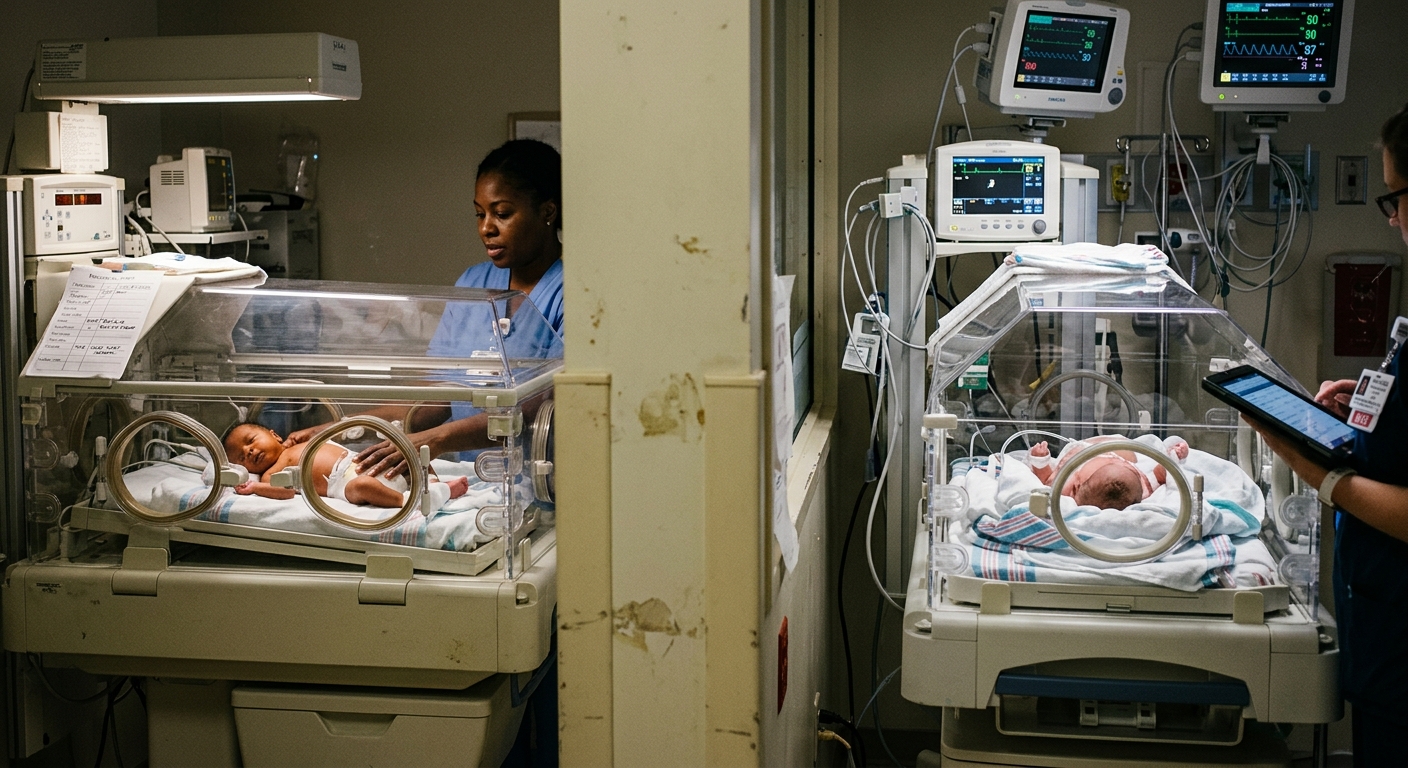
For many marginalized families, systemic inequities do not begin in the classroom, the workplace, or the criminal justice system; they begin at the hospital, manifesting on the exact day a child is born. In the United States, the healthcare and child welfare systems have historically operated under deeply entrenched structural biases that disproportionately affect Black, Indigenous, and low-income families. While the birth of a child is broadly celebrated as a moment of profound joy and new beginnings, for marginalized mothers and their newborns, it can quickly transform into an arena of intense surveillance, medical prejudice, and unwarranted state intervention. The intersection of racial discrimination, the criminalization of poverty, and institutional policing creates a volatile environment where some families are instinctively nurtured by society, while others are immediately scrutinized and torn apart.
Before state intervention regarding a newborn even becomes a possibility, the birthing process itself is fraught with medical peril for women of color. The stark reality of the maternal healthcare crisis in the United States highlights that systemic failure begins in the delivery room. Institutional bias, lack of access to quality prenatal care, and the chronic dismissal of Black women’s physical pain contribute to catastrophic medical outcomes. Statistics for 2024 from the Centers for Disease Control and Prevention (CDC) underscore this persistent public health emergency. The data reveals that the maternal mortality rate for non-Hispanic Black women is significantly higher than that of their white counterparts. Specifically, Black mothers experience 44.8 deaths per 100,000 live births, compared to just 14.2 for white mothers. This disparity is not merely a statistical anomaly or a reflection of biological differences; it is a profound reflection of how the medical establishment interacts with and often fails different demographic groups.
When a Black or Indigenous mother enters a medical facility, she frequently carries the burden of historical and ongoing systemic neglect. Medical algorithms and implicit biases among healthcare providers routinely result in inadequate pain management, delayed responses to emergency obstetric symptoms like preeclampsia, and overall substandard care. The tragic consequence is that the very institution designed to safeguard maternal and infant life often becomes the first site of systemic trauma for minority families.
The Hidden Surveillance of Expectant Mothers
The inequities experienced by pregnant, marginalized people extend far beyond direct medical care, bleeding into constitutional violations and invasive hospital surveillance. One of the most insidious practices involves the non-consensual drug screening of pregnant individuals and their newborn infants. While drug screening can theoretically serve as a medical tool for offering supportive health interventions, it has historically been aggressively wielded as a mechanism for legal criminalization and immediate family separation.
The legality and ethics of these screenings were famously contested in the landmark 2001 United States Supreme Court case, Ferguson v. City of Charleston. The Supreme Court ruled that state hospital workers cannot drug test pregnant women without their explicit informed consent or a valid warrant if the primary objective is to alert law enforcement to potential criminal activity. The ruling emphasized that patients do not surrender their Fourth Amendment protections simply by seeking obstetric care. Despite this constitutional protection, covert surveillance continues in many jurisdictions under the guise of “medical necessity” and child safety.
Often, medical providers subject patients to toxicology screens based on arbitrary risk factors, such as receiving Medicaid, residing in specific low-income zip codes, or simply fitting the profile of an implicitly biased stereotype held by the attending physician. A positive toxicology result—which can sometimes stem from legitimate medical prescriptions or even innocuous dietary consumption, such as poppy seeds—can immediately trigger a cascade of punitive actions. Instead of being offered evidence-based substance use treatment or community resources, the mother is reported to state agencies, fundamentally and permanently altering the trajectory of her new family.
Mandated Reporting and the “Family Policing” System
The transition from medical surveillance to state custody is primarily facilitated by the legal framework of mandated reporting. Healthcare professionals, including nurses, doctors, and hospital social workers, are legally required by state laws to report suspected child abuse or neglect to child protective services (CPS). While originally intended to protect vulnerable children from severe physical harm, the highly subjective nature of what constitutes “neglect” has effectively weaponized mandated reporting against poor and minority families.
Because of these dynamics, advocacy groups and civil rights organizations frequently refer to the child welfare system as the “family policing system.” This alternative terminology reflects the harsh reality that for Black, Indigenous, and Hispanic communities, these agencies function less like social support networks and more like extensions of the criminal justice system. In a medical setting, the threshold for reporting a family of color is often far lower than the threshold for a white family exhibiting identical behaviors or facing the exact same socioeconomic hardships.
Poverty is regularly and unfairly conflated with parental neglect. A new mother who is unable to secure stable housing, afford comprehensive infant supplies, or secure reliable transportation may be flagged by hospital social workers as an unfit parent. Rather than the hospital connecting the struggling family to financial assistance, subsidized housing vouchers, or nutritional programs, the default institutional response is overwhelmingly punitive. By involving state investigators, the hospital initiates a traumatic process of investigation that threatens the very foundation of the family unit.
The Mechanics of Disproportionate Family Separation
Once a family is thrust into the family policing system, navigating the bureaucratic labyrinth becomes an intense uphill battle against systemic disproportionality. The concept of “visibility bias” plays a massive role in this dynamic. Low-income families who rely heavily on public clinics, state-funded healthcare, and public welfare programs are subjected to a much higher degree of institutional visibility. Every aspect of their lives is documented, analyzed, and scrutinized by state actors, creating exponentially more opportunities for perceived infractions to be reported. In stark contrast, wealthier families who utilize private doctors, independent resources, and closed-door medical networks remain largely insulated from this form of state oversight.
Comprehensive data provided by federal government reports on child welfare disparities indicate that children of color are significantly overrepresented in the foster care system. They are more likely to be removed from their primary homes, spend longer, more unstable periods in state custody, and experience a substantially lower likelihood of successful family reunification compared to white children navigating identical circumstances.
When child welfare agencies intervene, the rigorous constitutional protections afforded to defendants in criminal proceedings are notably absent. Parents facing the permanent termination of their parental rights are not always guaranteed the same stringent evidentiary standards or comprehensive legal representation as individuals facing criminal charges, despite the profound and irreversible severity of losing one’s child. This lack of robust due process allows the initial biases formed in the hospital to compound rapidly, ultimately tearing families apart based on structural disadvantages rather than actual malicious intent or danger.
The Intergenerational Trauma of Institutional Disruption
When families are separated at or shortly after birth, the psychological and emotional impacts ripple through multiple generations. Attachment theory extensively documents the absolute necessity of the maternal-infant bond in the early stages of cognitive, emotional, and social development. Disrupting this vital bond because of poverty-driven “neglect” metrics inflicts profound, lasting trauma on both the mother and the infant.
For the mother, the abrupt and involuntary removal of her child can precipitate severe mental health crises, including devastating postpartum depression, acute anxiety, and a deep, enduring distrust of all medical and state authorities. This distrust often results in marginalized women actively avoiding prenatal and postpartum care in future pregnancies to evade further surveillance. By avoiding medical systems, they inadvertently increase their risk of experiencing maternal mortality or severe obstetric complications. The cycle is profoundly self-perpetuating: systemic intervention causes trauma, trauma reduces engagement with preventative healthcare, and reduced healthcare engagement triggers further systemic intervention and worsened physical outcomes for the community.
Redefining Welfare: Moving from Punishment to Support
To dismantle the gross inequities that begin on the exact day a child is born, a radical reimagining of family support is absolutely essential. Society must urgently transition away from a punitive, surveillance-based framework and adopt a restorative, resource-driven approach that genuinely prioritizes the preservation and well-being of the family unit.
True child welfare does not start with a state investigation; it starts with community investment. Providing universal healthcare, expanding access to culturally competent maternal mental health resources, and ensuring livable wages are foundational steps to eliminating the chronic socioeconomic stressors that are currently classified as “neglect.” Hospitals and healthcare networks must rigorously reevaluate their internal policies regarding drug testing and mandated reporting, shifting their institutional focus toward informed consent, trauma-informed care, harm reduction, and voluntary community referrals.
When a family is actively struggling with substance use or housing instability, the standard response should involve immediate therapeutic interventions, housing assistance, and nutritional aid—completely decoupled from the lingering threat of child removal. By directly addressing the root economic and social causes of family instability rather than punishing the inevitable symptoms of poverty, we can ensure that every child, regardless of their race, ethnicity, or socioeconomic background, has the undeniable opportunity to remain in a safe, loving, and supportive home from their very first breath.
Comparing Approaches to Child Welfare
Understanding the stark differences between the current family policing model and a truly supportive child welfare model highlights the necessary path forward.
| System Characteristic | Current “Family Policing” Model | Restorative Support Model |
|---|---|---|
| Primary Response | Investigation, surveillance, and threat of removal. | Assessment of needs and provision of resources. |
| View of Poverty | Conflated with neglect and poor parenting. | Viewed as a systemic failure requiring economic aid. |
| Medical Interaction | Non-consensual screening and mandatory reporting. | Informed consent and voluntary referrals. |
| Ultimate Goal | Compliance and child safety through separation. | Family preservation and holistic community health. |
Frequently Asked Questions (FAQs)
What is the difference between child welfare and the family policing system?
The term “child welfare” traditionally implies a system designed to support and protect children. However, civil rights advocates use the term “family policing system” to describe how the current structure operates in practice. The system disproportionately targets, surveils, and separates marginalized families, utilizing tactics that closely mirror criminal law enforcement rather than social work and community support.
Why is maternal mortality significantly higher for Black women in the United States?
The high maternal mortality rate for Black women is driven by systemic racism within the healthcare system. This includes implicit bias among medical providers, the historical dismissal of Black women’s physical pain, unequal access to high-quality prenatal and postpartum care, and the compounded physical toll of chronic stress caused by structural inequities.
Can a hospital legally drug test a pregnant patient without their explicit consent?
According to the Supreme Court ruling in Ferguson v. City of Charleston, hospitals cannot constitutionally drug test pregnant women without informed consent or a warrant if the primary goal is law enforcement. However, many hospitals still perform universal or selectively biased screenings under the justification of “medical necessity,” which can subsequently trigger unnecessary child welfare investigations.
References
- Maternal Mortality Rates in the United States, 2024 — Centers for Disease Control and Prevention (CDC) / National Center for Health Statistics. 2026-03-04. https://pubmed.ncbi.nlm.nih.gov/41805296/
- Child Welfare Practice to Address Racial Disproportionality and Disparity — Children’s Bureau, Administration for Children and Families, U.S. Department of Health and Human Services. https://www.govinfo.gov/content/pkg/GOVPUB-HE20-PURL-gpo126023/pdf/GOVPUB-HE20-PURL-gpo126023.pdf
- Pregnant women cannot be tested for drugs without consent (Ferguson v. City of Charleston) — National Center for Biotechnology Information (NCBI) / PMC. https://www.ncbi.nlm.nih.gov/pmc/articles/PMC1120006/
Similar Articles








Read full bio of Sneha Tete


