
Suspended Due Process: A Pandemic Crisis in Jails
Freezing court deadlines causes constitutional and health disasters in jails.
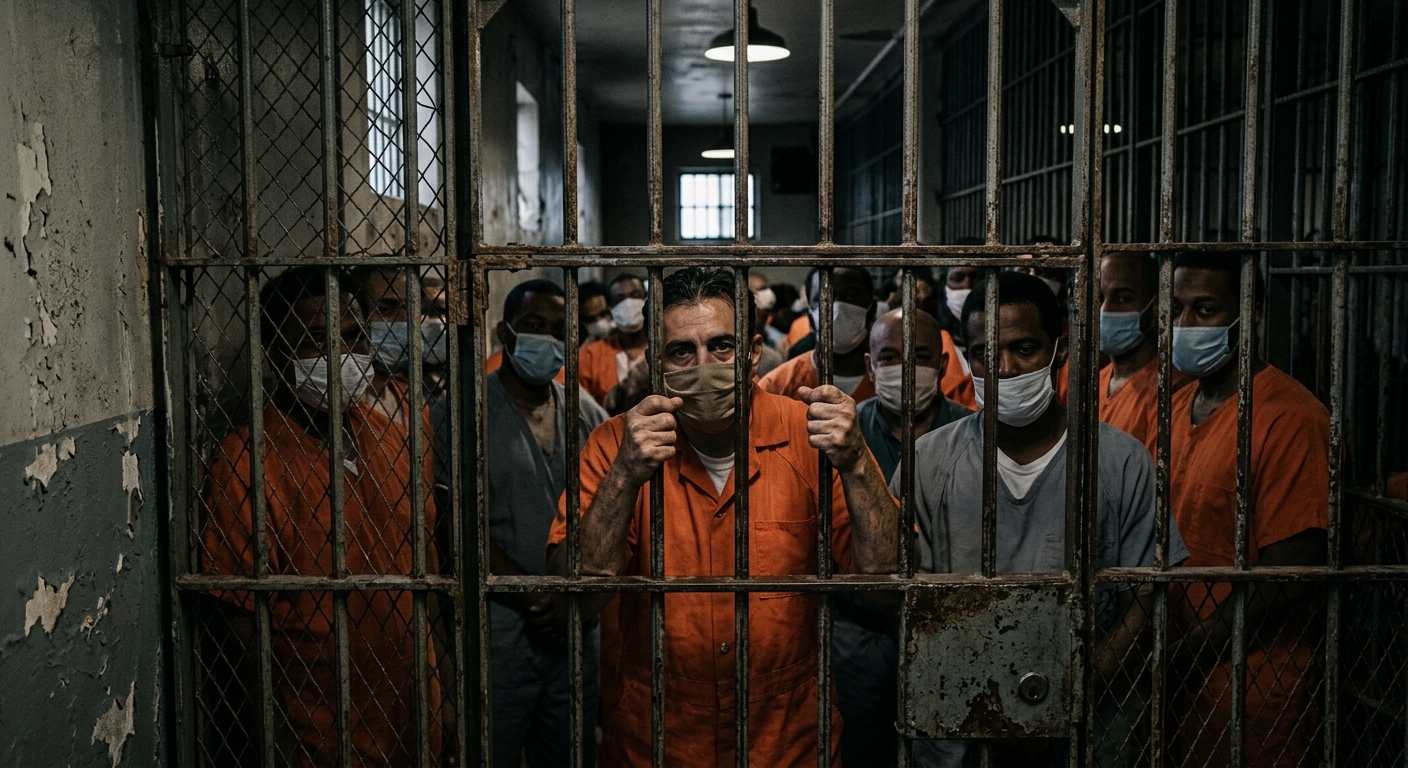
The Intersection of Emergency Declarations and Justice
When a public health emergency or natural disaster strikes, state and local governments must act swiftly to preserve human life. Historically, we have seen this during severe events like the COVID-19 pandemic, where strict lockdown measures, travel restrictions, and emergency declarations became standard operating procedures across the globe. However, while civilian society adapts to these severe disruptions, the criminal justice system often falters under the immense pressure. One of the most severe and continuously overlooked consequences of broad emergency declarations is the suspension of legal deadlines and fundamental due process procedures. When courts close their physical doors or drastically reduce their daily operations, thousands of individuals find themselves trapped in a terrifying legal limbo. Pretrial detention—already a deeply contentious and problematic issue in the United States—suddenly morphs into an indefinite sentence without a trial, conviction, or chance for defense.
This phenomenon highlights a catastrophic intersection between public health vulnerability and constitutional erosion. Suspending the basic mechanisms of justice, such as speedy trial rights, bail hearings, and statutory limits on pretrial confinement, transforms local jails into overcrowded waiting rooms where infectious diseases can spread unchecked. By pausing the very systems designed to protect innocence until proven guilty, governments inadvertently create human rights disasters within their own borders. This comprehensive analysis delves deeply into why freezing court timelines is a fundamentally flawed emergency response, the public health nightmare it consistently triggers within carceral facilities, and how the modern justice system must adapt to protect both public safety and constitutional rights during future global crises.
The Legal Freeze: Understanding Suspended Due Process
Due process is the absolute bedrock of the American legal system. The Fifth and Fourteenth Amendments explicitly guarantee that the government cannot deprive any person of life, liberty, or property without due process of law. In the context of criminal law, this essential constitutional guarantee translates to timely court hearings, the right to active legal representation, the opportunity to challenge the basis of an arrest, and the absolute right to a speedy trial before an impartial judge or jury.
When state governors or supreme courts issue emergency executive orders to halt legal deadlines—often citing the logistical impossibility of safely convening juries or transporting inmates during a widespread outbreak—the clock stops on these vital protections. For someone who has just been arrested, the implications of this pause are both immediate and utterly devastating. In a properly functioning legal system, an arrested individual must be brought before a judge within a specific, rigid timeframe (typically 48 to 72 hours) to determine if there is sufficient probable cause and to set fair conditions for release or bail. If these timelines are suspended indefinitely, that individual remains incarcerated, regardless of the severity of the alleged offense, the strength of the actual evidence against them, or their personal health risk profile.
The vast majority of people currently held in local and county jails are pretrial detainees. They have not been convicted of a crime; legally speaking, they are entirely innocent. Their continued confinement relies on the core assumption that a speedy legal process will soon determine their fate. Suspending this process effectively weaponizes time against the accused. As days turn into weeks, and weeks into months, pretrial detainees face agonizing and destructive uncertainty. They frequently lose their employment, default on housing payments, and are forcibly separated from their families and crucial support systems. More importantly, their prolonged, open-ended incarceration ceases to act as a regulatory mechanism to ensure court appearance and instead transforms into a purely punitive measure, representing a direct contradiction to the fundamental principles of American jurisprudence.
A Public Health Nightmare: Viral Spread in Carceral Facilities
The suspension of due process and court operations inevitably leads to massive facility overcrowding. If the influx of new arrests continues from the streets while the required legal mechanisms for release (such as trials, bail hearings, and plea agreements) are abruptly halted, the population of a local jail will rapidly swell far beyond its maximum designed capacity. During a highly transmissible viral pandemic, this logistical legal bottleneck rapidly escalates from an administrative management issue into a pressing matter of life and death.
Prisons and jails are inherently designed to confine and restrict, not to heal or protect against microscopic pathogens. They are extremely high-density, congregate settings characterized by remarkably close quarters, shared communal facilities, and historically poor air ventilation systems. Social distancing, which is the primary public health defense against airborne viruses like SARS-CoV-2, is a physical impossibility in a standard correctional cell block . Inmates are forced to share sinks, toilets, and tightly packed dining spaces. Sleeping arrangements frequently involve bunk beds spaced only a few feet apart or, in times of severe overcrowding resulting from prolonged court closures, mattresses placed directly on the floor of communal gymnasiums, chapels, or hallways.
Extensive epidemiological research heavily documents the exponential spread of respiratory illnesses in these enclosed environments. When basic hygiene supplies like antibacterial soap, alcohol-based hand sanitizer (which is frequently banned by facilities due to its alcohol content), and clean medical masks are scarce or entirely unavailable, the facility environment becomes a hyper-efficient incubator for infectious disease . Furthermore, the incarcerated population frequently suffers from a substantially higher prevalence of chronic, underlying medical conditions—such as severe asthma, poorly managed diabetes, and advanced cardiovascular disease—than the general public . This makes them significantly more vulnerable to severe complications, extended hospitalization, or death from highly contagious viral infections.
The profound danger of this contagion extends far beyond the imposing concrete walls of the prison. Local jails, in particular, see a constant, daily churn of human movement. Correctional officers, contracted medical staff, food service workers, and administrative personnel enter and exit the facility at the beginning and end of every shift, acting as highly efficient potential vectors for disease between the jail and the surrounding civilian community. When a massive viral outbreak predictably surges through an overcrowded jail because pretrial detainees cannot be legally processed and released, the local community’s healthcare infrastructure inevitably bears the massive brunt of the crisis . Community hospitals and intensive care units become quickly overwhelmed with critical, complex cases originating directly from the correctional facility, proving without a doubt that carceral health is inextricably linked to broad, societal public health.
The Disproportionate Impact on Marginalized Communities
The heavy, destructive burden of suspended due process does not fall equally across the demographic spectrum. The American cash bail system already disproportionately harms low-income individuals and communities of color on a daily basis. When a public health pandemic freezes routine court operations, this deeply entrenched economic and racial disparity is severely magnified. Wealthy individuals who have the financial means to easily afford private legal counsel might still successfully find specialized procedural avenues to secure emergency hearings, or they may have already rapidly posted cash bail before the restrictive lockdown measures took full, devastating effect.
Conversely, those completely reliant on state-appointed public defenders—who are often already chronically overwhelmed with massive, unmanageable caseloads and severely hampered by heavily restricted facility access to their clients during lockdowns—are left silently languishing in crowded jail cells . A person held on a minor, non-violent misdemeanor charge simply because they cannot afford a basic $500 bail bond is suddenly subjected to months of life-threatening viral exposure. In this terrifying scenario, the sheer inability to buy one’s financial freedom becomes a potential death sentence due to infectious disease.
This stark dynamic essentially creates a highly stratified, two-tiered system of pandemic survival. Those with sufficient financial means comfortably wait out the state of emergency safely isolated in the comfort and security of their homes, while those without means are violently forced into crowded, unsanitary holding pens, desperately waiting for a legal system that has essentially paused its operations to finally decide their fate. The deep psychological toll of this forced physical vulnerability is immense, drastically exacerbating already critical mental health crises among the incarcerated population and further destabilizing deeply marginalized communities who lose their primary household breadwinners to indefinite, unconstitutional detention.
Alternative Strategies: Protecting Rights Without Compromising Health
The false dichotomy frequently presented by civic authorities during states of emergency is that governments must strictly choose between protecting public safety (by halting physical court operations to prevent viral spread) and upholding constitutional rights (by maintaining normal, in-person operations). This rigid, unimaginative thinking completely ignores a multitude of highly viable, incredibly effective alternative strategies that can safely reduce jail populations and properly uphold due process without intentionally exacerbating a catastrophic public health crisis.
| Emergency Strategy | Operational Description | Systemic Benefit |
|---|---|---|
| Virtual Court Hearings | Utilizing secure, encrypted video conferencing technology to continuously conduct arraignments, bail hearings, and routine status conferences remotely. | Allows the critical legal due process to continue unimpeded without ever risking the physical transmission of disease in a crowded, poorly ventilated courtroom. |
| Expanded Release on Recognizance (ROR) | Legally releasing individuals accused of strictly non-violent offenses or minor misdemeanors upon their signed promise to return, without requiring cash bail. | Drastically reduces the daily incoming jail population and specifically targets individuals posing absolutely minimal risk to the broader community. |
| Proactive Bail Reviews | Automatically reviewing and dynamically adjusting cash bail for all current pretrial detainees, deliberately prioritizing the elderly or medically vulnerable populations. | Successfully identifies key individuals who can be safely and securely transitioned to community supervision, immediately clearing critical facility space for medical distancing. |
| Moratorium on Minor Arrests | Directing local law enforcement agencies to issue written citations or court summons rather than making physical custodial arrests for low-level offenses. | Prevents the unnecessary and highly dangerous introduction of new, potentially infected individuals into the high-risk, closed carceral environment. |
| Early Compassionate Release | Expediting the formal legal release of convicted inmates who are rapidly nearing the end of their sentences or those diagnosed with severe, terminal health conditions. | Creates critically needed physical space within the crowded facility to allow for essential medical isolation, proper quarantine protocols, and realistic physical distancing . |
By deliberately implementing these forward-thinking, humane strategies, local and state jurisdictions can successfully manage the sheer scale of their carceral populations during an unprecedented crisis. A safely reduced jail population directly correlates with significantly lower viral transmission rates and markedly better overall health outcomes for those who absolutely must remain legally incarcerated. It ensures that the emergency suspension of a physical, in-person trial does not automatically equate to indefinite, highly dangerous, and constitutionally dubious confinement.
Lessons for the Future: Building Resilient Justice Systems
The COVID-19 pandemic laid bare the deep, systemic fragilities of the American criminal justice system. The highly reactive and exceptionally blunt measure of simply suspending vital legal deadlines demonstrated a profound institutional failure to anticipate exactly how integral the continuous, daily flow of the court system is to the safe, operational, and humane management of county jails. Moving forward, national emergency preparedness cannot be strictly limited to stockpiling personal protective equipment, quickly distributing vaccines, or establishing temporary emergency medical hospitals; it must fundamentally and intentionally encompass robust, constitutional legal contingency planning.
States and municipalities must actively codify stringent emergency protocols that explicitly prohibit the open-ended, indefinite suspension of statutory legal rights. If physical court buildings must close their doors to fiercely protect public health, the underlying judicial digital infrastructure must be robust enough to seamlessly and securely transition to remote judicial operations without skipping a single beat. Furthermore, vital public health metrics must be intrinsically integrated into daily criminal justice decision-making at every jurisdictional level.
When a statewide or national state of emergency is declared, it should automatically trigger a mandatory, comprehensive judicial review of all current pretrial detainees for potential safe release. This vital step powerfully shifts the legal burden of proof directly onto the state to clearly and empirically justify why an individual must remain locked in a high-risk infectious environment, rather than unfairly forcing the detained, unconvicted individual to desperately prove why they should be released. Justice delayed is justice denied, but during an explosive public health emergency, justice delayed is also a profound, direct threat to human life. Ensuring that core constitutional rights and basic human dignity remain completely intact, regardless of the severity of external circumstances, is the truest, most accurate measure of a highly functional, resilient, and humane justice system.
Frequently Asked Questions (FAQs)
What exactly does it mean to be a pretrial detainee?
A pretrial detainee is an individual who has been formally accused of a crime and physically arrested, but who has not yet faced a legal trial or been formally convicted of the charges in a court of law. Under the United States Constitution, they are legally presumed innocent until proven guilty. They are typically held in secure custody because they were denied bail by a presiding judge, cannot afford the high cash bail set for their temporary release, or are stuck awaiting an upcoming administrative hearing to officially determine their release conditions.
How does suspending court deadlines directly affect local jail populations?
Local jails function entirely on a continuous, necessary daily flow of intake and release. People predictably enter upon their arrest and leave after successfully making bail, having their charges formally dropped, or being transferred to a state prison facility post-conviction. When court deadlines and legal hearings are broadly suspended, the facility’s legal “exit” mechanisms are completely blocked. Ongoing street arrests continue to bring new people in, but without the necessary court hearings to legally authorize releases, the jail population rapidly swells, leading to severe and incredibly dangerous overcrowding.
Why are jails consistently considered high-risk environments during a viral pandemic?
Jails are highly dense, enclosed congregate settings where exceptionally large numbers of people constantly live, sleep, and eat in extremely close physical proximity, making standard physical distancing guidelines utterly impossible to safely follow. Shared communal sanitation facilities, chronically poor indoor air ventilation, and the constant, daily movement of staff in and out of the facility create the ideal environmental conditions for airborne and contact-transmitted viruses to spread rapidly and uncontrollably among the confined, vulnerable population.
Can fundamental constitutional rights, such as the right to a speedy trial, be legally suspended during an emergency?
While state and federal governments do possess broad, sweeping emergency powers designed to protect public safety and broadly maintain societal order, these executive powers are not absolute or entirely unlimited. The complete, indefinite suspension of core constitutional rights is heavily and critically scrutinized by higher appellate courts. Civil liberties advocates firmly argue that states of emergency absolutely require rapidly adapting the modern methods of delivering justice (such as implementing robust remote video hearings) rather than entirely abandoning the foundational constitutional rights altogether.
What is the legal process of compassionate release?
Compassionate release is a specialized legal and administrative process by which currently incarcerated inmates can be formally released from a prison or jail much earlier than their original sentence dictates, specifically due to extraordinary or compelling personal circumstances. This is most commonly granted for individuals actively suffering from severe, untreatable medical conditions, advanced elderly age, or terminal illness. During a major infectious pandemic, purposefully expanding the stringent criteria for compassionate release is a proven, vital public health strategy used to quickly protect the most physically vulnerable individuals from catastrophic viral outbreaks within the tightly closed facility.
References
- The Risk of COVID-19 Infection in Prisons and Prevention Strategies — National Institutes of Health (NIH). 2022-01-26. https://www.ncbi.nlm.nih.gov/pmc/articles/PMC8878586/
- Effects of the COVID-19 pandemic on people experiencing incarceration: a systematic review — PMC. 2023-01-24. https://www.ncbi.nlm.nih.gov/pmc/articles/PMC9874136/
- Preparing for the Next Pandemic: Lessons Learned from COVID-19 in Confinement Facilities — Bureau of Justice Assistance, U.S. Department of Justice. 2023-04-10. https://bja.ojp.gov/
- ICE’s Management of COVID-19 in Its Detention Facilities Provides Lessons Learned for Future Pandemic Responses — Office of Inspector General, DHS. 2021-09-07. https://www.oig.dhs.gov/
Similar Articles








Read full bio of Sneha Tete


