
The Supreme Court’s Hidden Levers: Understanding the Rise of the Shadow Docket
How unsigned, emergency rulings are reshaping American law far away from the public eye.
Introduction: The Rulings We Rarely Hear About
Most civic education regarding the United States Supreme Court focuses on a highly ritualized and transparent process. A case traditionally works its way through the lower courts over a period of years, allowing various judges to weigh in on the legal merits. When the Supreme Court eventually grants certiorari, hundreds of pages of intricate amicus briefs are filed by interested parties, ranging from civil rights organizations to corporate entities. The Justices then don their black robes and hear public oral arguments, where they rigorously question attorneys under the watchful eye of the press and the public. Months later, the Court issues a lengthy, painstakingly drafted, and signed opinion that sets a new legal precedent for the entire nation. This methodical process—commonly referred to as the “merits docket”—is the bedrock of the judiciary’s relationship with the American public, designed specifically to foster transparency, accountability, and the careful, deliberate development of constitutional law.
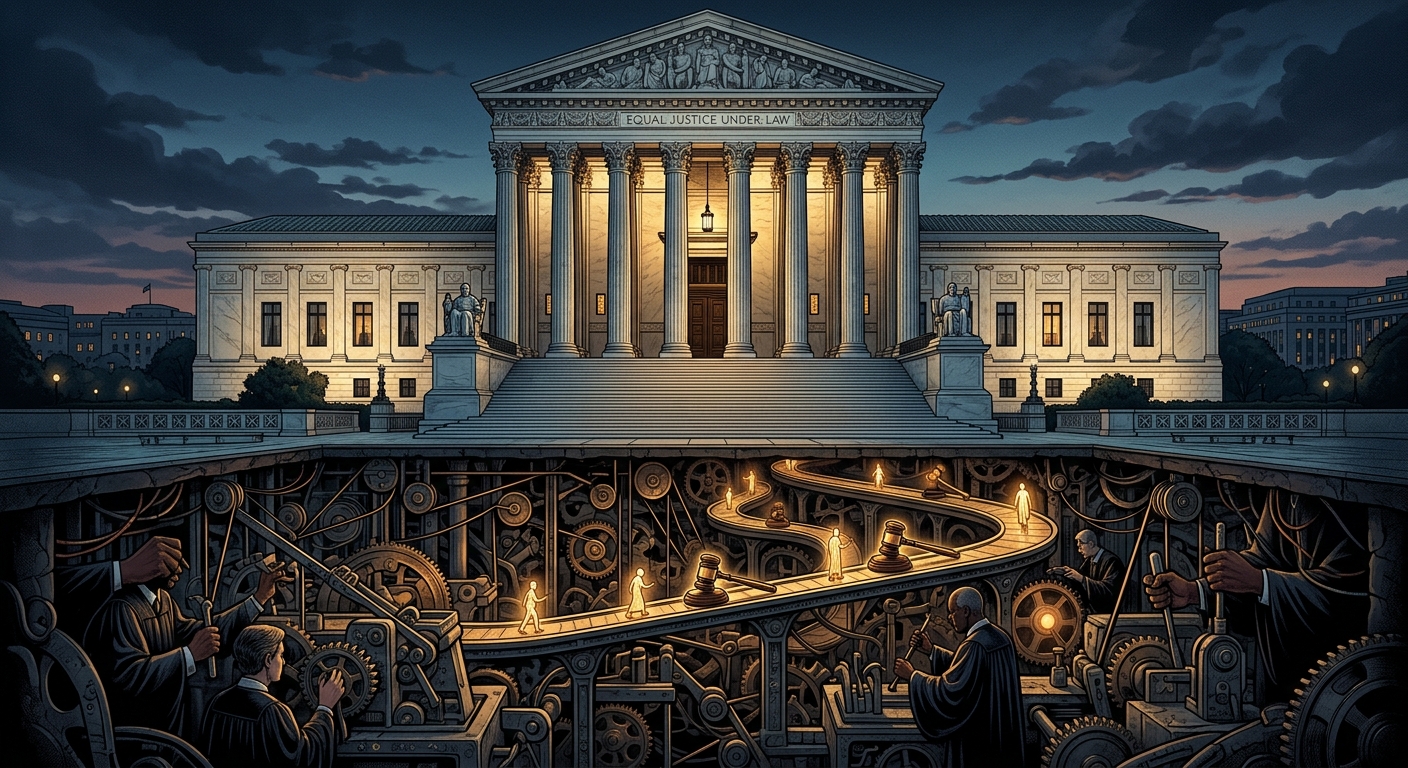
Yet, a parallel system of jurisprudence operates far outside this limelight, wielding tremendous power over American life with only a fraction of the scrutiny. This alternative and increasingly controversial mechanism is now widely referred to as the “shadow docket.” Through swift, often unsigned emergency orders issued late at night, the Court has drastically altered federal policy, stayed lower-court injunctions, and reshaped fundamental civil liberties without the benefit of extensive briefing, public oral argument, or detailed legal reasoning. As the Supreme Court continues to navigate hyper-partisan cultural and political disputes—from reproductive rights to pandemic protocols—the outsized influence of these rapid emergency interventions has sparked fierce debate among legal scholars, sitting lawmakers, and the general public.
This article explores the inner workings of this hidden legal lever, examining why its sudden and exponential expansion is viewed with profound alarm by court watchers, and how the surge of unreasoned emergency orders affects the foundational integrity of the American legal system.
What Exactly is the Shadow Docket?
The evocative term “shadow docket” was first introduced to the legal lexicon in 2015 by legal scholar William Baude. He utilized the phrase to describe a broad and growing array of summary decisions and orders that diverge significantly from the Court’s normal procedural rigor. Originally, the mechanisms that comprise this docket were largely viewed as mundane, administrative tools. For decades, the Court relied on these unreasoned orders for routine procedural housekeeping—such as managing briefing deadlines, responding to standard administrative requests, or making minor jurisdictional determinations that had little impact on the broader public.
When emergency interventions were required, they were traditionally issued strictly to maintain the “status quo.” For instance, if a lower court judge ruled that a specific federal action or state law was illegal, the Supreme Court might occasionally issue a temporary stay. This stay would put the lower court’s ruling on pause, but only to prevent immediate and irreparable harm while the case slowly made its way through the standard, lengthy appeals process. These historical orders were generally viewed as administrative bridges, maintaining a holding pattern rather than serving as definitive declarations of national legal policy.
Today, however, the fundamental character and application of the shadow docket have profoundly changed. Rather than merely preserving the status quo until full arguments can be heard on the merits docket, the modern Supreme Court has frequently utilized these emergency applications to grant definitive legal victories, lift lower-court injunctions, and dictate immediate national policy on deeply controversial issues. Crucially, these sweeping rulings are often handed down with little to no explanation of the legal rationale behind them. They are frequently unsigned, meaning the American public cannot definitively know which specific Justices supported or opposed the measure unless an individual Justice voluntarily decides to publish a dissenting opinion.
The Exponential Growth of Emergency Orders
The transition of the shadow docket from a tool for administrative bookkeeping to an instrument of substantive policymaking did not happen overnight, but its acceleration over the past few presidential administrations is exceptionally stark. Legal historians and court statisticians point to a steady rise in emergency applications beginning in the mid-2010s, which then skyrocketed into a primary vehicle for legal maneuvering.
During periods of intense executive action, federal administrations increasingly turned to the Supreme Court to bypass the traditional, sluggish appellate process. When lower federal courts issued nationwide injunctions blocking controversial executive orders—such as sweeping border enforcement protocols, travel bans, or pandemic-era public health mandates—the executive branch repeatedly bypassed the appellate courts. Instead, they filed emergency applications directly asking the Supreme Court to lift those injunctions immediately.
Because these emergency requests entirely bypass the slow, deliberative churn of the lower appellate courts, they essentially force the Supreme Court to make sweeping legal determinations in a matter of days or sometimes even hours, rather than months. As noted by legal analysts at Harvard Law School, this creates a profound structural dilemma: the Court must choose between allowing a single lower-court judge to stall a major nationwide policy indefinitely, or making a rushed, monumental constitutional determination without the benefit of robust legal debate and thorough lower-court fact-finding. The result is an era of “invisible adjudication”—a systemic process where major constitutional questions are practically resolved behind closed doors, without the transparency that legitimizes judicial power.
How Invisible Adjudication Impacts Civil Liberties
The transformation of the shadow docket into a primary vehicle for rapid legal change has not occurred in a vacuum; it has dramatically and tangibly impacted some of the most contentious and delicate areas of civil rights and public policy in the United States. The glaring lack of detailed reasoning in these cases leaves lower federal and state courts constantly guessing how to accurately interpret the law moving forward, creating a chilling effect and widespread confusion across various sectors of society.
- Elections and Voting Rights: Emergency orders have increasingly been used to directly intervene in state-level electoral maps and voting procedures just weeks, or sometimes days, before a major election. In several recent election cycles, the Supreme Court has utilized the shadow docket to pause lower-court rulings that ordered states to redraw racially gerrymandered congressional districts. By issuing unsigned orders to block the redrawing of these maps, the Court effectively permitted multiple high-stakes elections to proceed under voting systems that lower federal courts had already explicitly deemed discriminatory and unconstitutional.
- Immigration and Border Policy: Federal immigration policy has experienced significant, whiplash-inducing volatility due directly to shadow docket interventions. Lower court judges frequently issue injunctions to block executive branch directives regarding border control, only to have the Supreme Court rapidly issue an emergency stay of those injunctions. This creates an environment of extreme uncertainty for federal enforcement agencies and immigrant communities alike, as the “law of the land” shifts overnight without a formal, written, and reasoned opinion to guide future enforcement and compliance.
- Capital Punishment: Perhaps the most harrowing and literal life-or-death application of these emergency orders occurs in capital punishment cases. For decades, eleventh-hour requests for stays of execution have heavily populated the emergency docket. However, in recent years, the Court has aggressively stepped in to vacate lower-court stays of execution, allowing lethal injections to proceed despite massive, unresolved constitutional questions regarding the specific execution methods or the mental capacity of the condemned individual. These late-night, one-paragraph rulings offer no legal closure or solace to those seeking a principled, transparent administration of ultimate justice.
- Reproductive Rights: The shadow docket has also been weaponized in the battle over bodily autonomy. Before the Supreme Court formally overturned established abortion precedents on its merits docket, it utilized the shadow docket to allow highly restrictive state laws—such as Texas’s heartbeat bill—to go into effect. By refusing to block the law via an emergency order, the Court effectively nullified reproductive rights for millions of individuals in the state without holding a single oral argument or issuing a fully reasoned constitutional justification at the time.
The Core Criticisms: Transparency, Consistency, and Legitimacy
The primary currency of the federal judiciary is its legitimacy, a fragile asset derived almost entirely from its unique ability to provide reasoned, persuasive legal explanations for its actions. Alexander Hamilton famously noted in the Federalist Papers that the judiciary has “neither force nor will, but merely judgment.” When the Supreme Court issues substantive, nation-altering decisions without clearly explaining its judgment, it risks deeply squandering the public’s trust and undermining its own institutional authority.
Critics across the political spectrum argue that the shadow docket inherently violates the fundamental principles of procedural justice. When monumental decisions are handed down late at night without an identified author, the public is entirely deprived of the intellectual rigor and historical context that characterizes the Court’s traditional jurisprudence. This opacity prevents legal scholars, sitting lawmakers, and lower court judges from understanding the nuances of the Court’s reasoning. Lower court judges, in particular, are left in an impossible, precarious position: they must desperately attempt to divine the Supreme Court’s broader intentions from cryptic, one-paragraph orders and accurately apply those vague signals to complex future cases.
Furthermore, the undeniable lack of transparency fuels persistent accusations of partisan bias. Because the emergency docket is entirely discretionary, critics allege that the Court selectively applies its shadow docket powers to favor specific political administrations, executive branches, or ideological outcomes. Instead of functioning as a neutral, deliberative arbiter of the law, the Court is increasingly perceived as acting as an unpredictable political “veto” that shields its motives behind a veil of procedural brevity.
Table: The Merits Docket vs. The Shadow Docket
To fully grasp the abnormality of these emergency rulings, it is highly instructive to compare them directly to the Court’s standard procedures.
| Procedural Feature | The Merits Docket | The Shadow Docket |
|---|---|---|
| Briefing Process | Extensive and exhaustive; includes vast lower court records and dozens of amicus briefs from external experts. | Highly abbreviated; often filed, rapidly responded to, and thoroughly reviewed within a matter of mere days. |
| Oral Arguments | Public, transparent, and rigorous live questioning by the Justices, often broadcasted. | None. Decisions are made entirely in private based strictly on the expedited paper filings. |
| Authorship | Opinions are explicitly signed by a specific Justice, with totally transparent and clear vote counts. | Typically unsigned (per curiam), deliberately obscuring the final vote count and individual alignments. |
| Reasoning | Detailed, lengthy, and heavily cited opinions explaining the complex legal philosophy and historical precedent. | Often limited to a single sentence or a brief paragraph with absolutely no underlying legal rationale provided. |
| Decision Timeline | Months to years from the initial filing to the publication of the final decision. | Days, sometimes hours; heavily criticized for often being issued late at night without warning. |
Can the Shadow Docket Be Reformed?
Recognizing the escalating and profound unease surrounding these sweeping emergency interventions, a growing, bipartisan coalition of legal scholars, civil rights advocates, and lawmakers has formally begun proposing structural reforms designed to reign in the Court’s unchecked use of summary orders.
One popular and straightforward proposal involves implementing far stricter statutory requirements for emergency interventions, legally limiting their use strictly to cases of genuine, undeniable, and irreparable harm, rather than allowing administrations to use them as a convenient backdoor for premature appellate review. Another vital reform advocates for a mandatory explanation rule: if the Supreme Court is going to actively alter a lower court’s ruling, pause an injunction, or change federal policy, it must provide a written, signed opinion outlining its precise legal reasoning. By simply forcing the Justices to attach their individual names and intellectual rationale to these orders, proponents firmly believe the Court would naturally exercise considerably more restraint and quickly restore a necessary baseline of public transparency.
Finally, some legal theorists suggest that Congress could exercise its explicit constitutional authority to regulate the appellate jurisdiction of the Supreme Court, ensuring that massive nationwide injunctions or highly specific civil rights disputes are mandated to route through specialized, fast-tracked merits review processes rather than lingering indefinitely in the opaque, unaccountable realm of emergency orders.
Frequently Asked Questions (FAQs)
What does “per curiam” mean in the context of the Supreme Court?
“Per curiam” is a Latin legal phrase translating to “by the court.” In the context of the shadow docket, it specifically refers to an unsigned opinion or order that represents the collective decision of the Court as a whole, rather than an opinion explicitly authored and signed by a specific, named Justice.
Are shadow docket rulings considered legally binding precedent?
This exact question is currently a subject of intense academic and judicial debate. Technically, unreasoned emergency orders do not definitively carry the exact same binding precedential weight as fully briefed and argued merits decisions. However, because they are issued directly by the highest court in the land, lower courts almost universally feel deeply compelled to treat them as highly predictive, authoritative signals of how the Supreme Court will rule in the future, effectively granting them the practical, everyday force of binding precedent.
Who originally coined the term “shadow docket”?
The evocative term was officially coined by William Baude, a prominent legal scholar and professor at the University of Chicago Law School, in a comprehensive 2015 law review article designed to critically describe and analyze the Court’s increasingly frequent non-merits orders and summary decisions.
Conclusion: Bringing the Court Back into the Light
The Supreme Court occupies a uniquely powerful, entirely unelected position of immense authority in the American democratic system. Its ultimate power relies not on the tangible force of the purse or the sword, but strictly on the intellectual weight, moral consistency, and perceived fairness of its legal rulings. While emergency procedures are undeniably necessary in a complex and fast-paced legal landscape, the routine reliance on invisible adjudication to settle massive cultural, electoral, and constitutional disputes severely undermines the very foundation of judicial legitimacy.
If the American public is to successfully maintain its wavering faith in the strict neutrality and intellectual rigor of the federal judiciary, the mechanics of justice must be distinctly visible. Reforming the shadow docket is not merely an obscure procedural debate reserved for law professors and appellate attorneys; it is an absolute, vital step in ensuring that the laws governing the nation are fundamentally shaped in the light of day, with the utmost transparency and structural accountability that the American public fundamentally deserves.
References
- Foreword: The Supreme Court’s Shadow Docket — William Baude / NYU Journal of Law & Liberty. 2015-01-01. https://www.nyujll.org/
- Shedding light on the Supreme Court’s shadow docket — Rachel Reed / Harvard Law School. 2026-03-04. https://hls.harvard.edu/today/shedding-light-on-the-supreme-courts-shadow-docket/
- The Case Against Unreasoned “Shadow Docket” Precedent — University of Minnesota Law School Scholarship Repository. 2023-02-05. https://scholarship.law.umn.edu/mlr/
- Rise of the Shadow Docket — Cornell Journal of Law and Public Policy. 2023-10-23. https://jlpp.org/
Similar Articles








Read full bio of Sneha Tete


