
Inside the Supreme Court’s Secret Basketball Gym
Explore how a forgotten storage room above the courtroom became the Supreme Court’s legendary "Highest Court in the Land" gym.
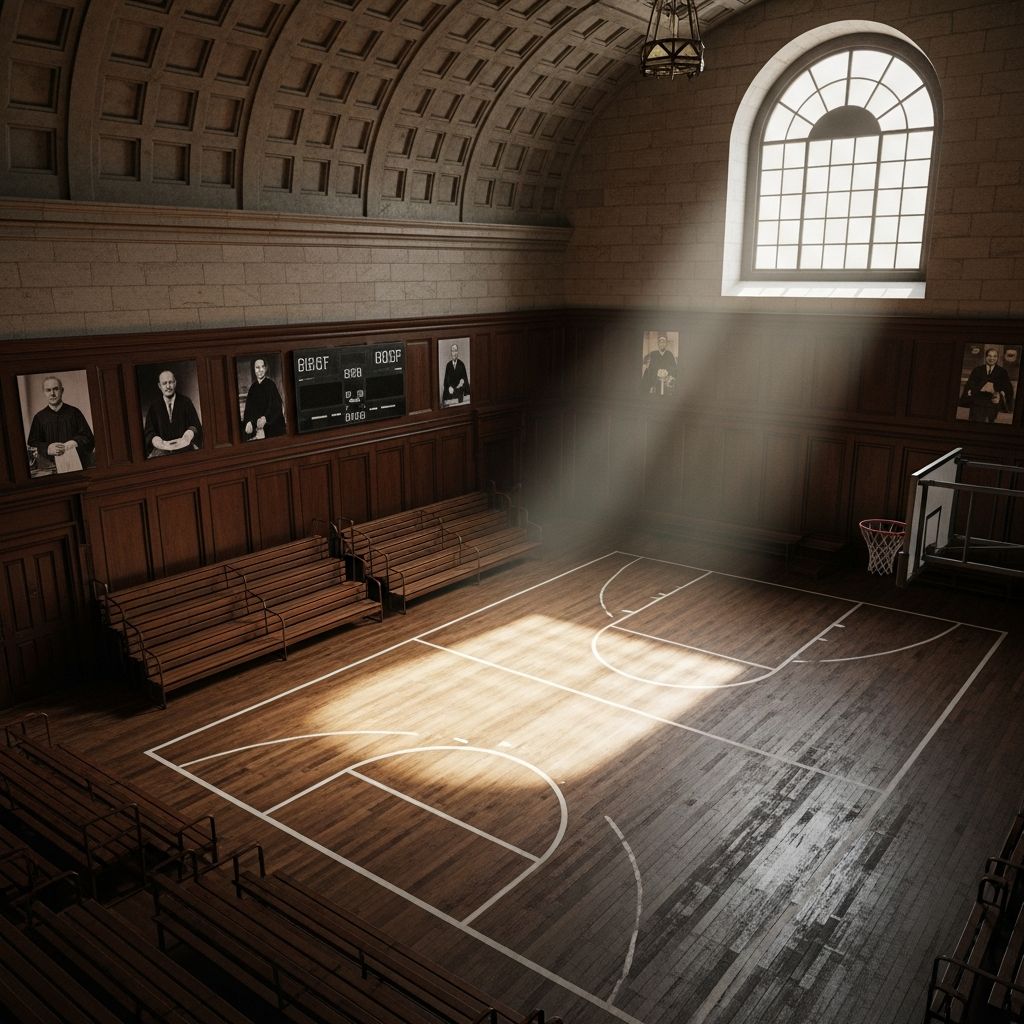
Far above the marble columns and solemn oral arguments of the U.S. Supreme Court sits an unexpected feature: a compact basketball gym that staff jokingly call the “Highest Court in the Land.” Tucked on an upper floor of the building, this gym has evolved from a storage loft into a quirky, beloved piece of Supreme Court lore, blending exercise, office camaraderie, and judicial history in one out-of-the-way room.
The Supreme Court Building and Its Upper Floors
The Supreme Court moved into its first permanent, purpose-built home in 1935, after decades of meeting in spaces inside the U.S. Capitol. The structure, designed by architect Cass Gilbert, features a monumental façade, a central courtroom, chambers for the justices, and several levels of offices, library stacks, and workrooms above the main floor.
While visitors typically see only the public spaces—like the grand staircase and courtroom—the building includes upper stories that house:
- Library stacks for case reporters and legal research materials
- Office suites for law clerks and staff
- Support areas originally intended for storage and utilities
It was one such support space, high above the courtroom, that eventually became the Supreme Court’s informal athletic facility.
From Storage Loft to Makeshift Gym
On the building’s upper level, a room was initially used for storing legal journals and other materials. Sometime in the 1940s, long after the Court first occupied the building, this underused space was converted into a modest workout area for people who worked in the building.
The transformation unfolded gradually:
- The room, originally a simple storage loft, provided enough open floor space to allow physical activity.
- Basic exercise equipment was brought in, turning it into a small gym for staff rather than a formal recreation facility.
- Over time, staff installed wooden backboards and baskets, giving rise to regular basketball games.
This slow evolution—rather than a single, planned project—helped give the gym its informal character. It was never advertised on building tours, and it remains largely unknown to the public, yet it has become a central feature of internal Supreme Court culture.
Why It’s Called the “Highest Court in the Land”
The nickname “Highest Court in the Land” is both a joke and a literal description. The gym sits on one of the top levels of the building, above the courtroom itself, making it physically higher than the official judicial bench.
The phrase works on two levels:
- Literal height: The court is located on an upper floor, above the courtroom, in a space that once stored journals and later became a gym.
- Playful wordplay: It evokes the idea of another “court” where disputes are settled—this time over fouls, jump shots, and pickup games rather than constitutional questions.
Over the years, media outlets, former clerks, and even official educational sources have repeated the nickname, cementing it as part of the Court’s public mythology.
Layout, Size, and Playing Conditions
Unlike a modern professional facility, the Supreme Court’s gym is more akin to a cramped school gym than a regulation basketball arena.
Commonly noted features include:
- Smaller-than-regulation court, which requires improvised boundaries and shorter play areas.
- Low ceiling, which can interfere with high-arc shots or long passes.
- Compact walls and minimal seating, so spectators must hug the edges of the space.
Over time, the Court has invested in some improvements:
- A new playing surface was added in the 1980s to replace the original hard floor.
- Modern backboards were installed, upgrading from wooden boards to more transparent materials.
- An adjacent weight and fitness area provides strength equipment in addition to the basketball floor.
| Feature | Supreme Court Gym | Standard NBA Court |
|---|---|---|
| Court size | Smaller than regulation; compact playing area | 94 x 50 feet (full regulation) |
| Ceiling height | Relatively low, can affect high shots | Typically 25+ feet |
| Seating | Minimal; spectators stand near walls | Thousands of seats, full arena |
| Primary users | Justices, clerks, staff, building employees | Professional players and officials |
Building Rules: Playing Above the Courtroom
Because the gym sits directly above the courtroom, noise control is critical. To prevent interference with oral arguments, the Court enforces practical guidelines on when and how games can be played.
Typical expectations reported by former staff and media include:
- No games during active court sessions, especially when oral arguments are underway below.
- Informal scheduling, with many pickup games taking place in the evenings or off days, away from argument calendars.
- Signage reminding players to keep noise down because of the courtroom directly beneath the gym.
These rules reflect the unusual reality of placing an athletic space over a solemn judicial chamber, requiring cooperation from everyone who uses the gym.
Clerks, Staff, and the Culture of Pickup Games
The basketball court is most closely associated with the Supreme Court’s law clerks and staff, many of whom are former college players, lifelong fans, or simply people seeking stress relief during a demanding year of work.
Reportedly, regular users over the years have included:
- Law clerks to the justices, who often form the core of pickup teams and friendly rivalries.
- Security officers and building personnel, such as police officers assigned to the Court.
- Library and administrative staff, who may join games or use the gym for exercise.
Beyond recreation, the court functions as a social equalizer. In the gym, hierarchies soften: clerks and staff from different chambers play together, and titles matter less than shooting, passing, and defense. Former players have described it as a space where the intense formality of the building gives way to relaxed conversation and friendly competition.
Justices on the Court: From Athletes to Spectators
Although most pickup games involve staff, several justices have personal connections to the gym, ranging from watching games to actively participating when they were younger.
- Athletic justices: Some justices arrived at the Court with distinguished sports backgrounds. For example, one former justice had been a standout college football player and maintained his fitness in part through basketball games on the Court’s gym.
- Injuries and caution: Notably, Justice Clarence Thomas suffered an Achilles tendon injury while playing basketball on the Supreme Court gym in the early 1990s, an incident that has been mentioned in official and educational summaries of the court’s history.
- Alternative uses: Some justices have favored non-basketball workouts, using the adjoining fitness equipment or encouraging group exercise classes for staff.
As the Court has grown older on average, active play by justices themselves has become less frequent, but the lore of judicial participation continues to surround the gym.
Equipment Upgrades and Safety Concerns
Even though the gym is informal, it has undergone meaningful upgrades over the decades to improve both play quality and safety.
Key changes have reportedly included:
- Replacing an unforgiving original floor with a more suitable playing surface to reduce injury risk.
- Swapping wooden backboards for more modern materials, improving bounce and visibility.
- Adding and updating fitness equipment in adjacent rooms, providing alternatives to full-court play.
Despite these improvements, the space retains quirks—tight boundaries, low clearance, and minimal seating—that keep it closer to a nostalgic gym than a modern training facility.
Gender, Inclusion, and Changing Participation
As legal professions and clerkships have diversified, the basketball court has also become a site where questions of inclusion and gender balance have played out.
Over time, patterns have emerged:
- Male-dominated play historically characterized many pickup games, reflecting broader imbalances in clerk hiring and legal practice.
- Women clerks and staff have increasingly participated in games, sometimes organizing mixed or women’s-only runs and demonstrating that basketball culture at the Court is not exclusively male.
- Group exercise classes led or encouraged by women justices and staff have helped expand the gym’s use beyond traditional pickup basketball.
These developments mirror broader changes in the composition of the Court’s workforce and ongoing efforts to make all informal spaces—courtroom, chambers, or gym—more inclusive.
The Gym as a Pressure Valve in a High-Stakes Institution
Working at the Supreme Court involves long hours, intense case preparation, and the constant awareness that decisions can shape national law for generations. Within that demanding environment, the basketball court functions as a rare pressure valve.
For many clerks and staff, the gym offers:
- Physical relief from sedentary research and writing
- Mental reset during complex and contentious cases
- Cross-chambers camaraderie that helps build friendships outside hierarchical office settings
Informal tournaments, pickup traditions during events like March college basketball season, and long-standing rivalries between chambers reinforce the sense that the Court is not only a workplace but also a temporary community.
Why the “Highest Court in the Land” Captivates the Public
The Supreme Court is commonly perceived as distant and austere. Photos of the marble building, robes, and formal arguments reinforce that image. Against that backdrop, the idea of justices and clerks running full-speed under a low ceiling and arguing over fouls is inherently striking.
The gym captures public imagination because it:
- Humanizes the Court by revealing that even the nation’s top legal minds need a break, pick-up games, and the occasional layup.
- Highlights the building’s hidden spaces, reminding people that behind the public areas lies a complex workplace with ordinary features like gyms and break rooms.
- Offers a rare lighthearted story about an institution usually discussed only in the context of serious cases and national debates.
As long as the gym remains in use, the “Highest Court in the Land” will continue to serve as an enduring, if unofficial, symbol of the Court’s more ordinary side.
Frequently Asked Questions (FAQs)
Q: Where exactly is the Supreme Court’s basketball court located?
A: The basketball gym is located on an upper floor of the U.S. Supreme Court building in Washington, D.C., above the courtroom and near the building’s library and office areas.
Q: Can members of the public visit or play on the “Highest Court in the Land”?
A: No. The gym is not part of public tours and is reserved for justices, clerks, Court staff, and building employees. Visitors typically see only the courtroom and main public areas.
Q: Is the Supreme Court gym a full-size basketball court?
A: No. Reports describe it as smaller than a regulation court, with a relatively low ceiling and compact boundaries, more like a school or small recreational gym than a professional facility.
Q: Do justices still play basketball there today?
A: Historically, some justices were active players, but as the Court’s average age has increased, justices more often use adjoining fitness equipment or attend group exercise sessions rather than regular pickup games.
Q: Why are games restricted during Court sessions?
A: Because the gym is located directly above the courtroom, noise from bouncing balls or running can carry downward. To protect the integrity of oral arguments and proceedings, playing is generally limited while Court is in session.
References
- An inside look at the Supreme Court’s famous basketball court — Axios. 2018-07-26. https://www.axios.com/2018/07/26/supreme-court-united-states-basketball-highest-land
- The Highest Court in the Land — Sports Illustrated. 2018-07-25. https://www.si.com/nba/2018/07/25/supreme-court-building-basketball-court
- March Madness at the Supreme Court — Supreme Court Historical Society. 2021-03-15. https://supremecourthistory.org/scotus-scoops/march-madness-at-the-supreme-court/
- One Good Fact: The Highest Court in the Land — Encyclopaedia Britannica. 2023-10-21. https://www.britannica.com/one-good-fact/what-sport-is-played-in-the-supreme-court-building
- The Highest Court in the Land — Atlas Obscura. 2016-03-16. https://www.atlasobscura.com/places/highest-court-of-the-land
- Legal Eagles Tip Off in ‘Highest Court in the Land’ — Los Angeles Times. 2002-09-08. https://www.latimes.com/archives/la-xpm-2002-sep-08-adna-court8-story.html
Similar Articles








Read full bio of Sneha Tete


