
The Hidden Struggles of Supreme Court Justices
Exploring the personal and professional challenges that have shaped Supreme Court history.
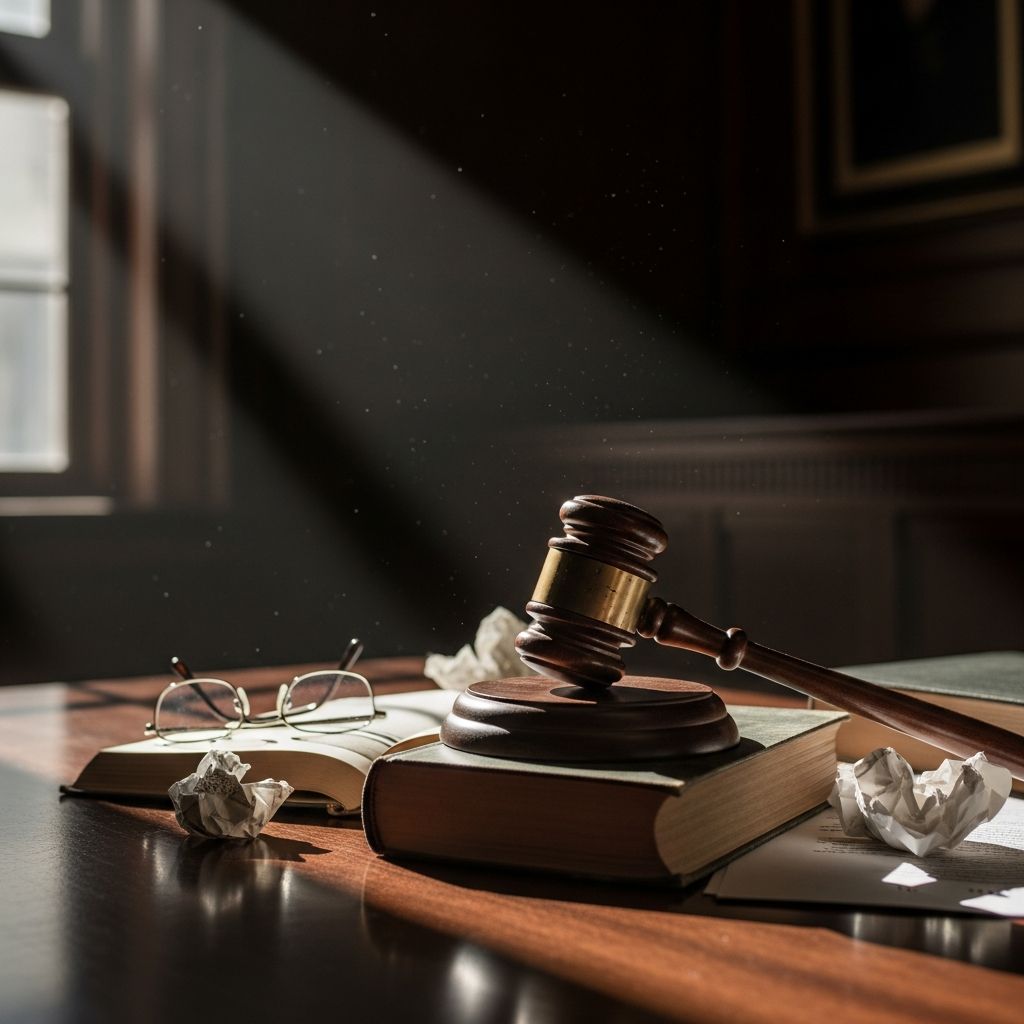
Understanding the Complexities Behind the Bench
The Supreme Court of the United States stands as the pinnacle of the American judicial system, with justices wielding significant authority over the nation’s most consequential legal matters. Yet behind the marble columns and formal proceedings lies a history marked by unexpected vulnerabilities and substantial difficulties that have tested both individual justices and the institution itself. From financial ruin to mental health crises, the men and women who have served on this highest court have confronted challenges that extended far beyond their judicial responsibilities. These struggles reveal a more human dimension to the Supreme Court, one that often contrasts sharply with the austere image the institution projects to the public.
Financial Instability and Personal Debt
One of the most significant yet underappreciated challenges that certain Supreme Court justices have faced involves serious financial difficulties. Early in the Court’s history, justices were not sheltered from the economic hardships that could befall any individual, regardless of their prominent position. Justice James Wilson, one of the nation’s Founding Fathers who played a crucial role as a delegate from Pennsylvania at the Constitutional Convention, found himself in such dire financial straits that he felt compelled to abandon his judicial duties entirely.
Wilson’s financial troubles stemmed from land speculation ventures that had spiraled into catastrophic losses. The magnitude of his debt was staggering for the era—approximately $197,000 owed to fellow Convention delegate Pierce Butler of South Carolina alone. Facing the genuine threat of imprisonment due to his unpaid obligations, Wilson made the desperate decision to flee to North Carolina in 1798, deliberately absenting himself from the February Supreme Court term. This extraordinary action by a Founding Father underscores how financial mismanagement could compromise even the most prominent figures in early American governance. The incident raises troubling questions about the vulnerability of judicial officers and the potential for personal crises to interfere with their capacity to serve the nation.
Mental Health Crises and Fitness for Duty
Beyond financial difficulties, the Supreme Court has grappled with justices facing severe mental health challenges that called into question their ability to perform their constitutional duties. Justice Henry Baldwin’s experience during the 1830s represents one of the most troubling episodes in the Court’s institutional history. Baldwin completely missed the entire 1833 term of the Court due to hospitalization for what was officially documented as “incurable lunacy.”
What makes Baldwin’s situation particularly concerning is the apparent lack of effective institutional response. Despite his colleagues expressing serious reservations throughout the early 1830s about Baldwin’s mental competence—explicitly stating that the justice “could not be sane”—the Court took no definitive action to address the situation. Baldwin continued functioning as a voting member of the Court, retaining all his judicial authority and responsibilities, until his death in 1844. This prolonged gap between the recognition of his condition and any substantive response reveals significant institutional limitations in managing judicial fitness issues during that historical period.
Behavioral and Conduct Issues
The Supreme Court’s history encompasses various instances where justices engaged in behavior that raised ethical concerns or contradicted public expectations about judicial decorum. These conduct matters have ranged from relatively minor infractions to more serious questions about the propriety of justices’ actions and associations.
Some justices have faced scrutiny related to their past affiliations and personal choices. For instance, Justice Hugo Black’s career, despite his eventual contributions to constitutional jurisprudence during his 34-year tenure, carried the shadow of his earlier membership in the Ku Klux Klan during his time as a local prosecutor and Alabama state senator. While Black later articulated a principled constitutional philosophy, this chapter of his biography complicated his legacy and raised important questions about redemption and judicial integrity.
More contemporary issues have involved questions about gifts, financial relationships, and the boundaries of appropriate conduct for justices serving in a modern era where public scrutiny has intensified considerably. These behavioral dimensions add another layer to understanding the multifaceted challenges that the Court as an institution has had to navigate.
The Burden of Institutional Expectations and Traditions
Beyond personal crises, Supreme Court justices navigate demanding institutional expectations and time-consuming obligations that many outside observers underestimate. The Court maintains various traditions and committee responsibilities that each justice must fulfill, regardless of their other judicial duties. One striking example involves the cafeteria committee—a seemingly mundane assignment that each new justice must assume as part of Court tradition.
Justice Elena Kagan, upon joining the Court, accepted responsibility for modernizing the Supreme Court’s cafeteria facilities, resulting in the installation of the Court’s first frozen-yogurt machine. While this particular contribution might seem lighthearted or even humorous on its surface, it illustrates how justices must balance their primary judicial function with various administrative and institutional responsibilities. Kagan herself humorously acknowledged that she anticipated being remembered as the “frozen-yogurt justice” for modernizing the traditionally conservative Court cafeteria.
These institutional obligations, multiplied across various committees and responsibilities, represent a form of invisible labor that extends beyond the substantive judicial work for which justices are primarily known. The demands of these positions can create additional stress and consume time that might otherwise be devoted to judicial contemplation and decision-making.
Career Uncertainty and Major Life Transitions
Some justices have navigated significant career transitions and life direction changes before ascending to the Supreme Court, suggesting that the path to this ultimate judicial position often involves substantial personal recalibration and reassessment. Justice Clarence Thomas, for example, experienced a profound period of discernment regarding his life direction before ultimately pursuing a legal career.
Thomas seriously considered entering the priesthood for the Catholic Church, dedicating himself to seminary study at Conception Seminary during his college years. This was not a casual or superficial exploration but rather a substantive commitment to religious life. However, Thomas ultimately departed from this path due to fundamental disagreements with the Church’s official position on civil rights matters. This represents a significant life transition—moving away from a deep religious calling to pursue an entirely different professional trajectory. Such major life changes necessarily involve periods of uncertainty, doubt, and adaptation that can create psychological and emotional stress.
Historical Gaps and Institutional Anomalies
The Supreme Court’s lengthy history includes several unusual and noteworthy gaps in attendance and participation. When the Supreme Court first convened, only three justices appeared for the initial meeting, despite six having been appointed to the position. This remarkable absence of the majority of the Court’s original membership raises questions about the justices’ priorities and understanding of their institutional obligations during the founding era.
Additionally, the historical record reveals that throughout its entire history, the Supreme Court has never had all nine seats filled simultaneously on multiple occasions. In more recent history, the nomination of Merrick Garland by President Barack Obama in 2016 received no Senate vote whatsoever, with Congressional Republicans refusing to consider the nomination on the grounds that it occurred during a presidential election year. This resulted in Justice Antonin Scalia’s vacancy persisting until Donald Trump’s election and Neil Gorsuch’s subsequent appointment. Such gaps create operational challenges and raise questions about continuity and the integrity of the judicial process.
The Educational and Background Diversity Challenge
While contemporary justices universally hold law degrees from elite institutions, the Court’s historical record reveals significant educational diversity among earlier justices. A notable historical fact involves the number of Supreme Court justices who never attended law school—approximately 64 justices throughout the Court’s history proceeded without formal legal education. The last justice without a law degree was James F. Burns, who lacked even a high school diploma and taught himself law through independent study.
This transition from relative educational informality to strict educational credentialing reflects broader changes in American professional standards. However, it also creates a subtle institutional pressure: modern justices must navigate the expectations that accompany attendance at only the most prestigious institutions, with every current justice having graduated from either Harvard or Yale Law School. This concentration of educational background among contemporary justices raises subtle questions about intellectual diversity and the range of perspectives represented on the bench.
Impeachment and Political Vulnerability
The Supreme Court’s history includes at least one instance of formal impeachment proceedings against a justice, underscoring the potential political vulnerability of even the most elevated judicial officers. Justice Samuel Chase faced impeachment by the House of Representatives in 1805 at the urging of President Thomas Jefferson, though he was ultimately acquitted by the Senate. This episode reveals that justices, despite their lifetime tenure, remain subject to extraordinary political challenges and institutional vulnerability under certain circumstances.
The Weight of Historical Circumstance
Many Supreme Court justices have confronted significant challenges related to the historical moments in which they served. Chief Justice Charles Evans Hughes navigated the Court through turbulent periods of social change, leveraging political acumen rather than eloquence to guide the institution. Similarly, Justice Louis Brandeis, as the first Jewish justice appointed to the Court, faced a bitter confirmation fight and became a controversial figure due to his advocacy for social justice causes, earning the nickname the “People’s Lawyer.”
These justices bore not only their individual responsibilities but also the weight of representing historically marginalized groups or navigating unprecedented institutional challenges. Justice Holmes, despite his iconic status as the “Great Dissenter,” endured significant professional isolation during his 30 years on the Court due to his frequent contrarian positions on diverse legal issues including copyright, due process, and antitrust matters.
Institutional Age and Relevance
The Supreme Court operates with traditions dating back to its inception, some of which seem increasingly anachronistic in modern contexts. The Court still places white goose-feather quill pens on counsel tables during each day of oral arguments, continuing a practice from the institution’s earliest days. While advocates typically take these quill pens home as souvenirs rather than using them for actual legal work, the tradition persists. Such institutional adherence to historical practices, while maintaining cultural continuity, also represents a form of constraint on modernization and adaptation to contemporary needs.
The Burden of Being Observed
Modern Supreme Court justices operate under intense public scrutiny in ways that their historical predecessors never experienced. Research analyzing oral arguments reveals that justices’ personalities, including their sense of humor, become subject to systematic study and public commentary. A study of the 2004 Supreme Court term demonstrated that Justice Antonin Scalia generated approximately 77 rounds of laughter during oral arguments—roughly one laugh per argument—earning recognition as the funniest justice, while Justice Ruth Bader Ginsburg produced only four laughs. Such quantification of judicial personality represents a form of public judgment that extends beyond the substance of judicial reasoning.
FAQ Section
Q: Have Supreme Court justices ever been removed from office?
A: While impeachment proceedings have been initiated against justices, removal has proven extraordinarily rare. Justice Samuel Chase was impeached in 1805 but acquitted by the Senate. Most justices serve lifetime appointments and remain in office until retirement or death, averaging approximately 16 years of service.
Q: What educational requirements exist for Supreme Court justices?
A: While there are no formal constitutional requirements mandating law school attendance, every current Supreme Court justice graduated from either Harvard or Yale Law School. Historically, about 64 Supreme Court justices never attended law school at all, though this represents a bygone era of legal practice.
Q: How many Supreme Court justices serve at any given time?
A: Nine justices currently serve on the Supreme Court—one Chief Justice and eight Associate Justices. This number was established by the Judiciary Act of 1869, though the Court has operated with different numbers of justices throughout its history.
Q: Can Supreme Court justices refuse to serve?
A: While justices can retire, historically some have abandoned their duties entirely due to personal crises. Justice James Wilson fled to North Carolina to avoid debtor’s prison, demonstrating that even the highest judicial officers can face circumstances forcing them away from their duties.
Q: Do Supreme Court justices have non-judicial responsibilities?
A: Yes, all new justices must serve on the Court’s cafeteria committee as part of institutional tradition. This responsibility reflects the broader administrative obligations that extend beyond the justices’ primary judicial function.
References
- Fascinating Facts About Supreme Court Justices — Constitution Center. https://constitutioncenter.org/blog/fascinating-facts-about-supreme-court-justices
- The 9 Greatest Supreme Court Justices — HistoryNet. https://historynet.com/the-nine-greatest-supreme-court-justices/
- History of the Supreme Court: Why Do 9 Justices Serve? — Fox 26 Houston. https://www.fox26houston.com/news/history-of-the-supreme-court-why-do-9-justices-serve-what-is-packing-the-court
- (Slightly) Astounding Facts About the Supreme Court — NBC News. https://www.youtube.com/watch?v=7nJIPA3OCPA
- Current Members — Supreme Court of the United States Official Website. https://www.supremecourt.gov/about/biographies.aspx
Similar Articles








Read full bio of Sneha Tete




