
Marriage to a U.S. Permanent Resident: Green Card Guide
Understand how marriage to a U.S. green card holder can lead to permanent residence, eligibility, timelines, and common pitfalls.
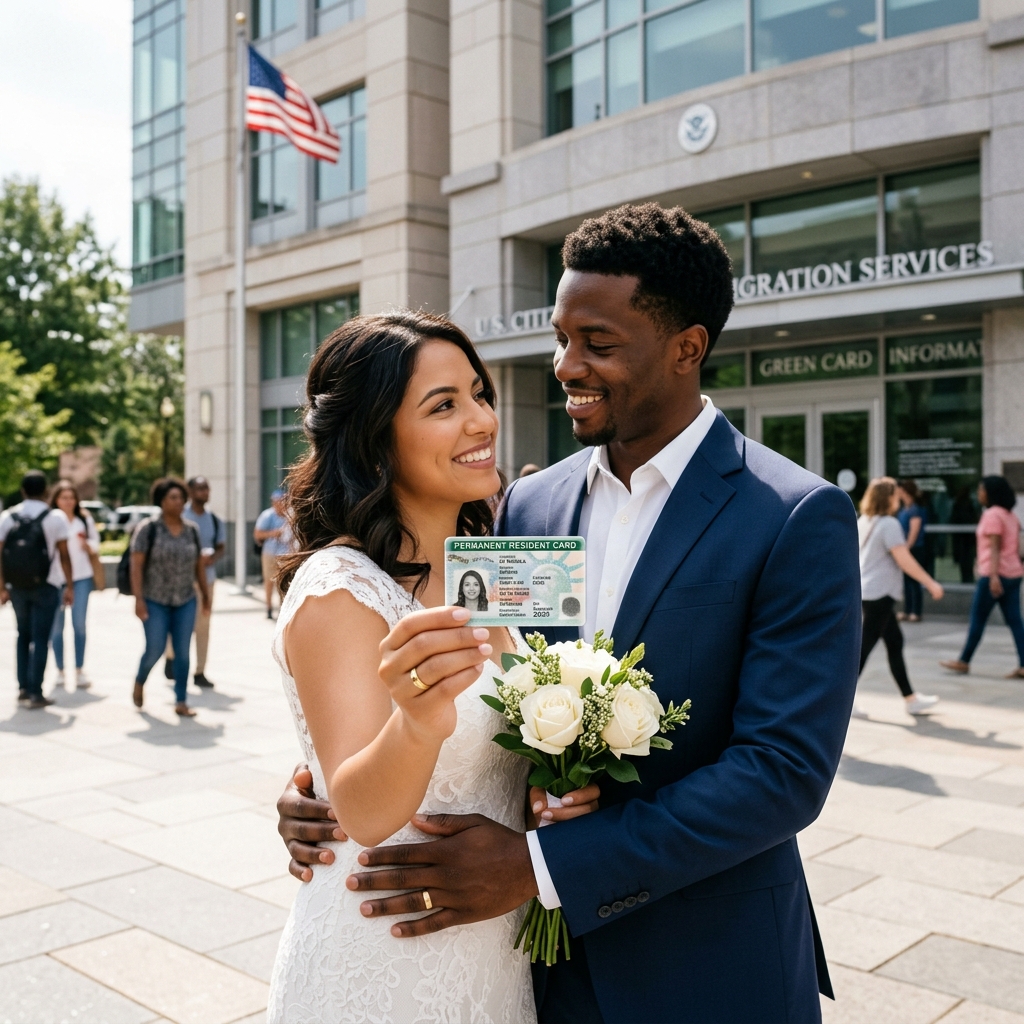
Marriage to a U.S. lawful permanent resident (LPR), commonly called a green card holder, can open a path to living and working in the United States permanently. Unlike marriage to a U.S. citizen, however, this route involves stricter quotas, longer waiting times, and additional strategic planning to maintain lawful status while your case is pending.
This article explains how marriage to a permanent resident can lead to a green card, who qualifies, what forms are required, how long the process usually takes, and how to avoid common mistakes that can delay or jeopardize approval.
Understanding the Role of the U.S. Permanent Resident Spouse
A lawful permanent resident is someone authorized to live and work in the U.S. indefinitely, evidenced by a physical green card. While LPRs do not have all the rights of citizens (for example, they cannot vote in federal elections), they can sponsor certain family members for permanent residence, including their spouses.
For immigration purposes, a spouse of a permanent resident is classified in the family preference category, specifically the F2A category (spouses and unmarried children under 21 of permanent residents). Visas in this category are subject to annual numerical limits, which directly affects how long you may wait before you can complete the green card process.
- Sponsoring spouse: The permanent resident who files the family petition.
- Beneficiary: The foreign national spouse seeking a green card.
- Preference category: F2A, subject to annual visa caps.
Basic Eligibility for a Marriage-Based Green Card
To qualify for a marriage-based green card through a permanent resident spouse, you must satisfy both relationship and admissibility requirements.
Relationship Requirements
- The marriage must be legally valid in the place where it occurred (proper license, ceremony, and registration).
- The marriage must be bona fide, meaning genuinely entered into, not primarily for immigration benefits.
- Any prior marriages for either spouse must have been legally terminated (divorce, annulment, or death certificates).
- The sponsoring spouse must already be a lawful permanent resident at the time of filing, or must become one before a visa can be issued.
Admissibility Requirements
Beyond proving the relationship, the foreign spouse must be admissible under U.S. immigration law.
- No disqualifying criminal history (certain offenses can trigger inadmissibility).
- No serious immigration violations, such as long-term unlawful presence or prior removal orders, unless a waiver is available.
- Passing a medical exam and vaccination review as documented on Form I-693.
- The permanent resident spouse must meet income requirements for the financial sponsorship form (Form I-864, Affidavit of Support).
Key Forms in a Marriage-Based Green Card Case
The marriage-based process is form-intensive. While exact requirements can vary by case, several foundational forms appear in nearly every application.
| Form | Filed By | Main Purpose |
|---|---|---|
| Form I-130 | Permanent resident spouse | Establishes the qualifying marital relationship and starts the case as a family petition. |
| Form I-130A | Foreign spouse | Provides supplemental biographic information for the beneficiary spouse. |
| Form I-485 | Foreign spouse (if eligible to adjust in the U.S.) | Requests adjustment of status to permanent residence inside the U.S. |
| Form DS-260 | Foreign spouse (consular processing) | Immigrant visa application filed with the Department of State for applicants outside the U.S. |
| Form I-864 | Permanent resident spouse (and possibly joint sponsor) | Affidavit of Support showing financial ability to support the immigrant and avoid public charge issues. |
| Form I-765 / I-131 | Foreign spouse (if adjusting status) | Applications for work authorization and advance parole travel permission during the pending I-485. |
Step-by-Step Process When Married to a Permanent Resident
While individual timelines and details vary, most couples move through the following core stages.
1. Filing the Family Petition (Form I-130)
The permanent resident begins by filing Form I-130, Petition for Alien Relative, with U.S. Citizenship and Immigration Services (USCIS). This establishes the marriage as a qualifying relationship for immigration purposes.
Supporting documentation often includes:
- Marriage certificate.
- Proof of termination of any prior marriages.
- Birth certificates for both spouses, if available.
- Evidence of a shared life (leases, bank statements, insurance policies, photos).
2. Waiting for a Visa Number in the F2A Category
Once USCIS approves the I-130, the case moves to the National Visa Center (NVC). Because spouses of permanent residents fall into the F2A preference category, they must wait for a visa number to become available according to the State Department’s monthly Visa Bulletin.
During this waiting period:
- The foreign spouse must maintain lawful status in the United States if they are physically present, or remain eligible for immigrant processing abroad.
- Unauthorized employment, overstays, or other violations can significantly complicate the later stages.
3. Choosing Between Adjustment of Status and Consular Processing
The path you follow depends largely on where the foreign spouse lives and whether a visa is immediately available.
- Adjustment of Status (inside the U.S.): The spouse files Form I-485 with USCIS once a visa number is available and they are eligible to adjust status.
- Consular Processing (outside the U.S.): The spouse completes Form DS-260 and attends a visa interview at a U.S. embassy or consulate in their home country.
The decision about which route to take should consider:
- Current immigration status in the U.S.
- Risk of triggering bars to re-entry by leaving the country.
- Processing times at local USCIS offices versus consulates.
4. Submitting the Green Card Application Package
For adjustment of status cases, the I-485 package typically includes the main form plus supporting evidence such as the medical exam, financial sponsorship documents, and proof of lawful entry (I-94 and passport visas).
For consular cases, the NVC collects civil documents and financial forms before scheduling the immigrant visa interview. These requirements closely parallel those of the I-485 package, but are handled through the Department of State rather than USCIS.
5. Attending the Marriage-Based Interview
Nearly all marriage-based cases include an in-person interview, either at a USCIS field office (for adjustment cases) or at a consulate overseas (for consular cases).
At the interview, the officer typically:
- Verifies the authenticity of the marriage through questions about your relationship history, daily life, and future plans.
- Reviews documentation for completeness and consistency.
- Checks for red flags such as conflicting answers or lack of shared life evidence.
If the officer is satisfied, the case may be approved at or shortly after the interview, and the green card (or immigrant visa) is issued.
Conditional vs. Permanent Green Cards
When a marriage is less than two years old on the date the foreign spouse becomes a permanent resident, USCIS grants a conditional green card valid for two years. The conditions are intended to deter sham marriages and ensure the relationship is genuine.
Before the conditional card expires, the couple must jointly file a petition to remove conditions, demonstrating that the marriage continues to be bona fide.
- Failure to remove conditions can result in loss of permanent resident status.
- Evidence at this stage often resembles the initial proof of shared life, updated to cover the past two years.
Processing Times and Practical Expectations
Processing times for marriage-based green cards can vary widely depending on whether the sponsoring spouse is a citizen or permanent resident, case complexity, and agency workload.
For marriages to permanent residents:
- The I-130 approval itself may take several months.
- Waiting for a visa number in the F2A category can add significant time, though this fluctuates as quotas and demand change.
- Once a visa number is available, many marriage-based applications take about 10–24 months for full processing in 2026, depending on specific circumstances.
Common Pitfalls and How to Avoid Them
Several recurring issues tend to delay or derail marriage-based green card cases, especially for spouses of permanent residents.
Inadequate Evidence of a Bona Fide Marriage
USCIS and consular officers rely heavily on relationship evidence to distinguish genuine marriages from those entered into primarily for immigration benefits.
Strong evidence may include:
- Joint leases or mortgage statements.
- Shared bank and credit account statements.
- Insurance policies listing each other as beneficiaries.
- Photos together across different times and places, including with family and friends.
- Travel records and correspondence showing a continuing relationship.
Status Violations During the Waiting Period
Because spouses of permanent residents often wait years before a visa becomes available, maintaining lawful immigration status in the U.S. is critical.
- Overstaying a visa can create barriers to adjustment of status and may trigger inadmissibility grounds.
- Unauthorized work may complicate the case, even if not automatically disqualifying in all categories.
- Failing to keep USCIS and NVC informed of address changes can result in missed notices and delays.
Insufficient Financial Sponsorship
The Affidavit of Support (Form I-864) requires the sponsoring permanent resident to meet minimum income thresholds based on federal poverty guidelines.
- Income can include wages, self-employment, or certain assets.
- If the sponsoring spouse does not meet the requirement, a joint sponsor may be necessary.
- Incomplete or outdated financial documents can lead to Requests for Evidence (RFEs) and added months of processing time.
Strategic Considerations: When the Permanent Resident Naturalizes
In many cases, a permanent resident spouse later becomes a U.S. citizen while the I-130 is pending. This can significantly affect the green card process.
- Once the sponsor becomes a citizen, the foreign spouse is treated as an immediate relative, and numerical limits no longer apply.
- This may allow faster progression to adjustment of status or consular processing.
- Couples in this situation should promptly notify USCIS or NVC of the status change to update the case category.
Frequently Asked Questions (FAQs)
1. Can I apply for a green card immediately after marrying a permanent resident?
No. Unlike spouses of U.S. citizens, spouses of permanent residents usually must wait until a visa number in the F2A category becomes available after the I-130 is approved. However, starting the I-130 soon after marriage is still important to secure your place in line.
2. Do I have to stay in my home country while I wait?
Not necessarily. Some spouses are already lawfully in the U.S. in another status and can remain while waiting, as long as they maintain valid immigration status. Others complete the process from abroad through consular processing. The safer option depends on your individual history and current status.
3. Is the process different if we have children?
Children do not automatically receive green cards through their parent’s marriage-based application. Each child generally requires their own petition and application, although they may benefit from similar family preference categories.
4. What happens if we divorce while the case is pending?
Because marriage is the basis for the green card, a divorce before approval usually ends eligibility through that petition. Conditional residents who divorce may, in some circumstances, file to remove conditions on the basis of a good faith but ended marriage, but this is more complex and evidence-intensive.
5. How soon can I apply for citizenship after getting my green card?
In general, lawful permanent residents may apply for naturalization after meeting residence and physical presence requirements. Spouses of U.S. citizens can often apply after three years of permanent residence; for spouses of permanent residents, the typical requirement is five years, unless the sponsor later naturalizes and additional factors apply.
Final Practical Tips for Couples
Successfully obtaining a green card through marriage to a permanent resident requires patience, organization, and honest communication with immigration authorities.
- Stay organized: Keep a dedicated folder with copies of all forms, receipts, and evidence.
- Monitor status: Regularly check case updates through USCIS online tools and track the Visa Bulletin.
- Maintain lawful presence: Avoid overstays or unauthorized employment whenever possible, and consult a qualified immigration professional if you have past violations.
- Update evidence: Continually collect proof of your shared life together; what you gather now may be crucial for later interviews or removal of conditions.
- Consider naturalization timing: If the permanent resident is eligible to become a U.S. citizen, this may significantly shorten the spouse’s path to a green card.
References
- Green Card for Immediate Relatives of U.S. Citizen — U.S. Citizenship and Immigration Services (USCIS). 2023-06-27. https://www.uscis.gov/green-card/green-card-eligibility/green-card-for-immediate-relatives-of-us-citizen
- Immigrant Visa for a Spouse or Fiancé(e) of a U.S. Citizen — U.S. Department of State, Bureau of Consular Affairs. 2024-02-01. https://travel.state.gov/content/travel/en/us-visas/immigrate/family-immigration/immigrant-visa-for-a-spouse-or-fiance-of-a-us-citizen.html
- Green Card for Fiancé(e) of U.S. Citizen — U.S. Citizenship and Immigration Services (USCIS). 2023-01-05. https://www.uscis.gov/green-card/green-card-eligibility/green-card-for-fiancee-of-us-citizen
- Marriage Green Card Guide 2026: Step-by-Step Process — Akalan Law. 2026-01-15. https://akalanlaw.com/marriage-green-card-guide-2026/
- Green Card Guide: Living in the U.S., Married to a Green Card Holder — Boundless Immigration. 2026-03-10. https://www.boundless.com/immigration-resources/us-family-spouse-noncitizen-us
- Permanent Residency (Green Card through Marriage) — University of Iowa International Programs. 2023-08-01. https://international.uiowa.edu/isss/current-students/permanent-residency-green-card-through-marriage
- Common Questions: Marriage and Permanent Residence — Indiana University Office of International Services. 2022-11-15. https://ois.iu.edu/scholars/permanent-residence/marriage/common-questions.html
Similar Articles








Read full bio of medha deb


