
Navigating Police Involvement in a Domestic Violence Case
A practical guide to understanding, preparing for, and working with law enforcement when domestic violence affects you or your family.
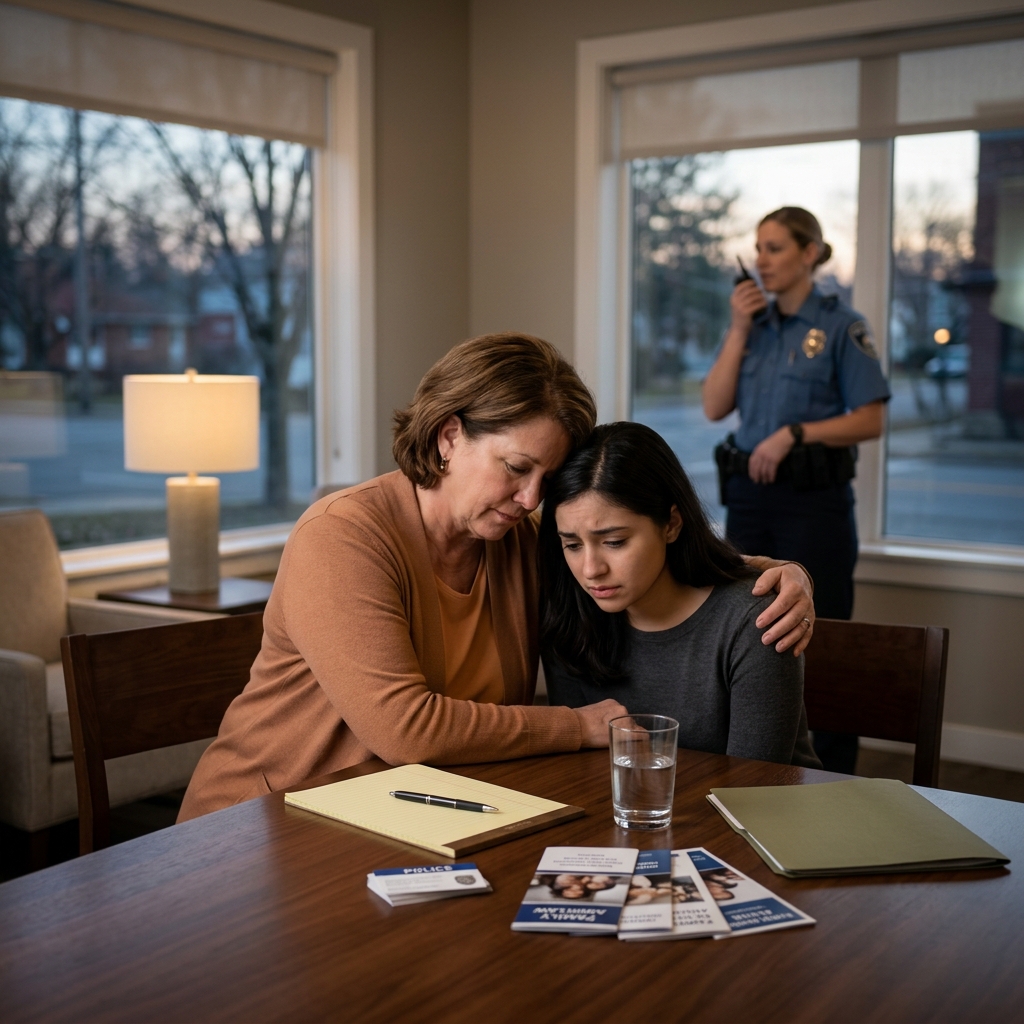
When domestic violence occurs, law enforcement can be a critical lifeline, but the process can feel confusing, intimidating, and emotionally overwhelming. This guide explains how police typically respond to domestic violence, what your rights are as a victim, and how you can work with officers and other professionals to protect yourself and pursue justice.
Understanding Domestic Violence and Police Responsibilities
Domestic violence is not a private dispute; it is a crime that can involve physical, emotional, sexual, psychological, or economic abuse within intimate or family relationships. Police departments across the United States are required and trained to respond to these incidents, investigate possible offenses, and help connect victims to safety and services.[10]
What Counts as Domestic Violence?
While definitions vary by state law, domestic violence generally includes abuse committed by a spouse, former spouse, intimate partner, cohabitant, or family member. Abuse may involve acts intended to control, intimidate, or harm another person, such as:
- Physical abuse – hitting, slapping, choking, restraining, or use of weapons.
- Sexual abuse – sexual acts forced through coercion, threats, or physical force.
- Emotional and psychological abuse – humiliation, isolation, threats, or constant criticism.
- Economic control – taking your money, preventing you from working, or restricting access to funds.
- Stalking and harassment – following you, unwanted calls or messages, showing up uninvited.
Core Duties of Police in Domestic Violence Cases
In many jurisdictions, law enforcement has specific obligations when responding to domestic violence calls. These often include:
- Ensuring immediate safety for victims, children, and others at the scene.
- Securing and documenting the crime scene, including injuries and damaged property.
- Separating parties and interviewing them individually to assess what happened.
- Determining whether probable cause exists to believe a crime was committed.
- Checking for active restraining or protective orders and whether they were violated.
- Explaining basic rights and available support services to the victim.
Specialized units, such as domestic violence response units or victim-services coordinators, may assist officers with investigations, safety planning, and referrals.
Calling the Police: What to Expect During the First Response
Deciding to call the police can be difficult, especially if you fear retaliation or worry that you will not be believed. Understanding what typically happens during a police response can help you prepare and assert your needs.
Steps You Can Take When You Call 911
In an emergency, call 911 and report that you are experiencing domestic violence or are in immediate danger. Try to provide:
- Your exact location, including apartment or floor number.
- Whether weapons are present or have been used.
- Whether children or other vulnerable people are nearby.
- Any active protective order or previous police reports.
If you cannot speak safely, some jurisdictions allow silent or coded calls; the dispatcher may ask yes/no questions. Follow their instructions as best you can.
What Officers Typically Do Upon Arrival
Once police arrive, their priority is to stabilize the situation and prevent further harm. Common steps include:
- Securing the scene – ensuring no immediate threats, disarming any weapons, and checking on children.
- Separating the parties – interviewing you and the abusive partner separately, away from direct influence or intimidation.
- Gathering evidence – documenting injuries, photographing damage, and collecting statements from witnesses.
- Assessing risk – asking questions about prior incidents, escalation, threats to kill, strangulation, and access to firearms.
Officers may use trauma-informed techniques, such as speaking calmly, allowing you time to compose yourself, and recognizing that victims may appear confused, hesitant, or fearful.
Information You Should Consider Sharing
Although it may be painful, the details you provide can significantly affect how police handle your case.
- Describe each incident, including what was said, done, and how you were injured.
- Point out visible injuries and areas that hurt, even if they are not obvious.
- Mention past assaults, threats, stalking, or harassment, especially recent escalation.
- Tell officers about any firearms, weapons, or dangerous items your abuser has access to.
- Explain whether children witnessed or were affected by the violence.
Honesty and specificity help officers understand the level of risk and decide whether to make an arrest, seek emergency protective measures, or call specialized advocates.
Incident Reports, Evidence, and Your Rights
One of the most important records in a domestic violence case is the incident report prepared by law enforcement. This document captures key facts and may be used later in criminal proceedings, protective order hearings, or safety planning.
Why the Incident Report Matters
An incident report generally includes the date, time, location, names of involved parties, visible injuries, witness statements, and a summary of what officers observed. It can help:
- Support criminal charges against the abuser.
- Establish a documented pattern of abuse for future court proceedings.
- Provide a basis for victim compensation or benefits where available.
- Show employers, schools, or housing authorities that you are seeking help.
How to Safeguard Documentation
To stay organized and protect your case, consider the following steps:
- Request that officers file an incident report for each call or visit related to abuse.
- Ask for the report number and, when possible, a copy of the report.
- Write down the names and badge numbers of responding officers for follow-up.
- Keep records of medical visits, photographs of injuries, threatening messages, and damaged property.
- Store documents in a safe place, such as with a trusted friend or advocate, or digitally with secure backups.
What If a Report Is Not Taken?
If officers decline to prepare a report or you believe important information was left out, you can:
- Visit your local police station and ask to file an incident report yourself.
- Provide written details of the event, including officers’ names, badge numbers, and any witnesses.
- Ask to speak with a supervisor if your request is not taken seriously.
- Seek assistance from a victim advocate who can support you in communicating with law enforcement.
Protective Orders, Arrests, and Legal Outcomes
Police involvement is closely tied to protective orders and potential criminal charges. Understanding how these processes interact can help you make informed decisions.
Protective and Restraining Orders
A protective or restraining order is a court order that can limit or prohibit contact, require an abuser to stay away from your home or work, and sometimes address child custody, firearms, and temporary support.
| Possible Protection | How Police Get Involved |
|---|---|
| Stay-away orders from home, school, or workplace | Police can arrest if they have probable cause the abuser violated the order. |
| No-contact provisions (no calls, messages, or third-party contact) | Threatening or annoying calls can be investigated; violations may lead to charges. |
| Firearms restrictions | Officers may seize firearms subject to law and seek voluntary surrender for safety. |
| Temporary custody or residence arrangements | Police may help enforce who can remain in the shared residence or pick up children, depending on the order and local law. |
If an abuser comes to your home, school, or workplace in violation of an order, contact police immediately, show them your copy of the order, and state clearly that you want the violation documented and charges considered.
Probable Cause and Arrest Decisions
Police can arrest a suspect without a warrant in many states if they have probable cause to believe that a domestic violence crime or protective order violation occurred. Factors may include:
- Visible injuries, particularly signs of strangulation or serious assault.
- Statements from you, children, or other witnesses.
- Evidence of property damage, broken items, or signs of forced entry.
- Threats to kill or harm you, your children, or others.
- Past history of abuse documented in prior reports or protective orders.
In many jurisdictions, victims cannot simply “drop” criminal charges once filed because the case is between the state and the defendant; you are a key witness, but not the legal party. This can sometimes provide added protection from pressure by the abuser to withdraw complaints.
Working with Advocates and Community Resources
Police response is only one piece of a comprehensive safety and support system. Collaboration among law enforcement, domestic violence advocates, and service providers can greatly improve outcomes for victims.
Role of Victim Advocates
Victim advocates are professionals or trained volunteers who help victims understand legal processes, safety options, and available resources. They may be based in police departments, prosecutors’ offices, shelters, or community organizations.
Advocates can help you:
- Prepare for interviews with police and prosecutors.
- Develop a safety plan tailored to your situation.
- Find shelter, counseling, and financial assistance.
- Understand court procedures and your rights at hearings.
- Address concerns about child safety and the impact of trauma on families.
Police–Community Partnerships
Many communities have formed partnerships between law enforcement agencies and domestic violence programs to coordinate responses, share information, and ensure victims do not fall through the cracks.[10]
These initiatives may include:
- Domestic violence investigative units that follow up on cases beyond the initial call.
- Joint training on trauma-informed, culturally responsive practices.
- Family justice centers that bring police, prosecutors, advocates, and service providers together in one location.
- Community education campaigns emphasizing that domestic violence is a crime and encouraging reporting.[10]
Practical Safety Tips When Engaging Law Enforcement
Staying safe during and after police involvement requires planning and awareness. While each situation is unique, the following practical steps can help reduce risk.
Before and During the Call
- Call as soon as you can safely do so; if possible, move to a room with an exit and no weapons.
- Avoid arguing in kitchens, bathrooms, or areas where weapons are stored.
- Keep a small emergency bag with essential documents, medications, and keys where you can access it quickly.
- If you leave the home before officers arrive, try to go somewhere they can meet you safely.
After Police Leave
- Write down what happened as soon as possible, including anything you forgot to tell officers.
- Update your safety plan, taking into account the abuser’s reaction to police involvement.
- Consider changing locks, securing windows, and varying your routines when feasible.
- Inform trusted friends, family, or neighbors about the situation if it is safe to do so.
- Follow up with advocates or legal services to explore protective orders and long-term options.
Frequently Asked Questions
Do I have to cooperate with police if I am afraid?
You have the right to speak or decline to speak, but sharing accurate information can help officers protect you and hold the abuser accountable. If you are worried about retaliation, tell officers and ask about safety planning and protective measures.
Can police help me if the abuse is mainly emotional or financial?
Yes. While physical violence is often easier to document, emotional, psychological, and economic abuse can still be part of a criminal case or grounds for a protective order, depending on state law. Describe all behaviors that make you feel unsafe or trapped, and ask about available legal options.
What if I called the police in the past but did not press charges?
Prior calls and reports can still be important. Officers and prosecutors may review historical information to understand patterns of abuse, escalating threats, or repeated violations. Let police know about any previous incidents, even if they did not lead to charges.
Will the abuser automatically go to jail if I call?
Not always. The decision to arrest depends on the evidence and applicable laws, including whether officers have probable cause that a crime or protective order violation occurred. In some places, mandatory or pro-arrest policies exist for certain types of domestic violence incidents.
How can I get help if I do not trust the police?
If you have concerns about law enforcement, contact a domestic violence hotline, shelter, or legal aid organization first. Advocates can explain local practices, help you weigh risks and benefits, and sometimes accompany you when interacting with police or court systems.
References
- Working with the Police in Your Domestic Violence Case — Maryland People’s Law Library. 2023-05-01. https://www.peoples-law.org/working-police-your-domestic-violence-case
- Police-Community Partnerships to Address Domestic Violence — U.S. Department of Justice, Office of Community Oriented Policing Services. 2002-06-01. https://portal.cops.usdoj.gov/resourcecenter/content.ashx/cops-w0766-pub.pdf
- The Role of Police in Combating Domestic Violence in the United States — U.S. Department of Justice, National Institute of Justice. 1996-05-01. https://www.ojp.gov/sites/g/files/xyckuh241/files/archives/policing/role161.htm
- Domestic Violence — Los Angeles Police Department. 2021-08-15. https://www.lapdonline.org/domestic-violence/
- Domestic Violence — City of Costa Mesa Police Department. 2020-11-10. https://www.costamesaca.gov/government/departments-and-divisions/police/police-information/domestic-violence
- Interviewing Techniques in Domestic Violence Cases — New Jersey Attorney General, Division of Criminal Justice. 2016-01-01. https://www.nj.gov/oag/dcj/njpdresources/dom-violence/module-four-student.pdf
- Reframing Law Enforcement’s Approach to Domestic Violence Calls — Duke University Center for Child and Family Policy. 2023-03-20. https://childandfamilypolicy.duke.edu/blog/research-item/test-research-post-2/
Similar Articles








Read full bio of medha deb


