
Renting to Minors: Legal Issues for Young Tenants and Landlords
A practical guide to how lease agreements work when the tenant is under 18, and what both landlords and young renters should know.
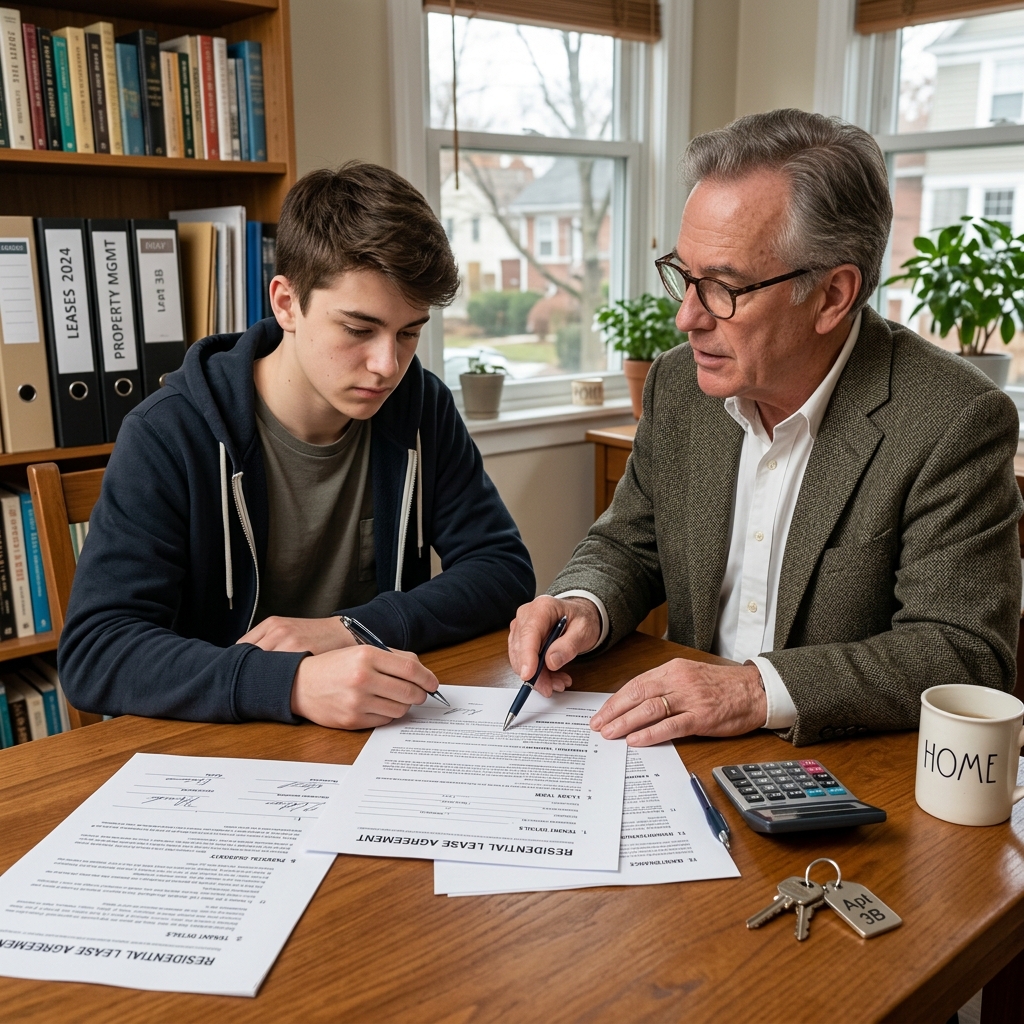
Housing questions become more complicated when the person signing the lease is under 18 years old. Under most U.S. state laws, people under 18 are treated as minors, which affects how and when they can be held to a rental contract. This article explains, in plain language, how leases work for minors, what risks landlords should consider, and how young tenants can responsibly enter into housing agreements.
Understanding Legal Age and Capacity to Sign a Lease
In many states, including Maryland, the general rule is that anyone under 18 is a minor and anyone 18 or older is an adult. While some laws create special exceptions—for example, for certain medical or criminal issues—these exceptions usually do not change landlord-tenant rules.
When it comes to leases, two concepts matter:
- Age of majority – the age at which a person is legally an adult (commonly 18).
- Capacity to contract – the legal ability to enter into a binding agreement.
Minors generally lack full capacity to be bound by contracts in the same way adults are. A lease is legally a type of contract, and contract rules therefore apply to most residential rental agreements.
Can a Minor Sign a Lease Agreement?
There is an important distinction between signing a lease and being legally bound by it:
- Anyone can sign a lease, including a minor.
- The legal issue is whether that person can be held accountable for all of the lease obligations, such as paying rent and following rules.
From a practical perspective, this means:
- A landlord may choose to accept a minor as a tenant and allow them to sign the rental lease.
- However, if a dispute arises, the minor may have extra legal protections that make the lease harder to enforce compared to a lease with an adult.
For young people seeking independence—such as college students or youth who have left their parents’ home—understanding these rules is important before entering into a lease. For landlords, it matters because it affects the level of risk involved in renting to someone under 18.
General Rule: Minors Are Not Fully Bound by Contracts
In contract law, minors are typically allowed to void or cancel many agreements they sign. The law treats minors as a protected group and assumes they may not fully understand the consequences of long-term contracts.
Applied to rental housing, this means:
- If a minor signs a lease and later decides the agreement is not in their best interest, the law may allow them to cancel the lease.
- The minor can sometimes choose either to honor the lease and continue paying rent, or to avoid the obligation by voiding the contract.
However, this broad rule has important limits, especially when the contract provides essential goods or services.
Exception for Basic Necessities: Why Lodging Is Different
Courts often treat certain items as “necessaries”—basic necessities of life that minors must still pay for even if they are under 18. Common examples include food, clothing, medical care, and housing (lodging).
When a contract provides these necessities, a minor generally has to pay a reasonable price for what they received, even if they technically have the right to void the contract.
For rental housing, lodging is a recognized basic necessity. This creates a middle ground:
- A minor may have the power to void the lease contract.
- But the minor can still be required to pay for the actual housing they used, often at a fair market rate.
As a result, a landlord who rents to a minor does not have the same level of certainty as with an adult tenant, but the law does not completely prevent the landlord from collecting payment for the housing provided.
What Happens When the Minor Turns 18 During the Tenancy?
A common real-life situation arises when someone moves into a rental unit at 17 and continues living there after their 18th birthday. In many jurisdictions, if the person remains in the unit after turning 18 and continues to pay rent or follow lease terms, that ongoing conduct can be treated as ratifying the lease as an adult.
In other words:
- The tenant starts as a minor with limited contract obligations.
- Once the tenant turns 18 and keeps living there, they can become fully bound by the lease as an adult for the remaining term.
Landlords and young tenants should pay close attention to the timeline. If the lease extends beyond the minor’s 18th birthday, there is a strong chance that the tenant will be treated as an adult under the lease after that date.
Risk Management for Landlords Renting to Minors
Because minors have extra rights to avoid contractual obligations, landlords often think carefully before entering a lease with an underage tenant. Several practical strategies can help manage risk while still providing housing access:
Using a Co-Signer or Guarantor
One common approach is to ask an adult—often a parent, guardian, or relative—to co-sign the lease. This adult agrees to be legally responsible for rent and other obligations if the minor does not pay.
Benefits of having a co-signer:
- Provides a financially responsible adult the landlord can pursue for unpaid rent or damages.
- Reduces the risk that the minor will void the lease without consequences.
- Can give the landlord more confidence to rent to younger tenants, such as students.
Landlords should still follow fair housing laws. Under federal law, landlords generally may not refuse to rent solely because a household includes children (familial status), and they may not unfairly change rental terms based on age, disability, race, or other protected traits.
Setting Clear Lease Terms and House Rules
Renting to minors often works best when expectations are clearly written and explained. Good practices include:
- Spelling out rent due dates and late fee policies.
- Listing responsibilities for utilities, repairs, and reporting maintenance problems.
- Explaining occupancy limits and guest policies.
- Clarifying noise rules, safety policies, and any building-specific requirements.
Many states require landlords to maintain habitable, safe housing and to follow specific security deposit rules, regardless of the tenant’s age. These obligations cannot usually be waived by the lease.
Balancing Legal Risk and Access to Housing
Some landlords hesitate to rent to minors because of uncertainty about enforcement of the lease. However, young people may need housing for education, work, or safety reasons. When handled carefully, renting to minors can be mutually beneficial:
- Minors gain stable housing and an opportunity to build rental history.
- Landlords expand their pool of potential tenants and meet community housing needs.
In some cases, working with a legal aid organization or attorney can help structure lease documents and co-signer agreements to reduce misunderstandings and future disputes.
Considerations for Young Tenants and Their Families
For minors who are thinking about signing a lease, several issues deserve careful thought:
Financial Responsibility and Budgeting
Entering into a lease means committing to regular rent payments, plus utilities or other charges. Before signing, minors and their families should consider:
- Reliable income sources (job, family support, financial aid).
- Monthly rent compared to income.
- Security deposit amounts and move-in costs.
- Costs for internet, electricity, gas, and other utilities.
Under many state laws, security deposits are limited (often to one month’s rent), and landlords must handle those funds according to specific rules. Understanding these rules helps minors avoid overpaying or losing deposits unfairly.
Understanding Legal Rights as a Tenant
Minors living in rental housing usually have the same basic tenant rights as adults in areas such as:
- Safe and habitable housing – landlords must keep units structurally sound, provide heat, and correct serious code violations.
- Freedom from discrimination – landlords cannot deny housing or treat tenants differently because of protected characteristics, including familial status and, in some jurisdictions, age.
- Protection from illegal eviction – in many cities and states, a landlord must have a court order to evict a tenant, and “self-help” lockouts or utility shutoffs are unlawful.
These protections generally apply whether the tenant is a minor or an adult, though specific procedures may vary by state.
Comparing Key Issues: Minor Tenants vs. Adult Tenants
| Issue | Minor Tenant | Adult Tenant |
|---|---|---|
| Capacity to contract | Limited; may void some contracts, with exceptions for necessities. | Full legal capacity; contracts generally fully enforceable. |
| Lease enforceability | Lease can be harder to enforce; minor may cancel but must pay reasonable value for lodging. | Lease terms normally enforceable through courts and standard remedies. |
| Use of co-signer | Common for risk management; adult guarantor often required. | Optional; often used when credit or income is insufficient. |
| Transition to adulthood | May start as minor; lease can become binding once tenant turns 18 and stays in the unit. | No transition issue; already an adult at lease signing. |
| Basic tenant rights | Generally same rights to habitability, fair housing, and due process. | Same rights; age does not reduce protections. |
Common Questions About Minors and Rental Leases
FAQ 1: Is it legal for a landlord to refuse to rent to someone just because they are under 18?
Whether a landlord can refuse to rent to a minor depends on state law and how age is treated under anti-discrimination statutes. Federal fair housing law protects familial status (presence of children) but does not specifically list age as a protected characteristic. Some states or localities add age as a protected category. Landlords often focus on capacity to contract rather than age alone, and many will require a co-signer if they agree to rent to a minor.
FAQ 2: If a minor moves out early, can the landlord demand the remaining months of rent?
Because minors can sometimes void contracts, a landlord may have limited ability to enforce the full remaining term of the lease compared to an adult. However, the landlord can usually seek payment for rent covering the period during which the minor actually occupied the property, since lodging is considered a necessity. The exact outcome will depend on state contract law and any co-signer agreements.
FAQ 3: Are minors responsible for property damage in a rental unit?
Even when a tenant is under 18, they may be held responsible for their own wrongful acts, such as intentional damage or negligence. If a minor or their guests damage the property, the landlord may pursue reimbursement—often through a co-signer or security deposit—and, if necessary, through legal action. Habitability and security deposit rules still apply.
FAQ 4: Does turning 18 automatically change the lease terms?
The written lease terms do not automatically rewrite themselves on the tenant’s birthday. However, once the tenant becomes an adult and continues to live in the rental unit, courts may treat their ongoing occupancy and payment of rent as acceptance of the contract as an adult. From that point forward, the tenant is more likely to be fully bound by the lease.
FAQ 5: Where can minors or landlords get help with disputes?
Legal aid organizations, tenant advocacy groups, and state or city agencies often provide guidance about landlord-tenant issues, including situations involving minors. For example, statewide legal aid networks and city housing departments publish tenant rights materials and may offer direct assistance in disputes involving habitability, discrimination, or eviction.
Practical Tips for Both Sides
To reduce conflict and uncertainty when a tenant is under 18, both landlords and minors can take proactive steps:
- Get everything in writing. Clearly document the lease, co-signer agreements, and any special arrangements regarding move-in, move-out, or responsibilities.
- Communicate early about age and co-signers. Landlords should ask about the prospective tenant’s age and explain any co-signer requirements before preparing the lease.
- Review local tenant rights. Both sides should understand habitability standards, security deposit rules, and eviction procedures in their state.
- Plan for the 18th birthday. If a minor will turn 18 during the lease term, discuss whether the lease will continue, whether any changes will be made, and how responsibilities will be handled after adulthood.
- Seek legal advice for unusual situations. Cases involving emancipation, guardianship, or safety concerns may require individualized legal guidance.
References
- When the Tenant Is a Minor — Maryland People’s Law Library. 2023-10-04. https://www.peoples-law.org/when-tenant-minor
- Tenant Rights — Housing Equality Center of Pennsylvania. 2024-05-01. https://www.equalhousing.org/wp-content/uploads/2024/05/Tenant-Rights-Flyer-FINAL.pdf
- Pennsylvania Landlord-Tenant Law Explained — Hemlane. 2024-01-15. https://www.hemlane.com/resources/pennsylvania-tenant-landlord-law
- Residential Tenants’ Rights Guide — Office of the New York State Attorney General. 2022-06-01. https://ag.ny.gov/sites/default/files/tenants_rights.pdf
- Tenant Rights and Responsibilities — NYC Department of Housing Preservation & Development. 2023-03-10. https://www.nyc.gov/site/hpd/services-and-information/tenants-rights-and-responsibilities.page
- Common Landlord Tenant Issues — Philadelphia Legal Assistance. 2023-09-01. https://philalegal.org/resources/common-landlord-tenant-issues
Similar Articles








Read full bio of Sneha Tete


