
Breach of Lease: Rights, Notices, and Remedies
Understand what happens when a lease is broken and how Maryland law handles notice, eviction, and damages.
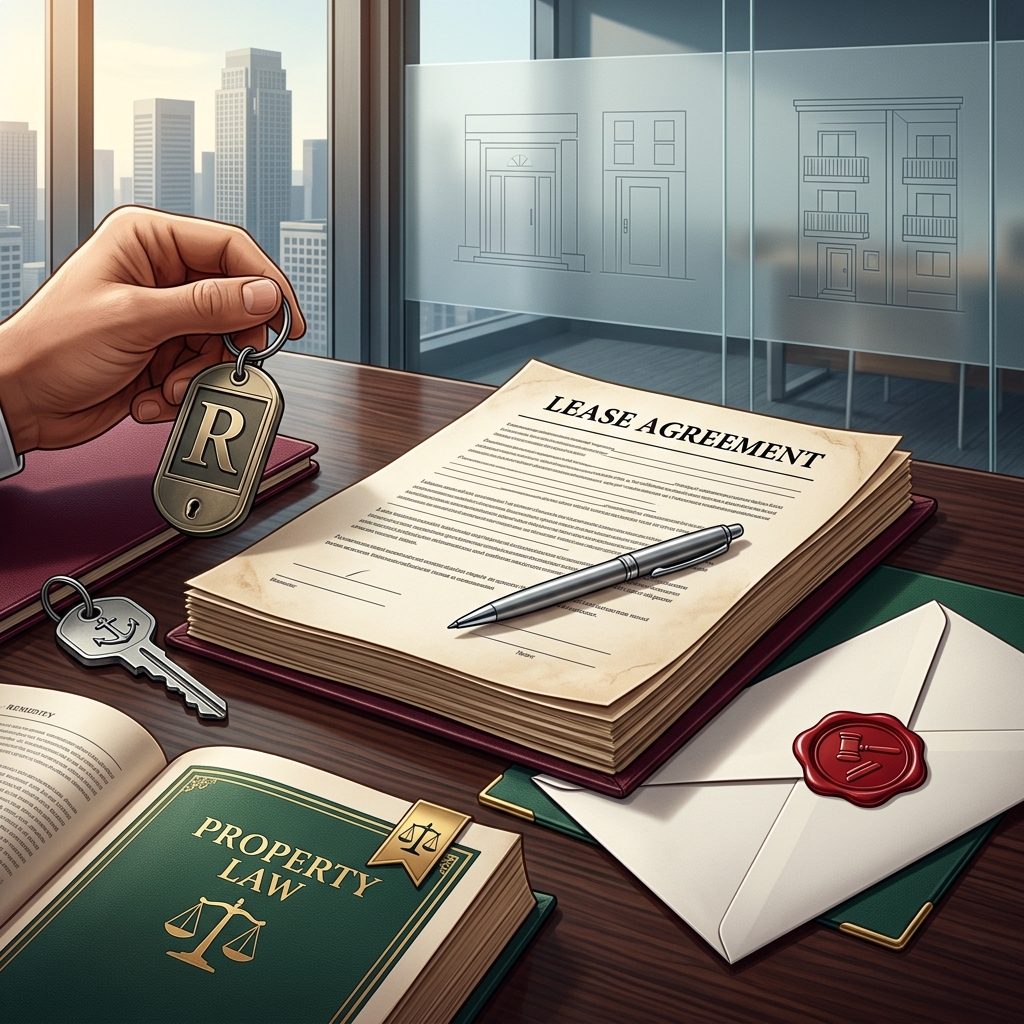
A lease is more than a payment schedule. It is a binding contract that sets the rules for how a rental home may be used, maintained, and occupied. When one side does not follow those rules, the result may be a breach of lease, which can lead to court action, eviction, or claims for money damages.
This article explains the core legal ideas behind a lease breach, including when a landlord may start a case, what notice is required, how serious conduct changes the timeline, and what remedies may be available to both landlords and tenants. The focus is on Maryland-style lease enforcement, where written notice, court procedure, and proof of the violation matter greatly.
What Counts as a Lease Breach?
A lease breach happens when a landlord or tenant fails to follow an important term of the rental agreement. In everyday terms, it means someone broke the bargain the parties made. The breach may be major, like repeated nonpayment of rent, or it may involve other prohibited conduct such as damage to the property, unauthorized occupants, or behavior that threatens safety.
Not every disagreement rises to the level of a legal breach. Courts usually look at whether the violation is tied to a real lease obligation and whether the evidence shows that the obligation was not met. A lease can be breached by action, such as damaging the unit, or by inaction, such as refusing to move out when the term has ended.
| Common lease issues | Possible legal result |
|---|---|
| Failure to pay rent | Notice, court case, money judgment, eviction |
| Property damage | Repair costs, deposit deductions, damages claim |
| Unauthorized conduct or occupants | Notice to correct, repossession action |
| Dangerous behavior | Shortened notice period, rapid court action |
When a Landlord May File in Court
In Maryland, a landlord with an unexpired lease for a fixed period may bring a complaint in District Court if the tenant or another person in possession has violated the lease, the landlord has given the required written notice, and the tenant still refuses to comply. The basic rule is that the tenant must first be told about the alleged violation and given an opportunity to correct it when correction is allowed by law.
For many breaches, the notice period is 30 days. That means the landlord must give written notice stating that the lease was violated and that the landlord wants to repossess the premises if the problem is not resolved. If the tenant does not comply within that time, the landlord may proceed with a court complaint.
Some breaches are treated more urgently. If the conduct involves behavior by the tenant or someone on the property with the tenant’s consent, and that behavior creates a clear and imminent danger of serious harm to the tenant, other tenants, the landlord, the landlord’s property or representatives, or anyone else on the property, the notice period may be reduced to 14 days. That shorter timeline reflects the safety risk involved.
Why Written Notice Matters
Written notice is not a formality. It is often the step that determines whether the landlord can move forward in court. The notice should identify the breach clearly enough for the tenant to understand what conduct is at issue and what action is being demanded. Without proper notice, a court may reject or delay the landlord’s claim.
Good notice practices also help tenants. A tenant who receives a clear written notice has a chance to correct the issue, gather evidence, or seek legal help. In some cases, the alleged breach may be based on a misunderstanding, a disputed fact, or a lease term that is being applied incorrectly.
- The notice should be in writing.
- The notice should describe the conduct or condition that allegedly violated the lease.
- The notice should state the time allowed to fix the problem, if any.
- The notice should say whether the landlord is seeking repossession if the violation is not cured.
How the Court Process Usually Works
If the tenant does not resolve the breach after proper notice, the landlord may file a complaint in court seeking possession of the property. The case is usually heard in District Court. At that stage, the landlord must prove the lease, the breach, the notice, and the tenant’s failure to comply. The tenant may defend by challenging the facts, the notice, or the legal basis for eviction.
If the court rules for the landlord, the tenant may be ordered to give up possession. The landlord may also seek money damages depending on the type of breach and the losses suffered. The court process is designed to replace self-help, meaning landlords generally must not change locks, remove belongings, or shut off utilities to force a move-out.
Special Rules for Dangerous Behavior
Some lease violations are treated as emergencies because they pose an immediate safety threat. Maryland law allows a shorter notice period when the breach involves conduct that shows a clear and imminent danger of serious harm. That standard is higher than mere annoyance, conflict, or inconvenience. It is aimed at situations where waiting longer would create an unacceptable risk.
Examples may include violent conduct, threats, or serious dangerous activity connected to the tenant or someone present with the tenant’s permission. Because these cases can move quickly, the landlord must be especially careful with documentation and proof. The tenant, in turn, should respond quickly and seek advice immediately if safety allegations are being made.
What Happens After a Landlord Wins
If the landlord obtains a judgment, the tenant may still have limited options depending on the posture of the case and whether an appeal is filed. An appeal does not automatically allow the tenant to stay in the unit. To remain in possession while the appeal is pending, the tenant must satisfy several legal requirements.
- File an affidavit stating that the appeal is not being used just to delay eviction.
- Post a sufficient bond with one or more sureties.
- Pay all outstanding rent and court costs in the case.
- Pay losses or damages the landlord may suffer because the tenant remains in possession.
These requirements are designed to protect the landlord from delay while still preserving appellate rights. If the tenant does not meet them, the landlord may be able to move forward with possession even while the appeal is pending.
Damages and the Duty to Reduce Losses
A lease breach can create financial losses, not just a right to possession. A landlord may seek unpaid rent, repair costs, and other losses caused by the breach. In some cases, the tenant may also be responsible for court costs or attorney’s fees if the lease allows it or if a statute provides for recovery.
But the law also requires the injured party to reduce damages where possible. This duty to mitigate means a landlord should take reasonable steps to limit the amount lost after a breach. For example, if a tenant leaves early or stops paying before the lease term ends, the landlord cannot simply let the property sit idle and charge the full amount without trying to lessen the loss.
Maryland recognizes mitigation concerns in several situations:
- When the landlord fails to deliver possession or the tenant fails to surrender possession.
- When the tenant refuses to take possession at the start of the term.
- When either party ends occupancy before the lease term ends.
Even when mitigation applies, the breaching party can still owe damages. The duty to reduce loss does not erase liability; it limits avoidable harm.
The Role of the Security Deposit
Security deposits often become part of a breach dispute because they provide a source of payment for unpaid rent or damage. A landlord may apply the deposit toward legitimate losses if local law is followed. That usually means keeping proper records, making lawful deductions, and returning any remaining balance within the required time.
Tenants should remember that a deposit is not an automatic penalty fund. It cannot be used for every disagreement, and deductions should be tied to actual losses rather than normal wear and tear. Clear move-in and move-out documentation can help both sides avoid disputes over what the deposit should cover.
How Tenants Can Respond to a Breach Claim
When a tenant receives a breach notice, the best response depends on the facts. If the problem is real and fixable, curing it quickly may prevent a court case. If the tenant disputes the allegation, the tenant should preserve evidence such as photos, text messages, receipts, repair requests, and witness information.
Tenants should also review the lease carefully. Some disputes arise because the lease language is broad, unclear, or applied in a way that is not supported by law. A tenant may have defenses based on lack of notice, improper notice timing, waiver, retaliation, or the landlord’s own failure to meet rental obligations.
- Read the notice and lease together.
- Keep copies of all communications.
- Document the condition of the property.
- Get legal advice quickly if court papers are filed.
Practical Differences Between Curable and Serious Breaches
Not every breach is handled the same way. Some violations can be corrected, such as certain rule violations or repairable conduct. Others may be treated as so serious that correction is not realistic or not enough to restore trust and safety. The legal path may change depending on whether the breach can be cured and whether the conduct endangered others.
| Type of issue | Typical response |
|---|---|
| Minor curable violation | Notice and chance to correct |
| Repeated noncompliance | Notice followed by court action if unresolved |
| Dangerous conduct | Short notice period and expedited enforcement |
| Early move-out or abandonment | Damage claim and mitigation analysis |
Frequently Asked Questions
Can a landlord evict immediately for any lease violation?
No. Most breach cases require written notice first, and many require a 30-day period. Only certain dangerous situations allow a shorter 14-day notice period.
Does a lease breach always mean eviction?
No. Some breaches can be cured, and some disputes are resolved without eviction. The outcome depends on the facts, the lease, and whether proper notice was given.
Can a tenant appeal an adverse decision?
Yes, but staying in the property during appeal usually requires an affidavit, bond, payment of outstanding rent and costs, and coverage for the landlord’s losses if the tenant remains in possession.
Can the landlord keep the security deposit after a breach?
The landlord may apply the deposit to lawful losses, but only according to the rules that govern deposits and itemized deductions.
What if the landlord also broke the lease?
Tenants may have defenses or counterclaims if the landlord failed to provide possession, maintain the property, or honor other obligations. The contract runs both ways.
Why Documentation Can Decide the Case
Lease breach disputes often turn on proof. A landlord may need the lease, notice, photographs, repair invoices, witness statements, and records of the tenant’s noncompliance. A tenant may need payment records, maintenance requests, emails, and proof that the alleged breach did not happen or was fixed in time.
Because the process is evidence-driven, both sides should treat every notice, text, and inspection record as important. The stronger the paper trail, the easier it is for a court to sort out the facts and apply the law fairly.
References
- Breach of the Lease — The Maryland People’s Law Library. 2026-07-10. https://www.peoples-law.org/breach-lease
- Maryland Code, Real Property Article, Title 8 — Maryland General Assembly. 2026-07-10. https://mgaleg.maryland.gov/mgawebsite/Laws/StatuteText?article=grp§ion=8-402.1
- Landlord-Tenant Law — Maryland Judiciary. 2026-07-10. https://www.mdcourts.gov/legalhelp/landlordtenant
- Security Deposits and Rent Escrow — Maryland Attorney General. 2026-07-10. https://www.marylandattorneygeneral.gov/Pages/CPD/landlords.aspx
- Landlord and Tenant — Maryland Department of Housing and Community Development. 2026-07-10. https://dhcd.maryland.gov/Pages/landlordtenant/default.aspx
Similar Articles








Read full bio of medha deb


