
Changing Your Name After Marriage or Divorce
Understand the legal steps, documents, and agency updates involved in a name change after marriage or divorce.
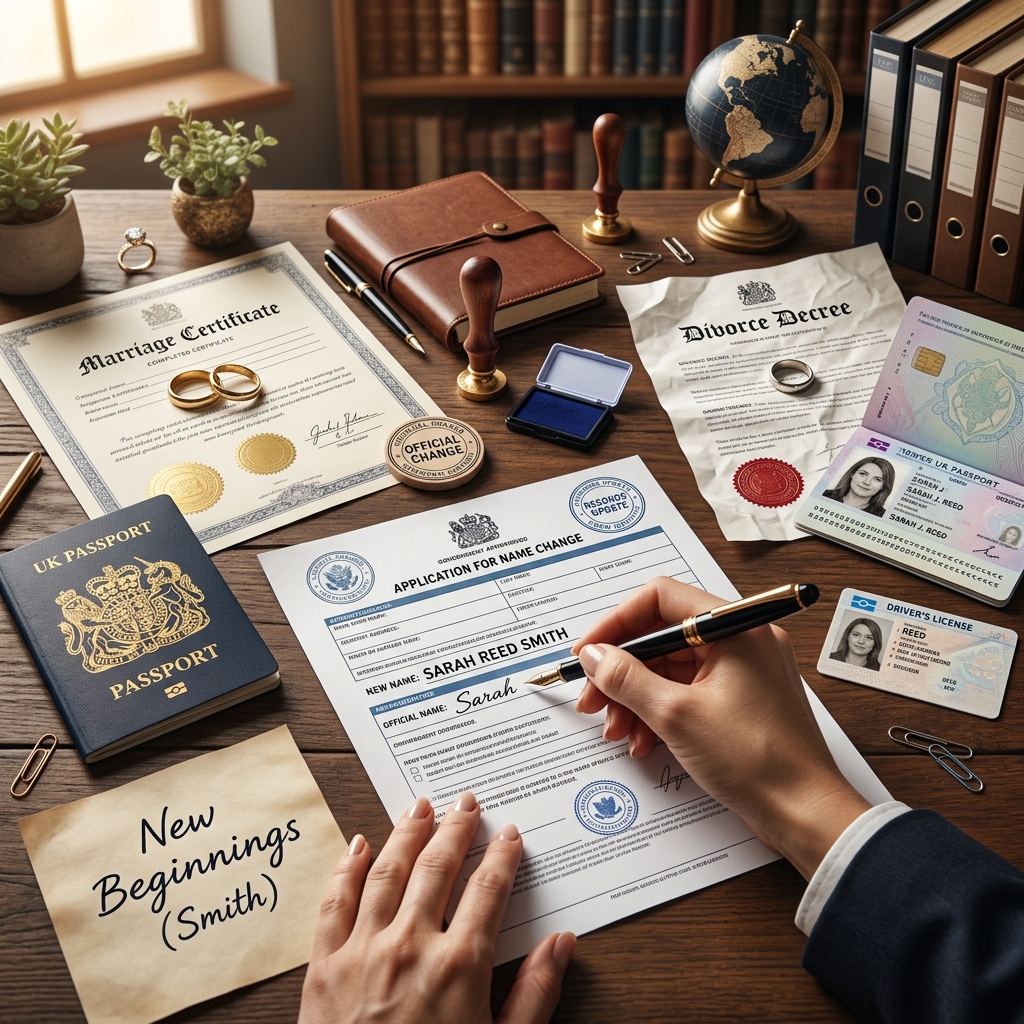
Changing your name after a marriage or divorce is usually straightforward, but the process depends on why you are changing it and what part of your name you want to change. In many cases, a marriage certificate or divorce decree is enough to support the change, while a court petition may be needed for anything beyond the usual last-name adjustment.
The most important step is to understand that a name change is not just a personal preference; it must match the legal documents used by government offices, financial institutions, employers, and travel agencies. If you handle the process in the right order, you can avoid delays and repeated paperwork.
When a Legal Name Change Is Allowed
Marriage and divorce often give people a built-in path to a new legal name. After marriage, many people take a spouse’s surname or use a hyphenated version. After divorce, many people return to a former name they used before the marriage. These changes are commonly accepted without a separate court case, as long as the requested name fits the legal rules in the jurisdiction involved.
- After marriage, the new name is usually based on the marriage record and local agency rules.
- After divorce, you may often restore a prior name during the divorce case itself.
- If you want a completely new name, a separate court petition is usually required.
State procedures differ, but the general principle is the same: a marriage or divorce record can serve as legal proof when the name change follows the event itself. If the request goes beyond that, a formal name-change case may be necessary.
Using a Former Name After Divorce
Many people choose to return to a former name when their marriage ends. In some courts, it is best to make this request in the divorce papers from the beginning. That approach can save time and reduce the need for an extra filing later. If the divorce papers have already been filed, some courts allow an amendment before the final hearing so the judge can include the request in the decree.
The key detail is that the former name should be a name you actually used before. A divorce case is not usually the place to invent a completely new identity. The court typically needs to see a clear link between the prior legal name and the name you want restored.
- Ask for the restoration of your former name in the divorce petition if possible.
- Make sure the spelling is accurate on the final order.
- Obtain certified copies of the decree after the court signs it.
Once the decree includes the name-restoration language, that document becomes the core proof you will use with other agencies. Without it, you may need additional court paperwork.
Changing Your Name After Marriage
A name change after marriage is often simpler than people expect. In many cases, the marriage certificate or license is the main document needed to begin the process. However, the exact requirements may depend on whether the office accepts the marriage record as proof and whether the name change is limited to the surname or includes a broader change.
Most agencies that handle identification records will ask for a certified copy of the marriage certificate rather than a ceremonial or unofficial copy. It is also common to wait until the marriage record has been properly filed before requesting updates. This avoids problems caused by incomplete documentation.
| Situation | Typical proof used | Common limitation |
|---|---|---|
| Taking spouse’s last name | Certified marriage certificate | Usually accepted without a court order |
| Hyphenating surnames | Certified marriage certificate and ID | Agency rules may vary |
| Changing first or middle name too | Court order may be needed | Marriage record alone may not be enough |
Documents You Should Gather First
Before you begin updating records, assemble the documents most offices will ask to see. Having everything ready at the start makes the rest of the process much easier. The exact list varies by agency, but the following items are commonly useful:
- A certified copy of the marriage certificate or divorce decree.
- A government-issued photo ID, such as a driver’s license or passport.
- Your current Social Security card or proof of your current number.
- Proof of citizenship or lawful presence if an office requests it.
- Proof of your current address, such as a utility bill or bank statement.
If you are restoring a former name after divorce, it can also help to keep an older record showing the name you used before the marriage. That may be a birth certificate, earlier passport, or other official document, depending on the office’s rules.
Why Social Security Usually Comes First
For many people in the United States, the first office to update is the Social Security Administration. That is because your Social Security record often serves as the basis for later updates at the DMV, employer payroll systems, banks, and insurance companies. If the Social Security record does not reflect your new name, other offices may reject your application or ask you to return later.
In practice, you will usually complete a name-change application and present the legal proof of the marriage or divorce. The Social Security number itself does not change; only the name attached to the record is updated. After the update is processed, you can request a card showing the new name.
Updating Your Driver’s License or State ID
After your Social Security record has been corrected, the next major step is usually the motor vehicle agency. Driver’s license and state ID rules are often strict because these documents are used for identity verification in many other settings. The agency may require a visit in person and may ask you to bring a bundle of supporting documents.
Typical items include the legal name-change document, the updated Social Security record, your current ID, and proof of address. Some states also require you to surrender the old card and pay a replacement fee. In many cases, the new license will be printed under the updated name, while the number remains the same.
- Wait until your Social Security record is updated before visiting the DMV unless your state says otherwise.
- Bring certified copies if the office requires originals.
- Check whether your state gives you a deadline for updating the license after the name change.
Other Places to Update Your Name
Once your core government records are updated, you should move through the rest of your accounts one by one. Each institution has its own process, and some will only accept a copy of your updated government ID. Others may also ask for the court order, marriage certificate, or Social Security card.
Common places to update include banks, credit cards, employer payroll records, retirement accounts, health insurance, auto insurance, homeowner or renter accounts, voter registration, and travel documents. If you own property or have a professional license, those records may need changes too.
- Bank and credit union accounts.
- Credit cards and loans.
- Employer payroll and benefits.
- Insurance policies and retirement plans.
- Voter registration and passport records.
What Happens If Your Name Change Is Not Included in the Decree
If your divorce decree does not contain the name-restoration language you need, you may still have options. Some courts allow a post-decree motion or a separate filing to restore the former name. The rules often depend on how long it has been since the judgment was entered and whether the case is still open.
This is one reason it is smart to address the issue early. Adding the request while the divorce is pending can be easier than returning to court later. If you miss that opportunity, you may need to file additional papers, appear before a judge, or pay another fee.
Common Mistakes to Avoid
Small paperwork errors can slow down the entire process. One missed detail on a court form or agency application may force you to start over. The most common problems are usually simple and preventable.
- Using an uncertified copy of the marriage or divorce record.
- Spelling the new name differently on different forms.
- Skipping the Social Security update and going straight to the DMV.
- Forgetting to change employer records and tax documents.
- Assuming every agency follows the same rules.
It also helps to keep copies of everything you submit. A personal file with certified documents, receipts, and confirmation letters can save time later if any office asks for proof.
How Long the Process Usually Takes
The timeline varies depending on how quickly you can get certified documents and how long each agency takes to process requests. Some updates can be completed in a single visit, while others take weeks. The Social Security update, for example, may be processed before the new card arrives in the mail. Driver’s license offices may issue a temporary document before the permanent card is printed.
Because several records may depend on one another, it is best to work in sequence rather than all at once. Start with the legal document, move to Social Security, then update your state ID, and only then continue to banks, employers, and other private institutions.
Frequently Asked Questions
Do I need a court order to change my name after marriage?
Usually no, if you are taking a spouse’s surname or making a change allowed by the marriage record and local agency rules. A court order is more likely to be needed for a broader change, such as altering your first or middle name.
Can I go back to my former name after divorce?
Yes, in many cases you can ask the divorce court to restore your former name. If the decree already includes that language, you can use it as proof for later updates.
Should I update Social Security or the DMV first?
In most cases, Social Security comes first. That update often makes the DMV and other offices easier to handle because your name already matches a key federal record.
Do I need original documents?
Many agencies want certified copies rather than ordinary photocopies. Always check the office’s rules before you go, because some documents must be originals while others can be copies.
Will my Social Security number change?
No. A legal name change after marriage or divorce usually changes the name on the record, not the number itself.
Planning Ahead Makes the Process Easier
A successful name change is mostly about order and documentation. If you know which document proves the change, which office should be notified first, and which records depend on the others, the process becomes much more manageable. Whether you are adopting a married name or returning to a former one after divorce, careful preparation reduces delays and helps every agency recognize the change the first time.
References
- Name Change: Upon Divorce or Marriage — Maryland People’s Law Library. 2026. https://www.peoples-law.org/name-change-upon-divorce-or-marriage
- How to change your name and what government agencies to notify — USA.gov. 2026. https://www.usa.gov/name-change
- Name Change Restoration After Divorce — Colorado Judicial Branch. 2026. https://www.coloradojudicial.gov/self-help/name-change-restoration-after-divorce
- How to Change Your Name After Divorce — NewlyNamed. 2026. https://newlynamed.com/blogs/guides/name-change-after-divorce
- Change Last Name After Marriage — Wake County Government. 2026. https://www.wake.gov/departments-government/register-deeds/apply-marriage-license/change-last-name-after-marriage
Similar Articles








Read full bio of medha deb


