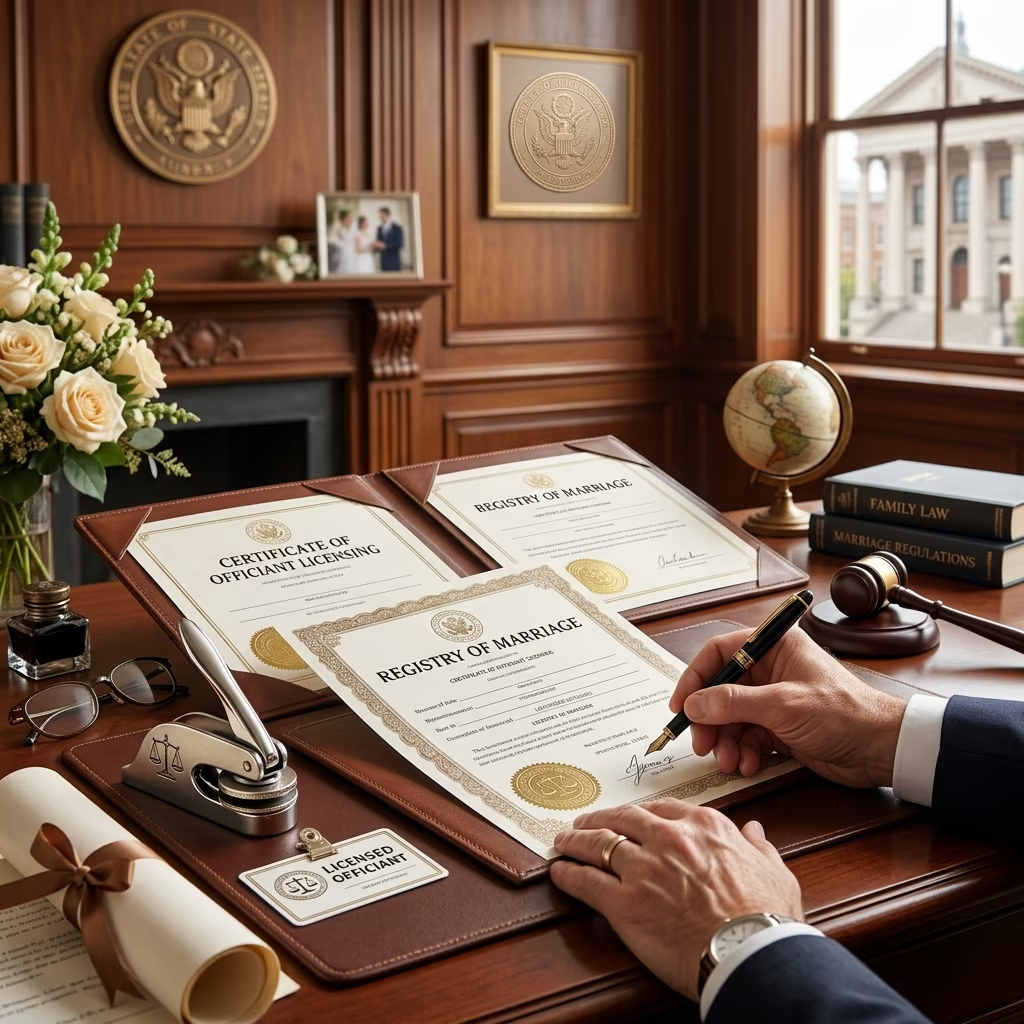
Choosing someone to lead your wedding ceremony is an emotional decision, but it is also a legal one. The person who pronounces you married is not only a ceremonial figure; they are a key part of the legal process that creates a valid marriage in the eyes of the state. This guide explains how marriage officiant licensing works, what legal authority is required, and how couples and officiants can avoid common mistakes that jeopardize the validity of a marriage.
Why the Officiant Matters Legally
In most jurisdictions, a marriage becomes legally effective only when a qualified officiant conducts the ceremony, witnesses your consent, and properly completes the marriage license. Simply exchanging vows privately or declaring yourselves married is not enough; the law typically requires an authorized person to solemnize the marriage.
The officiant serves several legal functions:
- Witnessing consent: Confirming that both partners voluntarily agree to marry and understand what they are doing.
- Leading key parts of the ceremony: Including a clear declaration of intent (the “Do you take…” moment) and a pronouncement that the couple is officially married.
- Signing the marriage license: Completing the officiant section accurately and ensuring all signatures are in place.
- Returning paperwork: Making sure the license is filed within the legal time limits so the marriage is recorded.
Because these duties are tied to state law, most places require the officiant to hold some recognized legal authority—through ordination, public office, or a specific license.
Forms of Legal Authority for Marriage Officiants
States define in their statutes who may solemnize a marriage. Although details differ, officiants usually fall into three broad categories.
1. Religious or Ordained Officiants
Many couples choose a minister, priest, rabbi, imam, or other clergy member. These officiants are generally authorized by virtue of their ordination or appointment within a religious organization. Some jurisdictions also recognize non‑denominational or online ordinations when performed through established organizations that issue credentials.[10]
Common features of religious authorization include:
- An ordination certificate or letter confirming ministerial status.
- The ability to demonstrate good standing with the religious body, if asked by local officials.
- Recognition in state law that allows clergy to solemnize marriages once other requirements are met.
2. Civil Officials and Public Officers
States also authorize certain civil officers to perform marriages. For example, New York law allows a wide range of officials to solemnize marriages, including clergy, the governor, mayors, county executives, legislators, and specified state and federal judges. Other states use slightly different lists, but the pattern is similar: people who hold judicial or executive positions often have authority to preside over civil ceremonies.
Couples may choose a civil officiant when they want:
- A non‑religious ceremony conducted by a judge or magistrate.
- A simple courthouse wedding focused on documentation rather than ritual.
- To avoid any questions about the legal standing of an online‑ordained minister.
3. One‑Day or Special Marriage Officiant Licenses
Some states and local governments offer a one‑day marriage officiant license that temporarily authorizes a private person to officiate a specific couple’s wedding. New York, for example, permits a “One-Day Marriage Officiant License” issued by the same clerk that granted the couple’s marriage license. This approach allows a friend or relative to lead the ceremony while still complying with the law.
Typical aspects of one‑day licenses include:
- The license applies only to one specific ceremony and one named couple.
- The application is made at the local town or city clerk’s office that issued the couple’s marriage license.
- The one‑day officiant must follow the same legal rules as other officiants when completing and returning the marriage license.
Licensing vs. Ordination vs. Registration
Terminology around marriage officiation can be confusing. Different jurisdictions talk about “licensing,” “ordination,” and “registration,” and these terms do not always mean the same thing.
| Term | What It Generally Means | Who It Applies To |
|---|---|---|
| Licensing | Government issuance of formal permission to perform a regulated activity, such as a one‑day officiant license or professional license. | One‑day officiants, sometimes ministers or notaries, depending on state rules. |
| Ordination | Recognition by a religious organization that a person is a minister or clergy member authorized to conduct rites, including marriages. | Religious and non‑denominational ministers, including those ordained online.[10] |
| Registration | Requirement that an officiant file documents with a government office before conducting ceremonies in a particular area. | Often applies to ministers in certain cities, such as New York City, that require registration to officiate weddings. |
In some states, clergy may solemnize marriages based solely on their ordination and do not need a government-issued “license.” In others, they must also register or present their credentials to the local clerk before officiating. Separately, one‑day officiants typically apply for a specific license that is distinct from religious ordination.
Core Legal Responsibilities of the Officiant
Regardless of how an officiant receives authority, their duties at and after the ceremony are similar. Official state guidance emphasizes the importance of completing the license accurately and on time.
Before the Ceremony
- Confirm authority: Ensure the officiant is properly ordained, licensed, or registered under the laws of the state where the wedding will take place.
- Review local requirements: Contact the office that issues marriage licenses (usually the county or city clerk) to learn what documentation the officiant must present.
- Check license validity: Verify that the couple has obtained a marriage license and that it has not expired; many states limit license validity to 30–90 days.
During the Ceremony
- Include a clear declaration of intent, where each party states that they take the other as a spouse.
- Provide a formal pronouncement, such as “I now pronounce you married,” signifying that the marriage has been solemnized.
- Ensure any witnesses required by state law are present and able to sign the license.
After the Ceremony
- Complete the license: Fill in the officiant and witness sections legibly and accurately, including date, location, and officiant’s title.
- Collect signatures: Have both spouses, the officiant, and required witnesses sign in the designated spaces.
- Return the license promptly: Submit the completed license to the issuing office within the prescribed timeframe so the marriage can be officially recorded.
Failure to perform these steps correctly can delay or complicate proof of marriage, and in some circumstances may call the validity of the marriage into question.
Verifying Your Officiant’s Legality
Couples often assume that a willing friend or relative can simply “do the ceremony.” In reality, it is crucial to verify that the officiant has appropriate authority. Legal guidance emphasizes that this verification is an important safeguard for the couple.
Practical Steps for Couples
- Ask the officiant for a copy of their ordination certificate or proof of public office, and keep a copy with your wedding records.
- If your state requires registration, request the registration confirmation or number and verify it with the clerk’s office.
- Contact the organization that ordained the officiant to confirm that they are in good standing.
- Reach out to your county or city clerk to ask what credentials are necessary and whether they keep a list of approved officiants.
Any legitimate officiant should be willing and able to provide documentation. If they cannot, that is a signal to investigate further or consider another officiant.
Special Rules and Local Variations
Two neighboring states can treat marriage officiation very differently. Even within a single state, local procedures may vary by county or city. A few examples help illustrate these differences.
Example: New York State
New York law lists several categories of people who may solemnize marriages, including clergy and specified public officials. The state recognizes religious ministers, but certain locations demand additional steps:
- Statewide: Clergy generally may solemnize marriages if properly ordained, and one‑day licenses are available in some municipalities.
- New York City: Ministers must complete a registration process with the City Clerk before officiating weddings.
- Timing rules: Couples must wait a short period after receiving their marriage license before marrying, and must marry and return the license within a specified validity window.
Because of these rules, a minister who can legally perform weddings in one New York county might need additional registration before officiating in New York City.
License Validity and Waiting Periods
Many states impose a waiting period between license issuance and the ceremony, and a separate deadline for returning the completed license. Guides to state marriage laws note that licenses frequently expire within 30–90 days. Some places, including New York, specify a minimum waiting period and a maximum validity period by statute.
For couples and officiants, this means:
- Do not obtain the license too early, or it may expire before the wedding.
- Do not wait too long to file it after the ceremony, or you may face additional administrative steps.
Common Pitfalls in Officiant Licensing
Most weddings proceed without legal complications, but misunderstandings about officiant requirements create avoidable risk. Below are frequent issues and how to avoid them.
- Assuming online ordination is always accepted: Some states accept ordinations from recognized online ministries, while others are more cautious or have case law limiting their use. Always confirm with the local clerk’s office before relying on online ordination.[10]
- Skipping required registration: In certain cities, particularly large urban jurisdictions, ministers must register to officiate weddings. Failing to do so can create questions about the ceremony’s legality.
- Neglecting the paperwork after the ceremony: Officiants sometimes sign the license but forget to return it promptly, delaying official recognition.
- Ignoring age‑related rules: Some statutes impose special restrictions when either party is under a particular age, limiting who may solemnize the marriage to specific officials.
Addressing these issues early—during wedding planning rather than after the ceremony—reduces stress and protects both partners.
FAQs About Marriage Officiant Licensing
Do all officiants need a government license?
Not necessarily. Many states recognize religious ordination alone as sufficient authority for clergy to officiate marriages. In some places, however, ministers must also register with a local clerk or obtain documentation for specific ceremonies, and one‑day officiants usually require a government‑issued license.
Can a friend or relative officiate my wedding?
Often, yes—but they must obtain proper authority. Depending on your location, that may mean getting ordained through a religious organization, registering as a minister with the city or county, or applying for a one‑day marriage officiant license.
Is an online‑ordained minister always valid?
Online ordination is recognized in many jurisdictions when obtained through established organizations that provide credentials, but acceptance is not universal. Because rules vary and may change, couples and ministers should consult the office that issues marriage licenses in the area where the wedding will occur.[10]
Who checks that the officiant portion of the license is correct?
State health and vital records agencies emphasize that it is the officiant’s responsibility to ensure their section of the license and the witness portion are completed accurately before the document is returned for recording.
What happens if the license is not returned on time?
If the completed license is returned late or not at all, the marriage may not appear in official records, which can complicate name changes, tax filings, and benefits. In some jurisdictions, corrective steps or court involvement may be needed to establish proof of marriage. To avoid these issues, officiants should file the license promptly within the statutory window.
References
- Marriage Officiant Requirements – Your Legal Checklist — LegalShield. 2023-06-01. https://www.legalshield.com/blog/does-an-officiant-have-to-be-licensed
- Responsibilities of the Officiant — New York State Department of Health. 2019-01-15. https://www.health.ny.gov/vital_records/marriage_officiant_responsibility.htm
- How to Officiate a Wedding – A Three-Step Guide — Universal Life Church. 2022-08-10. https://www.themonastery.org/training/weddings/performing-a-wedding-3-steps
- How to Become a Wedding Officiant in New York — Get Ordained. 2022-05-20. https://getordained.org/perform-a-marriage/new-york
- Become a Wedding Officiant in New York — American Marriage Ministries. 2021-11-30. https://theamm.org/weddings-by-state/new-york
- By Whom a Marriage Must be Solemnized — Stephen Bilkis & Associates / New York Family Law. 2020-03-05. https://familylawyer.1800nynylaw.com/practice-areas/new-york-family-lawyer/domestic-relations/by-whom-a-marriage-must-be-solemnized/
- One-Day Marriage Officiant License — Town of Brookhaven, NY. 2023-02-14. https://www.brookhavenny.gov/1338/One-Day-Marriage-Officiant-License