
Who Counts as a Child Under Maryland Criminal Law
A clear guide to how Maryland criminal law defines a child and why that definition matters.
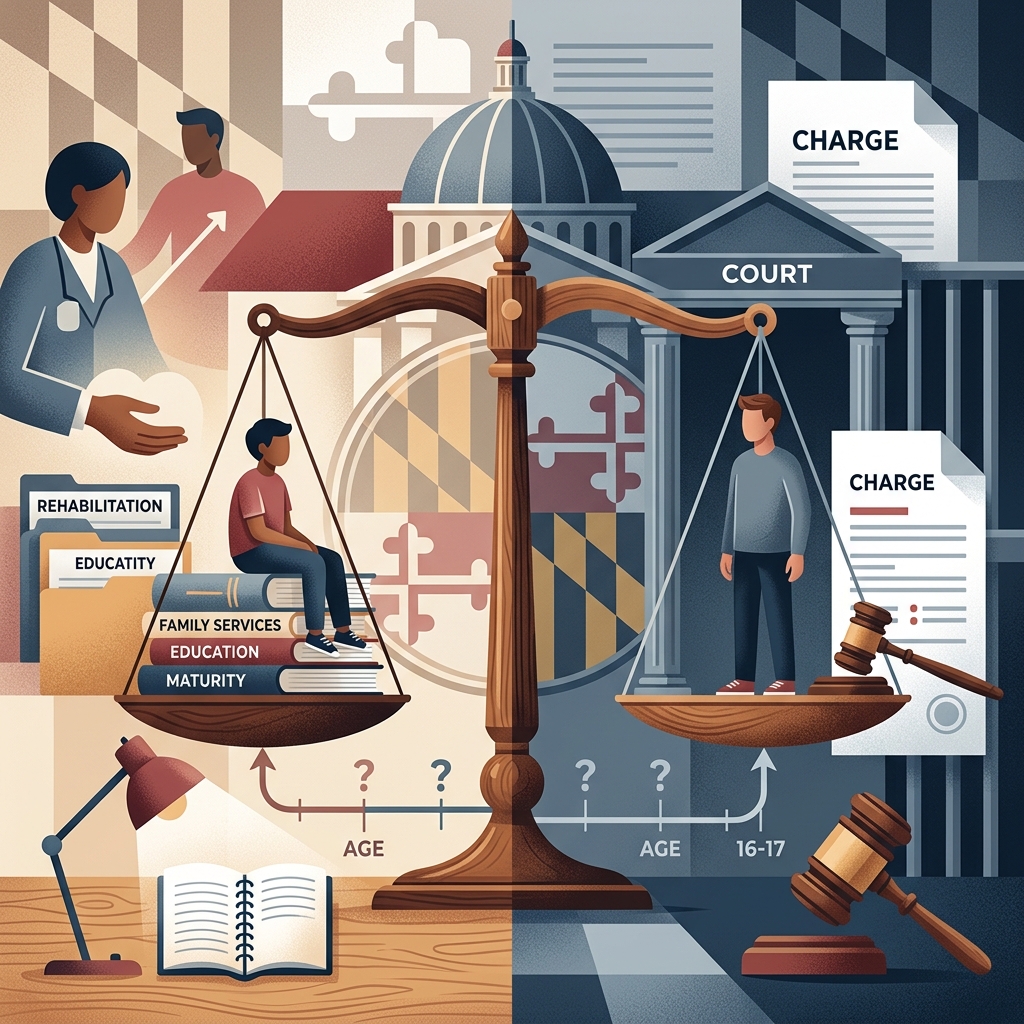
Maryland law does not use one single age threshold for every criminal offense. In some statutes, a child means a person under 18, while in others the law creates narrower categories, such as children under 16 or under 12. Those distinctions matter because they can change what conduct is illegal, which charges apply, and how serious the potential penalties may be.
For people trying to understand a criminal allegation involving a minor, the first step is to identify the exact statute at issue. A case involving abuse, kidnapping, sexual offenses, or child abduction may rely on a different age definition than a case in another part of Maryland law. The result is that the word child is simple in everyday speech but highly specific in criminal practice.
Why the Legal Definition Matters
Age is often a central element of a criminal offense. If the prosecution cannot prove that the alleged victim falls within the statute’s protected age group, the charge may fail or be reduced. Maryland’s criminal code uses age thresholds to define who receives special legal protection in situations involving abduction, abuse, exploitation, and related conduct.
This approach reflects a policy choice: younger individuals are treated as needing stronger protection in certain circumstances. But the law does not treat all minors identically. For example, a statute might protect all persons under 18, while another focuses specifically on a child under 12 because the legislature viewed that age group as especially vulnerable in the context of abduction and custody interference.
Maryland Uses More Than One Age Standard
The most important point is that Maryland criminal law is context-specific. The same person may be a child for one offense and outside the protected age range for another. That means a lawyer, judge, or investigator must read the exact statute rather than relying on a general assumption about the word child.
| Legal context | Common age threshold | Why it matters |
|---|---|---|
| General child abuse statutes | Under 18 | Determines whether the victim qualifies as a child for abuse charges |
| Child abduction from home or custody | Under 12 | Sets the age group protected by the child abduction provisions |
| Kidnapping of a child by force or fraud | Under 16 | Expands protection beyond younger children for kidnapping offenses |
These thresholds are not interchangeable. They serve different policy goals and appear in different parts of Maryland’s criminal statutes. A person may be considered a child under one law but not another, depending on the conduct being charged.
How Child Protection Works in Abuse Cases
In Maryland criminal law, abuse-related provisions generally protect individuals under 18. That broad definition is important because it covers teenagers as well as younger children. In practice, prosecutors look at both the victim’s age and the relationship between the accused and the child.
Child abuse laws usually focus on whether there was physical injury, cruel or inhumane treatment, or a malicious act that harmed or threatened the child’s health or welfare. The age question is only one part of the case, but it is an essential one. If the person is 18 or older, the child abuse statute does not apply in the same way.
The broader age range in abuse laws shows that Maryland recognizes that harm can occur at many developmental stages. A teenager may be more independent than a younger child, but the law still treats that person as a child for abuse purposes.
Child Abduction and Custody Interference
Maryland also protects younger children from abduction and custody interference. Under the relevant criminal statute, a child under 12 receives special protection against being forcibly taken, persuaded away, or secretly kept from a parent or legal guardian. The law also addresses conduct done without a lawful claim of right.
This is an important distinction because the statute is aimed not only at stranger abduction but also at conduct that interferes with lawful care and custody. A person can violate the law by taking a child from the home or from the custody of a parent or legal guardian, or by enticing the child away without consent. In another form of the offense, a person may be liable for knowingly hiding or harboring the child with the intent to deprive the parent or guardian of custody, care, or control.
The under-12 threshold indicates that the law places especially strong emphasis on very young children in custody-related cases. The criminal focus is not just on physical removal, but also on deception, concealment, and intentional interference with parental rights.
Kidnapping Rules Apply to a Broader Age Group
Maryland’s criminal law also prohibits kidnapping, stealing, taking, or carrying away a child under 16 by force or fraud. This threshold is broader than the under-12 rule for child abduction. In effect, the law expands protection to older minors when force or fraud is used to remove them.
That broader reach makes sense because force or fraud can overcome the resistance of a teenager even if that person is not as vulnerable as a younger child. The law therefore does not rely on one single line between childhood and adulthood. Instead, it tailors the offense to the seriousness of the conduct and the age of the victim.
In practical terms, this means a 14-year-old may fall outside one child-abduction rule but still be covered by the kidnapping provision. Understanding the exact age bracket is therefore critical when evaluating a case.
Relationship Between Age and Criminal Liability
Age alone does not create criminal liability, but it often determines whether a statute applies at all. Maryland criminal law usually requires prosecutors to prove additional facts, such as force, fraud, malicious conduct, or intent to deprive a parent of custody. The victim’s age operates as a gatekeeper that brings the case within a particular legal category.
That structure has practical consequences:
- It narrows the scope of certain offenses to protect especially vulnerable minors.
- It separates child-specific crimes from adult offenses.
- It can increase penalties when the victim is younger.
- It affects how charges are drafted and defended.
For defense attorneys, the child’s exact age may be a key issue. For prosecutors, the age element may be one of the easiest facts to prove, but it still must be established with reliable evidence.
Common Situations Where the Definition Comes Up
The legal meaning of child is often relevant in cases involving family conflict, custody disputes, alleged abuse, or situations where a minor is taken from a guardian’s care. It also arises in cases involving coercion, deception, or concealment of a minor. In those cases, a court may need to decide whether the accused acted without lawful authority and whether the victim was within the age range protected by the statute.
These cases may involve overlapping allegations. For example, the same facts could potentially support charges involving child abduction, kidnapping, or abuse depending on the conduct and the child’s age. That is one reason Maryland law uses separate age thresholds: each offense targets a different kind of harm.
How to Read the Statute Correctly
When a statute says child, always ask four questions:
- What offense is being charged?
- What age does that specific statute require?
- What conduct does the law prohibit?
- Does the accused have lawful authority, consent, or another defense?
That method helps prevent mistakes. A general dictionary meaning will not answer the legal question. The correct answer depends on the text of the criminal statute and the elements the State must prove.
Practical Effects for Defendants, Parents, and Guardians
For defendants, the age element may be one of the first issues to investigate because it can determine whether a charge is legally available. For parents and guardians, the statute offers protection against unlawful interference with custody and care. For law enforcement, it provides a framework for deciding whether a suspected act should be investigated as a child-specific offense.
In family-related cases, the line between a custody dispute and a criminal act can be significant. A parent or relative may believe they are acting in a child’s best interests, but that belief does not automatically create legal authority. Maryland law looks closely at consent, lawful custody, and intent.
Where the offense involves a younger child, courts and prosecutors may treat the matter more seriously because the law assumes a higher level of vulnerability. Where the victim is older, the statute may still apply, but only under the specific age rules written into the offense.
Quick Reference: Age Thresholds in Maryland Criminal Law
| Age threshold | Typical criminal-law use |
|---|---|
| Under 18 | General child abuse and related protection statutes |
| Under 16 | Kidnapping of a child by force or fraud |
| Under 12 | Child abduction from home or custody, persuasion, or concealment |
This table is a simplified guide, not a substitute for reading the statute itself. The details of each offense, including intent and method, still control the legal outcome.
Frequently Asked Questions
Is a person under 18 always a child under Maryland criminal law?
No. Many Maryland criminal statutes use under 18 as the definition of child, but some offenses use narrower age limits such as under 16 or under 12.
Why do different crimes use different age limits?
Different crimes protect against different harms. Maryland law uses age thresholds to match the seriousness of the offense and the vulnerability of the victim.
Can a teenager be treated as a child in a criminal case?
Yes. For some offenses, a teenager is still a child under the statute, especially in abuse cases and some kidnapping provisions.
Does consent always matter in child-related offenses?
No. In many child-related offenses, the law focuses on parental or guardian consent, lawful custody, or the victim’s age rather than the child’s personal consent alone.
What should someone do if a charge depends on the victim’s age?
The exact statute should be reviewed carefully, along with records establishing the victim’s age and any facts showing consent, custody, or lawful authority.
References
- Maryland Code, Criminal Law § 3-503 — Maryland General Assembly. 2026-07-10. https://mgaleg.maryland.gov/mgawebsite/laws/StatuteText?article=gcr§ion=3-503&enactments=false
- Maryland Code, Criminal Law § 3-601 — Maryland General Assembly. 2026-07-10. https://mgaleg.maryland.gov/mgawebsite/laws/StatuteText?article=gcr§ion=3-601&enactments=false
- Definitions of Child Abuse and Neglect – Maryland — Child Welfare Information Gateway. 2025-02-01. https://www.childwelfare.gov/resources/definitions-child-abuse-and-neglect-maryland/
- Maryland Code and Court Rules, 3-801 Definitions — Westlaw / Maryland legislature mirror. 2026-07-10. https://govt.westlaw.com/mdc/Document/ND26D7620659B11EFA6E78CF7BBFE7CE0?viewType=FullText&originationContext=documenttoc&transitionType=CategoryPageItem&contextData=(sc.Default)
- Library of Maryland Regulations, COMAR 07.02.09.02 Definitions — Maryland Department of the Environment / Maryland regulations portal. 2026-07-10. https://regs.maryland.gov/us/md/exec/comar/07.02.09.02
Similar Articles








Read full bio of Sneha Tete




