
When Your Neighbor Cuts Down a Shared Tree
Understand your rights, remedies, and next steps when a neighbor removes or damages a tree that sits on or near your shared property line.
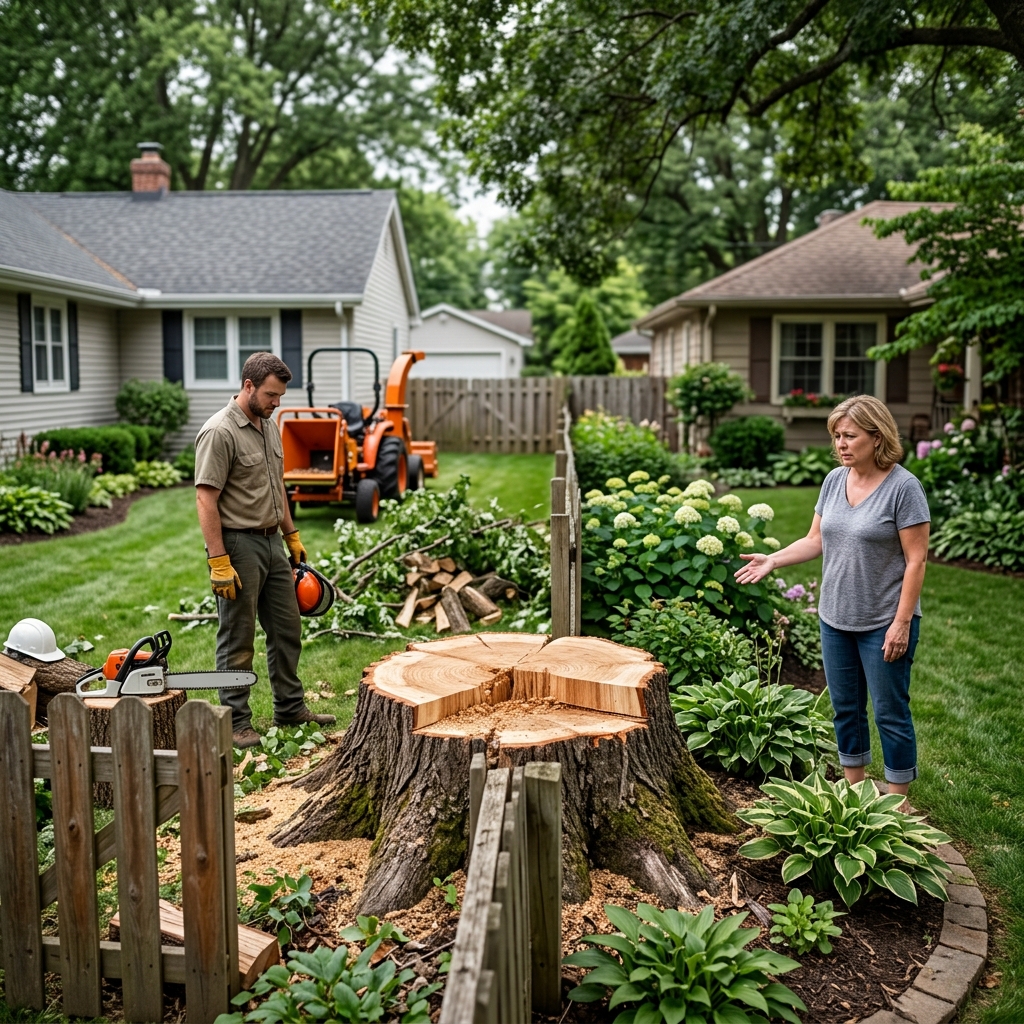
Trees at or near a property line can add shade, privacy, and value—but they can also become the center of serious legal disputes. When a neighbor cuts down or significantly damages a tree you share, the conflict is not just emotional. It often raises important questions about ownership, consent, and financial responsibility.
This guide explains how boundary trees are treated under the law, what happens when a neighbor removes or harms a shared tree without permission, and the practical steps you can take to protect your rights.
Understanding Tree Ownership Along Property Lines
Before deciding what to do, you need to know who legally owns the tree. Ownership usually depends on where the trunk is located in relation to the boundary line.
Key Ownership Rules
- Tree wholly on one property: If the trunk sits entirely on one side of the boundary, that landowner is typically the sole owner of the tree.
- Boundary tree: When a tree trunk is divided by the property line, it is commonly treated as a boundary tree, jointly owned by all landowners whose property the trunk touches.
- Branches and roots across lines: Branches and roots often extend over property lines, but they do not usually change ownership of the tree itself.
States and local governments may have specific rules defining tree ownership, but the trunk’s location is the starting point. Some jurisdictions allow exceptions based on agreements, easements, or long-standing practices, so it can be important to check local law or consult a lawyer for details.
Why Boundary Trees Are Different
Because boundary trees are co-owned, each owner typically has shared rights and responsibilities. Neither owner can usually destroy or remove the entire tree without the other’s consent, and both may have duties related to maintaining safety and preventing unreasonable harm to the other property.
What Your Neighbor Can and Cannot Do
Tree disputes often arise when one neighbor takes action without fully understanding the limits of their legal rights. The law typically distinguishes between trimming overhanging branches and removing or seriously injuring the tree.
Permissible Trimming
In most jurisdictions, a property owner has the right to maintain their own side of the property line, including trimming branches and cutting roots that extend onto their land.
- Trimming up to the property line: You and your neighbor may each generally cut branches and roots that encroach onto your own property, as long as you do not cross onto the other’s land.
- Duty of reasonable care: While trimming, the person doing the work must act reasonably. If trimming is done so aggressively that it seriously harms or kills the tree, they can be held liable for the damage, even if the tree stands on the neighbor’s property.
- No automatic right to enter: You usually may not go onto the neighbor’s land to prune without permission, even if branches are affecting your property.
Prohibited Removal and Serious Damage
The law treats outright removal or severe injury to a tree differently from routine maintenance:
- Removing a boundary tree: When a tree is a boundary tree, neither co-owner may lawfully cut it down or destroy it without the other co-owner’s consent.
- Destroying another’s tree: If someone cuts down, removes, or injures a tree on another person’s property without permission, they are generally liable for the resulting loss.
- Intentional harm: Many states allow enhanced damages if the person knowingly or recklessly harms a tree on someone else’s land, especially when the conduct is willful rather than a good-faith mistake.
These rules apply whether your neighbor personally cut the tree or hired a tree service that worked without proper authorization. Liability often follows the person who ordered or allowed the work.
Liability When a Neighbor Cuts Down a Shared Tree
When a neighbor removes a boundary tree or severely injures it without your consent, you may be entitled to compensation. Determining liability involves examining ownership, intent, and the nature of the loss.
Typical Legal Consequences
- Compensation for actual loss: Courts often award damages reflecting the tree’s value, the impact on your property, and the cost of cleanup and restoration.
- Potential statutory damages: Some states have statutes that provide specific penalties or multiple damages when someone recklessly or intentionally cuts, destroys, or injures trees on another’s land.
- Punitive damages: In cases of particularly malicious or outrageous conduct, courts in some jurisdictions may award punitive damages to punish and deter such behavior.
Factors Courts Consider
Courts often look at several factors when deciding whether your neighbor is liable and how much they should pay:
- Whether the tree was fully on your property or co-owned as a boundary tree.
- Whether your neighbor reasonably believed they had the right to remove the tree.
- Whether the neighbor acted intentionally, recklessly, or negligently in causing the damage.
- How significant the tree was to your property’s value, appearance, or use.
Difference Between Damage and Natural Events
Tree law also distinguishes between damage caused by human actions and damage caused by natural events, such as storms. If a healthy tree falls due to an unforeseeable storm, the event may be treated legally as an “act of God,” where the tree owner is not liable, and the affected neighbor must look to their own insurance. But when a neighbor voluntarily cuts down a boundary tree, liability typically rests with the person who ordered the removal.
Calculating Damages for a Lost Tree
Putting a dollar value on a tree can be complex, especially when it provides shade, privacy, or aesthetic benefits that are hard to quantify. Yet courts need a method to assess compensation when a tree is wrongfully removed or destroyed.
Common Approaches to Valuing Tree Loss
- Replacement cost: The cost of planting a comparable tree or trees, including purchase, labor, and related landscaping.
- Diminished property value: The difference in market value of your property before and after the loss of the tree, often supported by appraisals.
- Restoration expenses: Cleanup, stump removal, and remedial work to restore the area to a usable condition.
Professional arborists and real estate appraisers may be involved in calculating the loss. They can consider the tree’s species, size, health, location, and contribution to the property’s overall character.
Sample Comparison Table: Damage vs. Storm Loss
| Scenario | Cause | Typical Liability | Primary Remedy |
|---|---|---|---|
| Neighbor cuts down shared tree | Intentional human action | Neighbor likely liable for damages | Compensation for tree value, restoration, possible statutory or punitive damages |
| Healthy tree falls in severe storm | Natural event (“act of God”) | Tree owner usually not liable | Claim under affected property owner’s insurance policy |
Practical Steps After Your Neighbor Removes a Shared Tree
If you discover that your neighbor has already cut down a boundary tree or severely damaged it without your consent, a calm but systematic response can preserve your rights and improve your chances of a fair outcome.
1. Confirm Property Lines and Ownership
- Review your deed, plat map, or survey to verify where the property line lies.
- If the tree’s trunk sat directly on the line, treat it as a probable boundary tree and note this in your records.
- Consider obtaining a new survey if the location is contested or unclear.
2. Document the Situation Thoroughly
- Take dated photographs of the stump, remaining roots, and surrounding area from multiple angles.
- Record any communications with your neighbor, including texts, emails, and notes from conversations.
- Keep receipts and invoices for cleanup, temporary repairs, or related costs.
3. Talk to Your Neighbor First
Many disputes can be resolved without litigation. A direct conversation may reveal misunderstandings or lead to a voluntary agreement.
- Explain calmly why you believe the tree was shared and why its removal affected you.
- Ask whether they obtained any permission, permits, or professional advice before removing it.
- Explore options such as cost-sharing for replacement landscaping or a jointly agreed new planting.
4. Check Local Laws and Regulations
Tree law can vary widely among states and municipalities. Some areas require permits for removing certain trees, especially large, old, or protected species, and some impose specific penalties for unauthorized cutting.
- Review state statutes or city ordinances on tree removal, boundary trees, and property damage.
- Look at neighbor law guides provided by state law libraries or bar associations.
- Determine whether any local tree preservation rules were violated.
5. Consider Insurance and Legal Advice
Depending on the nature of the loss, you may have multiple potential avenues for financial recovery.
- Insurance claims: Your neighbor’s homeowners liability coverage may apply if they are legally responsible for the damage; your own insurance may also help with cleanup or repair costs.
- Consult a lawyer: An attorney familiar with property and neighbor law can evaluate your situation, help quantify damages, and advise on negotiation or litigation.
- Negotiated settlement: Many tree disputes end in a settlement where the neighbor pays a mutually agreed amount or shares the cost of restoration.
Preventing Future Tree Disputes
Because trees grow slowly and property lines are fixed, conflicts often build over time. Proactive communication and planning can reduce the risk of another boundary tree dispute.
Best Practices for Neighbor Cooperation
- Discuss tree issues early, especially when planting near a property line.
- Agree in writing on how you will handle pruning, removal, and replacement of boundary trees.
- Schedule joint inspections of large trees that could pose safety risks to either property.
- Use certified arborists for significant work and share reports with each other.
Legal Duties to Maintain Trees
Property owners typically have duties to make reasonable inspections and to take steps to ensure trees are safe. Failing to deal with a clearly dangerous tree—such as one that is diseased, dead, or leaning toward a neighbor’s structure—can lead to liability if it later causes damage. By addressing problems promptly and transparently, you can both reduce hazards and avoid accusations of negligence.
FAQs About Shared Trees and Neighbor Disputes
Can my neighbor cut down a tree that sits on the property line?
Generally no. A tree whose trunk sits on the property line is usually considered a boundary tree that is co-owned by both neighbors. Removing a boundary tree without the co-owner’s consent is typically unlawful and can result in liability for damages.
What if the tree was entirely in my neighbor’s yard but shaded my property?
If the trunk is wholly on your neighbor’s land, they ordinarily own the tree and have the right to remove it, even if you enjoyed its shade. However, if their removal violated local permit rules or was done in a way that caused additional damage to your property (such as careless cutting that damaged your fence), you may still have claims related to that extra harm.
Am I allowed to trim branches that hang over my yard?
In most places, yes. You may generally trim branches and roots that cross onto your property, up to the property line, so long as you act reasonably and avoid harming the health of the tree. Excessive or careless cutting that kills or seriously injures the tree can lead to liability.
Do I have to let my neighbor come onto my property to prune?
Not usually. A neighbor cannot enter your land to trim or remove a tree without your permission, except where specific legal orders or easements apply. Cooperative arrangements, however, often make practical sense when professional work is required.
What should I do first if I think the law was broken?
Start by confirming property lines and documenting what happened. Then review local legal resources and consider speaking with a property or neighbor law attorney. They can help you assess whether your neighbor’s actions violated tree removal rules or trespass laws and advise on next steps, including negotiation, insurance claims, or formal legal action.
References
- When a Neighbor Damages or Destroys Your Tree — Nolo. 2023-05-01. https://www.nolo.com/legal-encyclopedia/neighbor-tree-damage-46933.html
- Conflicts Involving Trees and Neighbors FAQ — FindLaw. 2022-08-10. https://www.findlaw.com/realestate/neighbors/conflicts-involving-trees-and-neighbors.html
- Trimming Trees on a Property Line: What Are Your Rights? — LawnStarter. 2023-04-12. https://www.lawnstarter.com/blog/tree-care/trees-on-property-line-rights-neighbor-border/
- Trees – Neighbor Law Guide — Texas State Law Library. 2021-06-15. https://guides.sll.texas.gov/neighbor-law/trees
- The Rights and Responsibilities of Tree Ownership — Ohio State Bar Association. 2024-02-01. https://www.ohiobar.org/member-tools-benefits/practice-resources/practice-library-search/practice-library/section-newsletters/2024/the-rights-and-responsibilities–of-tree-ownership/
- Cutting Trees on Property Lines: Connecticut Law — K&J Tree Service. 2022-09-20. https://www.kjtreeservice.com/resources/cutting-trees-on-property-lines-ct-law
Similar Articles








Read full bio of medha deb


