
Understanding the Children’s Online Privacy Protection Rule
A practical guide to how COPPA protects children’s data online, who must comply, and what legal duties apply to websites and digital services.
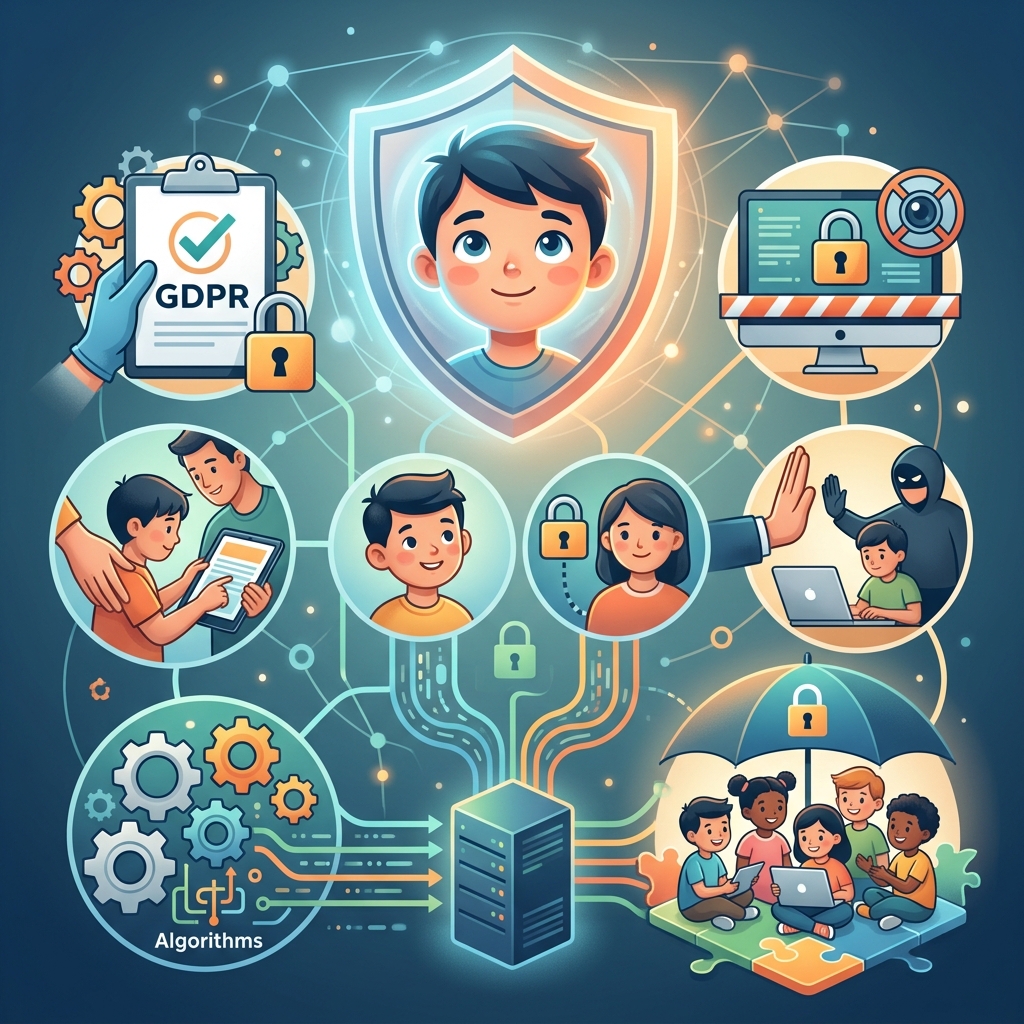
The Children’s Online Privacy Protection ActChildren’s Online Privacy Protection Rule
1. COPPA and the Children’s Online Privacy Protection Rule: The Basics
COPPA is a federal statute enacted in 1998 to address growing concerns about commercial websites collecting children’s data without parental knowledge or control. The Federal Trade Commission (FTC) issued the Children’s Online Privacy Protection Rule to implement the Act and spell out specific duties for covered operators.
In simple terms, COPPA and the Rule are designed to:
- Limit the collection, use, and disclosure of personal information from children under 13.
- Give parents control over what data is gathered about their children.
- Require operators to be transparent about their data practices and to keep kids’ information secure.
The Rule first became effective in 2000 and was substantially updated in 2013 to reflect changes in technology, such as mobile apps, social media, and persistent identifiers used for tracking.
2. Who Must Comply with the Rule?
The Children’s Online Privacy Protection Rule does not apply to every site on the internet. Instead, it targets commercial operators that interact with young children or knowingly collect their data.
In general, the Rule covers:
- Websites and online services directed to children under 13, including apps, online games, educational platforms, and social features clearly designed for kids.
- Other websites or services that are not primarily child-focused but have actual knowledge that they are collecting personal information from users under 13.
“Online services” is interpreted broadly and can include:
- Mobile applications
- Connected toys or devices that communicate over the internet
- Online advertising networks and analytics tools
- Social media plug-ins embedded in child-directed content
Operators outside the United States are not exempt. If an online service targets children in the U.S. or otherwise falls under U.S. jurisdiction, it must follow the Rule’s requirements.
3. What Counts as “Personal Information”?
COPPA defines personal information in a way that reflects both traditional identifiers and modern tracking technologies. The Rule covers any data that can identify a child or be reasonably linked to them.
Examples of personal information include:
- Full name or first and last name
- Home or physical address, including street and city
- Email address or other online contact information
- Telephone number or mobile number
- Social Security number
- Usernames that function as identifiers across services
- Persistent identifiers, such as cookies, device IDs, or IP addresses, when used for tracking or profiling.
- Geolocation data that can identify a street or neighborhood
- Photos, videos, or audio recordings where a child’s image or voice is captured
When operators collect these data points directly from children or through background technologies, COPPA’s protections are triggered.
4. Core Obligations Under the Rule
The Children’s Online Privacy Protection Rule imposes a series of duties on operators that fall under its scope. These obligations aim to embed fair information practices into the design and operation of child-directed services.
| Obligation | Purpose |
|---|---|
| Clear online privacy policy | Ensures parents understand what data is collected, how it is used, and with whom it is shared. |
| Direct notice to parents | Makes parents aware, in an individualized communication, of data practices and their rights before information is collected. |
| Verifiable parental consent | Prevents unauthorized data collection from children by requiring proof that a parent agrees. |
| Parental access and control | Allows parents to review, correct, or delete data and to withdraw consent. |
| Data security & limited retention | Reduces risk of breaches and misuse, and prevents indefinite storage of children’s data. |
| No unnecessary data collection | Stops operators from conditioning participation on giving more information than is reasonably needed. |
4.1 Privacy Policy Requirements
Operators must post a clear and comprehensive privacy policy on any area of their site or service that is directed to children and anywhere they collect personal information from kids.
A compliant COPPA privacy policy should, at a minimum:
- Identify the operator and any third parties that collect data through the service.
- Describe exactly what personal information is collected from children.
- Explain how the information is used (for example, to create accounts, customize content, or support internal operations).
- List the types of third parties with whom information is shared.
- Provide contact information so parents can ask questions or exercise their rights.
4.2 Direct Notice to Parents
Before collecting children’s personal information, operators must send a direct notice to parents, separate from the general privacy policy.
That notice should:
- Explain that the operator wants to collect personal information from their child.
- Describe the types of information and the purposes for collection.
- Inform parents that their consent is required and how they can provide it.
- State that parents can withdraw consent and request deletion of their child’s data.
- Include a link or instructions to access the full privacy policy.
4.3 Verifiable Parental Consent
In most cases, operators must obtain verifiable parental consent before collecting, using, or disclosing personal information from a child. The methods chosen should reflect the sensitivity of the data and the risks of misuse.
Acceptable methods to verify parental identity and consent can include:
- A signed consent form returned by mail, scan, or email.
- Use of a credit or debit card during a transaction.
- A telephone call or video conference with trained personnel.
- Challenge questions known only to the parent.
- Government-issued ID checked against the parent’s information, with safeguards to prevent unauthorized use.
The Rule also outlines limited circumstances where parental consent is not required, such as collecting a parent’s email address solely to obtain consent later, or for certain one-time contacts and safety purposes.
4.4 Parents’ Rights to Review and Delete Data
Parents have ongoing rights once consent is given. Operators must provide reasonable means for parents to:
- Review the personal information collected from their child.
- Request correction of inaccurate or incomplete information.
- Delete the child’s data and refuse further collection or use.
Operators must honor these requests promptly and cannot condition children’s continued access to basic features on parents’ willingness to allow extensive data collection.
4.5 Data Security, Retention, and Deletion
The Rule requires operators to implement reasonable procedures to protect the confidentiality, security, and integrity of children’s personal information.
Key expectations include:
- Limiting access to children’s data to personnel and partners who need it and can safeguard it.
- Using appropriate technical measures to prevent unauthorized access, such as encryption and access controls.
- Retaining children’s data only as long as necessary to fulfill the purpose for which it was collected, then securely deleting it.
These duties apply not only to information stored directly by the operator, but also to data held by service providers and third-party processors acting on the operator’s behalf.
5. Limits on Conditioning Participation and Data Collection
A specific safeguard in COPPA is the prohibition on conditioning a child’s participation in an online activity on providing more personal information than is reasonably necessary.
In practice, this means:
- Simple games, quizzes, or educational tools should not require extensive personal details to access basic features.
- Contests or prize draws aimed at children may collect contact information needed to award prizes, but not unrelated identifiers.
- Operators should regularly review what data they collect and justify each item against the activity’s genuine needs.
This requirement reinforces the broader principle of data minimization: collecting only what is needed, and nothing more, when dealing with children’s data.
6. Practical Compliance Tips for Operators
Meeting COPPA obligations requires a mix of legal understanding and practical implementation. Operators that design child-directed services or knowingly host under-13 users should consider the following steps:
- Conduct a COPPA assessment to determine whether parts of the service are child-directed or whether children are likely to be active users.
- Map data flows to identify what information is collected from users, how it is transmitted, where it is stored, and with whom it is shared.
- Update privacy policies and notices to meet the Rule’s specific content and transparency requirements.
- Implement consent workflows that verify parental identity before collecting children’s information, using methods appropriate to the risk level.
- Train staff and developers on COPPA’s obligations and on secure handling of children’s data.
- Review third-party tools (analytics, advertising networks, plug-ins) to ensure they are compatible with COPPA and do not secretly collect data from children.
- Set retention limits and create deletion routines for children’s data to avoid unnecessary long-term storage.
Operators that take a proactive, design-focused approach to privacy—often called “privacy by design”—are better positioned to comply and to protect young users from harm.
7. Common FAQs About the Children’s Online Privacy Protection Rule
7.1 What ages does COPPA protect?
COPPA and the Rule protect children under the age of 13. Once a user turns 13, general data protection and consumer privacy laws apply, but the special COPPA safeguards no longer govern the relationship.
7.2 Does the Rule apply to non-profit organizations?
COPPA focuses on commercial websites and online services, but some educational or institutional programs may fall within its scope if they operate services that function like commercial offerings or rely on third-party commercial platforms. Operators should seek legal advice if their status is unclear.
7.3 Are platforms responsible if a child lies about their age?
The Rule focuses on whether an operator has actual knowledge that a user is under 13. If a service is clearly child-directed, age misrepresentation is irrelevant; COPPA applies. For general-audience services, operators must respond appropriately when they become aware that a user is under 13, which may require deleting data and obtaining parental consent.
7.4 Can operators rely on a single global privacy policy?
While a unified policy may be possible, COPPA requires that child-directed areas and data practices be explained in a way that is clear and comprehensive for parents. Many operators maintain dedicated sections or separate documents that focus specifically on children’s data.
7.5 What are the consequences of non-compliance?
The FTC can bring enforcement actions for violations of the Rule, which may result in civil penalties, corrective orders, and mandatory changes to data practices. Reputational damage and loss of user trust can be equally serious, especially for services marketed to families and schools.
8. Why the Rule Matters for Families and the Digital Ecosystem
The Children’s Online Privacy Protection Rule is more than a legal checklist; it is a framework that encourages responsible design of digital environments for kids. By requiring transparency, parental involvement, and robust data protection, the Rule helps:
- Parents make informed decisions about the apps, games, and platforms their children use.
- Children benefit from age-appropriate services that do not exploit their data or expose them to unnecessary risks.
- Operators build trust and avoid conflicts with regulators and users by embedding privacy into their business models.
As technology evolves, the principles behind COPPA—limiting data collection, granting meaningful control, and securing information—remain central to ethical and legally compliant digital innovation.
References
- Children’s Online Privacy Protection Rule (“COPPA”) — Federal Trade Commission. 2024-04-22. https://www.ftc.gov/legal-library/browse/rules/childrens-online-privacy-protection-rule-coppa
- 16 CFR Part 312 — Children’s Online Privacy Protection Rule — U.S. eCFR, Office of the Federal Register. 2024-01-01. https://www.ecfr.gov/current/title-16/chapter-I/subchapter-C/part-312
- Children’s Online Privacy Protection Act — National Credit Union Administration (NCUA). 2023-03-01. https://ncua.gov/regulation-supervision/manuals-guides/federal-consumer-financial-protection-guide/compliance-management/deposit-regulations/childrens-online-privacy-protection-act
- Children’s Online Privacy Protection Act — University of Alabama, CERA. 2023-02-15. https://compliance.ua.edu/privacy/coppa/
- Children’s Online Privacy Protection Act (COPPA) — Electronic Privacy Information Center (EPIC). 2022-09-01. https://epic.org/issues/data-protection/childrens-privacy/
- COPPA: Children’s Online Privacy Protection Act Explained — Termly. 2024-05-10. https://termly.io/resources/articles/coppa/
- Children’s Online Privacy Protection Rule — Federal Register. 2025-04-22. https://www.federalregister.gov/documents/2025/04/22/2025-05904/childrens-online-privacy-protection-rule
Similar Articles








Read full bio of Sneha Tete


