
DUI Preliminary Hearing: What To Expect And Why It Matters Now
Learn how DUI preliminary hearings work, what happens in court, and how this early step can shape the rest of your drunk driving case.
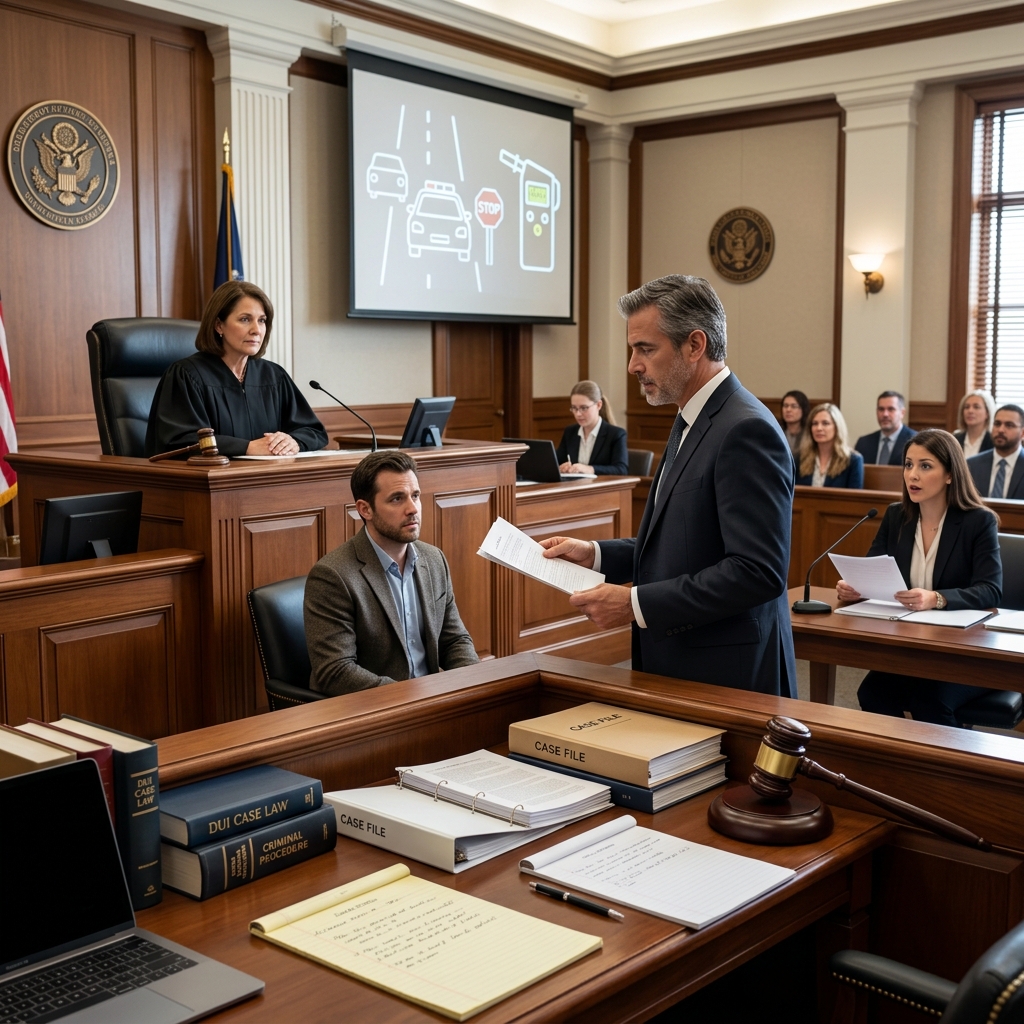
A driving under the influence (DUI) charge does not go straight to a full trial. In many jurisdictions, one of the earliest and most important steps is the preliminary hearing, sometimes called a probable cause hearing. This hearing acts as a screening process where a judge decides whether the prosecution has enough evidence to move the case forward.
This article explains what a DUI preliminary hearing is, why it matters, what happens in the courtroom, and how it can affect the rest of your case. It is general educational information, not legal advice; DUI procedures and timelines vary by state and sometimes even by local court rules.
What Is a DUI Preliminary Hearing?
A DUI preliminary hearing is a formal court proceeding held after you are charged and typically after you enter a not guilty plea at arraignment. At this stage, the judge is not deciding guilt or innocence. Instead, the judge asks a narrower question: Is there probable cause to believe a DUI crime was committed and that this defendant committed it?
Key characteristics of a DUI preliminary hearing include:
- It occurs early in the criminal process, often within weeks of arrest, depending on state law.
- The hearing may be required to occur within a statutory deadline (for example, within about 30 days after arraignment in some jurisdictions).
- The judge evaluates whether the evidence supports probable cause, a much lower standard than proof beyond a reasonable doubt.
- If probable cause exists, the case is “bound over” for trial or further proceedings in a higher court.
- If probable cause is lacking, some or all charges may be dismissed at this stage.
Where the Preliminary Hearing Fits in a DUI Case
A DUI case typically proceeds through a series of stages from arrest to potential trial and sentencing. While details vary by state, the preliminary hearing usually comes after the arraignment and before significant pre-trial motions.
| Stage | Typical Purpose |
|---|---|
| Arrest & Booking | Police stop, investigate, and arrest for suspected DUI; fingerprints, photos, and initial custody decisions are made. |
| Arraignment | Charges are formally announced; the defendant enters a plea (often “not guilty” in contested DUI cases). |
| Preliminary Hearing | Judge determines whether there is probable cause to proceed with the case (not held in every jurisdiction for every DUI). |
| Pre-trial Motions & Conferences | Lawyers argue about what evidence is admissible, file motions to suppress, and discuss plea negotiations. |
| Trial | Judge or jury hears evidence and determines guilt or innocence; prosecution must prove the charge beyond a reasonable doubt. |
| Sentencing & Possible Appeal | If convicted or a plea is entered, the court imposes penalties; certain legal challenges can be raised on appeal. |
Some states use different terminology or may combine functions of a preliminary hearing with pre-trial conferences, especially for misdemeanor-level DUIs. In felony DUI cases, preliminary hearings are more common because higher-level charges require a formal probable cause determination before proceeding to trial court.
The Legal Standard: Probable Cause vs. Proof Beyond a Reasonable Doubt
One of the most misunderstood aspects of DUI preliminary hearings is the burden of proof. The prosecution’s burden at this stage is significantly lower than at trial.
- Probable cause means there is a reasonable basis to believe a crime was committed and that the defendant was involved. It is a threshold standard used throughout criminal procedure in the United States, such as when issuing warrants.
- Proof beyond a reasonable doubt is the much higher standard required for a criminal conviction at trial. It requires the evidence to be so convincing that a reasonable person would have no reasonable doubt about the defendant’s guilt.
At a DUI preliminary hearing, the judge looks at whether, if the prosecution’s evidence is believed, it is sufficient to justify moving the case forward. The judge does not weigh credibility in the same way a trial judge or jury would, and does not decide contested factual issues with the same depth. In many jurisdictions, the court is required to view the evidence in the light most favorable to the prosecution at this stage.
How a DUI Preliminary Hearing Works in Practice
Although procedures vary, a typical DUI preliminary hearing follows a recognizable basic pattern. The setting is formal and recorded; testimony is under oath, and the outcome can significantly influence the future of the case.
1. Scheduling and Notice
After the arraignment and entry of a not guilty plea, the court sets a date for the preliminary hearing, often within a statutory timeframe such as 30 days (though defendants can sometimes waive that deadline to allow more time to prepare). The defendant and their attorney receive notice of the hearing date, time, and location.
2. The Participants
A DUI preliminary hearing usually involves:
- The judge (often a lower court or magistrate judge) who presides and decides probable cause.
- The prosecutor, who presents the state’s evidence and calls witnesses.
- The defendant, who has a right to attend and is usually present unless excused.
- Defense counsel, who cross-examines witnesses and may present limited evidence or argument.
- Witnesses, such as the arresting officer, other officers involved, and possibly civilian witnesses.
3. Presentation of Evidence
The prosecution normally presents its case first. The evidence may include:
- Testimony from the arresting officer about the traffic stop, observations, field sobriety tests, and statements made by the driver.
- Preliminary breath test or evidentiary breath test results, when available.
- Blood test results, if the DUI is based on blood alcohol concentration (BAC) or drugs in the bloodstream.
- Police reports or sworn statements, depending on the jurisdiction’s rules of evidence at preliminary hearings.
Many states allow more relaxed evidentiary rules at preliminary hearings than at trial, meaning some hearsay may be allowed to show probable cause even if it would not be admitted at a jury trial.
4. Cross-Examination by the Defense
The defense attorney typically has the right to cross-examine the prosecution’s witnesses. This step is essential for several reasons:
- It reveals more detail about the officer’s observations and conduct during the stop and arrest.
- It may expose inconsistencies or weaknesses in the prosecution’s version of events.
- It creates a transcript of testimony that can later be used to impeach (challenge) a witness at trial if their story changes.
In some cases, the defense may choose to call its own witnesses or present limited evidence, but many lawyers treat the preliminary hearing primarily as a discovery and testing opportunity rather than as a mini-trial.
5. Legal Arguments and the Judge’s Ruling
After the testimony, both sides may make legal arguments about whether the evidence meets the probable cause standard. The judge can then:
- Bind the case over for trial or further proceedings on the same charges.
- Reduce the charges (for example, reducing a felony DUI to a lesser offense, depending on state law).
- Dismiss some or all charges if probable cause is lacking.
If the case is bound over, it typically moves to a higher-level trial court where further pre-trial motions, plea negotiations, and eventually trial may occur.
Possible Outcomes and Their Impact
The outcome of a DUI preliminary hearing shapes the next steps in your case. It does not end the case in most situations, but it can narrow the issues or alter the charges.
- Case moves forward: If the judge finds probable cause for the DUI charge, the case continues toward trial or plea discussions.
- Some charges dismissed: The court may find probable cause for some counts but not others, resulting in a narrower case moving forward.
- All charges dismissed: If no probable cause exists, the judge can dismiss the case at this stage. However, depending on state law, the prosecutor may sometimes refile or seek an indictment through a grand jury.
- Plea negotiations influenced: The testimony and legal issues exposed at the preliminary hearing can influence later plea negotiations, especially if weaknesses in the prosecution’s case become evident.
Strategic Reasons the Defense May Want a Preliminary Hearing
Even though the prosecution rarely loses at this stage due to the low burden, there are several strategic reasons a defendant may choose to proceed with a DUI preliminary hearing rather than waive it.
- Preview of the evidence: The hearing provides an early look at the prosecution’s case, including how the officer testifies under oath.
- Locking in testimony: A transcript of the officer’s answers can be valuable later if they change their story at trial.
- Identifying legal issues: Cross-examination may reveal grounds for later motions to suppress evidence (for example, challenging the legality of the traffic stop or the reliability of a field sobriety test).
- Assessing negotiation leverage: Seeing the strength or weakness of the evidence can help both sides evaluate realistic plea options.
In some circumstances, however, defense attorneys may recommend waiving the hearing to pursue a different strategic path, such as focusing immediately on negotiation or avoiding giving the prosecution a preview of the defense theory. The best choice is highly fact-specific and depends on local practice.
Common Evidence Used to Establish Probable Cause in DUI Cases
At the preliminary hearing, the prosecution usually relies on a limited but focused set of evidence to meet the probable cause standard. Typical building blocks include:
- Driving behavior: Swerving, speeding, failing to maintain lane, or involvement in a crash.
- Physical signs: Odor of alcohol, red or watery eyes, slurred speech, unsteady gait as described by the officer.
- Field sobriety tests: Standardized tests such as the walk-and-turn or one-leg stand, and how the officer says the driver performed.
- Chemical tests: Breath or blood test results showing a BAC at or above the legal limit, or presence of controlled substances.
- Statements: Admissions by the driver about drinking or drug use, or refusal to take a chemical test when that is admissible under state law.
For probable cause, the state does not need to prove every detail beyond dispute. The judge only needs enough credible evidence to reasonably support the DUI charge if believed.
Rights and Protections at a DUI Preliminary Hearing
Even though a preliminary hearing is less formal than a trial, important rights still apply because it is a critical stage of criminal proceedings.
- Right to counsel: Defendants generally have the right to an attorney at the preliminary hearing. Courts appoint counsel for indigent defendants in many DUI cases because liberty is at stake.
- Right to be present: Defendants usually have the right to attend, hear the evidence, and consult with their attorney.
- Right to cross-examine: Defense counsel can question the state’s witnesses, subject to the rules of the jurisdiction.
- Right to present evidence: In many states defendants may call their own witnesses or introduce evidence, though strategically this is used sparingly.
- Recording of proceedings: Preliminary hearings are typically recorded or transcribed, providing a written record for later use in the case.
Frequently Asked Questions About DUI Preliminary Hearings
Is a DUI preliminary hearing the same as a trial?
No. A trial is where guilt or innocence is determined, and the prosecution must prove the DUI charge beyond a reasonable doubt. A preliminary hearing only examines whether there is probable cause to move the case forward.
Do all DUI cases have a preliminary hearing?
Not always. In some states, only felony DUIs or cases filed in certain courts receive a formal preliminary hearing. In others, DUI cases may move from arraignment directly into pre-trial conferences and motions without a separate probable cause hearing.
Can I waive my preliminary hearing?
In many jurisdictions, a defendant can waive the preliminary hearing, often as part of a strategic decision or negotiation. This does not end the case; it usually means the case proceeds directly to the higher court. You should only decide whether to waive after consulting with a qualified defense attorney.
What happens if the judge dismisses my DUI at the preliminary hearing?
If the judge finds no probable cause, the DUI charge can be dismissed at this stage. However, in some states the prosecution may refile charges or seek a grand jury indictment, especially in serious cases. The effect of dismissal depends heavily on local law and facts.
Will I go to jail at the preliminary hearing?
The preliminary hearing is primarily about evidence, not sentencing. However, if you are already in custody, the judge may address bail or continued detention. If you are out on bond, the hearing itself does not typically create new jail time unless you violate court orders.
Do I have to testify at my DUI preliminary hearing?
Defendants retain the right against self-incrimination and generally cannot be forced to testify. In many cases, defense attorneys advise clients not to testify at this early stage to avoid creating statements that could be used against them later.
Why Legal Representation Is Critical
Because the preliminary hearing can shape the rest of the DUI case, having knowledgeable legal representation is important. A skilled lawyer can:
- Explain whether you are entitled to a preliminary hearing in your jurisdiction and what to expect.
- Advise whether to waive or proceed with the hearing based on the facts and local practice.
- Cross-examine witnesses to expose weaknesses in the prosecution’s case.
- Preserve legal issues and testimony for later motions and trial.
- Use what is learned at the hearing to pursue better plea options or prepare a stronger defense.
Because DUI laws and court procedures vary by state and are influenced by statutory deadlines and local rules, consulting an attorney experienced in DUI defense in your jurisdiction is the best way to understand how a preliminary hearing will work in your specific case.
References
- DUI Preliminary Hearing Questions: What to Expect in Court? — LegalMatch. 2023-04-01. https://www.legalmatch.com/law-library/article/dui-preliminary-hearings.html
- Preliminary Hearings in Pennsylvania DUI & Criminal Cases — Myeastonattorney.com. 2022-06-15. https://myeastonattorney.com/practice-areas/dui/what_is_a_preliminary_hearing/
- Pennsylvania DUI Court Process — Pennsylvaniaduilawyers.com. 2021-11-10. https://www.pennsylvaniaduilawyers.com/court-process/pennsylvania-dui-court-process/
- WA DUI Process – DUI Arraignment & Court Hearings in Washington — Beckwith Law Group. 2022-09-05. https://www.beckwithlawgroup.com/dui-court-process.html
- Criminal DUI Process — Fury Duarte. 2021-08-20. https://www.furyduarte.com/resource/criminal-dui-process/
- The Stages of a DUI Case in Florida: What to Expect — Law Offices of John M. Phillips. 2023-01-12. https://www.jacksonvillecriminaldefenseattorneyblog.net/the-stages-of-a-dui-case-in-florida-what-to-expect/
Similar Articles








Read full bio of Sneha Tete




