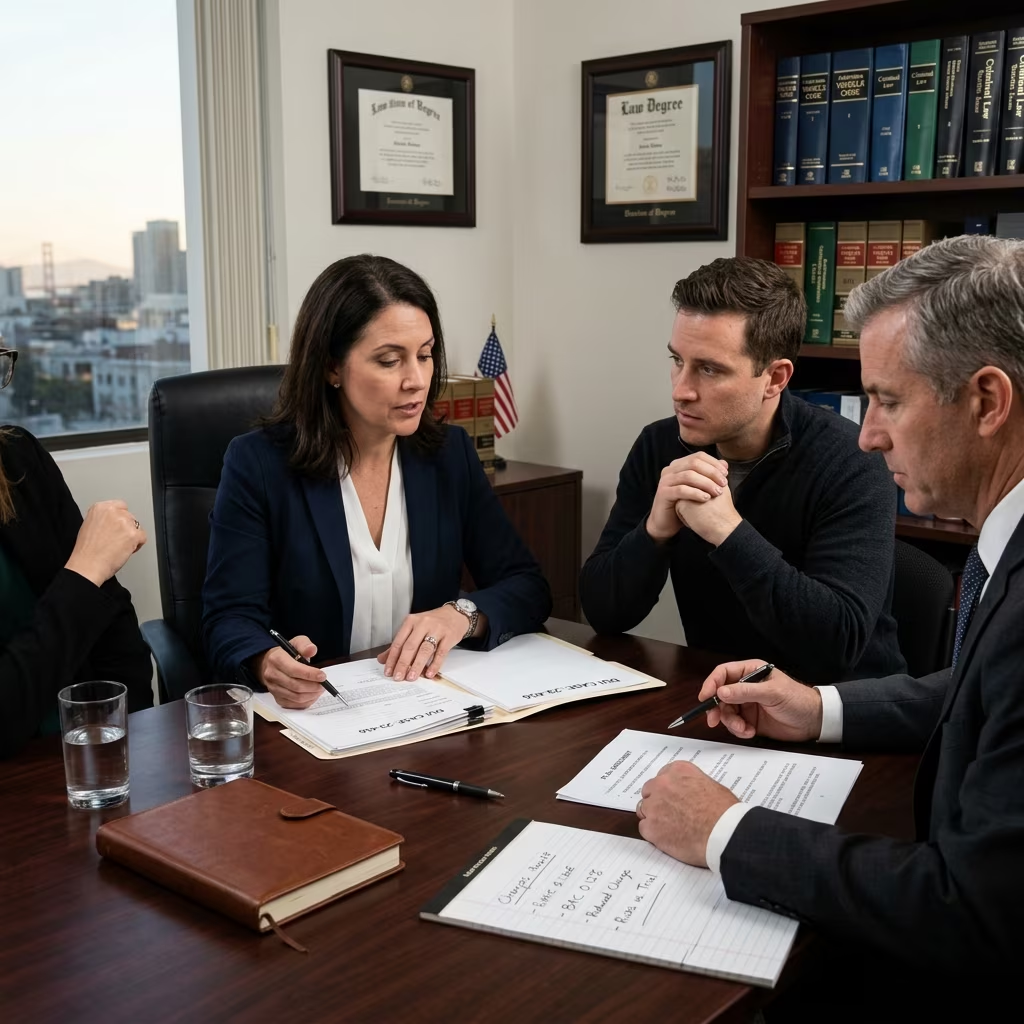
Facing a criminal charge for driving under the influence (DUI) is stressful and confusing, especially if it is your first time in the court system. One of the first major decisions many people confront is whether to negotiate a plea bargain instead of going to trial. This article explains what plea bargaining means in DUI cases, the kinds of deals that may be available, and how to think strategically about accepting or rejecting an offer.
What Is a Plea Bargain in a DUI Case?
In a DUI prosecution, a plea bargain is a negotiated agreement between the person accused of the crime and the government’s lawyer (the prosecutor). Under this agreement, the defendant agrees to plead guilty or “no contest” in exchange for a specific benefit, such as a reduced charge or a lighter sentence. Instead of having a judge or jury decide guilt after a trial, the case is resolved through negotiation.
Plea agreements are common across criminal law and are especially frequent in DUI cases. Official data from the U.S. Department of Justice show that the vast majority of federal criminal cases end in guilty pleas rather than trials, and state courts also rely heavily on plea bargaining to manage large caseloads. While statistics vary by jurisdiction, in many places most DUI charges are resolved through some form of negotiated plea.
Key Features of a DUI Plea Deal
- Negotiated outcome: The prosecutor and defense discuss what charge and sentence will be imposed if the defendant pleads guilty.
- Waiver of trial rights: The defendant gives up the right to a jury trial, to confront witnesses, and to require the state to prove the case beyond a reasonable doubt.
- Certainty and predictability: The parties know in advance what the conviction and punishment will look like, rather than risking an uncertain trial result.
Judges generally must approve plea agreements, and in most jurisdictions they will ensure that the defendant understands the rights being waived and the consequences of the plea before accepting it.
Why Plea Bargains Are So Common in DUI Cases
DUI cases present particular reasons for plea bargaining. Courts frequently handle high volumes of impaired-driving prosecutions, and trials for every case would overwhelm limited resources. Plea agreements help courts operate more efficiently and allow prosecutors to focus time and effort on more serious or complex matters.
On the defendant’s side, a negotiated plea can reduce exposure to harsh penalties and the risk of an unpredictable outcome at trial. For example, many states impose mandatory minimum jail terms, lengthy license suspensions, fines, and other penalties upon DUI conviction, with enhanced punishments for high blood alcohol levels, accidents, or prior offenses. A plea bargain may soften these consequences.
Common Reasons Prosecutors Offer DUI Plea Deals
- Case weaknesses: Evidence problems, such as unreliable breath tests or questionable traffic stops, may make conviction at trial uncertain.
- Resource constraints: Prosecutors must manage heavy caseloads and cannot take every DUI case to trial.
- Defendant’s background: A clean record, cooperation, or early acceptance of responsibility may support a more lenient resolution.
- Policy considerations: Some offices have guidance for offering reduced charges in first-offense cases or where there was no accident or injury.
Types of DUI Plea Bargains
The structure of a plea deal depends heavily on state law, local practices, and the facts of the case. However, several broad categories of plea bargains commonly appear in drunk-driving prosecutions.
1. Plea to a Reduced Charge
One common approach is to allow the defendant to plead guilty to a lesser offense instead of the original DUI charge. These reduced offenses typically carry fewer mandatory penalties and may have different consequences for licensing, insurance, and criminal records.
| Type of Reduced Charge | Typical Characteristics |
|---|---|
| Reckless driving (sometimes “wet reckless”) | Still a criminal offense, but often with lower fines, shorter or no mandatory jail, and different license consequences compared to DUI. |
| Other moving violations | In some cases, the DUI may be reduced to a non-criminal traffic infraction (such as speeding), with monetary fines but no criminal conviction. |
The exact labels and legal definitions of these reduced charges vary widely from one state to another, and not all jurisdictions offer the same options.
2. Plea to the Original Charge with Reduced Penalties
In other plea deals, the defendant pleads guilty to the DUI itself, but the prosecutor agrees to recommend a lower sentence than might otherwise be imposed. This may involve:
- Shorter or suspended jail time
- Lower fines or fees
- Less restrictive probation terms
- Shorter periods of license suspension where permitted by law
In some states, prosecutors and defense counsel also negotiate around special sentencing programs, such as treatment courts or diversion programs, that may offer reduced penalties in exchange for strict compliance with conditions.
3. Alternative Sentencing Agreements
Another form of plea bargaining involves substituting traditional jail time with alternative sanctions, when allowed by local law and policy. These alternatives might include:
- Community service or community labor requirements
- Residential or outpatient treatment for substance use
- Electronic home monitoring in lieu of jail
- Mandatory participation in DUI education programs
These agreements still result in a criminal conviction but may be more compatible with employment, family responsibilities, and rehabilitation.
Benefits of Accepting a DUI Plea Bargain
The potential advantages of a plea deal are significant, which is why so many defendants resolve DUI charges this way.
Predictability and Reduced Risk
A trial always carries uncertainty. Even if you believe the evidence is weak, juries can be unpredictable, and judges may impose strict sentences if they conclude the offense was serious. A plea bargain allows you to trade the possibility of a better outcome at trial for the certainty of a known, often more lenient, result.
Time, Cost, and Stress Savings
Trials demand extensive preparation, multiple court appearances, and significant attorney time. A negotiated plea often resolves the case sooner, with fewer hearings and lower legal fees. Many defendants prefer to move on, restore driving privileges, and return to normal life without the ongoing anxiety of a pending trial.
Potentially Lower Penalties and Collateral Consequences
By pleading to a lesser offense or securing a reduced sentence, defendants may:
- Serve little or no jail time
- Face smaller fines and fewer court costs
- Experience shorter license suspensions, depending on state law
- Limit long-term consequences for employment, professional licenses, or immigration status
For example, in some jurisdictions a reduced charge such as reckless driving may be viewed differently by employers or licensing agencies than a DUI conviction, even though both remain serious.
Risks and Tradeoffs of DUI Plea Agreements
Despite their advantages, plea bargains are not risk-free. Accepting a plea means permanently giving up important rights and accepting the consequences of a criminal conviction.
Waiver of Constitutional Rights
To enter a plea, you must give up the right to a jury trial, the right to confront and cross‑examine witnesses, and the right to require the government to prove the case beyond a reasonable doubt. Once the court accepts your plea, reversing that decision is difficult and often only possible in narrow circumstances, such as showing that the plea was not knowing and voluntary.
Permanent Criminal Record
Even a reduced charge can appear on criminal background checks and may affect job prospects, security clearances, housing, and professional licensing. Some states offer post‑conviction relief mechanisms like expungement or sealing for certain offenses, but eligibility is limited and varies widely. It is important to understand the long-term record impact, not just the immediate sentence.
Not Always the Best Outcome
If the state’s case is weak or there are strong legal defenses, going to trial may lead to acquittal or dismissal, a result that is clearly better than any guilty plea. Accepting a plea too quickly, without fully evaluating the evidence and legal options, can mean giving up a chance at a clean outcome.
How DUI Plea Negotiations Typically Work
The process of negotiating a plea bargain usually unfolds over several stages. Although details vary by court, the basic structure is similar in many jurisdictions.
1. Case Evaluation by the Defense
Before meaningful negotiations, defense counsel reviews the prosecution’s evidence, including:
- Police reports and witness statements
- Breath or blood test results and any laboratory documentation
- Dash‑cam or body‑camera video, if available
- Information about prior convictions or driving history
The lawyer assesses potential defenses, such as unlawful traffic stops, improper testing procedures, or evidentiary gaps. This assessment informs whether to seek a plea and what terms would be reasonable.
2. Discussion With the Prosecutor
Once the defense understands the case, counsel usually meets or communicates with the prosecutor to explore possible resolutions. These conversations may occur informally in the courthouse or more formally through written offers, depending on local practice.
Factors that commonly influence prosecutor decisions include:
- Strength or weakness of the evidence
- Whether the incident involved an accident, injuries, or property damage
- Defendant’s prior record and level of cooperation
- Office policies and state sentencing laws
3. Presenting and Considering the Offer
After negotiations, the prosecutor may present a plea offer specifying the charge, recommended sentence, and any conditions such as probation, treatment, or restitution. The defense lawyer then explains the proposal, compares it to likely trial outcomes, and advises the client on the pros and cons. Ultimately, the decision to accept or reject the offer belongs to the defendant.
4. Court Hearing and Plea Colloquy
If the defendant chooses to accept the deal, the court holds a hearing to formally enter the plea. The judge typically asks a series of questions to confirm that the plea is voluntary, that the defendant understands the rights being waived, and that there is a factual basis for the plea. Once satisfied, the judge accepts the plea and imposes the agreed‑upon or recommended sentence, subject to any limits under local law.
Deciding Whether to Fight the DUI or Accept a Plea
Choosing between trial and plea bargain is a deeply personal decision. However, several practical considerations can help structure that choice.
Situations Where a Plea Deal Is Often Considered
- Strong evidence of impairment: Clear test results, officer observations, and driving behavior all point toward guilt.
- Limited legal defenses: No obvious constitutional or evidentiary problems exist that could suppress key evidence.
- Harsh potential penalties: The law requires mandatory jail or very long license suspensions if convicted at trial.
- Need for closure: The defendant wants to resolve the case quickly for employment, family, or personal reasons.
Situations Where Fighting the Case May Make Sense
- Questionable traffic stop or arrest: Officers may have lacked reasonable suspicion or probable cause, creating potential grounds to exclude evidence.
- Unreliable testing: Breath or blood tests may be flawed due to equipment issues or improper procedures.
- Witness credibility concerns: Key witnesses may have inconsistent stories or motives to exaggerate.
- Severe collateral consequences: Immigration risks, professional licenses, or military service may make any guilty plea unacceptable.
An experienced defense lawyer can compare the prosecutor’s offer to a realistic assessment of trial risks and potential sentences. This comparative analysis is central to making an informed decision.
Frequently Asked Questions About DUI Plea Bargains
Does every DUI case include a plea offer?
Not necessarily. While many DUI prosecutions involve plea negotiations, prosecutors are not required to offer reduced charges or lenient sentences. In some jurisdictions, policy or statutory restrictions limit the availability of certain plea deals, especially in cases involving injury, very high blood alcohol levels, or multiple prior offenses.
Can I change my mind after pleading guilty?
Once the court accepts a guilty plea, withdrawing it is difficult and usually requires showing a legal defect, such as ineffective assistance of counsel or that the plea was not knowing and voluntary. Deadlines for challenging a plea are short, and the standards are strict, so it is crucial to understand the consequences beforehand.
Will a reduced charge still affect my driver’s license?
Often yes. In many states, driver’s license consequences are controlled by specific statutes and may attach regardless of how the criminal case is resolved. For example, administrative license suspensions can be triggered by failing or refusing a chemical test, independent of the court conviction. Your attorney should review both court and licensing agency rules before you accept any plea.
Do I need a lawyer to negotiate a plea bargain?
While some courts allow people to represent themselves, DUI law is complex and penalties can be severe. Government resources and legal guidance overwhelmingly emphasize the importance of legal counsel in criminal cases, especially when entering guilty pleas. A knowledgeable attorney can identify defenses, negotiate more skillfully, and help you understand long‑term consequences.
Will a plea bargain keep my record clean?
Not usually. Plea bargains almost always involve pleading guilty to some offense, which becomes part of your criminal record. In some states, certain reduced charges or diversion programs may eventually allow expungement or sealing, but this depends on local law and your compliance with all conditions.
Practical Tips Before You Accept Any DUI Plea Deal
- Ask for a clear written summary of the proposed charge, sentence, and all conditions, including probation terms and fees.
- Discuss both short‑term and long‑term consequences, such as employment, licensing, immigration, and insurance impacts.
- Compare the offer to realistic trial outcomes, not just the theoretical maximum penalties under the statute.
- Confirm how the plea will affect your driver’s license, including any mandatory suspensions or ignition interlock requirements.
- Take time to think rather than agreeing under pressure; most courts allow reasonable time for consultation with counsel.
References
- DUI Plea Bargains — FindLaw. 2023-04-10. https://www.findlaw.com/dui/cases/dui-plea-bargains.html
- Negotiating a Plea Deal for a DUI Charge — LawInfo. 2022-09-15. https://www.lawinfo.com/resources/dui/negotiating-a-plea-deal-for-a-dui-charge.html
- Plea Bargaining in DUI Cases — Law Office of Bernie McEvoy. 2021-11-30. https://www.mcevoycriminallaw.com/criminal-defense/dui/plea-bargaining-in-dui-cases/
- Plea Bargains in California DUI Cases — ACE Criminal Attorneys. 2022-06-01. https://www.acecriminalattorneys.com/plea-bargains
- DUI Plea Bargains Lawyer — The Meehan Law Firm. 2022-02-18. https://www.themeehanlawfirm.com/dui/dui-plea-bargains
- Plea Bargains in DUI Cases — Ellis and Bryant. 2021-09-20. https://www.ellisandbryant.com/practice-areas/dui-defense/plea-bargains-in-dui-cases/