
The Sunset of Capital Punishment in the US
Exploring the unprecedented decline of the U.S. death penalty.
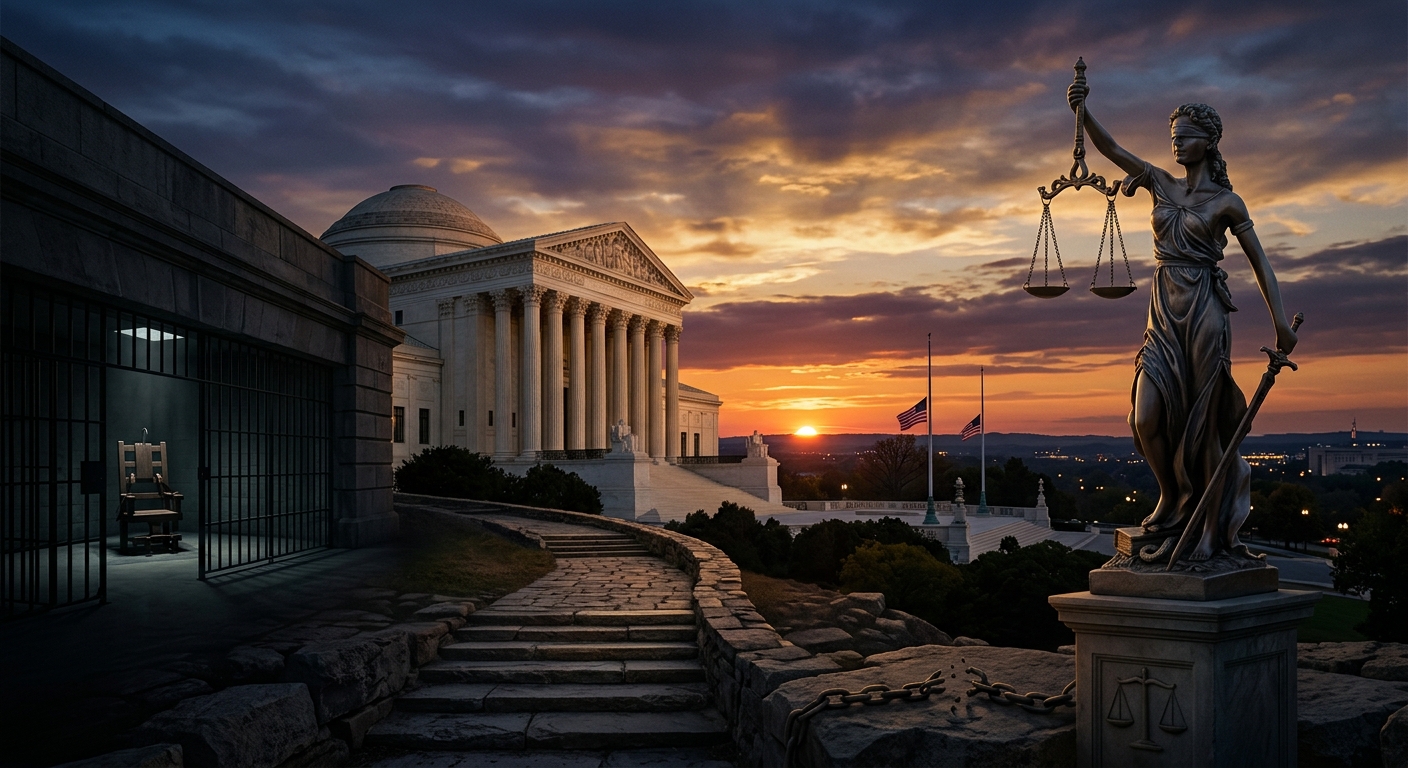
For centuries, the concept of capital punishment has served as the ultimate sanction within the justice system, rooted in retributive justice. However, the modern era has witnessed a profound transformation in how society evaluates the morality, efficacy, and constitutionality of state-sanctioned executions. Across the United States, the death penalty is currently facing an existential crisis. A powerful combination of relentless legal challenges, shifting public sentiment, legislative repeals, and mounting international pressure has driven the practice to historic lows. What was once a widely accepted, almost routine consequence for severe crimes has now become increasingly rare, heavily scrutinized, and geographically isolated to a shrinking handful of jurisdictions.
This dramatic paradigm shift is not the result of a single isolated event, but rather the culmination of decades of targeted advocacy, meticulous legal scrutiny, and an evolving societal understanding of human rights and civil liberties. The narrative surrounding capital punishment is no longer dominated solely by discussions of crime and punishment; it has rightly expanded to encompass the inherent and seemingly unfixable flaws within the justice system. These include systemic racial biases, the chilling risk of executing entirely innocent individuals, and the overwhelming financial costs associated with capital litigation. As we analyze the contemporary landscape of the death penalty, it becomes starkly evident that the machinery of capital punishment is slowly but surely grinding to a permanent halt.
The Statistical Reality: A Consistent and Historic Decline
The numbers surrounding capital punishment in the United States tell a compelling story of an institution in steady decline. While certain regions of the country stubbornly continue to carry out executions, the overarching national trend points firmly toward abandonment. According to comprehensive data released by the Bureau of Justice Statistics, the population of prisoners under the sentence of death has been shrinking consistently for over two decades. In 2023, there were 2,192 individuals on death row nationwide, marking the 23rd consecutive year that this demographic has decreased. This sustained reduction is a powerful indicator that both prosecutors and juries are increasingly hesitant to pursue and impose the ultimate penalty.
This statistical contraction is driven by several converging factors. First, the rate of new death sentences has plummeted significantly since its peak in the late 1990s. Juries, equipped with a much better understanding of forensic science limitations and the availability of alternative sentences like life imprisonment without the possibility of parole, are choosing life over death with far greater frequency. Furthermore, appellate courts are routinely overturning older capital convictions due to prosecutorial misconduct, ineffective assistance of counsel, or the sudden emergence of exculpatory DNA evidence.
Even among the states that officially retain the death penalty on their legal books, actual executions are heavily concentrated in just a few specific jurisdictions. Several states, most notably Texas, Florida, and Oklahoma, account for the vast majority of executions carried out in the modern era. Meanwhile, a significant portion of the country exists in a state of de facto abolition, where capital statutes exist in theory but are entirely dormant in practice.
The Turning Point: State Legislatures Rejecting the Ultimate Penalty
The legislative momentum against the death penalty has accelerated significantly in the 21st century. Historically, efforts to eliminate capital punishment were largely reliant on judicial intervention, but recent decades have seen state legislatures proactively dismantling their death chambers. A pivotal moment in this modern abolitionist wave occurred in 2007 when New Jersey became the first state in over 40 years to legislatively repeal capital punishment. The state replaced the death penalty with life imprisonment without parole through a landmark bill that garnered bipartisan support. This event effectively shattered the long-standing political consensus that supporting the death penalty was a prerequisite for holding public office.
New Jersey’s historic move served as a vital catalyst, proving that a legislative path to abolition was not only possible but politically viable. In the years that followed, a cascade of other states took similar actions. Jurisdictions varying from New Mexico to Illinois, and more recently, Colorado and Virginia, have formally abolished the practice. Virginia’s repeal in 2021 was particularly significant given its status as a Southern state with a long history of carrying out executions, demonstrating that the geographic holdouts of capital punishment are beginning to fracture permanently.
The Courtroom Battles: Lethal Injection and the Constitution
Beyond the legislative arena, the death penalty has been relentlessly besieged within the federal court system. A significant catalyst for the steep decline in executions has been the fierce and ongoing litigation surrounding the methods used to put inmates to death. The Eighth Amendment of the United States Constitution explicitly prohibits “cruel and unusual punishments,” a standard that the Supreme Court has stated must draw its meaning from the evolving standards of decency that mark the progress of a maturing society.
For decades, lethal injection was presented to the public as a sanitized, medicalized, and painless method of execution. However, this facade has crumbled rapidly under intense legal and scientific scrutiny. Pharmaceutical companies, refusing to be associated with capital punishment, have heavily restricted the sale of drugs traditionally used in lethal injection protocols. This blockade has forced retentionist states to experiment with untested and often highly controversial drug cocktails, leading to a series of botched executions that have deeply disturbed the public conscience.
Global Momentum: The Unrelenting International Pressure
The United States’ continued use of the death penalty places it sharply at odds with the vast majority of its democratic allies and the broader international community. Globally, the momentum is undeniably moving toward universal abolition. This international consensus was powerfully articulated in 2007 when the United Nations General Assembly passed a historic resolution calling for a global moratorium on executions. The resolution emphasized that the death penalty lacks conclusive deterrent value and that any miscarriage of justice in its application is absolutely irreversible.
This global pressure extends well beyond symbolic resolutions. European nations have implemented stringent export controls on lethal injection drugs, directly crippling the ability of American states to carry out executions. Furthermore, the United States’ retention of capital punishment frequently complicates its diplomatic relations and extradition treaties. As the world becomes increasingly interconnected, the U.S. finds its stance on capital punishment to be a glaring human rights liability on the global stage.
Public Sentiment: A Nuanced and Shifting View
The legal and legislative shifts mirroring the decline of the death penalty are deeply intertwined with rapidly changing public opinion. While historical polling often showed overwhelming support for capital punishment, contemporary surveys reveal a much more skeptical and highly nuanced public. According to the Pew Research Center, while a narrow majority of Americans still express abstract support for the death penalty for severe crimes, this support collapses quickly when scrutinized against the practical realities of the justice system.
Crucially, the public has lost faith in the administrative safeguards of the system. Recent polling indicates that nearly eight in ten Americans believe there is a significant risk that an innocent person will be put to death. This deep skepticism is largely fueled by the rising number of high-profile exonerations, where individuals who spent decades on death row were ultimately proven innocent through DNA testing. When given the explicit option between the death penalty and life imprisonment without parole, public preference increasingly leans toward the latter.
The Fallacy of Deterrence and the Risk of Irreversible Error
Two of the most enduring arguments traditionally used to justify the death penalty—that it deters violent crime and that it is reserved for the most culpable offenders—have been thoroughly dismantled by modern empirical research. Extensive sociological and criminological studies have repeatedly failed to find any credible evidence that the death penalty functions as a more effective deterrent to murder than long-term imprisonment. Crime rates in states that have abolished the death penalty are consistently on par with, or even lower than, states that actively execute prisoners.
Perhaps even more damning is the deeply ingrained systemic inequity that dictates who actually ends up on death row. The application of capital punishment is notoriously arbitrary, heavily influenced by factors that have nothing to do with the severity of the underlying crime. Statistics consistently show that the race of the victim plays an overwhelmingly disproportionate role in determining whether a death sentence is aggressively pursued. Additionally, the quality of legal representation—often tied entirely to the defendant’s socioeconomic status—remains one of the strongest predictors of receiving a death sentence.
The ultimate and most terrifying flaw of the death penalty is its absolute irreversibility. Unlike any other criminal sanction, an execution leaves no room for the correction of errors. In a judicial system administered entirely by human beings, mistakes are inevitable.
Recent Trends in U.S. Capital Punishment
To fully grasp the rapid transformation of the criminal justice landscape, it is helpful to look at the concrete data illustrating the steep decline of state-sanctioned executions over recent years.
| Trend Category | Description of Recent Developments |
|---|---|
| Death Row Population | The national death row population has declined for over 20 consecutive years, dropping to 2,192 inmates by the end of 2023. |
| State Abolitions | Since 2007, a growing wave of states including New Jersey, Illinois, Colorado, and Virginia have completely repealed their capital statutes. |
| Public Confidence | Public faith in the system’s accuracy has plummeted, with an estimated 78% of Americans acknowledging the real risk of executing an innocent person. |
| Execution Methods | Lethal injection protocols are continuously stalled by severe Eighth Amendment litigation and pharmaceutical supply blockades from international markets. |
Frequently Asked Questions (FAQs)
What is the primary alternative to the death penalty?
The most common and widely accepted alternative to capital punishment is life imprisonment without the possibility of parole (LWOP). This sentence ensures that the convicted individual is permanently removed from society and cannot pose a future threat to the public, while completely eliminating the risk of executing an innocent person. It is also significantly less expensive for state taxpayers due to the reduction in mandatory, decades-long appellate litigation.
Does the death penalty effectively deter violent crime?
No. Decades of comprehensive criminological research have consistently failed to produce any reliable evidence that capital punishment deters violent crime more effectively than the threat of long-term imprisonment. The United Nations and numerous academic bodies have formally recognized the complete lack of deterrence value. States without the death penalty frequently maintain murder rates that are equal to or lower than states that retain the practice.
Why do capital cases take so much longer to resolve than other criminal cases?
Capital cases are subject to a complex, multi-tiered appeals process mandated by the Constitution to ensure that the ultimate punishment is not administered unfairly or erroneously. Because execution is an irreversible act, the courts require exhaustive reviews of the trial process, the evidence, and the legal representation provided to the defendant. This essential “super due process” is critical to minimize the risk of executing an innocent person.
How does international law view capital punishment?
International law and global consensus increasingly view the death penalty as a profound violation of fundamental human rights. The United Nations General Assembly has repeatedly passed resolutions urging a global moratorium on executions with the ultimate goal of total abolition. The vast majority of democratic, industrialized nations have already banned the practice, leaving the United States as a notable outlier among its geopolitical peers.
Are there racial disparities in how the death penalty is applied?
Yes. Extensive statistical analyses have consistently demonstrated profound racial disparities within the capital punishment system. Studies show that defendants are significantly more likely to receive a death sentence if their victim was white, regardless of the defendant’s own race. Furthermore, minority defendants are disproportionately represented on death row, highlighting systemic biases in prosecutorial discretion and jury selection processes across the country.
Conclusion: The Path Toward a More Equitable Future
The arc of the American criminal justice system is undoubtedly bending away from the death penalty. The powerful combination of sustained legislative repeals, shifting public consciousness regarding the risk of executing the innocent, and relentless constitutional challenges to execution methods have severely crippled the machinery of capital punishment. As the data consistently shows a year-over-year decline in both new death sentences and actual executions, it is clear that society is re-evaluating its reliance on retributive violence. The ultimate sunset of the death penalty in the United States appears not to be a question of if, but rather a question of when, as the nation moves steadily closer to a justice system grounded in rehabilitation, equity, and the unyielding preservation of fundamental civil liberties.
References
- Capital Punishment, 2023 – Statistical Tables — Bureau of Justice Statistics. 2025-07-24. https://bjs.ojp.gov/document/cp23st.pdf
- Most Americans Favor the Death Penalty Despite Concerns About Its Administration — Pew Research Center. 2021-06-02. https://www.pewresearch.org/politics/2021/06/02/most-americans-favor-the-death-penalty-despite-concerns-about-its-administration/
- Moratorium on the use of the death penalty (Resolution 62/149) — United Nations General Assembly. 2007-12-18. https://undocs.org/en/A/RES/62/149
Similar Articles








Read full bio of Sneha Tete




