
Suing for Vaccine Injuries: Legal Options Explained
Navigating liability protections, government programs, and rare exceptions for COVID-19 vaccine injury claims against manufacturers like Johnson & Johnson.
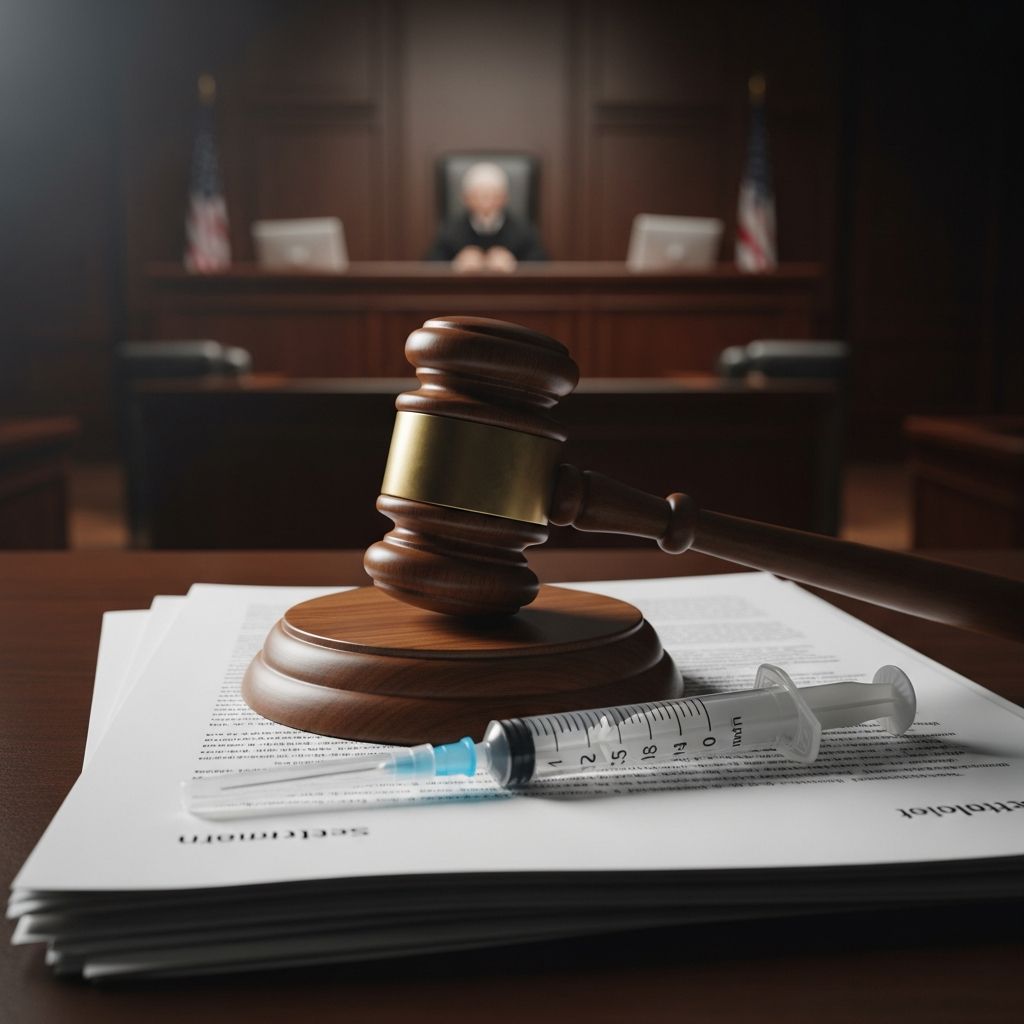
Individuals experiencing adverse effects from COVID-19 vaccines face significant legal hurdles when seeking redress from manufacturers such as Johnson & Johnson. Broad liability protections under federal law generally shield pharmaceutical companies, directing claims toward specialized government compensation programs instead of traditional lawsuits.
Understanding Federal Liability Shields for Vaccines
The Public Readiness and Emergency Preparedness (PREP) Act, enacted in 2005, provides near-total immunity to vaccine manufacturers, distributors, and administrators during public health emergencies. For COVID-19 vaccines, this means companies like Johnson & Johnson, Pfizer, and Moderna cannot typically be sued for injuries unless ‘willful misconduct’ is proven—a high bar requiring clear evidence of intentional harm.
This protection was extended to ensure rapid vaccine deployment amid the pandemic. As noted by the Congressional Research Service, without such safeguards, manufacturers might hesitate to produce countermeasures, delaying public health responses. However, this leaves injured parties reliant on alternative federal mechanisms rather than civil courts.
Government Compensation: The CICP Pathway
Claims for COVID-19 vaccine injuries fall under the Countermeasures Injury Compensation Program (CICP), administered by the Health Resources and Services Administration (HRSA). Unlike the standard National Vaccine Injury Compensation Program (VICP) for routine vaccines, CICP handles emergency countermeasures and imposes stricter standards.
- High Burden of Proof: Claimants must provide ‘compelling, reliable, valid, medical, and scientific evidence’ that the vaccine directly caused the injury—a tougher threshold than VICP’s ‘preponderance of evidence’ standard.
- Filing Deadlines: Claims must generally be filed within one year of vaccination, though some exceptions apply for delayed diagnoses.
- Processing Delays: As of early 2023 data, over 8,000 claims were pending with zero compensations paid; only 21 were deemed eligible but unpaid.
Real-world examples highlight these challenges. One claimant spent 98 days hospitalized with Guillain-Barré Syndrome (GBS) after the Johnson & Johnson vaccine, yet awaited compensation. Another pilot suffered severe ear issues post-Pfizer shot, incurring $60,000 in bills, only for his CICP claim to be denied twice, citing alternative causes like ‘barotrauma from flying’.
Specific Risks Tied to Johnson & Johnson Vaccine
The Johnson & Johnson (Janssen) COVID-19 vaccine, a viral vector type, was linked to rare but serious conditions, prompting pauses and warnings. Key concerns include:
| Condition | Description | Incidence & Timeline |
|---|---|---|
| Cerebral Venous Sinus Thrombosis (CVST) | Rare blood clots in brain veins, potentially causing stroke-like symptoms or death. | Reported 5-15 days post-vaccination; ~6 initial U.S. cases in 2021. |
| Guillain-Barré Syndrome (GBS) | Neurological disorder causing muscle weakness or paralysis. | 295 reports post-vaccination; elevated risk with J&J per JAMA analysis. |
| Pulmonary Embolism & Other Clots | Clots in lungs, legs, or abdomen. | Occurring days to weeks after shot; CDC/FDA warnings issued. |
In April 2021, the FDA and CDC paused J&J distribution after six women developed thrombosis with thrombocytopenia syndrome (TTS), a clotting disorder with low platelets. One died. Global incidence of spontaneous CVST is ~5 per million annually, but vaccine-associated cases appeared clustered.
These events underscore why liability firms now pursue J&J-specific lawsuits, alleging failure to warn despite known risks similar to AstraZeneca’s issues in Europe.
Contrasts with Traditional Vaccine Compensation
The VICP, often called ‘vaccine court,’ covers routine childhood vaccines via the U.S. Court of Federal Claims. It offers a no-fault system with lower proof standards and attorney representation lists. COVID vaccines, however, bypass VICP for CICP due to their emergency status.
- VICP: Preponderance standard; covers lost wages, medical bills, pain/suffering (capped at $250,000); ~70% approval rate historically.
- CICP: Causal proof required; no pain/suffering awards; medical/lost wages only; low approval rates.
Critics argue CICP’s design disadvantages claimants, especially with evolving science on long-term effects like chronic inflammatory demyelinating polyneuropathy (CIDP), potentially linked to GBS.
Potential Exceptions: When Lawsuits Might Proceed
PREP Act immunity isn’t absolute. ‘Willful misconduct’ claims can be filed in U.S. District Courts, but success is rare. Law firms report investigating cases where:
- Manufacturers allegedly knew of risks (e.g., J&J post-AstraZeneca data) yet proceeded without warnings.
- Administrative errors, like improper storage, void protections.
- Non-PREP entities (e.g., employers mandating shots) face separate liability.
Compensation in viable suits may include medical expenses, lost income, and economic losses. Firms like those handling J&J cases seek these for TTS survivors.
Steps to Take if You Suspect Vaccine Injury
- Report to VAERS: File with Vaccine Adverse Event Reporting System immediately—it’s a surveillance tool, not proof, but essential for patterns.
- Seek Medical Documentation: Gather records linking symptoms to vaccination timeline.
- File CICP Claim: Submit via HRSA within deadlines; track status patiently.
- Consult Attorneys: Vaccine-specialized lawyers (e.g., via Court of Federal Claims list) assess rare lawsuit viability.
- Explore State Options: Some workers’ comp or disability claims may apply independently.
Delays in diagnosis—often over a year—complicate filings, as one claimant noted after late CIDP confirmation.
Frequently Asked Questions
Can I sue Johnson & Johnson directly for my COVID vaccine injury?
Generally no, due to PREP Act immunity, but exceptions for willful misconduct or non-countermeasure issues may allow federal court claims.
What compensation does CICP provide?
Medical expenses and lost wages; no pain/suffering. Approvals are rare pending high-proof claims.
Is the J&J vaccine still available after clot concerns?
Limited use post-2021 pauses; CDC prefers mRNA options due to TTS risks.
How long do I have to file a CICP claim?
Typically one year from vaccination or injury awareness, with some flexibility.
Does VAERS prove causation for compensation?
No—it’s for monitoring; CICP requires separate scientific evidence.
Broader Implications for Public Health and Policy
The tension between rapid vaccine rollout and injury accountability persists. Over 13,000 CICP claims by mid-2023 reflect genuine suffering, yet zero payouts fuel reform calls. Senators highlight ‘living hell’ stories, urging faster processing and research into GBS/CIDP links.
Future policy might blend VICP’s accessibility with CICP’s scope, balancing innovation incentives against claimant rights. For now, affected individuals must navigate this framework diligently.
References
- Those injured by COVID-19 vaccine still waiting for government compensation — Sen. Cindy Hyde-Smith. 2023-03-29. https://www.hydesmith.senate.gov/those-injured-covid-19-vaccine-still-waiting-government-compensation
- Johnson & Johnson COVID Vaccine Lawsuit Lawyer — The Lake Law Firm. 2024-01-15. https://thelakelawfirm.com/lawsuits/johnson-johnson-covid-vaccine/
- COVID Vaccinations Problems and Injuries — Shiner Law Group. 2023-11-20. https://shinerlawgroup.com/covid-vaccinations-problems-and-injuries/
- SARS-CoV-2/COVID-19 Vaccine Injury Attorneys — Aeton Law Partners. 2024-02-10. https://www.aetonlaw.com/connecticut/sars-cov-2-covid-19-vaccine-injury-attorneys/
- Compensation for COVID-19 Vaccine Injuries — Congressional Research Service. 2024-05-01. https://www.congress.gov/crs-product/R46982
- National Vaccine Injury Compensation Program — HRSA. 2026-01-01. https://www.hrsa.gov/vaccine-compensation
Similar Articles








Read full bio of Sneha Tete


