
Suing Telemarketers: A Step-By-Step Guide To Your Rights
Discover if you can take legal action against unwanted calls and texts, including TCPA violations and compensation options.
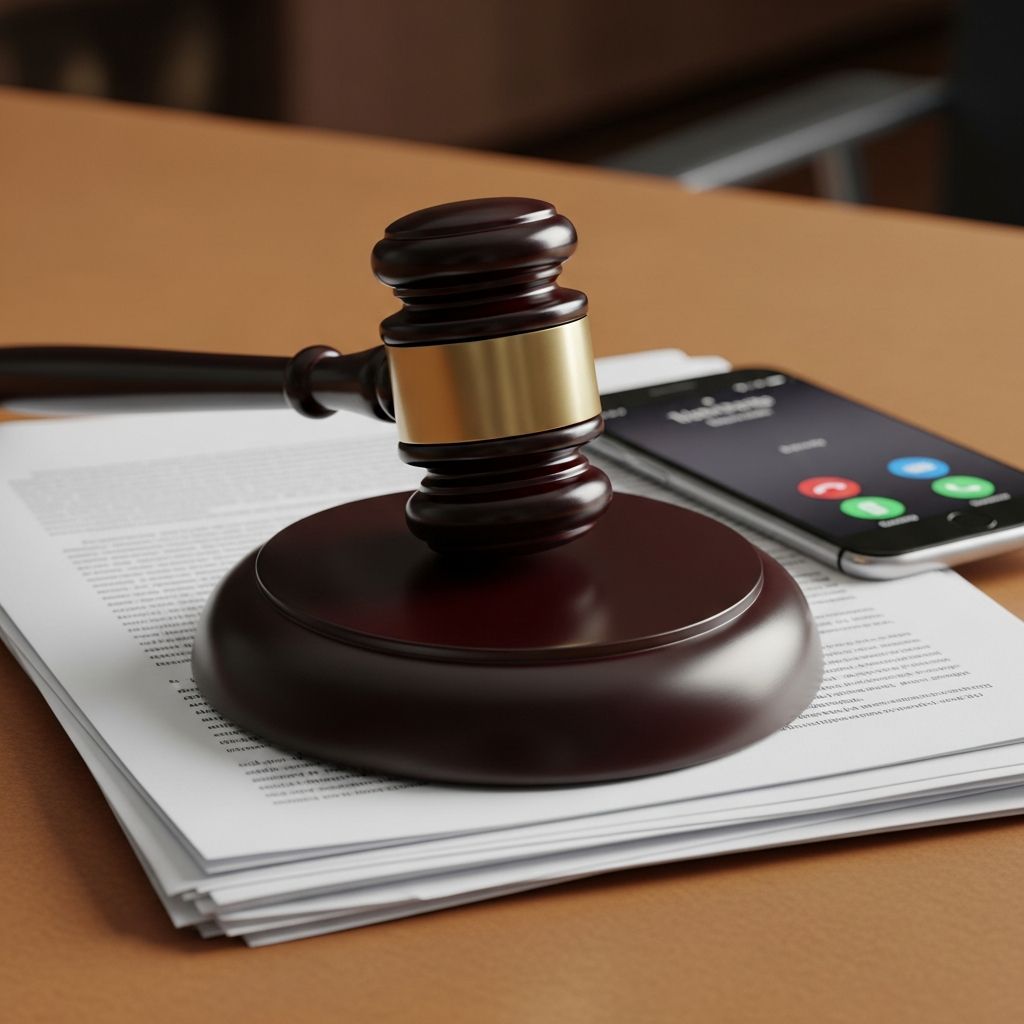
Unsolicited calls and texts from telemarketers disrupt daily life and invade privacy. Federal laws empower consumers to fight back through lawsuits, potentially securing substantial financial awards. This article outlines the legal framework, actionable steps, and strategies to hold violators accountable.
Understanding Key Federal Protections Against Telemarketing Abuse
The cornerstone of consumer defense is the Telephone Consumer Protection Act (TCPA), enacted in 1991 and amended multiple times to address evolving technologies like autodialers and prerecorded messages. This law prohibits unsolicited robocalls, autodialed calls, and texts to cell phones, landlines, and fax machines without prior express consent. It also mandates opt-out mechanisms and respects the National Do Not Call Registry.
Key TCPA provisions include:
- Bans on prerecorded messages or artificial voices for residential solicitations unless consent is given.
- Restrictions on automated dialing systems (ATDS) that randomly or sequentially generate numbers.
- Requirements for telemarketers to maintain internal do-not-call lists for at least five years.
- Prohibitions on calls before 8 a.m. or after 9 p.m. in the consumer’s time zone.
Violations trigger civil penalties, making TCPA one of the most plaintiff-friendly statutes. Consumers can pursue actual damages or statutory amounts, whichever is greater.
Who Qualifies to Sue and What Counts as a Violation?
Any individual receiving non-emergency calls or texts in violation of TCPA rules can sue, provided they lack prior consent. Registration on the Do Not Call Registry strengthens claims, especially without an existing business relationship. A single unwanted robocall or text qualifies as a violation; multiple instances multiply liability.
| Violation Type | Description | Potential Penalty per Incident |
|---|---|---|
| Robocall to Cell Phone | Prerecorded message without consent | $500–$1,500 |
| Autodialed Text | Unsolicited marketing SMS | $500–$1,500 |
| Do Not Call Breach | Call despite registry listing | $500–$1,500 |
| Fax Solicitation | Unsolicited ads to fax machines | $500–$1,500 |
Willful violations—knowingly ignoring rules—triple damages to $1,500 per call. Businesses face massive exposure in high-volume campaigns, often leading to settlements.
Essential Steps to Build a Strong TCPA Claim
Success hinges on evidence. Start by documenting every incident meticulously:
- Log details: Date, time, caller ID, duration, content, and any opt-out attempts.
- Preserve records: Screenshots of texts, voicemails, and call logs from your carrier.
- Verify registry status: Confirm your number on DoNotCall.gov for at least 31 days prior.
- Request opt-out: Note if the caller fails to provide this during the call.
Anticipate defenses like “prior consent.” Companies may claim you opted in via website forms, sweepstakes entries, or purchases. Counter this with proof of revocation—TCPA allows withdrawal of consent anytime.
File complaints with the Federal Trade Commission (FTC) or Federal Communications Commission (FCC) alongside your records. These bolster lawsuits by creating an official paper trail.
Individual Lawsuits vs. Class Actions: Choosing Your Path
Consumers have flexibility in pursuing justice. Individual suits suit isolated harassment, while class actions amplify impact for widespread violations.
Individual Actions: File in small claims court for simplicity—no attorney needed, limits often $5,000–$10,000. Process varies by state but involves basic forms at your local courthouse. Ideal for 5–20 violations yielding $2,500–$30,000.
Class Actions: Powerful for mass harm. Federal Rules require numerosity (40+ plaintiffs), commonality of issues, typicality, and adequate representation. A lead plaintiff represents the group against deep-pocketed defendants. Settlements can distribute millions, as in cases against cruise lines yielding $56–$76 million.
|Option|Pros|Cons|Best For|
—|—|—|—|
Individual Suit|Quick, low-cost, full control|Limited to your damages|Few calls|
Class Action|High payouts, shared costs|Smaller per-person share, longer timeline|Mass violations|
Filing Your Lawsuit: Courts and Procedures
TCPA claims proceed in federal or state courts with jurisdiction over the defendant—where they operate or calls originated. Supreme Court rulings affirm both venues.
- Consult an attorney: TCPA specialists evaluate free; many work on contingency (no upfront fees).
- Draft complaint: Detail violations, evidence, and demanded damages.
- Serve defendant: Notify via formal process.
- Negotiate or litigate: Many settle pre-trial to avoid treble damages.
Common defenses include consent arguments, disputing ATDS use, or challenging class certification. Experienced counsel navigates these effectively.
Potential Outcomes and Real-World Payouts
Victorious plaintiffs recover $500 minimum per violation, often more via settlement. A dozen calls could net $6,000–$18,000 individually. Class members receive smaller but guaranteed shares from multimillion-dollar funds.
Notable cases demonstrate potency: Telecom firms have paid hundreds of millions for robocall blitzes. Even voicemails on cell phones trigger liability.
Preventing Future Harassment While Pursuing Claims
Lawsuits deter but don’t stop calls immediately. Use apps blocking spoofed numbers, screen unknowns, and revoke consent in writing. Report to FTC/FCC for enforcement.
Frequently Asked Questions (FAQs)
Can anyone sue for a single robocall?
Yes, one violation suffices under TCPA, entitling you to at least $500 if unconsented.
Do I need a lawyer for a TCPA lawsuit?
Not for small claims, but recommended for federal suits or class actions due to complexities.
What if I gave my number online—can they still call?
Only with express written consent for marketing; you can revoke it anytime.
How long do I have to file?
Four years from violation under federal law, but act promptly for best evidence.
Can debt collectors be sued under TCPA?
Yes, if using robocalls without consent, separate from FDCPA.
Empowering Consumers: Take Control Today
Telemarketers thrive on inaction. By leveraging TCPA, you not only seek compensation but contribute to cleaner phone lines nationwide. Document, register, and consult professionals to turn frustration into financial justice.
References
- How Do I File a TCPA Lawsuit? — Kazerouni Law Group. 2023. https://www.kazlg.com/how-to-file-tcpa-lawsuit/
- Telemarketer Harassment Attorneys — Maginnis Howard. 2021-02. https://www.carolinalaw.com/2021/02/telemarketer-harassment-attorneys/
- Can I sue a telemarketer? Read this before you file a robocall lawsuit — RoboKiller Blog. 2023. https://www.robokiller.com/blog/how-to-sue-a-robocaller
- Telemarketing Violations of Consumer Protection Laws — Justia. 2023. https://www.justia.com/consumer/deceptive-practices-and-fraud/unwanted-telemarketing/
- Robocall Lawsuit Investigation — Top Class Actions. 2023. https://topclassactions.com/lawsuit-settlements/investigations/unsolicited-illegal-marketing-robocalls-lawsuit-investigation/
- TCPA Class Action Lawsuits — Class Law Group. 2023. https://www.classlawgroup.com/telephone-consumer-protection-act-lawsuit
- Filing A Complaint — State of California Department of Justice. 2023. https://oag.ca.gov/donotcall/complaint
Similar Articles








Read full bio of medha deb


