
Suing After Delivery Truck Collision: A Practical Guide
Learn your rights, legal steps, and compensation options when struck by a delivery truck in a crash.
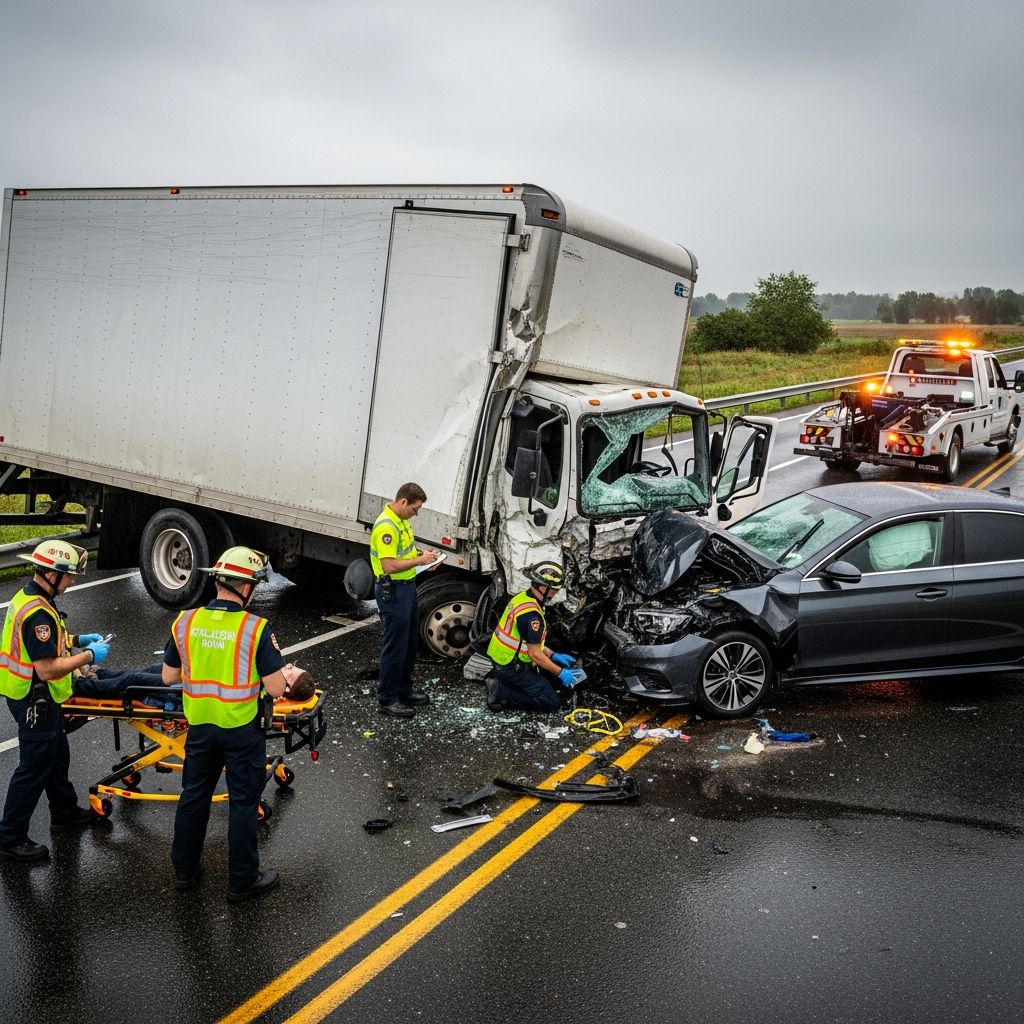
Victims hit by delivery trucks can pursue legal action against drivers, trucking firms, or related parties if negligence caused the incident. Success depends on proving fault, gathering robust evidence, and navigating complex insurance dynamics unique to commercial vehicles.
Why Delivery Truck Crashes Warrant Legal Pursuit
Delivery trucks from companies like UPS, FedEx, or Amazon operate under tight schedules, often leading to aggressive maneuvers, fatigue, or maintenance oversights. These vehicles’ size amplifies injury severity, with victims facing steep medical costs, wage losses, and long-term disabilities. Federal Motor Carrier Safety Administration (FMCSA) data shows large trucks were involved in over 5,000 fatal crashes in 2021 alone, underscoring the stakes.
Unlike passenger car accidents, delivery truck cases involve multiple liable entities: the driver for errors like speeding, the employer under vicarious liability, or third parties for faulty cargo loading. Proving these connections unlocks higher insurance payouts, often exceeding $750,000 minimum coverage mandated by federal law for interstate carriers.
Establishing Negligence in Delivery Truck Incidents
To sue successfully, demonstrate the at-fault party breached their duty of care. Common violations include:
- Distracted operation: Phone use or navigation fiddling, despite hands-free mandates.
- Fatigue breaches: Ignoring hours-of-service rules limiting drivers to 11 hours daily.
- Vehicle defects: Brake failures from skipped inspections.
- Improper loading: Shifting cargo causing instability.
Plaintiffs must link this breach to their harm, showing causation via medical records and expert analysis. Contributory negligence rules in some states reduce awards if victims share blame, like jaywalking.
Immediate Steps Post-Collision
Prioritize safety: exit the roadway if possible, call 911, and seek medical evaluation even for minor symptoms—adrenaline masks issues like whiplash or internal trauma. Document everything: photograph vehicles, injuries, skid marks, and license plates; collect witness contacts; obtain the police report.
Avoid insurer statements without counsel, as admissions can undermine claims. Notify your auto insurer promptly for initial coverage under personal injury protection (PIP) or medical payments if applicable.
Multiple Paths to Liability
Delivery accidents often implicate several defendants:
| Party | Potential Fault | Legal Basis |
|---|---|---|
| Driver | Reckless turns, failure to yield | Direct negligence |
| Trucking Company | Hiring unqualified drivers, pressure for speed | Vicarious liability, negligent entrustment |
| Cargo Loader | Overloading or unsecured freight | Third-party negligence |
| Manufacturer | Defective parts like tires | Product liability |
This web of responsibility boosts settlement values, as insurers fear joint-and-several liability judgments.
Claims Process: From Demand to Resolution
The journey starts with a demand package: accident reconstruction, medical bills, wage stubs, and expert reports valuing losses. Attorneys send this to the carrier, sparking negotiations. Insurers lowball initially, citing comparative fault or pre-existing conditions.
Most cases (over 95%) settle pre-trial. If stalled, file suit within state statutes—typically 2-3 years. Discovery follows: depositions, interrogatories, and subpoenas for electronic logging devices (ELDs), black box data, and driver logs.
Timeline Breakdown
- 0-3 Months: Investigation, medical stabilization, demand letter.
- 3-12 Months: Negotiations, expert retention.
- 12-24 Months: Litigation, discovery, motions.
- 2+ Years: Trial (rare), appeals.
Factors like injury severity or disputes extend timelines; complex truck data analysis adds months.
Gathering Critical Evidence
Truck-specific proof differentiates winners:
- Driver logs/ELDs revealing violations.
- Maintenance records showing neglect.
- Telematics and dashcam footage.
- Expert reconstructions modeling fault.
- Witness affidavits and scene surveys.
Act fast—companies purge records after 6 months per FMCSA rules.
Compensatory Damages Explained
Recover economic losses (bills, wages, future care) plus non-economic (pain, trauma). Caps apply in some states for non-economic awards. Punitive damages target egregious conduct like DUI trucking.
| Damage Type | Examples | Average Value Range |
|---|---|---|
| Economic | Hospital stays, rehab, lost earnings | $50K-$500K+ |
| Non-Economic | Suffering, disfigurement | $100K-$1M (uncapped states) |
| Punitive | Reckless malice | Varies, rare |
Quantify via life care planners and vocational experts.
Settlement vs. Trial Realities
Trials risk zero recovery and high costs ($50K+), with juries skeptical of high demands. Settlements average $100K-$400K for serious injuries, per industry data. Strong evidence prompts better offers during mediation.
Role of Specialized Legal Counsel
Hire attorneys experienced in Federal Motor Carrier regulations and interstate claims. They handle insurer tactics, preserve evidence, and maximize values—contingency fees (33-40%) align incentives. Free consults assess viability.
State Variations and Deadlines
Statutes of limitations: 2 years in Illinois/Ohio, 3 in California. No-fault states like Michigan limit suits to thresholds. Interstate crashes invoke choice-of-law complexities.
Frequently Asked Questions
What if the delivery driver was at fault?
Their employer shares liability via respondeat superior if work-related. Sue both for full coverage.
Can I claim lost income?
Yes, with pay stubs, tax returns, and expert projections for future capacity loss.
Does insurance cover pedestrians?
Often yes, via bodily injury liability; uninsured motorist if applicable.
How long until settlement?
6-18 months typically; litigation doubles it.
What if multiple trucks involved?
Pursue all insurers; apportion fault per comparative rules.
Protecting Your Recovery
Focus on health while lawyers build cases. Avoid social media posts or recorded statements that could portray you as uninjured. Structured settlements fund annuities for lifelong needs.
Delivery truck victims deserve accountability—prompt action preserves rights and evidence, paving the way for deserved compensation.
References
- What Is the Average Truck Accident Lawsuit Timeline? — Morris Bart. 2023. https://www.morrisbart.com/faqs/truck-accident-lawsuit-timeline/
- The Legal Process for a Truck Accident Claim in Illinois — Windy City Law Firm. 2024. https://windycitylawfirm.com/the-legal-process-for-a-truck-accident-claim-in-illinois/
- Truck Accident Lawsuit Process — Omega Law Group. 2023. https://www.omegalaw.com/faqs/how-does-the-truck-accident-lawsuit-process-work/
- The 2025 Guide to Semi-Truck Accident Lawsuits — KDLM. 2025-01-01. https://kdlm.com/semi-truck-accident-lawsuit/
- How Do Truck Accident Claims and Lawsuits Work? — Bressman Law. 2024. https://www.bressmanlaw.com/truck-accidents/how-do-truck-accident-claims-and-lawsuits-work/
- What to Do After a Delivery Truck Accident — JJ Law Office. 2023. https://jjlawoffice.com/personal-injury/what-to-do-after-a-delivery-truck-accident-steps-to-secure-compensation/
Similar Articles








Read full bio of Sneha Tete


