
Suboxone Film Payments: Understanding Your Rights
Learn how people prescribed Suboxone film may qualify for payments from government enforcement settlements and what steps to take.
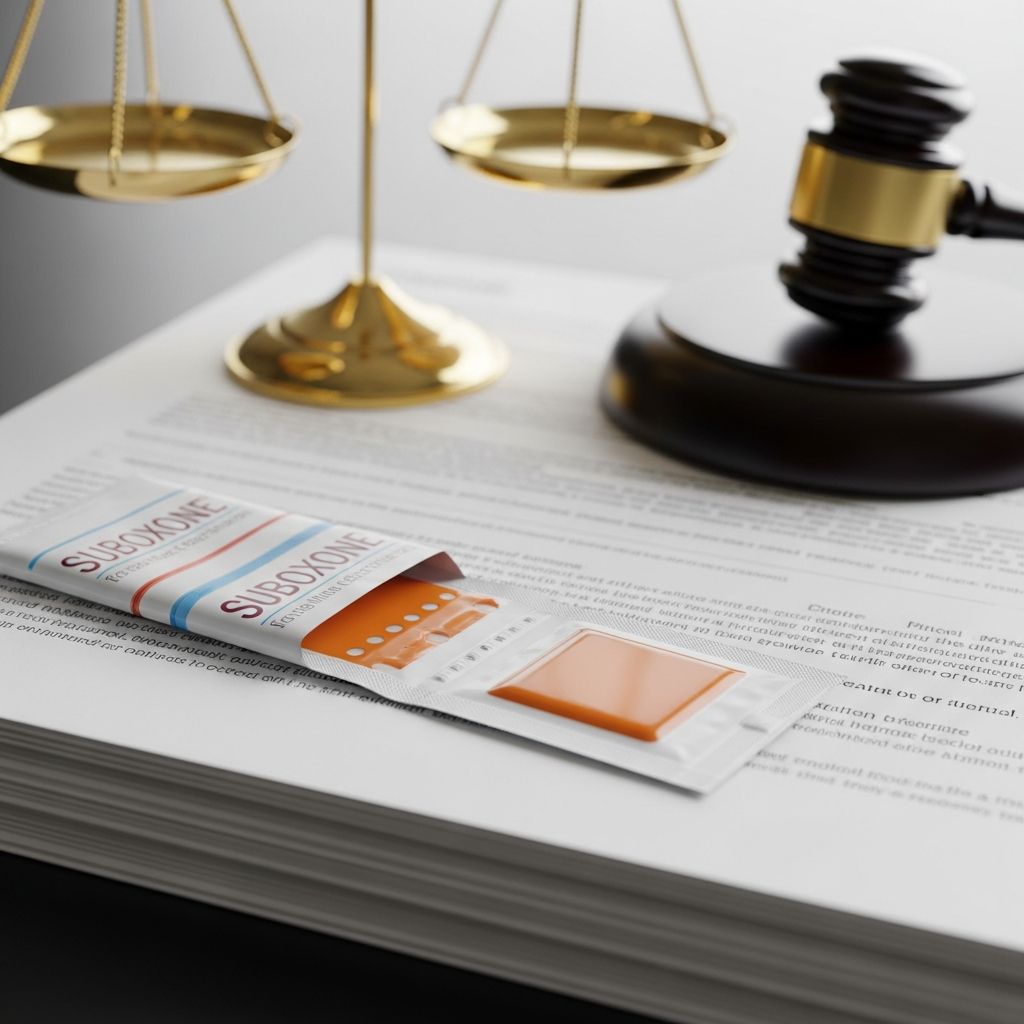
People who were prescribed Suboxone film in the United States have been at the center of several major government enforcement actions and private lawsuits. Some of those actions resulted in companies paying money to compensate consumers who were allegedly overcharged for their prescriptions because of anticompetitive conduct and deceptive practices.
This guide explains, in plain language, how these cases work, how government agencies may return money to affected patients, and what steps you can take to protect your rights if you were prescribed Suboxone film.
1. What Is Suboxone Film and Why Does It Matter?
Suboxone is a prescription medicine that combines buprenorphine and naloxone. It is approved by the U.S. Food and Drug Administration (FDA) to treat opioid use disorder as part of a comprehensive treatment plan that usually includes counseling and psychosocial support.
The medicine is available in different dosage forms, including a sublingual film (a thin strip that dissolves under the tongue) and tablets. The film version became widely used after the tablet form, in part because of marketing claims about safety and abuse-deterrent benefits.
This product matters for consumers because:
- Millions of prescriptions for Suboxone and similar medicines have been written to help people manage opioid dependence and recovery.
- Suboxone’s manufacturer and related companies have faced antitrust and deceptive marketing investigations and lawsuits.
- Some of those cases resulted in settlements where government agencies were able to send money back to eligible consumers.
2. The Role of the Federal Trade Commission (FTC)
The U.S. Federal Trade Commission (FTC) is a federal agency charged with enforcing laws against unfair or deceptive acts or practices and anticompetitive business conduct in the marketplace.
In the Suboxone context, the FTC has:
- Investigated claims that drug manufacturers used illegal strategies to maintain a monopoly and delay entry of lower-cost generic competitors.
- Joined or supported antitrust lawsuits seeking to recover money for consumers and health plans that overpaid for Suboxone.
- Distributed refunds to qualifying consumers after settlements were reached and courts approved distribution plans.
According to public court and agency records, settlements involving Suboxone-related antitrust and deceptive practices have totaled hundreds of millions of dollars across several cases, though not all of this money went directly to individual patients.
3. How Antitrust and Deceptive Practices Can Harm Patients
Prescription drug markets rely on competition to help keep prices in check. When a company illegally blocks or delays competition, patients and health plans can end up overpaying for medications.
In enforcement and civil cases involving Suboxone, plaintiffs and government agencies have alleged that companies:
- Manipulated the market by shifting prescribers and patients from an older product to Suboxone film, while generics for the older product were about to enter the market.
- Engaged in conduct that delayed approval or uptake of lower-priced generic versions.
- Promoted the film using safety assertions that were not adequately supported by evidence.
When such allegations are proven or settled, regulators may classify them as unfair methods of competition or deceptive practices, and courts may order companies to pay monetary relief, including funds that can be distributed to consumers who overpaid.
4. Overview of Major Suboxone Legal Actions
Numerous Suboxone-related cases have been filed over the past decade. They are not all the same; some focus on antitrust, others on marketing, and others on product safety. The table below summarizes key categories relevant to consumers.
| Type of Case | Main Allegation | Typical Outcome | Who Might Receive Money |
|---|---|---|---|
| Antitrust lawsuits | Maintaining a Suboxone monopoly and blocking generics, causing higher prices. | Settlements in the hundreds of millions of dollars across multiple cases. | Health plans, direct purchasers, and sometimes individual consumers through refund programs. |
| Deceptive marketing enforcement | Misrepresenting Suboxone film’s safety or abuse-deterrent advantages. | Criminal and civil resolutions with large monetary penalties and compliance obligations. | Federal and state governments; in some instances money is used for restitution or public health efforts. |
| Product liability and injury claims | Inadequate warnings about dental or other health risks linked to Suboxone film. | Ongoing multidistrict litigation; potential future settlements. | Individual patients who can prove injury and causal connection may be eligible for compensation in separate lawsuits. |
5. How Consumer Refund Programs Normally Work
When the FTC or state attorneys general obtain money from companies in antitrust or deceptive practices cases, they may create a refund or claims program. The structure depends on the court order and settlement terms, but generally follows a few steps.
5.1 Typical Steps in a Refund Process
- Settlement or judgment is entered by a court, specifying how much money will be distributed and to whom.
- Identification of potentially eligible consumers using pharmacy records, claims data from health plans, or other purchase information.
- Notice and outreach through mailed letters, email, websites, and sometimes media announcements so consumers know a refund program exists.
- Claim forms may be required; some consumers receive automatic payments if the agency has sufficient reliable data.[10]
- Review and validation of claims to prevent duplicates and fraud and to ensure compliance with eligibility criteria.
- Distribution of payments by check, prepaid card, or electronic transfer, along with explanations of the payment.
In one Suboxone-related antitrust refund program, public records show that tens of thousands of consumers received payments averaging over a thousand dollars per person, reflecting alleged overcharges tied to the companies’ conduct.
5.2 Factors That Can Affect Refund Amounts
The amount any one person may receive from a government-run refund program can vary based on several factors:
- How long they used Suboxone and how many prescriptions they filled during the relevant period.
- Whether they paid out of pocket, used insurance, or relied on a public program.
- How much validated purchase data is available to tie them to the alleged overcharges.
- The total number of valid claims compared with the size of the settlement fund.
6. Checking Whether You Might Be Eligible
Government refund programs are time-limited and usually apply only to specific purchase dates and locations. Being prescribed Suboxone film does not automatically guarantee a payment. To assess potential eligibility, consider the following:
6.1 Key Questions to Ask Yourself
- Did you receive prescriptions for Suboxone film (or brand-name Suboxone generally) during the years covered by a particular settlement?
- Did you pay all or part of the cost out of pocket (copays, coinsurance, deductibles, or cash)?
- Did you previously receive a letter, email, or check from a settlement administrator or the FTC regarding Suboxone?
- Do you still have pharmacy receipts, explanation of benefits (EOB) statements, or other proof of payment?
6.2 Where to Look for Reliable Information
To determine if a Suboxone-related claims period is open or has already closed, you can:
- Search the FTC’s official consumer refunds and case pages, which list active and completed refund programs and provide contact information for administrators.
- Review any notices you may have received by mail or email that reference Suboxone settlements and carefully read deadlines and eligibility language.[10]
- Contact your health plan or pharmacy to ask whether they have records of Suboxone film prescriptions that could be relevant to a claim.
Be cautious about unofficial websites that are not clearly connected to a government agency, court-appointed administrator, or your own attorney. Government pages typically use .gov addresses and clearly identify the agency and case.
7. Protecting Your Prescription and Claims Records
Keeping organized health and financial records is critical when government refund programs or private lawsuits are involved. For Suboxone film, these documents may be especially important:
- Pharmacy printouts or digital histories showing dates when Suboxone film prescriptions were filled.
- Health insurance EOBs, prior authorization letters, or pharmacy benefit statements listing Suboxone film charges.
- Bank or credit card statements reflecting payments for prescriptions.
- Any letters or checks you have previously received that mention Suboxone settlements or refunds.
Under federal health privacy rules such as the Health Insurance Portability and Accountability Act (HIPAA), patients generally have a right to request copies of their health records, including prescription histories, from pharmacies and health care providers.
8. Distinguishing Government Refunds from Private Lawsuits
Many news stories and advertisements mention Suboxone-related settlements or potential compensation. It is important to understand the difference between government-run refunds and private litigation:
- Government refund programs (for example, those overseen by the FTC or state attorneys general) are tied to enforcement actions and often focus on economic harm from overcharges. These programs do not usually require hiring a lawyer, and claim forms, if needed, are provided by the settlement administrator.[10]
- Private class actions or personal injury lawsuits are run by private attorneys and law firms. They may seek compensation for overpayments, injuries, or both. Individuals often need to opt in or file separate claims, and legal representation may be involved.
You can sometimes participate in both, but each case has its own rules. Government agencies typically explain on their official websites whether participating in a refund program affects your rights in private lawsuits.
9. Avoiding Scams Related to Settlement Payments
Wherever there are legitimate settlement payments, there are often scams. To reduce your risk:
- Be skeptical of unsolicited calls, texts, or social media messages that promise large Suboxone payouts if you pay an upfront fee.
- Confirm claim websites are either
.govdomains or clearly linked from an agency or court website before providing personal or financial information. - Never pay a fee to receive a government-issued refund; legitimate refund programs do not require payment to release your money.
- If you are unsure, independently locate the FTC’s or your state attorney general’s website and verify whether a Suboxone refund program is listed.
10. Frequently Asked Questions (FAQs)
Q1: I was prescribed Suboxone film years ago. Am I automatically entitled to money?
No. Being prescribed Suboxone film does not guarantee a payment. Eligibility depends on the specific settlement, purchase dates, location, and whether you fall within the group defined in the court-approved distribution plan. In addition, many claims periods are time-limited and may already have closed.
Q2: How do I find out if a Suboxone refund program is still open?
Check the official FTC and settlement administrator websites for active refund programs and deadlines. These sites list the dates for filing claims, who may qualify, and how to submit documentation. You can also review any letters or emails previously sent to you about Suboxone settlements.[10]
Q3: Will filing a claim cost me anything?
Government-run refund programs do not charge fees to submit a claim or receive a payment. If anyone asks for upfront money to help you collect a Suboxone settlement from a government case, that is a red flag for a potential scam.
Q4: I lost my pharmacy receipts. Can I still prove I used Suboxone film?
In many cases, pharmacies and health plans keep electronic records of prescriptions. You can request a medication history or explanation of benefits (EOB) records, which may show Suboxone fills and patient responsibility amounts. Agencies or settlement administrators sometimes rely on such data instead of consumer-submitted receipts.
Q5: Are Suboxone injury claims the same as the FTC’s refund efforts?
No. FTC refund programs usually address economic harm from overcharges or deceptive marketing, not personal injuries. Separate product liability lawsuits focus on alleged physical harms, such as dental injuries, and have different eligibility standards and legal procedures.
11. Practical Steps If You Used Suboxone Film
If you were prescribed Suboxone film and want to be prepared in case of current or future claims opportunities, you may want to:
- Gather and safely store any pharmacy and insurance documents related to Suboxone film.
- Periodically check official FTC consumer refund pages for updates on Suboxone-related cases.
- Speak with your health care provider about any questions you have regarding Suboxone treatment and keep copies of treatment plans or medication lists.
- Consult a qualified attorney if you believe you suffered physical injury related to Suboxone and want legal advice specific to your situation.
By staying informed, maintaining records, and relying on verified government and court sources, you can better protect your interests and respond quickly if you qualify for any Suboxone-related payments.
References
- Suboxone (buprenorphine and naloxone) Sublingual Film Prescribing Information — U.S. Food and Drug Administration. 2023-06-15. https://www.accessdata.fda.gov/drugsatfda_docs/label/2023/022410s040lbl.pdf
- Suboxone Tooth Decay Lawsuit: December 2025 Updates — Drugwatch. 2025-12-01. https://www.drugwatch.com/suboxone-lawsuit/
- Suboxone Settlement Amounts — Sokolove Law. 2024-11-05. https://www.sokolovelaw.com/dangerous-drugs/suboxone/settlement/
- Suboxone Tooth Decay Lawsuit Settlement Updates — Lawsuit Information Center. 2025-11-20. https://www.lawsuit-information-center.com/suboxone-tooth-decay-lawsuit.html
- How Much Can I Get From a Suboxone Settlement? — Dolman Law Group. 2025-09-10. https://www.dolmanlaw.com/blog/how-much-suboxone-settlement/
- Suboxone Settlement | Tooth Decay Payouts & Eligibility — Lawfirm.com. 2025-10-02. https://www.lawfirm.com/dangerous-drugs/suboxone/settlements/
- How Much Will I Get From the Suboxone Settlement? [2025 Update] — The Robert King Law Firm. 2025-08-18. https://www.robertkinglawfirm.com/personal-injury/suboxone-lawsuit/how-much-will-i-get-from-the-suboxone-settlement/
Similar Articles








Read full bio of medha deb


