
How to Submit a Strong CFPB Complaint About a Financial Company
Learn how to file an effective complaint with the CFPB, track the company’s response, and protect your rights with financial products.
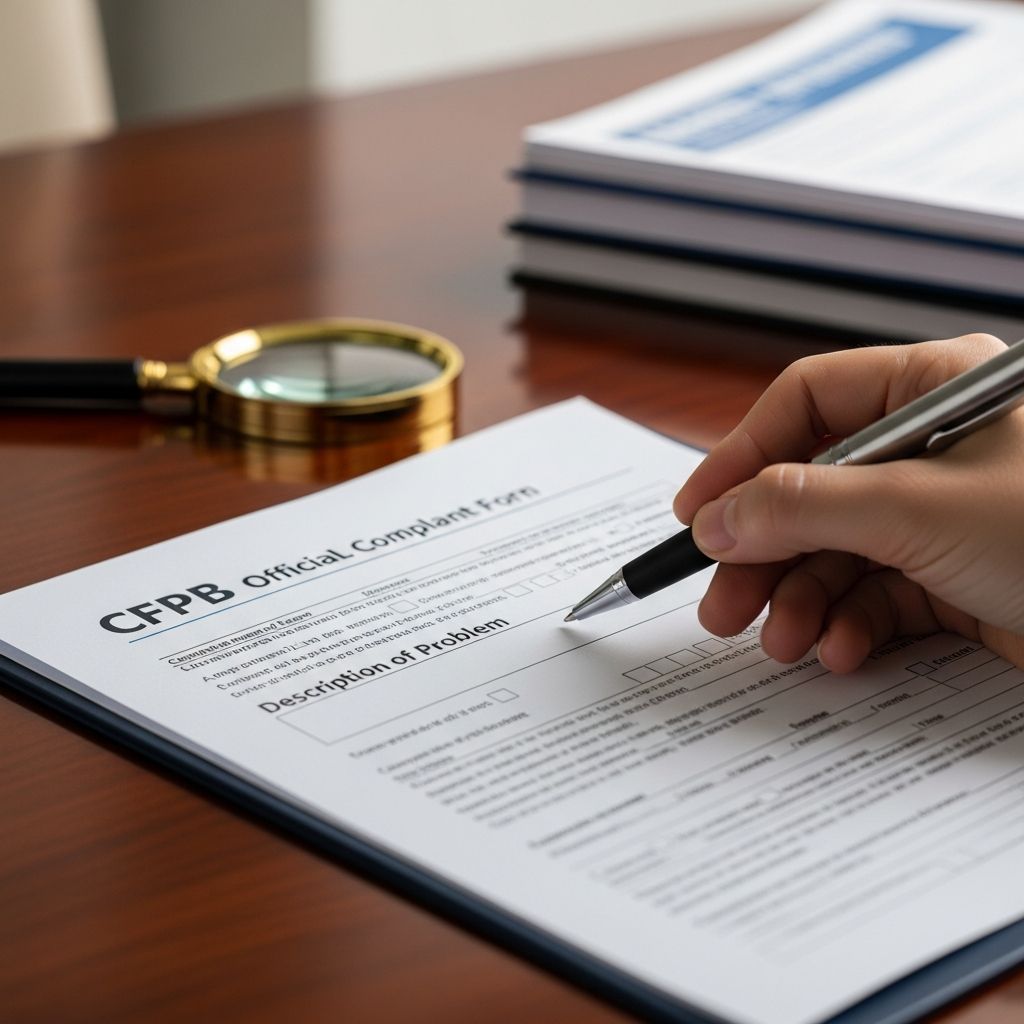
The Consumer Financial Protection Bureau (CFPB) offers a formal complaint process that helps people resolve problems with banks, lenders, and other financial companies while also improving oversight of the financial marketplace. This guide explains how to prepare, submit, and monitor a complaint so you can present your issue clearly and increase the chances of a useful response.
What the CFPB Complaint System Is Designed To Do
The CFPB is a U.S. government agency created after the 2008 financial crisis to protect consumers who use financial products such as mortgages, credit cards, and bank accounts. Through its complaint system, the CFPB:
- Forwards complaints directly to financial companies for review and response.
- Tracks how companies respond and how quickly they resolve issues.
- Shares complaint data publicly in an online database, after removing personal information, to reveal trends and potential violations.
- Uses complaint insights to guide supervision, enforcement, and rulemaking across the financial system.
Filing a complaint does not guarantee a particular outcome, but it creates an official record and often prompts a direct response from the company.
Which Problems and Products You Can Complain About
You can submit a complaint whenever you believe a financial company treated you unfairly, misled you, or mishandled an account or transaction. Typical products and services include:
- Checking and savings accounts, certificates of deposit, and prepaid cards
- Credit cards and charge cards
- Auto loans and leases
- Mortgages, home equity loans, and lines of credit
- Student loans (federal and private)
- Debt collection activities and credit reporting issues
- Money transfers, virtual wallets, and payment apps
Complaints frequently involve fees, billing, disputes, denial of credit, inaccurate information, communication problems, or collections conduct.
Preparing Before You File: Information and Documents to Gather
Effective complaints are specific, fact-based, and supported by documentation. Before you start the online form, gather the following:
Key facts about your situation
- Who you dealt with: company name, departments, and specific representatives if possible.
- What happened: actions the company took or failed to take that led to harm.
- When it occurred: dates of transactions, notices, calls, or account changes.
- How much is at stake: dollar amounts of disputed charges, balance errors, fees, or losses.
- What you already tried: steps you took to resolve the issue directly with the company.
Supporting documents
Attach only the most relevant pages that support your description.
- Account statements and transaction records
- Letters, emails, or chat transcripts with the company
- Copies of contracts, disclosures, or loan documents
- Collection notices or credit reports related to the dispute
- Written authorization if you are acting on someone else’s behalf
The CFPB portal allows a limited number of pages, so focus on the documents that clearly illustrate what went wrong and when.
Step-by-Step: How the CFPB Complaint Process Works
The CFPB describes its complaint process as a series of stages designed to get you a response and to flag broader marketplace issues.
| Stage | What Happens | Approximate Timing |
|---|---|---|
| 1. Submission | You send your complaint through the CFPB system or another agency forwards it. | Same day |
| 2. Routing | CFPB routes the complaint to the company or, if appropriate, to a different government agency and notifies you. | Shortly after submission |
| 3. Company response | The company reviews your complaint, may contact you, and uploads a response through the CFPB portal. | Generally within 15 days; up to 60 days for a final response in some cases |
| 4. Publication | Complaint information is added to the public Consumer Complaint Database without direct personal identifiers; with your consent, your narrative description is included. | After company response (timing can vary) |
| 5. Consumer review | You can review how the company responded and provide feedback on the outcome. | Within 60 days of being notified of the response |
Creating Your CFPB Account and Starting a Complaint
Complaints are typically submitted through the CFPB’s secure online portal. To begin, you will:
- Create a CFPB account using your name, email address, and phone number.
- Set a password and verify your email address.
- Log in and choose the option to start a new complaint.
The system guides you through screens where you select the product, describe the problem, identify the company, and upload documents.
Choosing the Correct Product and Problem Category
Early in the process, you will be asked to select what your complaint is about. These categories help route your case to the right company contacts and analysts.
Be as accurate as you can when you:
- Select the product or service type, such as checking account, credit card, mortgage, auto loan, or student loan.
- Choose the problem description that best fits your situation, such as billing disputes, account closure, fees, or credit reporting errors.
If your issue spans multiple products, pick the one at the center of the dispute and use your written narrative to explain the connections.
Writing a Clear, Impactful Complaint Narrative
The heart of your complaint is the text where you describe what happened and what you want the company to do. Strong narratives share certain qualities:
Be specific and focused
- Explain the sequence of events in order: what happened first, what happened next, and how the situation stands now.
- Highlight only the most important dates and amounts that show the problem clearly.
- Avoid unnecessary background that does not relate directly to the issue.
State the harm and desired outcome
- Describe how you were affected: money lost, fees charged, damage to credit, or stress caused by repeated calls.
- Specify what you believe would be a fair resolution, such as fee reversal, account correction, written clarification, or adjustment of credit reporting.
Use neutral, factual language
- Stick to facts that you can support with documents or communications.
- Quote key statements from the company only when relevant, and note how they influenced your decisions.
- Remember that both the company and the CFPB will read your explanation, and it may be summarized in the public database.
Identifying the Company and Providing Contact Details
The CFPB needs accurate company information to route your complaint and give the business a chance to respond.
- Choose the company from a drop-down list when possible; this helps match it to CFPB’s internal records.
- If the company does not appear, enter full contact information such as legal name, mailing address, and website or phone number.
- Provide details like your billing address and account number when requested, which helps the company locate your records.
You must also enter your own name, address, email, and phone number so the company can respond and the CFPB can communicate updates.
Submitting a Complaint for Someone Else
You can file a complaint on behalf of another person, such as a family member, client, or someone you legally represent.
- Disclose your relationship to the consumer (for example, relative, attorney, or authorized representative).
- Explain in the narrative that you are submitting on another person’s behalf.
- Understand that companies often require written authorization from their customer before discussing account details with someone else, and consider attaching that authorization if you have it.
This helps avoid delays and allows the company to respond fully within privacy and confidentiality rules.
After Submission: Tracking Progress and Reviewing Responses
Once you submit the complaint, the CFPB will send email updates and allow you to check status through your account. Key things to expect include:
- Notice that the complaint has been routed to a company or, in some cases, to another agency better positioned to help.
- Confirmation when the company uploads its response, often within about 15 days.
- Occasional status messages if the company indicates it needs additional time (up to 60 days for some matters).
After the company responds, you usually have 60 days to log in, read the response, and provide feedback on whether the issue was handled satisfactorily.
How Your Complaint Becomes Part of the Public Record
The CFPB maintains an online Consumer Complaint Database that contains information about individual complaints, company responses, and outcomes.
- The database does not include information that directly identifies you, such as your name or full account number.
- With your explicit consent, your written narrative may be published after personal details are removed.
- Researchers, policymakers, journalists, and the public use the data to spot trends, such as recurring fee practices or servicing issues.
Your decision to allow publication of your narrative is optional, but it can help others understand similar problems in the marketplace.
Practical Tips to Strengthen Your Complaint
Several strategies can improve the clarity and usefulness of your complaint for both the company and regulators.
- Contact the company first if you have not already. Many issues can be resolved faster through the company’s normal customer service channels, and you can document those efforts when filing your complaint.
- Organize documents chronologically so the progression of events is easy to follow.
- Check for accuracy in dates, dollar figures, and account numbers before you submit.
- Limit your submission to one complaint per issue. Add all relevant facts the first time because you may not be able to open a second complaint on the same dispute.
- Monitor email and your CFPB account so you do not miss company questions or request for additional clarification.
Frequently Asked Questions (FAQs)
Q: Do I have to pay a fee to file a CFPB complaint?
No. Filing a complaint with the CFPB is free for consumers. The agency is funded by the federal government to oversee consumer financial markets.
Q: Does the CFPB make companies resolve my complaint in a particular way?
The CFPB forwards your complaint and requires companies to respond through its system but does not promise a specific outcome in your individual case. However, complaint data can support broader enforcement or supervisory actions.
Q: How quickly will I get a response?
Companies generally have about 15 days to provide an initial response and may take up to 60 days for a final response in some situations. You will receive email updates when responses are posted.
Q: What if the CFPB sends my complaint to another agency?
If the CFPB determines another regulator or government office is better positioned to help—for example, a prudential bank regulator—it will forward the complaint and tell you where it was sent. You can then work with that agency if follow-up is needed.
Q: Will filing a complaint affect my credit score?
The CFPB complaint process itself does not directly affect your credit score. However, the issue you are complaining about—such as late payments or collection reports—may already be impacting your credit. Correcting inaccurate information through the company’s response can sometimes improve your credit history.
Q: Can businesses see my personal information in the public database?
No. The public complaint database excludes information that directly identifies you, and any narrative you choose to make public is scrubbed of personal details before publication.
References
- How to file a complaint with the CFPB — Bankrate. 2024-02-12. https://www.bankrate.com/banking/how-to-file-a-complaint-with-the-cfpb/
- Submit a complaint — Consumer Financial Protection Bureau. 2024-01-10. https://www.consumerfinance.gov/complaint/
- Learn how the complaint process works — Consumer Financial Protection Bureau. 2024-01-10. https://www.consumerfinance.gov/complaint/process/
- Consumer Complaint Program — Consumer Financial Protection Bureau. 2023-11-15. https://www.consumerfinance.gov/compliance/consumer-complaint-program/
- Consumer Complaint Process — Federal Deposit Insurance Corporation (FDIC). 2023-05-02. https://www.fdic.gov/consumer-resource-center/consumer-complaint-process
- Bank, credit, and securities complaints — USA.gov. 2023-08-09. https://www.usa.gov/bank-credit-complaints
Similar Articles








Read full bio of Sneha Tete


