
The Struggle for Ballot Access After Conviction
Exploring the constitutional battles of post-conviction voting rights.
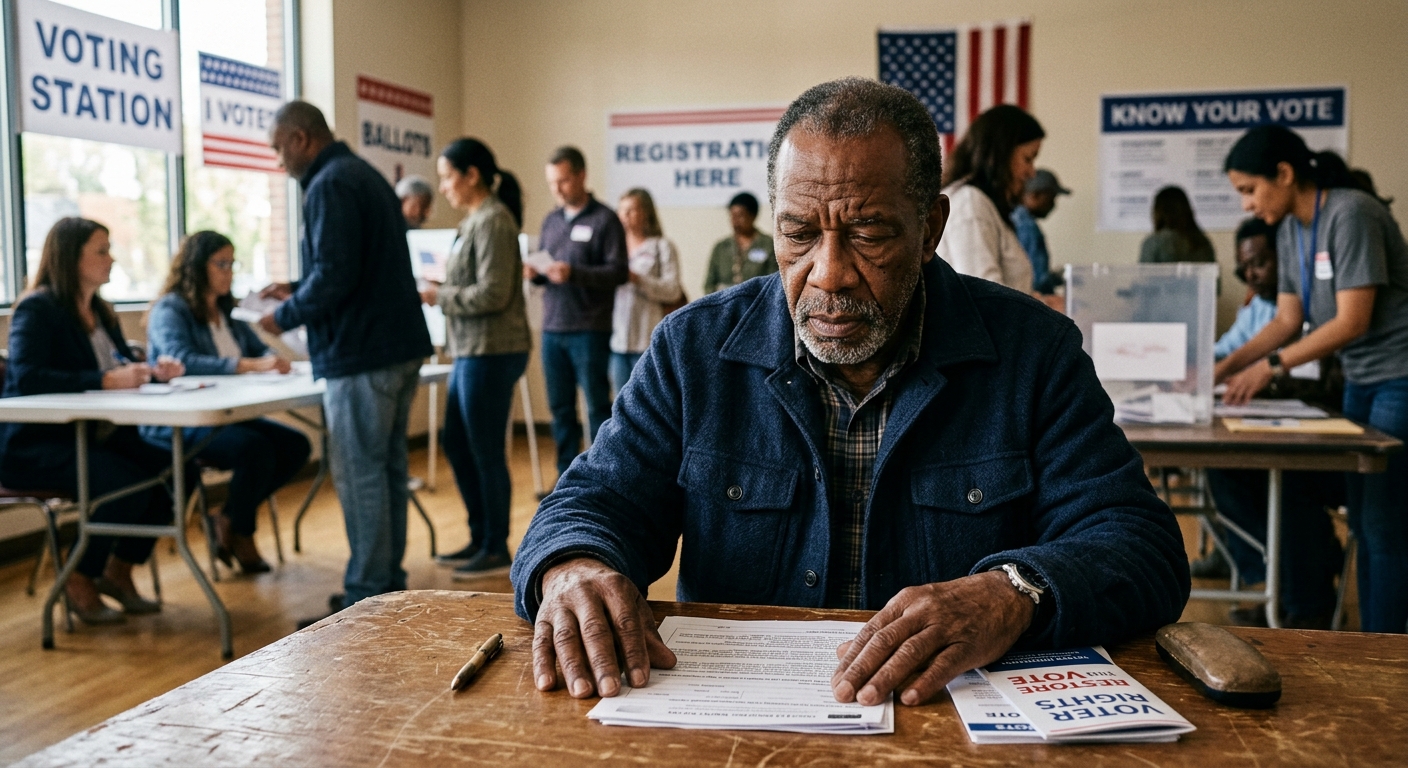
The right to vote is universally recognized as the lifeblood of any functioning democracy. It serves as the primary mechanism through which citizens voice their preferences, hold elected officials accountable, and influence the trajectory of public policy. However, millions of Americans find themselves legally barred from participating in this fundamental civic duty due to felony disenfranchisement laws. The tension between expanding the franchise to formerly incarcerated individuals and maintaining stringent electoral qualifications has sparked fierce legal, political, and social debates across the United States.
At the heart of this contemporary struggle is the clash between direct democracy and legislative intervention. In recent years, grassroots movements and voter-led initiatives have successfully championed the re-enfranchisement of individuals who have completed their sentences. Yet, these electoral victories are frequently met with legislative pushback, creating complex bureaucratic labyrinths that effectively nullify the public’s mandate. The ongoing tug-of-war over ballot access underscores a broader national conversation about redemption, the collateral consequences of criminal convictions, and the true meaning of universal suffrage in modern America.
The Mandate of Direct Democracy versus Legislative Pushback
Direct democracy offers a potent tool for citizens to bypass hesitant lawmakers and enact sweeping policy changes. Ballot initiatives have increasingly become the vehicle of choice for voting rights advocates seeking to dismantle outdated disenfranchisement frameworks. Through immense grassroots organizing and signature-gathering campaigns, citizens in various states have directly amended their constitutions to automatically restore voting rights to individuals with past felony convictions upon the completion of their sentences, typically excluding only those convicted of the most severe offenses like murder or felony sexual assault.
These historic mandates are routinely celebrated as monumental expansions of voting rights, promising to re-enfranchise massive segments of the population. However, the triumph of direct democracy is often short-lived. Following the passage of such amendments, state legislatures are tasked with drafting implementation bills to codify the new constitutional provisions into actionable law. It is during this legislative phase that the original intent of the voters is frequently narrowed. Lawmakers often pass strict implementation bills that define the “completion of all terms of sentence” to explicitly include the full payment of all court-ordered financial obligations. By tethering the restoration of constitutional rights to financial solvency, legislators can effectively create a bottleneck that keeps hundreds of thousands of returning citizens off the voter rolls.
Legal Financial Obligations as a Modern Electoral Barrier
The imposition of Legal Financial Obligations (LFOs) has become a pervasive feature of the modern American criminal justice system. LFOs encompass a wide array of monetary sanctions, including court processing costs, punitive fines, user fees, public defender application fees, and victim restitution. While these financial assessments are intended to fund municipal court operations and penalize offenders, they often accumulate into insurmountable debt for individuals attempting to reintegrate into society after serving time in prison.
When the payment of these debts is made a strict prerequisite for voting, the financial burden transforms into a formidable electoral roadblock. Critics and civil rights advocates fiercely argue that requiring the payment of LFOs to vote operates as a modern-day “poll tax.” Historically, poll taxes were utilized during the Jim Crow era specifically to disenfranchise Black voters and impoverished white citizens. The Twenty-Fourth Amendment to the U.S. Constitution formally abolished the use of poll taxes in federal elections, and the Supreme Court subsequently extended this prohibition to state elections, reinforcing the principle that the ballot box should not carry a price tag.
Despite these historical constitutional protections, contemporary laws that condition re-enfranchisement on the payment of court debt disproportionately impact marginalized communities. Because systemic inequities often leave returning citizens with diminished earning capacities, housing instability, and rampant employment discrimination, accumulating thousands of dollars to satisfy court debts is virtually impossible. Consequently, tying civic participation to bank account balances effectively strips low-income individuals of their political voice, perpetuating cycles of poverty and ensuring that the most vulnerable populations remain politically alienated.
The Federal Courts and Constitutional Clashes
The intense controversy over wealth-based voting restrictions inevitably migrated from state legislative chambers to federal courtrooms. Civil liberties organizations have launched aggressive legal challenges against state laws requiring the payment of LFOs prior to voter registration. These lawsuits typically argue that such requirements violate the Equal Protection Clause of the Fourteenth Amendment by invidiously discriminating against indigent citizens, and run afoul of the Twenty-Fourth Amendment by instituting an unlawful tax on voting.
The judicial trajectory of these challenges has been tumultuous and highly polarized. In initial rulings, some federal district courts granted preliminary injunctions in favor of the plaintiffs, asserting that states cannot constitutionally deny the right to vote to otherwise eligible citizens who genuinely lack the financial resources to pay their LFOs. These lower courts recognized the inherent constitutional friction in denying a fundamental democratic right based solely on an individual’s inability to generate wealth.
Conversely, federal appellate courts have frequently reversed these progressive rulings. In pivotal decisions, such as the en banc ruling by the Eleventh Circuit Court of Appeals in 2020, appellate judges have upheld wealth-based voting requirements. The prevailing judicial reasoning in these instances concludes that financial obligations are an inextricable part of a criminal sentence rather than a traditional tax, and therefore do not trigger the protections of the Twenty-Fourth Amendment. These appellate rulings have dealt massive blows to voting rights advocates, cementing the legality of wealth-based re-enfranchisement barriers and leaving countless returning citizens politically sidelined.
Civic Reintegration and the Reduction of Recidivism
Beyond the constitutional and political debates, the permanent disenfranchisement of returning citizens carries profound sociological implications, particularly concerning public safety and criminal recidivism. A primary goal of the criminal justice system is the successful reintegration of formerly incarcerated individuals into the community. Empowering these individuals with the right to vote fosters a sense of belonging and civic responsibility, which researchers have consistently linked to lower rates of reoffending.
A landmark 2004 sociological study by researchers Christopher Uggen and Jeff Manza, titled “Voting and Subsequent Crime and Arrest,” provided robust empirical evidence supporting this connection. Analyzing longitudinal data from a community sample, the researchers discovered “consistent differences between voters and non-voters in rates of subsequent arrest, incarceration, and self-reported criminal behavior.” Their research indicated that individuals who participated in the electoral process were significantly less likely to commit future crimes compared to their disenfranchised counterparts.
Voting acts as a tangible affirmation of one’s stake in society. When the state actively facilitates civic participation, it communicates to returning citizens that they are valued, law-abiding stakeholders in the democratic framework. Conversely, permanent disenfranchisement serves as an “invisible punishment” that alienates individuals. By legally branding them as second-class citizens, the state reinforces a marginalized identity that can ultimately undermine public safety objectives and encourage a return to illicit behaviors.
Analyzing the Patchwork of State Voting Policies
Because the United States Constitution grants individual states broad authority to determine the specific qualifications of their voters, the landscape of felony disenfranchisement is a chaotic patchwork of wildly divergent laws. The geographic location of a returning citizen entirely dictates their democratic fate, leading to stark national inequities in political representation.
To understand the spectrum of re-enfranchisement policies, state approaches can be categorized into several distinct groups:
| Policy Category | Description | Examples of States |
|---|---|---|
| No Disenfranchisement | Citizens never lose their right to vote, retaining the ability to cast absentee ballots even while incarcerated in a penal facility. | Maine, Vermont, Washington D.C. |
| Automatic Restoration (Post-Release) | Voting rights are automatically restored immediately upon release from a prison sentence, regardless of parole status. | California, Colorado, New York, Nevada |
| Restoration Post-Supervision | Rights are restored only after the absolute completion of prison time, as well as any mandatory parole and probation periods. | Texas, Georgia, Louisiana, Arkansas |
| Conditional or Permanent Disenfranchisement | Rights are heavily restricted, requiring a governor’s pardon, a mandatory waiting period, or contingent upon the payment of court fines and fees. | Florida, Iowa, Kentucky, Virginia |
This fragmented approach creates massive bureaucratic confusion. Furthermore, the lack of centralized state databases tracking court debt makes it nearly impossible for individuals to verify their own eligibility. Many returning citizens, fearful of inadvertently committing voter fraud by registering while ineligible, choose to abstain from the political process altogether. This severe “chilling effect” suppresses voter turnout even among those who have legally regained their rights, further diminishing the political power of affected communities.
The Road Ahead for Voting Rights Advocacy
Despite significant judicial and legislative setbacks, the movement to restore voting rights continues to gain impressive momentum across the nation. Grassroots organizations have adopted highly innovative strategies to combat wealth-based disenfranchisement. Local coalitions and advocacy groups have raised millions of dollars through public crowdfunding campaigns to pay off the court debts of returning citizens directly. By settling these legal financial obligations, organizers bypass legislative hurdles and successfully register thousands of newly eligible voters.
Furthermore, there is a growing push for federal intervention to standardize voting rights and eliminate the geographical lottery of disenfranchisement. Advocates point to the urgent need for a modernized Voting Rights Act that explicitly addresses and prohibits the collateral consequences of criminal convictions on ballot access. Until such comprehensive federal protections are enacted, the fight for re-enfranchisement will remain a grueling, state-by-state battle, heavily reliant on local organizers, civil rights litigators, and the enduring resilience of the disenfranchised citizens themselves.
Ultimately, a true democracy cannot thrive when a substantial portion of its populace is intentionally excluded from the electorate. Re-evaluating the intersection of criminal justice and electoral access is absolutely imperative to ensure that the fundamental right to vote remains a tangible reality for all citizens, regardless of their past mistakes or financial standing.
Frequently Asked Questions (FAQs)
- What is felony disenfranchisement?
Felony disenfranchisement refers to the legal suspension or complete withdrawal of a person’s right to vote due to a conviction for a criminal offense, typically a felony. The severity, application, and duration of this restriction vary drastically depending on the specific laws of the state in which the individual resides. - What are Legal Financial Obligations (LFOs)?
Legal Financial Obligations (LFOs) are monetary sanctions imposed by the criminal justice system upon conviction. They include court-ordered fines, administrative processing fees, and financial restitution owed to victims. In many jurisdictions, the failure to fully pay these LFOs can legally prevent a person from regaining their voting rights or obtaining a driver’s license. - How does restoring voting rights affect recidivism?
Empirical research strongly indicates that restoring voting rights can lead to a decrease in recidivism (the likelihood of a convicted individual reoffending). Sociological studies have found that voting fosters a sense of civic duty, community attachment, and positive identity, which collectively encourage law-abiding behavior and successful reintegration. - Is it constitutional to require the payment of fines before voting?
While critics fiercely argue that requiring the payment of fines and fees to vote constitutes an illegal “poll tax” under the Twenty-Fourth Amendment, current federal appellate rulings have largely upheld these state laws. The courts have ruled that making re-enfranchisement contingent on completing all terms of a criminal sentence, including financial terms, is constitutionally permissible under current interpretations. - Do all states take away the right to vote if you go to prison?
No. Two states—Maine and Vermont—as well as the District of Columbia, never revoke a citizen’s right to vote, allowing individuals to legally cast absentee ballots even while they are actively serving a prison sentence.
References
- Restoration of Voting Rights for Felons — National Conference of State Legislatures. 2026-05-28. https://www.ncsl.org/elections-and-campaigns/felon-voting-rights
- Collateral Consequences: The Crossroads of Punishment, Redemption, and the Effects on Communities — U.S. Commission on Civil Rights. 2019-06-13. https://www.usccr.gov/files/pubs/2019/06-13-Collateral-Consequences.pdf
- Voting and Subsequent Crime and Arrest: Evidence from a Community Sample — Christopher Uggen and Jeff Manza. Columbia Human Rights Law Review. 2004-10-01. https://users.cla.umn.edu/~uggen/Uggen_Manza_04_CHRLR.pdf
- Litigation to Protect Amendment 4 in Florida — Brennan Center for Justice. 2020-09-11. https://www.brennancenter.org/our-work/court-cases/litigation-protect-amendment-4-florida
- A Modern Poll Tax: Using the Twenty-Fourth Amendment to Challenge Legal Financial Obligations as a Condition to Re-Enfranchisement — Elizabeth Heckmann, California Law Review. 2022-08-01. https://www.californialawreview.org/print/a-modern-poll-tax
Similar Articles








Read full bio of medha deb


