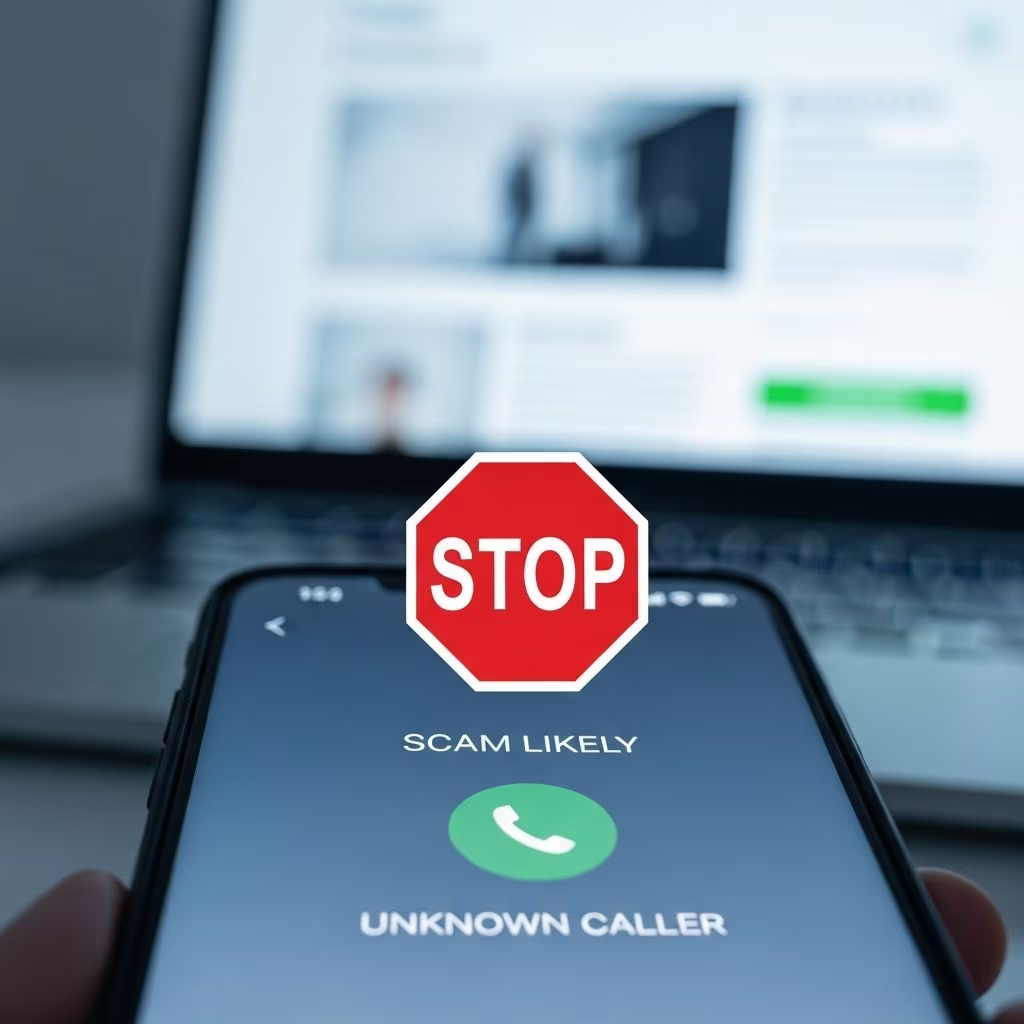
Phone scams that misuse your Social Security number (SSN) have become one of the most common ways criminals try to steal money and personal information. Scammers often pretend to be from a government agency, especially the Social Security Administration (SSA), and use fear, urgency, and high-pressure tactics to trick people into acting quickly.
This guide explains how these fake calls work, the warning signs to look for, and the practical steps you can take to safeguard your identity and your benefits.
Why Scammers Target Your Social Security Number
Your SSN is a key to many parts of your financial and government life. With it, criminals can:
- Apply for credit cards, loans, or other accounts in your name
- Try to claim your tax refund or file a false tax return
- Attempt to redirect your government benefits
- Use your identity to get jobs, phone accounts, or utilities
Because of this, scammers use alarming messages about your SSN being suspended, compromised, or under investigation to scare you into sharing personal information or sending money immediately.
How Fake Social Security Calls Typically Work
Although details vary, most SSN scam calls follow a similar pattern:
- Unexpected contact – You receive a call, text, or voicemail out of the blue about a problem with your Social Security number or benefits.
- Impersonation – The caller claims to be from the Social Security Administration, Office of Inspector General (OIG), another government agency, or even the police.
- Scare tactics – They warn that your number is suspended, your account is frozen, or you are under investigation for criminal activity.
- Urgent demands – You are instructed to act immediately or face arrest, legal action, or loss of benefits.
- Payment or data request – The scammer asks for money, gift cards, wire transfers, or personal information such as your SSN, bank account, or credit card numbers.
Many scammers use caller ID spoofing to make the call look like it’s coming from a real SSA or government phone number. This makes it even more important to rely on facts and verification, not just what you see on your phone screen.
Real SSA Contact vs. Scam Call: Key Differences
The Social Security Administration does contact people by phone for legitimate reasons, but its employees must follow strict rules. The table below highlights crucial differences between a legitimate SSA contact and a scam attempt.
| Legitimate SSA Contact | Scam or Imposter Call |
|---|---|
| Usually follows a recent application, benefit change, or a request you made. | Comes unexpectedly with no prior notice or known reason. |
| SSA normally sends a letter by mail if there is a problem with your record. | Claims there is a serious problem but insists it can only be handled over the phone right now. |
| Never threatens arrest, deportation, or immediate legal action. | Uses threats, fear, or intimidation to push you to act quickly. |
| Does not suspend your Social Security number or demand payment to fix an issue. | Claims your SSN is suspended or will be canceled unless you pay or provide information. |
| Never requires payment by gift card, prepaid card, cash, wire transfer, or cryptocurrency. | Demands these forms of payment because they are hard to trace. |
| May verify limited information but does not pressure you or demand secrecy. | Pressures you to share full SSN, bank numbers, or passwords and tells you not to tell anyone. |
Common Scripts and Tactics Scammers Use
Scammers often recycle similar stories, changing only the details. Watch for scenarios like these:
- “Your SSN is suspended due to suspicious activity.”
They claim your number is linked to criminal activity, money laundering, or drugs, and say they must “verify” your SSN and bank accounts to clear your name. - “You must pay a fee to reactivate or protect your SSN.”
The caller says you must pay to reactivate your number, secure your account, or avoid losing benefits. - “You are under investigation and must move your money.”
They urge you to withdraw funds and transfer them to a “safe” government account or buy gift cards for “verification.” - “We need your information to increase your benefits.”
They promise a higher Social Security benefit or a special payment if you give your SSN or bank information. - “There is a warrant for your arrest.”
They pretend to connect you to law enforcement and show spoofed caller IDs to make the threat look real.
Red Flags That a Social Security Call Is Fake
If you notice any of these warning signs, treat the call as a scam:
- Threats of arrest, deportation, or legal action if you do not pay immediately
- Claims that your SSN is suspended, blocked, or canceled
- Demands for instant payment by gift card, wire transfer, prepaid card, cryptocurrency, or mailing cash
- Pressure to act right away and not talk to anyone about the call
- Requests for full SSN, online account credentials, PINs, or bank and credit card numbers over the phone
- Caller ID that looks like SSA, OIG, the IRS, or local police but is followed by threats or payment demands
Immediate Steps to Take When You Get a Suspicious Call
You do not need to stay on the line to prove that a caller is a scammer. You only need to protect yourself. If you receive a suspicious SSN-related call:
- Hang up right away. Do not engage, argue, or press any phone keys. Just end the call.
- Do not share any information. Never give out your SSN, bank details, credit card numbers, or one-time codes to an unexpected caller.
- Do not send money or buy gift cards. Government agencies do not request payment using these methods.
- Record basic details. If possible, note the phone number shown on caller ID, the date, and what the caller said. This can help when reporting the scam.
- Verify using official contact information. If you are worried the call might be real, hang up and call SSA directly at the official number listed on its website, not the number that called you.
How to Report Fake Social Security Calls
Reporting scams helps enforcement agencies track criminal activity and warn others. You should report suspicious calls involving your SSN to the appropriate authorities.
- Social Security Administration – Office of Inspector General (OIG)
Use the OIG’s fraud reporting system to report Social Security-related scams, including fake calls, texts, and emails. - Federal Trade Commission (FTC)
If you believe your identity has been misused or exposed, file a report through the FTC’s identity theft resources for personalized recovery steps. - Credit Bureaus
Contact Equifax, Experian, and TransUnion to add a fraud alert or security freeze if you suspect your information has been compromised. - Internal Revenue Service (IRS)
If you think someone may use your SSN for tax-related identity theft, review the IRS’s identity protection guidance or contact its designated help lines.
Protecting Your Social Security Number Every Day
Reducing exposure of your SSN can limit the damage scammers can do. Government agencies offer several practical tips:
- Limit where your SSN appears. Keep your Social Security card and documents that show your number in a secure place. Do not routinely carry them with you.
- Share your SSN only when truly necessary. Ask why it is needed, how it will be used, and what happens if you decline.
- Avoid saying your SSN aloud in public. This includes busy offices, waiting rooms, or on speakerphone where others can overhear.
- Use secure connections online. Access your financial and SSA accounts only over secure, private networks and strong, unique passwords.
- Monitor your credit and benefits. Check your credit reports regularly and review your Social Security earnings statement to spot unfamiliar activity.
- Create a my Social Security account. Setting up this account yourself makes it harder for someone else to create a fraudulent one in your name.
What to Do If You Shared Information or Paid a Scammer
If you already gave personal information or sent money, act quickly to limit the harm.
- Stop further contact. Do not respond to calls, texts, emails, or social media messages from the scammer.
- Contact your bank and card issuers. Ask them to review your accounts, dispute unauthorized charges, and consider new account numbers or cards.
- Notify credit bureaus. Request a fraud alert or credit freeze with Equifax, Experian, and TransUnion to make it harder for new accounts to be opened in your name.
- Report the scam to SSA OIG. Provide as many details as you can about the scam call.
- Use identity theft recovery resources. Federal agencies provide checklists and step-by-step guidance if your SSN or other data may have been used fraudulently.
- Consider adding extra protections to your SSA account. SSA allows security blocks and other features that make it harder for someone to change your direct deposit or personal details.
Best Practices to Stay Ahead of SSN Scams
Scammers constantly change their stories, but the core protections remain the same. Build these habits into your routine:
- Be skeptical of any unsolicited contact about your SSN, especially if it involves threats or urgent action.
- Independently verify any message by using official contact information from a government website.
- Refuse to provide sensitive data or payments over the phone to unexpected callers, no matter what they claim.
- Educate family members, particularly older adults and new phone users, about how these scams work.
- Stay informed by checking official government resources on fraud and identity theft prevention.
Frequently Asked Questions About Fake Social Security Calls
Can the government really suspend my Social Security number?
No. Government agencies, including SSA, do not suspend or cancel your Social Security number, and they do not require payments to keep it active. Any caller claiming this is attempting to scam you.
Is it ever safe to give my SSN over the phone?
Only in limited situations when you initiated the call using an official number and you are certain of who you are speaking with. Even then, provide only the minimum information necessary and consider whether the SSN is truly required.
What if the caller ID shows the real SSA or local police number?
Scammers can fake caller ID to display real government or law enforcement numbers. Do not rely on caller ID alone. Hang up and call back using the official phone number listed on the agency’s website.
How can I tell if a letter, text, or email about my SSN is real?
Be suspicious of messages that include links, attachments, or instructions to call unfamiliar numbers, especially if they mention threats or urgent payments. Instead of clicking or replying, go directly to the official government website or use a known, trusted phone number to verify.
What ongoing monitoring should I do if I am worried about identity theft?
Regularly review your credit reports, monitor bank and card statements, verify your SSA earnings record, and consider setting up alerts for new account activity. If anything looks unfamiliar, investigate immediately and report it to the appropriate institutions.
References
- Scams involving your Social Security number and benefits are on the rise — Consumer Financial Protection Bureau. 2018-11-15. https://www.consumerfinance.gov/about-us/blog/scams-involving-your-social-security-number-and-benefits-are-rise/
- Fraud Prevention and Reporting — Social Security Administration. 2024-01-10 (last updated, approximate). https://www.ssa.gov/fraud/
- What should I do if I receive a call from someone claiming to be a Social Security employee? — Social Security Administration. 2023-05-01. https://www.ssa.gov/faqs/en/questions/KA-10018.html
- What You Can Do To Protect Your Personal Information — Social Security Administration. 2022-10-24. https://blog.ssa.gov/what-you-can-do-to-protect-your-personal-information/
- Protect Yourself from Social Security Scams — Social Security Administration. 2024-02-15. https://www.ssa.gov/scam/
- SCAM ALERT – Social Security-related Scams — SSA Office of the Inspector General. 2022-03-10. https://oig.nsa.gov/Portals/71/Documents/PRINTABLE-FLYER-Social-Security-related-Scams.pdf
- Identity protection tips — Internal Revenue Service. 2023-01-11. https://www.irs.gov/identity-theft-fraud-scams/identity-protection-tips