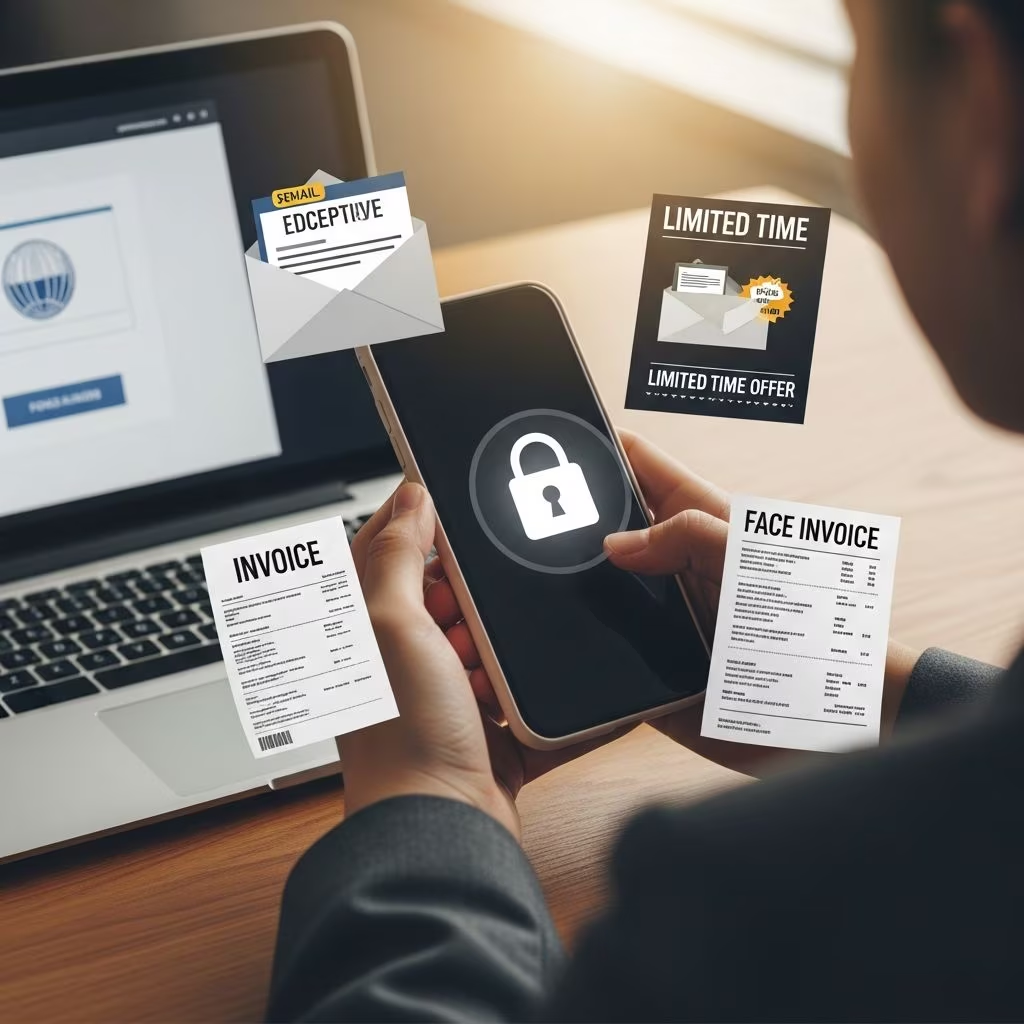
Fraudsters are constantly adapting their tricks, but most scams still rely on a few predictable tactics: rushing you, tricking you into sharing personal information, or getting you to send money in hard-to-trace ways. This guide explains how to recognize those warning signs, protect your data and finances, and use your rights under U.S. consumer protection laws.
1. Why Consumer Protection Matters More Than Ever
Technology and digital payments have made it easier to shop, bank, and communicate, but they have also expanded opportunities for scammers. The Federal Trade Commission (FTC) reports that consumers lose billions of dollars each year to fraud and scams across online, phone, and in-person channels. At the same time, identity theft and misuse of personal data remain major concerns, especially as more businesses and data brokers collect and share consumer information.
Strong consumer protection helps to:
- Prevent financial loss from fraudulent charges, fake investments, and deceptive fees.
- Reduce identity theft by limiting misuse of your sensitive information.
- Promote fair competition so honest businesses are not undercut by illegal tactics.
- Build trust in digital commerce, banking, and communication.
2. The Basic Rules Scammers Rely On You Ignoring
Although specific schemes change, most scams share a few core tactics. If you learn to recognize these patterns, you can avoid many kinds of fraud.
2.1 Common Red Flags of a Scam
- Urgent pressure – The caller or message says you must act immediately or lose money, be arrested, or miss out on a special deal.
- Demands for secrecy – You are told not to talk to your bank, friends, or family before taking action.
- Unusual payment methods – You are asked to pay by gift card, cryptocurrency, wire transfer, or peer-to-peer app to fix a problem or claim a prize.
- Requests for sensitive data – Someone contacts you unexpectedly asking for your Social Security number, bank account numbers, or one-time passcodes.
- Too-good-to-be-true promises – Offers of guaranteed investment returns, free grants, or loan forgiveness if you pay an upfront fee.
2.2 Legitimate Organizations Rarely Do This
In general, legitimate government agencies and reputable businesses do not:
- Call out of the blue to threaten arrest or legal action over unpaid taxes, fines, or debts.
- Ask you to pay fees or penalties by gift card, cryptocurrency, or money transfer.
- Demand that you share passwords or authentication codes over the phone or by email.
- Pressure you to make an immediate decision without giving you time to verify.
If you encounter any of these behaviors, stop and double-check using contact information you find yourself, not what appears in the message or on caller ID.
3. Protecting Your Personal and Financial Information
Your personal data is valuable. Criminals can use it to open credit accounts, access your bank or investment accounts, or impersonate you. The more you limit what you share and how widely it spreads, the safer you are from identity theft and account fraud.
3.1 Information You Should Treat as Highly Sensitive
| Type of Information | Risk if Exposed | Protection Tips |
|---|---|---|
| Social Security number | New credit accounts, tax refund fraud, benefits theft | Share only when legally required; ask why it is needed and how it will be protected. |
| Bank and card numbers | Unauthorized withdrawals, card charges | Use secure sites and apps; enable alerts for new transactions. |
| Online account passwords | Takeover of email, banking, and shopping accounts | Use strong, unique passwords and a password manager; turn on multi-factor authentication. |
| Government ID images | Impersonation and synthetic identity fraud | Only upload copies to trusted, verified entities when truly necessary. |
3.2 Smart Habits for Digital Security
- Use multi-factor authentication (MFA) on banking, email, and social media accounts so a stolen password alone is not enough to break in.
- Keep software and devices up to date to patch known vulnerabilities that criminals exploit.
- Be cautious with links and attachments in unsolicited emails, texts, and social media messages; go directly to a company’s official website instead of clicking embedded links.
- Limit personal details you share on social media that could be used to answer security questions or guess passwords.
- Review financial statements regularly and report unauthorized charges quickly to your bank, card issuer, or credit union.
4. Popular Scam Types and How They Work
Scammers tailor their pitch to whatever people are worried about or excited about in a given moment—economic relief, job offers, romance, investments, or online marketplaces. Understanding common categories can help you respond calmly instead of reacting to pressure.
4.1 Impersonation Scams
Impersonation scams involve criminals pretending to be a trusted organization—such as a government agency, bank, utility company, or well-known retailer—to convince you to send money or share sensitive information. These scams may use spoofed caller ID, realistic-looking emails, or fake websites.
To protect yourself:
- Independently confirm contact information using an official statement, card, or website.
- Hang up or ignore the message, then reach out using trusted channels.
- Do not click links or open attachments from unexpected messages claiming to be from government agencies or financial institutions.
4.2 Online Shopping and Marketplace Scams
Online shopping scams often involve fake websites, social media ads, or marketplace listings that collect your payment but never deliver the product, deliver inferior goods, or misuse your payment card. Deceptive add-on fees or hidden charges can also be a problem, which is why the FTC has adopted rules requiring clearer disclosure of total prices in certain sectors.
- Research unfamiliar sellers and check for realistic contact details and refund policies.
- Use secure payment methods that provide dispute rights, such as credit cards, rather than wire transfers or gift cards.
- Be skeptical of extremely low prices or sellers insisting on off-platform payments.
4.3 Tech Support and Device Security Scams
In tech support scams, a pop-up, email, or phone caller claims that your computer or phone is infected or your account is compromised. The scammer then pressures you to give remote access, pay for unnecessary services, or share payment information.
- Close suspicious pop-ups and avoid calling phone numbers listed in them.
- Contact your device manufacturer or service provider using information from their official site if you are worried.
- Never allow remote access to your device unless you initiated the contact with a trusted company.
4.4 Investment, Job, and Income Scams
Fraudsters promote fake investment opportunities, work-from-home schemes, or business coaching programs with promises of quick, guaranteed profits. They may request upfront fees, pressure you to recruit others, or discourage you from discussing the opportunity with anyone else.
- Be wary of promises of guaranteed or unusually high returns with little or no risk.
- Research the company or opportunity with state regulators or well-known investor education sites.
- Watch for pyramid-style compensation where earnings depend mainly on recruitment rather than actual sales or services.
5. Your Rights and Key Consumer Protections
Federal and state laws give you specific rights when dealing with credit accounts, debt collectors, data misuse, and unfair or deceptive practices. The FTC and other agencies enforce these laws and can take action against companies and individuals that violate them.
5.1 Protection Against Unfair or Deceptive Practices
The FTC Act prohibits unfair or deceptive acts or practices in or affecting commerce. This means companies cannot mislead consumers or omit important information in ways that are likely to cause harm, and they must avoid practices that cause substantial injury that consumers cannot reasonably avoid and that are not outweighed by benefits.
The FTC enforces this by:
- Investigating consumer complaints and patterns of misconduct.
- Bringing enforcement actions in court or through administrative processes.
- Issuing rules and guidance to clarify prohibited conduct.
- Returning money to consumers when possible after successful cases.
5.2 Credit, Debt Collection, and Reporting
Other key protections include:
- Fair Debt Collection Practices Act (FDCPA) – Limits abusive, deceptive, or unfair practices by many third-party debt collectors.
- Fair Credit Reporting Act (FCRA) – Provides rights to see and dispute information in your credit reports and restricts who can access them.
- Truth in Lending and other rules – Require clear disclosure of loan and credit card terms, including interest rates and fees.
These laws are enforced by the FTC and, for many financial products, by the Consumer Financial Protection Bureau (CFPB).
6. How to Respond If You Think You’ve Been Scammed
Acting quickly can limit the damage from fraud or identity theft. Even if you are unsure whether you have been victimized, it is safer to take protective steps right away.
6.1 Immediate Steps to Take
- Stop sending money and block further payments to the scammer if possible.
- Contact your bank or card issuer to report unauthorized transactions and request a new card or account number.
- Change passwords for any affected accounts and turn on multi-factor authentication.
- Monitor your accounts and credit reports for unfamiliar activity. Consider placing a fraud alert or credit freeze if your identity information was exposed.
6.2 Report the Scam to Help Others
Reporting fraud gives enforcement agencies the information they need to identify patterns, stop ongoing schemes, and sometimes return money to victims.
- Report scams, fraud, and bad business practices to the Federal Trade Commission. The FTC uses these reports in law enforcement investigations and to inform public education.
- File complaints involving financial products, loans, or debt collection with the Consumer Financial Protection Bureau (CFPB), which supervises many financial companies.
- Notify your state attorney general or consumer protection office about local or regional schemes.
7. Practical Tips for Different Situations
While not every scenario is predictable, a few practical guidelines can make you more resilient across a range of interactions.
7.1 When You Receive an Unexpected Call or Message
- Assume any unexpected demand for money or personal data could be a scam until you confirm otherwise.
- Refuse to give out information and avoid clicking links; instead, contact the organization using a verified phone number or website.
- End the conversation if you feel pressured, threatened, or rushed.
7.2 When You Are About to Make a Large Payment
- Pause and review the transaction details, including all fees and the total price; rules in some industries now require clearer fee disclosure to reduce surprise charges.
- Use payment methods with strong dispute and chargeback protections, such as credit cards.
- Keep records of invoices, confirmations, and communications in case a dispute arises.
7.3 Helping Older Adults Stay Protected
Older adults can be heavily targeted by fraudsters and may lose more money per incident than younger people. Offering support and open communication can make a significant difference.
- Talk regularly about common scams and warning signs in a non-judgmental way.
- Encourage them to check with a trusted friend or family member before sending money or sharing information.
- Help review bank statements and credit reports if they are comfortable, watching for unusual activity.
8. Frequently Asked Questions (FAQs)
Q1: How can I tell if a website is safe to enter my payment information?
Look for a locked padlock icon in the browser address bar, a web address that starts with “https,” and clear contact and refund information. Research unfamiliar sites by searching for the company name plus words like “complaints” or “reviews.” Use a credit card rather than a debit card or wire transfer for better dispute rights.
Q2: What should I do if I gave a scammer my bank or card information?
Contact your bank or card issuer immediately, explain what happened, and ask them to block or reverse unauthorized charges, issue a new card or account number, and place additional monitoring on your accounts. Then change online banking passwords and enable multi-factor authentication where available.
Q3: Is it safe to pay someone who insists on gift cards or cryptocurrency?
No. Requests for payment by gift card or cryptocurrency are a major red flag. These methods are extremely difficult to trace or reverse, which is why scammers prefer them. Legitimate businesses and government agencies do not demand that you pay fees, fines, or taxes this way.
Q4: How often should I check my credit reports?
Check your credit reports at least once a year, and more often if you spot suspicious activity, lose important documents, or learn that your data was part of a breach. Regular reviews help you catch inaccurate or fraudulent accounts early, when they are easier to correct.
Q5: Does reporting a scam to authorities really make a difference?
Yes. Individual reports help agencies like the FTC and CFPB see patterns, identify the companies or networks behind scams, and bring enforcement actions. Even if your money cannot be recovered, your report may prevent others from becoming victims and can influence future guidance and rulemaking.
References
- Bureau of Consumer Protection — Federal Trade Commission. 2024-10-01. https://www.ftc.gov/about-ftc/bureaus-offices/bureau-consumer-protection
- Rules — Federal Trade Commission. 2024-09-30. https://www.ftc.gov/legal-library/browse/rules
- Consumer Protection — Federal Trade Commission. 2025-05-15. https://www.ftc.gov/consumer-protection
- FTC Rule on Unfair or Deceptive Fees to Take Effect on May 12, 2025 — Federal Trade Commission. 2025-05-02. https://www.ftc.gov/news-events/news/press-releases/2025/05/ftc-rule-unfair-or-deceptive-fees-take-effect-may-12-2025
- Consumer Protection Laws and Regulations: USA 2025 — ICLG. 2025-04-09. https://iclg.com/practice-areas/consumer-protection-laws-and-regulations/usa
- Protecting Older Consumers 2024-2025: A Report of the Federal Trade Commission — Federal Trade Commission. 2024-10-18. https://www.ftc.gov/reports/protecting-older-consumers-2024-2025-report-federal-trade-commission
- Competition and Consumer Protection Guidance Documents — Federal Trade Commission. 2024-08-20. https://www.ftc.gov/enforcement/competition-consumer-protection-guidance-documents