
The Silent Democratic Surge: States Championing Voter Expansion
While restrictive voting laws dominate the headlines, a powerful legislative counter-movement is quietly expanding ballot access across America.
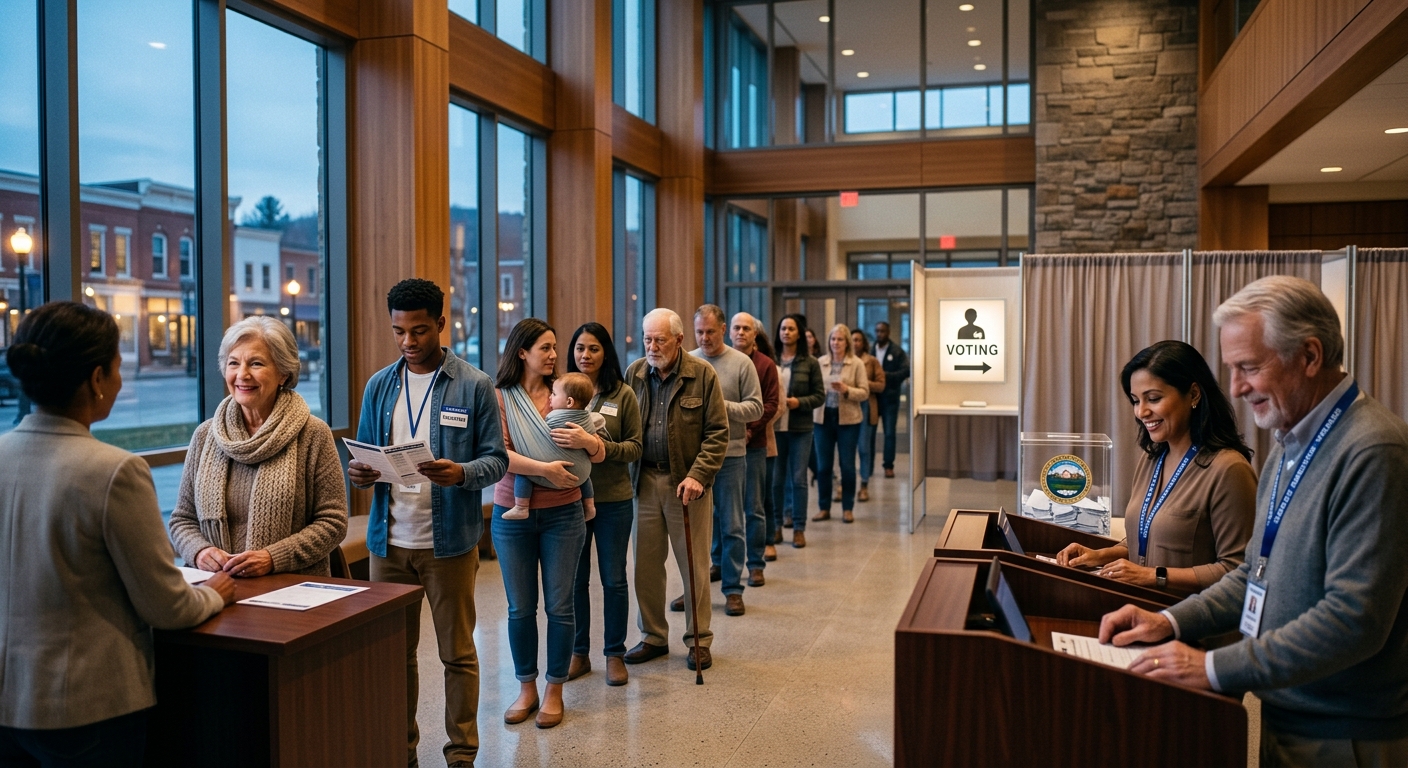
The Dual Reality of American Voting Rights
In recent years, the narrative surrounding American democracy has been largely dominated by a singular, deeply concerning theme: voter suppression. Following the unprecedented turnout of the 2020 presidential election, a well-documented wave of restrictive voting legislation swept through numerous statehouses. These bills, often introduced under the guise of election security, have systematically erected barriers to the ballot box, disproportionately affecting communities of color, young voters, and lower-income citizens. However, this focus on democratic backsliding obscures a parallel and equally vital reality. Amidst the national surge of restrictive policies, a robust counter-movement has emerged. Across the country, a significant number of states are actively championing democracy by passing comprehensive legislation designed to expand voter access, modernize election infrastructure, and dismantle systemic barriers to civic participation.
This dual reality presents a starkly polarized national landscape. On one hand, certain legislative bodies are reducing early voting days, implementing stringent identification requirements, and purging voter rolls with alarming frequency. On the other hand, forward-thinking legislatures are leaning into the democratic promise, establishing automatic voter registration, cementing permanent mail-in voting systems, and aggressively restoring the voting rights of justice-impacted individuals. To fully understand the current state of American elections, it is essential to examine this silent democratic surge and the specific mechanisms progressive states are utilizing to ensure that every eligible citizen can cast a ballot without undue hardship.
Understanding the Divide: Restrictive vs. Expansive Legislation
The United States operates a highly decentralized election system, meaning that a citizen’s ability to participate in the democratic process is heavily dependent on their zip code. The Brennan Center for Justice and the Brookings Institution have extensively tracked this divergence, noting that the aftermath of the 2020 election triggered an unprecedented volume of election-related bills. While restrictive laws in battleground and historically conservative states have rightfully drawn intense media scrutiny, the volume of expansive legislation passed in other regions is historically significant.
This legislative divide is not merely theoretical; it has profound implications for electoral outcomes and democratic representation. States that have adopted expansive frameworks are effectively neutralizing the historical inequities that have long plagued the American electoral system. By transforming the act of voting from a grueling endurance test into a seamless civic duty, these states are setting a new standard for modern democratic governance. Understanding the distinct trajectories of these two legislative approaches requires a close look at the data and the specific policies being debated in state capitols across the nation.
Analyzing the Data: Legislative Trends
To contextualize the scale of this divide, it is helpful to look at the broad categories of election laws that have dominated recent legislative sessions. The following table outlines the stark contrasts between restrictive and expansive election policies currently shaping the American political landscape.
| Legislative Trend | Primary Policy Mechanisms | Impact on Democratic Participation |
|---|---|---|
| Voter Restriction | Strict photo ID mandates, aggressive voter roll purges, elimination of drop boxes, shortened early voting windows. | Disproportionately disenfranchises marginalized communities, increases wait times, and creates administrative hurdles for eligible voters. |
| Voter Expansion | Automatic Voter Registration (AVR), permanent absentee lists, mandated polling place standards, curbside voting. | Dramatically increases voter turnout, reduces administrative bottlenecks, and ensures equitable access for disabled and rural voters. |
Key Innovations Expanding the Ballot
The states leading the charge in democratic accessibility are not simply rolling back restrictive measures; they are proactively innovating. By leveraging technology and rethinking outdated administrative processes, these states are implementing structural changes that fundamentally alter how citizens interact with their government. Three primary mechanisms have emerged as the gold standard for voter expansion.
1. Broadening Early Voting and Mail-in Options
The COVID-19 pandemic necessitated a rapid shift in how Americans cast their ballots, with millions relying on mail-in and early voting options to participate safely. While some states rushed to roll back these pandemic-era innovations, others recognized their immense value and moved to make them permanent. Expanding early voting windows allows workers with inflexible schedules, parents without childcare, and citizens living far from polling locations to vote on their own timeline. Furthermore, the implementation of ‘no-excuse’ absentee voting and permanent mail-in ballot lists ensures that registered voters automatically receive their ballots at home, removing the bureaucratic friction of requesting a ballot for every single election cycle. Coupled with the strategic deployment of secure, 24/7 ballot drop boxes, these policies have proven to be among the most effective drivers of high voter turnout.
2. Streamlining Registration Processes
Historically, the burden of voter registration has rested squarely on the shoulders of the individual citizen, complete with arbitrary deadlines and confusing paperwork. The voter expansion movement seeks to shift this burden to the state. Automatic Voter Registration (AVR) has emerged as a transformative policy in this regard. Under an AVR system, eligible citizens are automatically registered to vote—or have their existing registration updated—whenever they interact with government agencies like the Department of Motor Vehicles, unless they explicitly opt out. Additionally, the adoption of Same-Day Registration (SDR) serves as a critical fail-safe, allowing individuals to register and cast their ballot simultaneously on Election Day. This eliminates the disenfranchisement of voters who miss arbitrary, pre-election registration cut-offs.
3. Restoring Rights to Justice-Impacted Citizens
One of the darkest legacies of the American electoral system is the widespread disenfranchisement of individuals with past criminal convictions—a system rooted in post-Civil War efforts to suppress the Black vote. In a major victory for civil rights, several states have recently passed legislation to automatically restore voting rights to justice-impacted citizens immediately upon their release from incarceration. By decoupling civic participation from the criminal justice system, these states are facilitating the reintegration of formerly incarcerated individuals into society and restoring the voices of hundreds of thousands of marginalized citizens who have served their time.
State Spotlights: Leaders in Democratic Accessibility
The abstract concepts of voter expansion are best understood through the concrete actions of specific states. Operating as laboratories of democracy, several states have recently enacted landmark legislation that serves as a blueprint for national reform. These states demonstrate that securing elections and expanding access are not mutually exclusive goals.
- Illinois: In a decisive move to protect the ballot box, Illinois enacted Senate Bill 825, a sweeping reform package. This legislation not only established permanent vote-by-mail registries but also dramatically expanded curbside voting options for individuals with disabilities. Crucially, the bill granted local sheriffs the authority to establish polling locations directly inside county jails, ensuring that justice-impacted individuals awaiting trial—who have not lost their right to vote—can easily cast their ballots without facing insurmountable logistical barriers.
- Michigan: Driven by overwhelming citizen support through ballot initiatives like the ‘Promote the Vote’ constitutional amendment, Michigan has fundamentally rewired its election infrastructure. The state has constitutionally guaranteed the right to at least nine days of early in-person voting, mandated the widespread availability of secure absentee drop boxes in every community, and expanded the list of acceptable identifications. State officials, including the Secretary of State, have aggressively defended these expansions against attempts by federal lawmakers to impose draconian identification requirements.
- New York: Recognizing the intersection of climate change and voter suppression, New York recently repealed an outdated, punitive section of its election law that criminalized the distribution of food and water to voters waiting in line. With extreme heat becoming more common during summer primaries, this legislative update ensures that civic participation does not become a dangerous endurance test, protecting the health and rights of voters facing long lines in densely populated urban centers.
- Washington: As a pioneer in universal vote-by-mail, Washington State has continued to iterate on its accessible framework. The state’s adoption of its own state-level Voting Rights Act (WVRA) empowers local communities to challenge discriminatory election practices and demands equitable representation. State leaders have been vocal in their commitment to expanding language access and protecting Native American voters, actively pushing back against federal threats that seek to impose strict, exclusionary proof-of-citizenship mandates on local jurisdictions.
The Federal Void: Why National Standards Remain Essential
While the triumphs of states like Michigan, Illinois, and Washington are worth celebrating, they simultaneously highlight a glaring vulnerability in the American democratic system: the extreme disparity in constitutional rights based on geography. The fact that a citizen in Nevada enjoys expansive, accessible voting options while a citizen in a neighboring state faces severe, legally sanctioned voter suppression is a profound failure of national policy. This localized patchwork of voting laws underscores the urgent, enduring need for robust federal legislation to establish a baseline of democratic access for all Americans.
The gutting of the 1965 Voting Rights Act by the Supreme Court in the 2013 Shelby County v. Holder decision stripped the federal government of its most powerful tool—preclearance—which previously prevented states with a history of discrimination from altering election laws without federal approval. In the void left by that decision, the burden of protecting democracy has fallen heavily on executive actions, such as Executive Order 14019 which mandates federal agencies to promote voter registration, and the tireless work of grassroots organizers.
However, executive orders and state-level victories are not substitutes for permanent, federal statutory protections. Legislative proposals like the John Lewis Voting Rights Advancement Act and the Freedom to Vote Act remain critical necessities. These frameworks would standardize early voting, mandate automatic voter registration nationwide, ban partisan gerrymandering, and protect election workers from politically motivated intimidation. Until a federal baseline is re-established, the right to vote will remain vulnerable to the partisan whims of individual state legislatures.
Conclusion: The Ongoing Struggle for a Representative Democracy
The story of American voting rights is not a straightforward arc toward justice; it is a dynamic, ongoing struggle marked by intense push-and-pull forces. While the proliferation of restrictive election laws represents a severe threat to the principles of a representative republic, the aggressive, successful implementation of expansive voting policies across a multitude of states proves that democracy is highly resilient. These states have demonstrated that when political will aligns with civic duty, the ballot box can be opened wider than ever before.
Ultimately, the battle for the ballot requires unwavering vigilance. The contrast between states suppressing the vote and those expanding it serves as a powerful reminder that democracy is not a static inheritance, but an active pursuit. Ensuring that the American electoral system is equitable, secure, and accessible to every eligible citizen will require continued advocacy, rigorous legal defense, and robust participation in every single election cycle.
Frequently Asked Questions (FAQs)
What is Automatic Voter Registration (AVR)?
Automatic Voter Registration (AVR) is a modern policy that streamlines the registration process. Under AVR, eligible citizens are automatically registered to vote, or have their existing registration updated, when they interact with a government agency (such as the DMV) unless they explicitly choose to opt out. This shifts the burden of registration from the voter to the state, significantly increasing the number of registered voters.
How did the Shelby County v. Holder decision impact voting rights?
In 2013, the Supreme Court’s decision in Shelby County v. Holder effectively removed the ‘preclearance’ requirement of the 1965 Voting Rights Act. This requirement had previously forced states and jurisdictions with a documented history of racial discrimination in voting to obtain federal approval before changing their election laws. Its removal allowed these states to immediately pass restrictive voting measures without federal oversight.
What is no-excuse absentee voting?
No-excuse absentee voting allows any legally registered voter to request a mail-in or absentee ballot without having to provide a specific, state-approved reason (such as severe illness, disability, or out-of-state travel). This policy greatly enhances accessibility by allowing voters to cast their ballots from home at their own convenience.
Why are some jurisdictions limiting ballot drop boxes?
Proponents of restricting ballot drop boxes argue that limiting their numbers and availability improves ballot security and ensures a stricter chain-of-custody. However, voting rights advocates counter that these restrictions are a form of voter suppression that disproportionately harms rural voters, individuals with inflexible work schedules, and marginalized communities who rely on secure, after-hours drop-off locations.
How can federal legislation standardize voting access across the country?
Proposed federal bills, such as the Freedom to Vote Act, aim to establish a national baseline for democratic participation. By creating mandatory minimum standards for early voting days, ensuring the availability of mail-in ballots, and standardizing registration procedures, federal legislation ensures that an American citizen’s access to the ballot is fundamentally equal, regardless of the state in which they reside.
References
- Executive Order 14019: Promoting Access to Voting — The White House / Federal Register. 2021-03-10. https://www.federalregister.gov/documents/2021/03/10/2021-05087/promoting-access-to-voting
- Gov. Pritzker Signs Legislation Further Expanding Voting Protections for Illinois Residents — Illinois Governor’s Office. 2021-06-17. https://www.illinois.gov/news/press-release.23435.html
- State Voting Laws Roundup: 2025 in Review — Brennan Center for Justice. 2026-01-21. https://www.brennancenter.org/our-work/research-reports/state-voting-laws-roundup-2025-review
- Voter suppression or voter expansion? What’s happening and does it matter? — Brookings Institution. 2021-10-26. https://www.brookings.edu/articles/voter-suppression-or-voter-expansion-whats-happening-and-does-it-matter/
- ‘It’s a trick’: Secretary Benson calls on Congress to stop the SAVE Act — State of Michigan. 2025-02-27. https://www.michigan.gov/sos/news/2025/02/27/secretary-benson-calls-on-congress-to-stop-save-act
Similar Articles








Read full bio of Sneha Tete


