
Understanding State Vehicle Emissions Standards and Testing
Learn how state emissions rules, inspections, and exemptions affect your vehicle, registration, and driving costs.
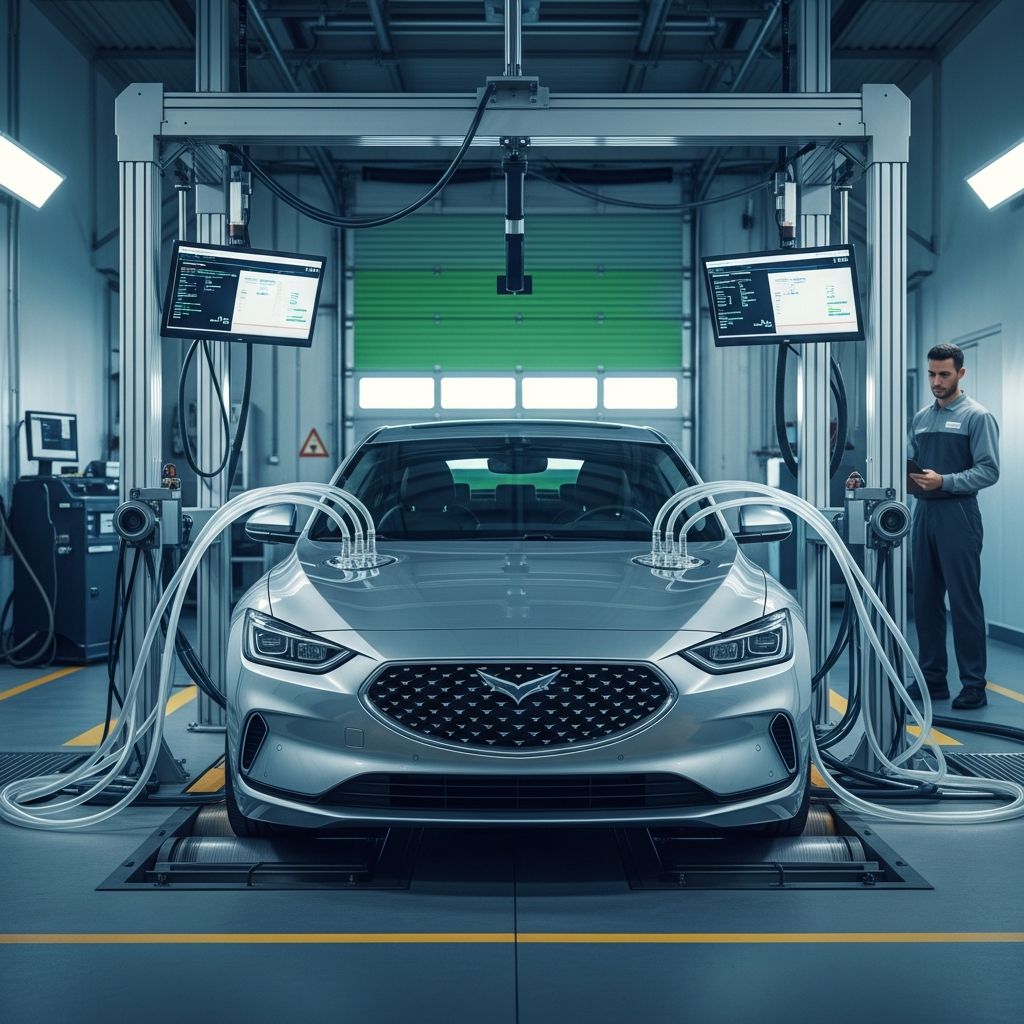
Motor vehicles are a major source of air pollution and greenhouse gases in the United States, so every state regulates tailpipe emissions in some way. These rules affect whether your car must pass an emissions test, how often you must be inspected, and what happens if your vehicle fails.
This guide explains how state emissions standards and testing programs work, why requirements differ from one state to another, and what drivers should know to stay compliant and avoid registration problems.
Why States Regulate Vehicle Emissions
Federal law requires the U.S. Environmental Protection Agency (EPA) to set nationwide limits on pollutants from new vehicles, including carbon monoxide (CO), nitrogen oxides (NOx), hydrocarbons, and particulate matter. These pollutants contribute to smog, respiratory illness, and climate change.
States then build on these federal rules in two main ways:
- Adopting inspection and maintenance (I/M) programs to periodically test vehicles and repair high emitters.
- Choosing which new-vehicle standard to follow—the default EPA program or the more stringent California program.
The result is a patchwork of state programs that share the same goal—cleaner air—but look very different in practice.
Federal, California, and State-Level Standards
Under the federal Clean Air Act, most states follow national vehicle emission standards set by the EPA, while California is allowed to adopt its own stricter standards due to its long-standing air quality problems. Other states may choose to follow California instead of the federal baseline.
The EPA baseline
The EPA regulates emissions from new cars, light trucks, and heavy-duty vehicles sold nationwide, setting phased standards over time (for example, the “Tier” and “Phase” standards). These rules limit tailpipe pollution and, more recently, greenhouse gas emissions per mile.
Key points about EPA standards:
- Apply to new vehicles sold in all states that have not adopted California rules.
- Focus on tailpipe pollutants that harm human health and visibility.
- Work together with fuel-quality rules and on-board diagnostics (OBD) systems.
California and CARB states
California’s standards are administered by the California Air Resources Board (CARB). Federal law allows California to set more stringent limits, and other states may “opt in” to those rules under Section 177 of the Clean Air Act.
States that adopt California rules are commonly called CARB states. They may adopt:
- More stringent low-emission vehicle (LEV) standards.
- Zero-emission vehicle (ZEV) sales requirements.
- Stricter greenhouse gas standards for new vehicles.
Examples of states that have adopted California’s vehicle emission standards and related ZEV policies include Colorado, Connecticut, New York, Oregon, and Washington, among others.
| Feature | EPA States | CARB States |
|---|---|---|
| New-vehicle emission limit stringency | Federal baseline | Generally stricter than federal |
| Zero-emission vehicle sales mandate | Not required at federal level | Often required for automakers in those states |
| Typical inspection focus | Varies by state; many test OBD | Often paired with robust I/M and clean-fuel policies |
| Vehicle choices for consumers | Standard national offerings | More low-emission and zero-emission models available |
How State Emissions Testing Programs Work
While federal law governs new-vehicle standards, each state decides whether, where, and how to test vehicles already on the road. Programs are often most stringent in metropolitan areas with ozone or fine particle pollution problems, because states must meet national ambient air quality standards.
Common components of a state testing program
Most emissions inspection programs include some combination of the following:
- On-board diagnostics (OBD) checks that plug into the vehicle’s diagnostic port and read emissions-related trouble codes.
- Tailpipe tests measuring pollutants directly from the exhaust, more common on older vehicles without advanced OBD systems.
- Fuel cap and visual inspections to ensure the fuel system and emissions-control components appear intact.
- Safety inspections combined with emissions tests in states that bundle both requirements into a single visit.
States that implement strong transportation-sector policies, including cleaner vehicles and fuels, have seen notable reductions in greenhouse gas emissions and other pollutants over the last two decades.
Which vehicles usually need testing?
Although the exact rules vary, many states require emissions tests for:
- Passenger cars and light trucks under a certain weight.
- Vehicles registered in specific counties or metropolitan nonattainment areas.
- Vehicles within certain model-year ranges (often excluding the newest and very oldest).
Several rural states or low-population areas have either minimal testing or none at all, especially where air quality already meets federal standards.
Typical Exemptions from Emissions Testing
Even in states with strong emissions programs, not every vehicle is required to undergo testing. Common exemptions include:
- Newer vehicles for the first few model years, based on the assumption that they are less likely to fail and already meet stringent standards.
- Very old or classic vehicles, often because they are driven infrequently or lack compatible diagnostics ports.
- Diesel vehicles below or above certain weight thresholds, which may follow separate testing protocols.
- Motorcycles, which many states do not subject to emissions inspections.
- Government, farm, or specialty vehicles that rarely use public roads.
Some states also offer hardship extensions or waivers if a vehicle cannot be brought into compliance despite documented repair attempts above a defined cost limit, though the eligibility rules are usually strict.
Registration, Renewal, and Failure Consequences
For most drivers, emissions testing is directly tied to registration or renewal. Failing to follow testing rules can lead to administrative consequences even if the vehicle continues to operate mechanically.
Link between testing and registration
In many states, you must provide proof of passing an emissions inspection to:
- Register a newly purchased used vehicle.
- Renew annual or biennial registration.
- Transfer title in certain jurisdictions.
If your vehicle fails the test, the state can refuse renewal until repairs are completed and the vehicle passes a retest.
What happens if your vehicle fails?
Consequences of failing an emissions test typically include:
- Required repairs to emissions-related systems, such as catalytic converters or oxygen sensors.
- Re-inspection fees after repairs, sometimes reduced or waived within a specified time period.
- Registration holds or suspensions if the vehicle is not brought into compliance by the deadline.
Some states have documented significant emissions reductions after implementing or tightening inspection and maintenance programs, contributing to overall declines in statewide energy-related CO2 emissions.
Differences Among States: Examples and Trends
State policies differ based on geography, population, industrial mix, and political priorities. Research on greenhouse gas emissions shows wide variation in both total and per-capita emissions across states, with transportation playing a leading role in many states’ pollution profiles.
High-emitting vs. low-emitting states
According to U.S. Energy Information Administration analyses, states with energy-intensive economies—often dependent on fossil fuel production or heavy industry—tend to have higher per-capita CO2 emissions than more service-based economies.
At the same time, transportation is a major contributor in many large states, which has pushed some jurisdictions to adopt ambitious vehicle emissions and zero-emission vehicle policies to meet climate and air-quality goals.
States adopting California-style rules
Several states have followed California’s lead by adopting its vehicle emissions and ZEV standards. These policies typically require automakers selling in those states to increase the share of electric and other zero-emission vehicles over time, helping reduce transportation-sector emissions and local air pollution.
As more states adopt greenhouse gas reduction targets and clean transportation strategies, the patchwork of policies is gradually moving toward stricter vehicle standards nationwide, even if federal rules remain the baseline in non-CARB states.
How Emissions Rules Affect Vehicle Owners
For drivers, emissions standards and testing requirements matter in several practical ways, from what vehicles are available for purchase to how often you visit an inspection station.
Buying or selling a car
When you buy or sell a used vehicle, state rules may require:
- A current passing emissions certificate before the title can be transferred.
- Correction of any check-engine-light issues before the buyer can register the vehicle.
- Disclosure of whether the vehicle passed or failed recent inspections.
If you purchase a vehicle in one state and register it in another, especially a CARB state, the vehicle may be subject to different or more stringent requirements at the time of registration.
Moving between states
Relocating can change your obligations overnight. For example:
- Moving from a state without emissions testing to one with mandatory inspections may require an immediate test before you can obtain local plates.
- Moving into a CARB state may affect which new vehicles are available and how warranties on emissions-related components are handled.
- Registration fees and inspection intervals can differ substantially from your previous state.
Cost and convenience considerations
Emissions inspections usually involve modest testing fees, but the real cost comes when repairs are necessary. However, by catching malfunctioning emissions components early, testing can sometimes improve fuel economy and vehicle performance, offsetting some expense over time.
Staying Compliant: Practical Tips for Drivers
Even though state programs differ, drivers can follow a few best practices to stay compliant and reduce unexpected problems at inspection time.
- Check your state DMV or environmental agency website for the latest testing schedule, locations, and exemptions before your registration is due.
- Address the check-engine light promptly, especially if it is related to emissions or fuel-system faults.
- Avoid clearing codes right before a test; many states require a certain number of completed drive cycles before an OBD test will pass.
- Keep maintenance records to support any repair waivers or hardship extensions if your state offers them.
- Consider lower-emission or zero-emission models when buying a new car, particularly in CARB or ZEV states where incentives and infrastructure may be more robust.
Frequently Asked Questions (FAQs)
Do all states require emissions testing?
No. Some states require emissions testing statewide or in specific urban counties, while others have no routine emissions inspections at all. Requirements depend on local air quality conditions and state law.
How often do I need an emissions test?
Testing frequency varies, but many states require inspections every one or two years, typically tied to vehicle registration or renewal. Some exempt the newest model years for several years after purchase.
What happens if I fail an emissions test?
You are usually required to repair the vehicle and then return for a retest. Until you pass or qualify for a waiver, the state may deny registration or renewal, which can make it unlawful to drive the vehicle on public roads.
What is the difference between an EPA state and a CARB state?
EPA states follow federal vehicle emission standards only, while CARB states adopt California’s more stringent rules for new vehicles, often including zero-emission vehicle sales requirements and additional consumer protections for emissions components.
If I move to a different state, do I need another emissions test?
In many cases, yes. When you register your vehicle in a new state, you must comply with that state’s testing rules, even if your previous state did not require inspections or your last test was recent.
References
- United States Vehicle Emission Standards — U.S. Environmental Protection Agency (via summary data compiled in public sources). 2021-12-01. https://www.epa.gov/regulations-emissions-vehicles-and-engines
- State CO2 Emissions — U.S. Energy Information Administration. 2019-02-27. https://www.eia.gov/environment/emissions/state/analysis/
- State Greenhouse Gas Emissions and Removals — U.S. Environmental Protection Agency. 2024-02-07. https://www.epa.gov/ghgemissions/state-ghg-emissions-and-removals
- CARB States: Emissions Regulations in the U.S. — Geotab. 2025-01-15. https://www.geotab.com/blog/carb-states/
- 8 Charts to Understand US State Greenhouse Gas Emissions — World Resources Institute. 2020-08-19. https://www.wri.org/insights/8-charts-understand-us-state-greenhouse-gas-emissions
- State Climate Policy Maps — Center for Climate and Energy Solutions. 2024-05-01. https://www.c2es.org/content/state-climate-policy/
Similar Articles








Read full bio of medha deb


