
State Supreme Courts and the Future of Civil Liberties
Local judicial elections are the new frontline for protecting your rights.
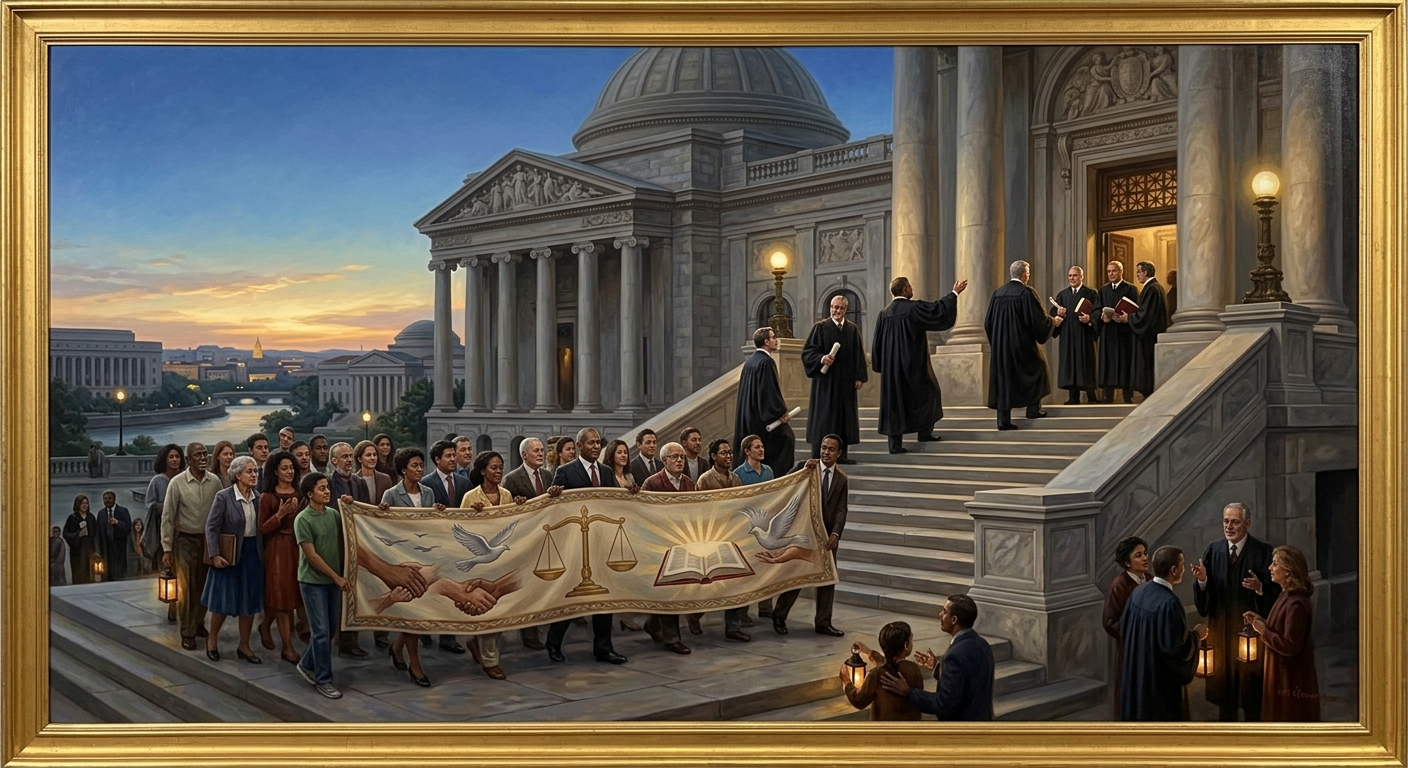
The Dawn of a New Era in American Jurisprudence
For decades, the American public and the national media have fixated almost exclusively on the United States Supreme Court as the ultimate guardian of civil liberties. High-profile federal confirmations capture the nation’s attention, while pivotal decisions handed down in Washington, D.C., dominate the headlines. However, a profound shift is underway in the landscape of American jurisprudence. The true frontiers for defining, protecting, and expanding fundamental rights have decentralized, moving rapidly from the federal judiciary to state-level supreme courts.
This transition, often referred to by legal scholars as “New Judicial Federalism,” is not entirely unprecedented, but its importance has skyrocketed in recent years. As federal courts adopt increasingly restrained interpretations of the U.S. Constitution regarding privacy, electoral fairness, and bodily autonomy, state supreme courts have become the courts of last resort for millions of citizens. Because state constitutions frequently contain unique provisions and broader language than their federal counterpart, state justices possess the authority to recognize and enforce rights that the federal system has either abandoned or refused to acknowledge.
Understanding Judicial Federalism and Independent State Grounds
To grasp why state supreme court elections are of paramount importance, one must understand the doctrine of independent and adequate state grounds. The United States operates under a dual-sovereignty system. The federal Constitution establishes an absolute “floor” or minimum baseline of rights that no state can violate. However, it does not establish a “ceiling.” States are entirely free to interpret their own constitutions to provide greater protections to their citizens than the federal government offers.
State constitutions are often fundamentally different from the U.S. Constitution. They are typically longer, more detailed, and easier to amend. Many state charters explicitly protect the right to privacy, the right to a clean environment, and the right to public education—guarantees that are notably absent from the federal text. Consequently, when a state supreme court interprets its own constitution, its ruling is generally final and cannot be overturned by the U.S. Supreme Court, provided the decision rests solely on state law. This makes the individuals who sit on these state benches extraordinarily powerful arbiters of everyday liberties.
The Pennsylvania Context: A Microcosm of a National Struggle
Pennsylvania serves as a perfect microcosm to illustrate the immense stakes of state supreme court elections. The Commonwealth’s highest court has been at the epicenter of some of the most consequential legal battles of the 21st century. The ideological balance of this court directly dictates the legal realities for over 12 million residents.
In Pennsylvania, the legal framework governing complex social issues is heavily reliant on statutory laws passed by the General Assembly, which can be modified or repealed based on shifting political winds. When fundamental disagreements arise over the constitutionality of these statutes, the Pennsylvania Supreme Court has the final say. Whether the issue is the legality of mail-in voting, the drawing of congressional district maps, or the regulation of reproductive healthcare, the seven justices on this bench wield the power to permanently alter the state’s trajectory.
Reproductive Freedom and the State Constitutional Shield
Nowhere is the power of state supreme courts more evident today than in the realm of reproductive healthcare. Following the dismantling of federal protections that had been in place for nearly half a century, the authority to regulate or prohibit abortion access reverted entirely to individual states. In this post-federal-protection era, the text of state constitutions—and the judges who interpret them—are the only barriers standing between reproductive freedom and absolute criminalization.
In states like Pennsylvania, abortion currently remains legal up to the 24th week of pregnancy. However, this access is primarily protected by statutory law, not an explicitly recognized constitutional mandate. This leaves the right vulnerable to legislative restriction. Advocates and legal practitioners are increasingly looking to state supreme courts to officially recognize reproductive autonomy as a fundamental right enshrined within the state’s constitutional framework.
Legal challenges frequently target specific restrictive policies, such as state bans on Medicaid funding for abortion services. These funding bans disproportionately impact low-income individuals, predominantly women of color, effectively making abortion access dependent on one’s zip code and bank account. By challenging these specific funding restrictions, advocates seek a broader ruling from the state supreme court that such bans violate state constitutional guarantees of equality and privacy, thereby securing a permanent legal shield for reproductive rights.
The Role of Equal Rights Amendments
A critical factor that distinguishes many state constitutions from the federal Constitution is the presence of an Equal Rights Amendment (ERA). While the federal ERA was never fully ratified, dozens of states, including Pennsylvania, adopted their own ERAs decades ago.
Adopted in 1971, the Pennsylvania Constitution’s Equal Rights Amendment explicitly states that equality of rights under the law shall not be denied or abridged because of the sex of the individual. Legal scholars argue that restrictions on reproductive healthcare—procedures only required by biological females—constitute sex-based discrimination. If a state supreme court adopts this interpretation, the ERA becomes a powerful, ironclad mechanism for invalidating not just funding bans, but any legislative attempt to restrict abortion access. The election of justices who view the ERA through this modern, substantive lens is therefore a critical priority for civil liberties advocates.
Beyond Healthcare: Voting Rights and Democratic Integrity
While reproductive rights are a highly visible flashpoint, the influence of state supreme courts extends deeply into the mechanics of democracy itself. State courts are the primary referees in disputes over voting rights, election administration, and partisan gerrymandering.
- Partisan Gerrymandering: State supreme courts have the authority to strike down legislative and congressional maps that are heavily skewed to favor one political party, relying on state constitutional clauses that guarantee “free and equal” elections.
- Voting Access: Disputes over mail-in ballots, drop boxes, voter ID laws, and voter registration deadlines are routinely resolved by state justices. Their rulings can either expand the franchise to ensure maximum participation or uphold strict administrative rules that inevitably disenfranchise marginalized voters.
- Environmental Protections: Some states possess constitutional amendments guaranteeing citizens the right to clean air and pure water. State supreme courts are tasked with determining how aggressively these rights can be enforced against industrial polluters and hesitant regulatory agencies.
The Mechanics of Judicial Elections: How Justices Ascend to the Bench
Unlike the federal system, where judges are appointed by the President and confirmed by the Senate for life terms, the vast majority of states utilize some form of election to select their high court justices. The methods vary significantly across the country, ranging from non-partisan elections to gubernatorial appointments with retention votes. Pennsylvania utilizes a highly structured, two-tiered electoral system for its appellate courts.
| Election Type | Process Description | Term Length | Accountability Mechanism |
|---|---|---|---|
| Partisan Election | Candidates run in primary and general elections under a specific political party label (e.g., Democrat, Republican). These elections are highly competitive and increasingly well-funded. | 10 Years | Voters assess the candidate’s stated judicial philosophy, professional background, and party platform. |
| Retention Election | At the end of a 10-year term, the sitting justice faces a simple “Yes” or “No” vote to remain on the bench. There is no opposing candidate and no party label listed on the ballot. | 10 Years | Voters evaluate the judge’s actual record, written opinions, and ethical conduct during their previous term. |
This electoral framework places immense responsibility directly in the hands of the electorate. However, judicial elections historically suffer from significant “ballot drop-off.” Voters who turn out for presidential or gubernatorial races frequently leave the judicial sections of their ballots blank, citing a lack of knowledge about the candidates. In a landscape where state courts are the ultimate defenders of civil rights, this lack of participation allows small, highly motivated fractions of the electorate to determine the state’s legal future.
Navigating the Information Gap in Judicial Races
Evaluating judicial candidates can be daunting. Judicial ethics codes rightly prohibit candidates from promising to rule a certain way on specific future cases, which can make their campaign messaging seem vague compared to traditional politicians. However, voters are not without resources.
To make informed decisions, voters should examine a candidate’s professional background. A history of working as a public defender, a civil rights litigator, or a corporate attorney provides strong clues about their legal worldview. Furthermore, endorsements from trusted advocacy groups, bar association ratings, and the candidate’s previous judicial opinions (if they are a lower court judge) offer invaluable insights into their judicial philosophy. Understanding whether a candidate views the state constitution as a living document designed to protect vulnerable populations or a rigid text meant to defer to legislative authority is the key to predicting their behavior on the bench.
The Urgency of Down-Ballot Engagement
The era of relying solely on federal courts to protect individual liberties is over. The battles over bodily autonomy, fair elections, criminal justice reform, and environmental protection are happening right now in state capitals and state courtrooms. When citizens cast their votes for state supreme court justices, they are not merely filling an administrative vacancy; they are choosing the architects of their state’s legal reality. Recognizing the profound impact of these down-ballot races and engaging fully in state judicial elections is no longer an optional civic exercise—it is a fundamental necessity for the preservation of civil liberties.
Frequently Asked Questions
Why do state constitutions matter if we have a federal constitution?
The federal U.S. Constitution sets a mandatory minimum standard of rights for all Americans. However, state constitutions can, and often do, provide broader, more expansive protections. State supreme courts are the final authority on what these state-level constitutional protections mean, making them incredibly powerful independent of federal courts.
Are judicial candidates allowed to tell voters how they will rule on abortion?
No. Judicial codes of conduct strictly prohibit candidates from making pledges or promises regarding how they will rule on specific cases or controversies that may come before the court. This is to ensure impartiality. However, they can discuss their general judicial philosophy, their interpretation of constitutional history, and their past legal experience.
What is a retention election?
In states like Pennsylvania, a retention election is an uncontested, up-or-down vote. Once a judge has served their initial 10-year term after winning a partisan election, they do not face a rival candidate. Instead, voters simply vote “Yes” or “No” on whether the judge should be retained for another 10-year term. If a majority votes “No,” the seat becomes vacant.
How does dark money affect state supreme court races?
Because state supreme courts have the final say on highly lucrative and controversial state issues—ranging from environmental regulations to tort law and election maps—special interest groups frequently funnel millions of dollars into judicial campaigns through political action committees (PACs). This “dark money” funds aggressive advertising campaigns without easily identifying the true corporate or ideological donors behind them.
References
- State Policies in Brief: An Overview of Abortion Laws — Guttmacher Institute. 2024-05-01. https://www.guttmacher.org/state-policy/explore/overview-abortion-laws
- Constitution of Pennsylvania — Pennsylvania General Assembly. 1971-05-18. https://www.legis.state.pa.us/cfdocs/legis/LI/consCheck.cfm
- The Politics of Judicial Elections — Brennan Center for Justice. 2023-11-15. https://www.brennancenter.org/issues/defend-our-elections/judicial-elections
- State supreme courts emerge as new battleground over abortion rights — Reuters. 2023-09-20. https://www.reuters.com/legal/government/state-supreme-courts-emerge-new-battleground-over-abortion-rights-2023-09-20/
Similar Articles








Read full bio of medha deb


